Artwork
Înălțarea lui Iisus Hristos la ceruri; Răstignirea lui Iisus Hristos
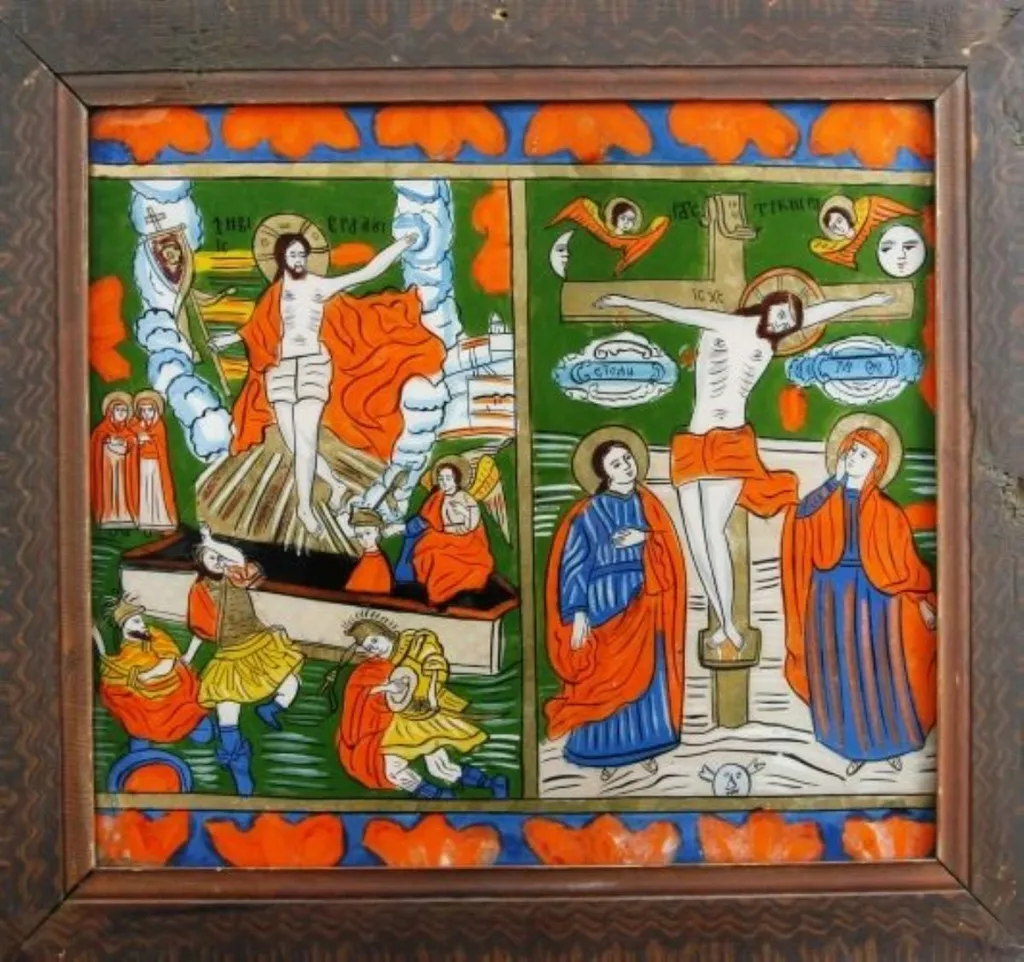
Înălțarea lui Iisus Hristos la ceruri; Răstignirea lui Iisus Hristos is a drawing by Unknown. It dates from 1850 and is held in the collection of the Romanian Peasant Museum. The work presents a diptych composition that juxtaposes two pivotal episodes from the Christian narrative.
About this work
Overview
The right panel depicts a crucifixion scene, with the central figure on the cross, two standing figures, and celestial beings above.
The work presents a diptych composition that juxtaposes two pivotal episodes from the Christian narrative. On the left, a figure emerges from an open tomb amid a sky populated by angels and clouds, while soldiers observe. The right panel depicts a crucifixion scene, with the central figure on the cross, two standing figures, and celestial beings above. Bright hues of green, blue, and orange dominate the flat background.
Subject & Meaning
The paired images convey the theological continuum from death to resurrection, emphasizing the transition from suffering to triumph. The ascending figure symbolizes the Ascension, whereas the crucifixion illustrates sacrifice. By placing them side by side, the artist underscores the interdependence of these events within Christian doctrine, inviting contemplation of redemption and divine promise.
Technique & Style
The painting employs bold outlines and a limited palette of vivid colors, creating a graphic, almost illustrative quality. Backgrounds are rendered in flat planes without perspective, and shading is suggested through cross‑hatching, a linear technique that builds tonal variation. The simplified robes and stylized angels contribute to a narrative clarity typical of devotional panels intended for didactic purposes.
Context
Such dual‑scene compositions were common in Eastern Orthodox and post‑Byzantine iconography, where narrative sequences were displayed together for liturgical instruction. The use of bright, non‑naturalistic colors and flattened space aligns the work with folk‑art traditions that prioritize symbolic meaning over realistic representation, reflecting its likely function as a visual aid for worshippers.
Artist & collection

 Domestic Scene
 Giacomo and Cardinal Marco, investing Andrea, Abbot of San Zeno, with his Benefice
 The Nymph of Fontainebleau
 Portrait of a Woman
 Madonna and Child with Saints in the Enclosed Garden
 Venus and Minerva
 Family Group of Four on Sofa
 Wall painting from Room H of the Villa of P. Fannius Synistor at Boscoreale
 Răstignirea și învierea Mântuitorului Iisus Hristos
 Răstignirea lui Iisus Hristos
 Răstignirea lui Iisus
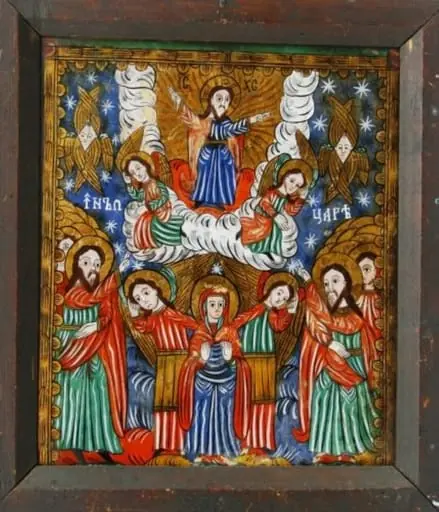 Înălțarea lui Iisus Hristos la ceruri
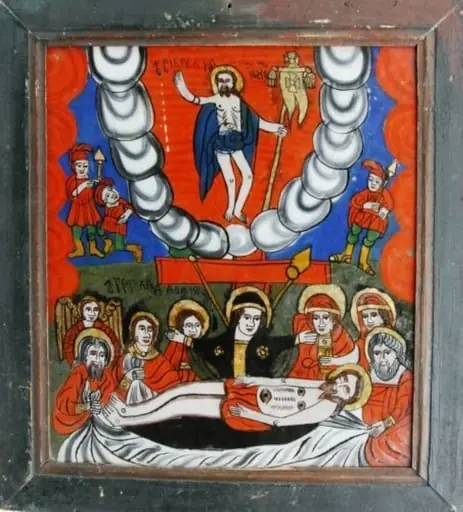 Îngroparea lui Iisus Hristos; Înălțarea lui Iisus Hristos la ceruri (Plângerea, Prohodul)
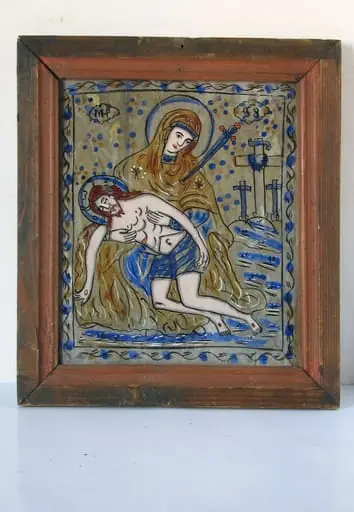 Coborârea Mântuitorului Iisus Hristos de pe cruce
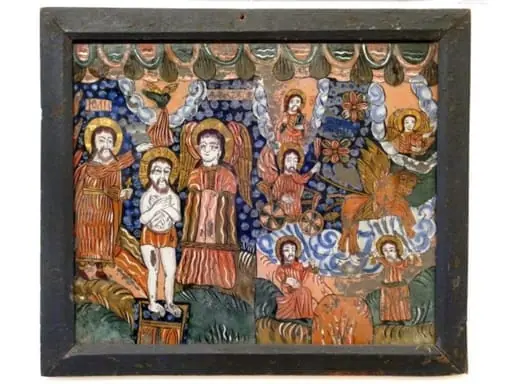 Botezul lui Iisus Hristos; Sfântul Proroc Ilie