Artwork
Înălțarea Maicii Domnului
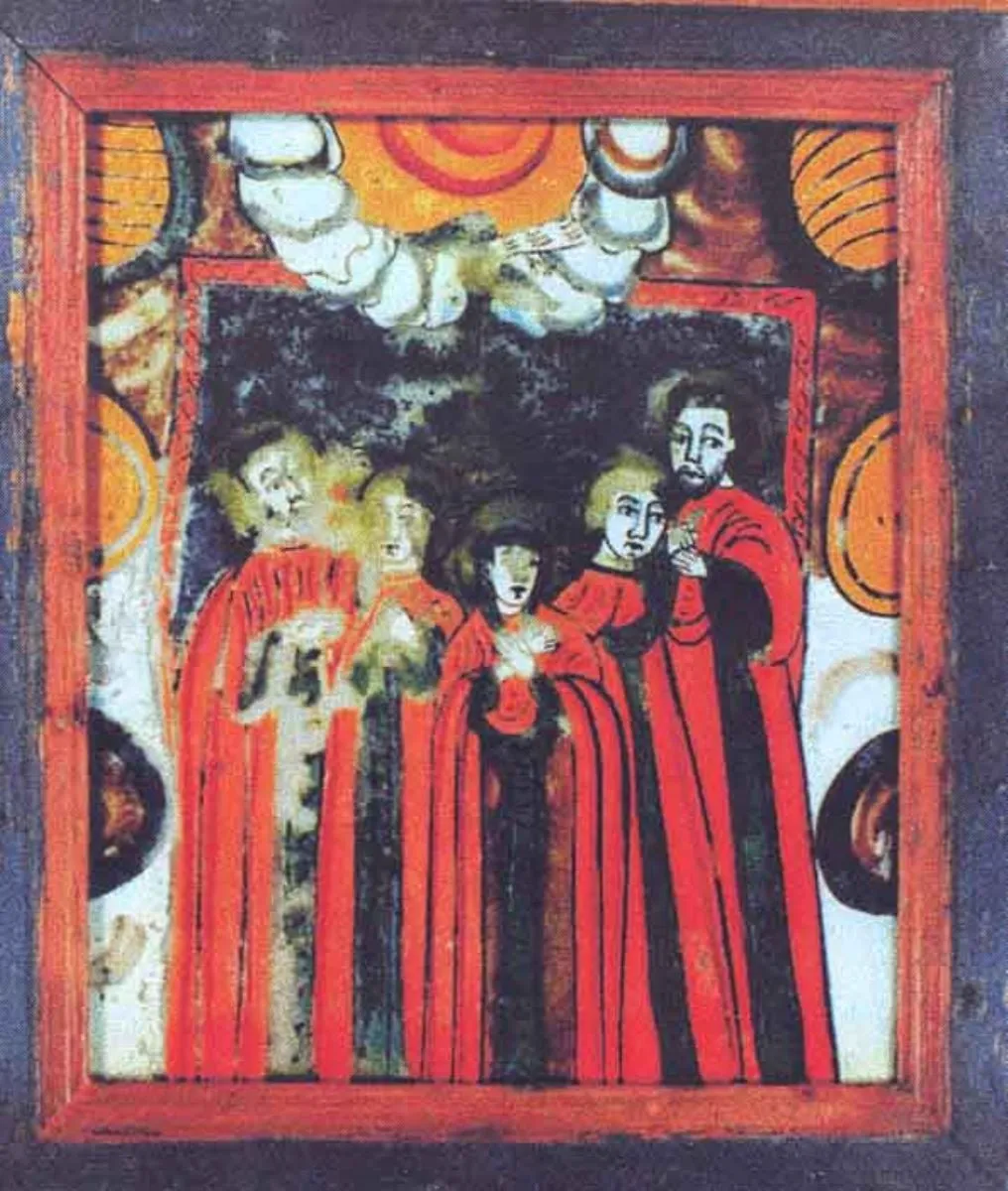
Înălțarea Maicii Domnului is a drawing by Unknown. It dates from 1850 and is held in the collection of the "Dimitrie Gusti" National Village Museum.
About this work
Overview
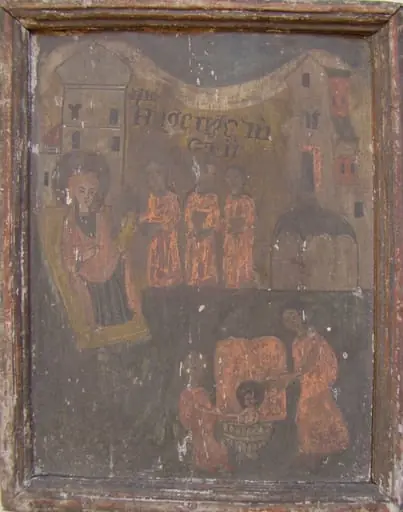
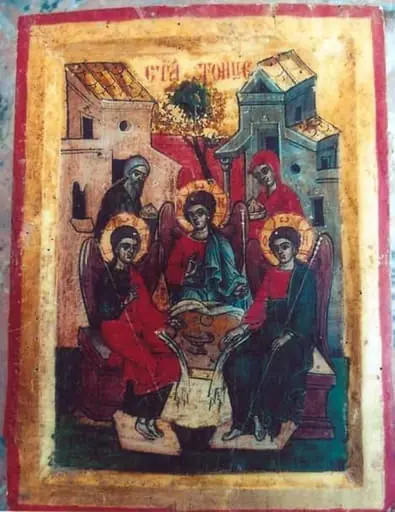
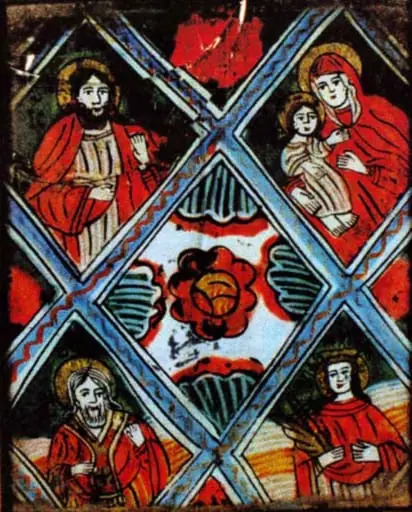
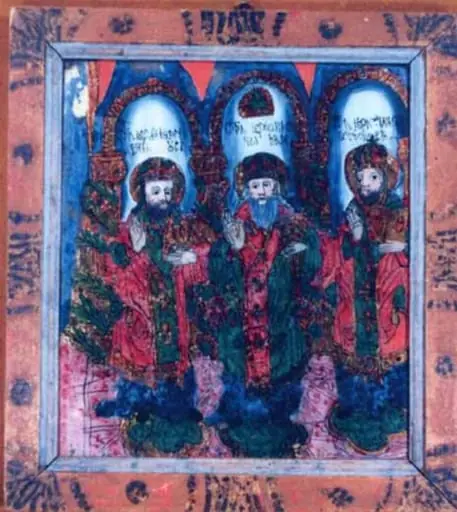
This image depicts a religious scene with five figures in vivid red garments, gathered closely beneath a divine hand emerging from a luminous, cloud-filled sky.
This image depicts a religious scene with five figures in vivid red garments, gathered closely beneath a divine hand emerging from a luminous, cloud-filled sky. The hand holds a scroll, suggesting a moment of sacred transmission. The figures, rendered with simplified facial features and uniform hair, appear in prayer or song. A white object held by one figure may symbolize a liturgical item. The dark background is punctuated by circular yellow forms, possibly halos or celestial bodies, enhancing the spiritual atmosphere.
Subject & Meaning
The scene illustrates the Assumption of the Virgin Mary, a moment when she is taken bodily into heaven. The descending hand signifies divine intervention, offering the scroll as a symbol of heavenly authority or revelation. The five figures, likely apostles or witnesses, respond with reverence. Their unified posture and attire emphasize collective devotion, while the absence of individualized expression reinforces the timeless, ritual nature of the event.
Technique & Style
The figures are rendered with flat, stylized forms and minimal modeling, typical of medieval iconography. Bright red robes contrast sharply with the dark ground, directing focus to the human group. The glowing sky and circular yellow motifs lack perspective, creating a symbolic rather than naturalistic space. Facial features are reduced to basic shapes—large eyes, straight lines for hair—prioritizing spiritual presence over physical realism.
History & Provenance
The work originates from a tradition of liturgical imagery, likely produced in a monastic or regional workshop during the late medieval period. Its schematic style and use of symbolic color suggest it was intended for devotional use rather than public display. No documented provenance exists, but similar compositions appear in Eastern Orthodox and Balkan religious art of the 14th–16th centuries.
Context
This image aligns with Byzantine and post-Byzantine devotional practices, where sacred events were depicted through standardized iconography to aid contemplation. The emphasis on divine gesture, collective worship, and celestial symbols reflects theological priorities of the time: the Virgin’s glorification, the role of apostles as witnesses, and the tangible presence of the divine. Such images were often displayed in churches or private chapels to reinforce doctrinal beliefs.
Legacy
The composition’s reliance on symbolic form over naturalism influenced later regional religious art, particularly in Eastern Europe. Its visual language—flat figures, radiant heavens, and hierarchical scale—became a template for liturgical imagery well into the early modern period. Though later movements favored realism, this style endured in folk and ecclesiastical contexts as a marker of sacred tradition.
Artist & collection
Museum
"Dimitrie Gusti" National Village Museum
Continue through works from the same source collection.
 Domestic Scene
 Giacomo and Cardinal Marco, investing Andrea, Abbot of San Zeno, with his Benefice
 The Nymph of Fontainebleau
 Portrait of a Woman
 Madonna and Child with Saints in the Enclosed Garden
 Venus and Minerva
 Family Group of Four on Sofa
 Wall painting from Room H of the Villa of P. Fannius Synistor at Boscoreale