Artwork
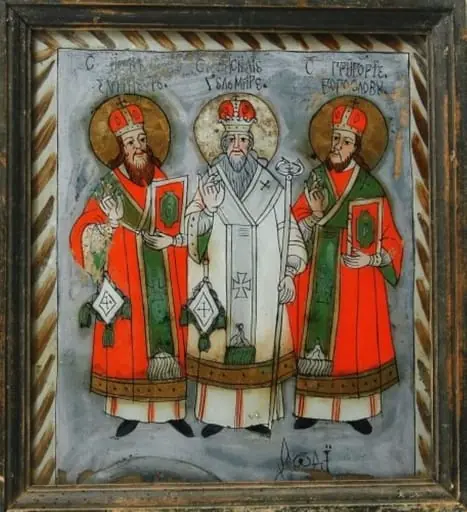
Trei Ierarhi
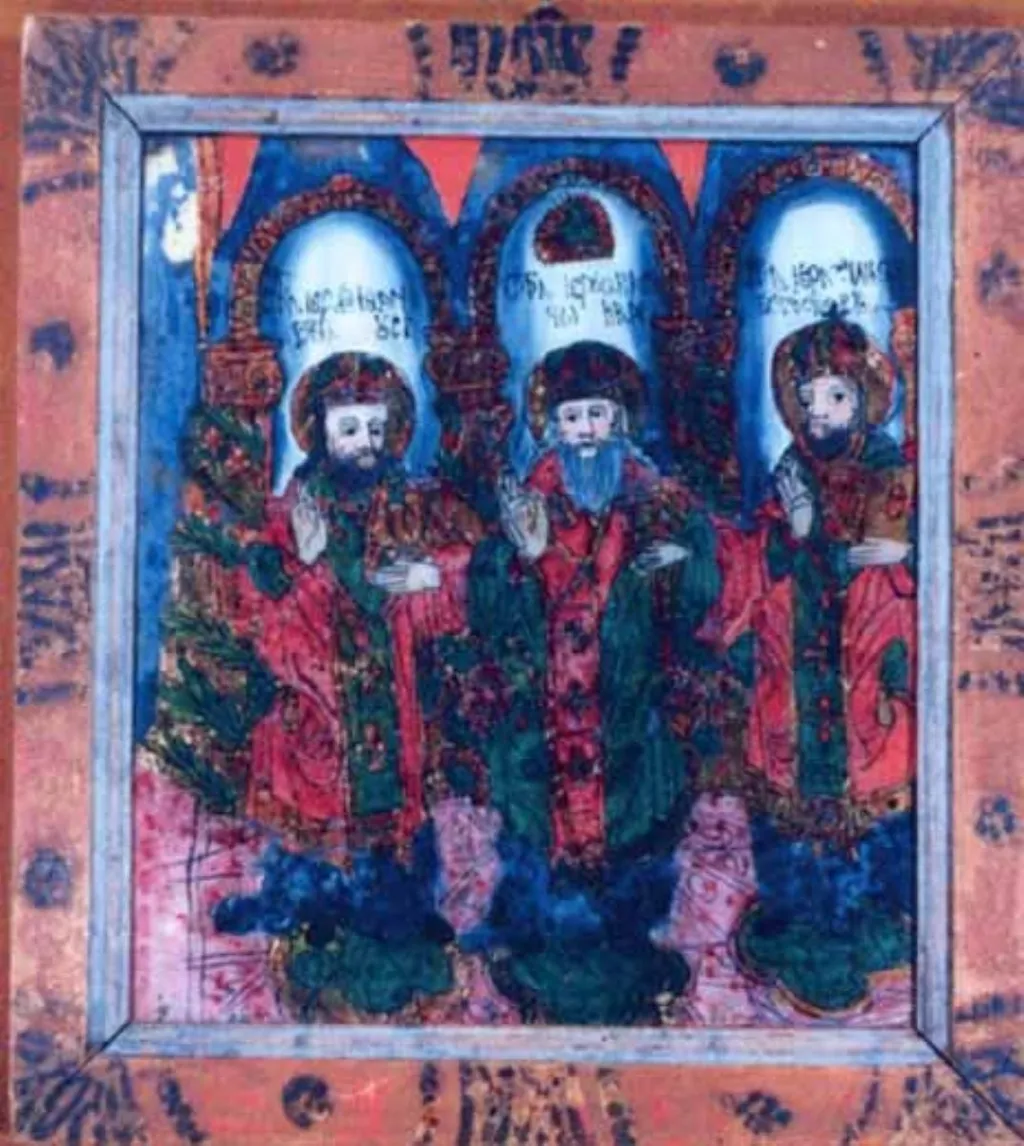
Trei Ierarhi is a drawing by Unknown. It dates from 1850 and is held in the collection of the "Dimitrie Gusti" National Village Museum.
About this work
Overview
This image depicts three religious figures in hierarchical arrangement, each crowned by a radiant halo and dressed in richly colored robes with gold detailing.
This image depicts three religious figures in hierarchical arrangement, each crowned by a radiant halo and dressed in richly colored robes with gold detailing. The central figure is slightly taller, suggesting primacy among the group. Above each head, a semicircular band contains inscriptions in an archaic script, likely liturgical text. The background, softly patterned with muted gold and earth tones, evokes a sacred, otherworldly space consistent with medieval ecclesiastical art.
Subject & Meaning
The three figures likely represent saints or church fathers venerated in Eastern Christian tradition, possibly the Three Holy Hierarchs—Basil the Great, Gregory the Theologian, and John Chrysostom. Their solemn expressions and identical halos signify spiritual equality, while the central figure’s height implies leadership or doctrinal prominence. The inscriptions above them may denote their names or scriptural attributions, reinforcing their role as authoritative voices in liturgical life.
Technique & Style
The composition employs flat, stylized forms typical of Byzantine-influenced iconography, with emphasis on symbolic rather than naturalistic representation. Robes are rendered in bold reds and greens, accented with gold leaf to denote divinity. The halos are rendered as luminous discs, and the background’s faint gold patterning suggests a celestial realm. The script above each figure is carefully inscribed, indicating the work’s liturgical function and the artist’s attention to textual precision.
History & Provenance
This image likely originated as part of an illuminated manuscript or devotional panel from a Byzantine or Slavic Orthodox context, possibly between the 12th and 15th centuries. Its format and iconography align with liturgical books used in church services, particularly evangeliaries or menologia. Though its exact origin is unrecorded, its stylistic features suggest production in a monastic scriptorium where sacred imagery was meticulously crafted for ritual use.
Context
In medieval Eastern Christianity, images of the Three Hierarchs were commonly displayed in churches and used in liturgical calendars to honor their theological contributions. Their depiction in this format reflects their role as pillars of Orthodox doctrine and educators of the faithful. The presence of inscribed text above each figure indicates this image was intended for public veneration and instruction, not private devotion alone.
Legacy
This image exemplifies a persistent tradition in Eastern Christian art that prioritized doctrinal clarity and spiritual authority over individual expression. Its iconographic model influenced later ecclesiastical murals and manuscript illuminations across the Orthodox world. Though no longer in active liturgical use, such works remain vital references for understanding medieval religious practice and the visual language of sanctity.
Artist & collection
Museum
"Dimitrie Gusti" National Village Museum
Continue through works from the same source collection.
 Domestic Scene
 Giacomo and Cardinal Marco, investing Andrea, Abbot of San Zeno, with his Benefice
 The Nymph of Fontainebleau
 Portrait of a Woman
 Madonna and Child with Saints in the Enclosed Garden
 Venus and Minerva
 Family Group of Four on Sofa
 Wall painting from Room H of the Villa of P. Fannius Synistor at Boscoreale
 Sfânta Treime
 Sfinții Trei Ierarhi - Vasile, Grigore și Ioan
 Sfinții trei ierarhi Vasile, Grigore și Ioan
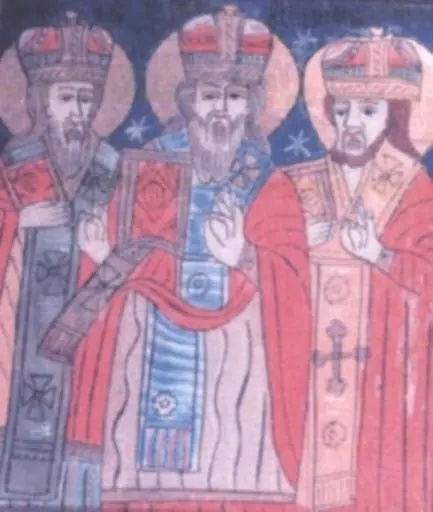 Sf. Paisie, Sf. Vasile și Sf. Ioan
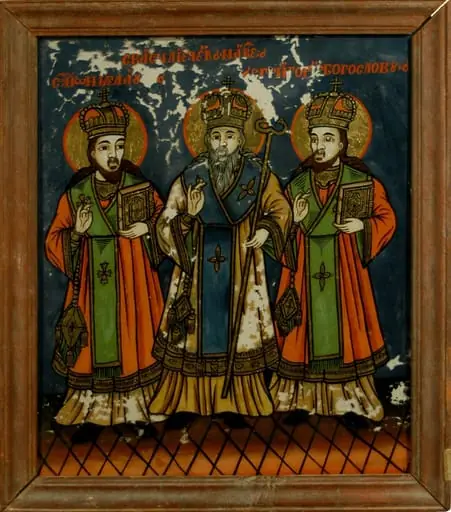 Sfinții Trei Ierarhi
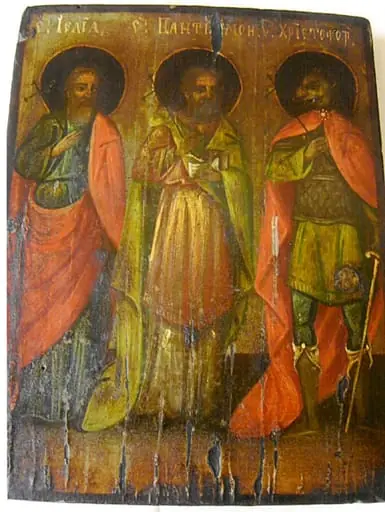 Sfinții Isaia, Pantelimon, Hristofor
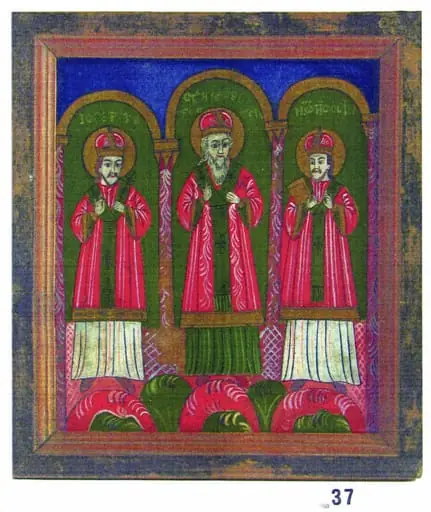 Sfinții trei ierarhi Vasile, Grigore și Ioan
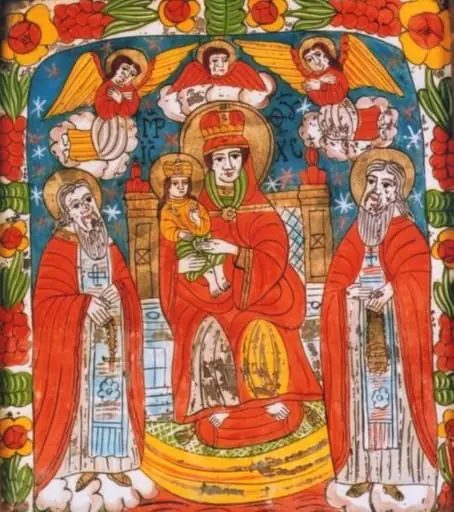 Maica Domnului cu Pruncul și Sfinții
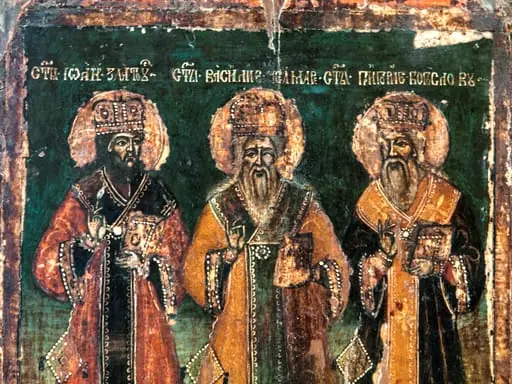 Tema icoanei este "Sfinții trei ierarhi, Vasile, Grigorie, și Ioan". Ordinea din icoană este, de la stânga la dreapta : Ioan Gură de aur(Zlotul), Vasile cel Mare și Grigore Teologul(Bogoslovul).Cei trei sfinți sunt pictați în picioare, Sf. Ioan și Grigorie ușor întorși către Sf Vasile plasat central. Redați în veșminte arhierești, cu însemne episcopale. Pe cap toți poartă mitră împodobită cu pietre scumpe, în mâna stângă țin Evanghelia iar cu dreapta binecuvintează prin atingerea degetului inelar de cel mare.De mâna dreaptă le atârnă bedernița, un veșmânt arhieresc în formă de romb. Reprezentarea celor trei respectă în mare indicațiile Erminiei, ceea ce arată că zugravul o studiase; Doar Sfântul Ioan este redat cu părul și barba negre, ceea ce nu corespunde descrierilor. Veșmintele sunt destul de simple, Sacosurile de culori diferite(roșu cărămiziu, galben ocru, brun închis) au în parte de jos o bordură lată, aurită decorată cu motive geometrice. Peste acestea este așezat omoforul mare, simplu, cu chenar pe margine . La gât poartă câte un engolpion rotund.În partea de jos se vede capătul epitrahilului deasemenea decorat cu motive geometrice și franjuri, așezat peste stihar. Aureolele sunt realizate cu foiță,delimitate de o linie albă, fină. Trăsăturile sunt foarte fine, cu aceent pe detalii, ceea ce denotă un iconar cu experiență și probabil școală. Proporțiile sunt respectate paleta cromatică dominată de culori calde valorate prin contraste cu culorile complementare și nuanțe. Fondul este realizat într-o trecere treptată, de la o culoare mai deschisă în partea de jos la un verde-albastru sus, ceea ce scoate în evidență figurile celor trei. Scrisul este caligrafic, foarte fin și ordonat, realizat cu o linie fină de culoare albă. Chenar dublu, roșu la exterior, auriu la interior. Icoana prezintă crăpături și lacune pe margine.
 Sfinții Trei Ierarhi