Artwork
Zămislirea Fecioarei Maria
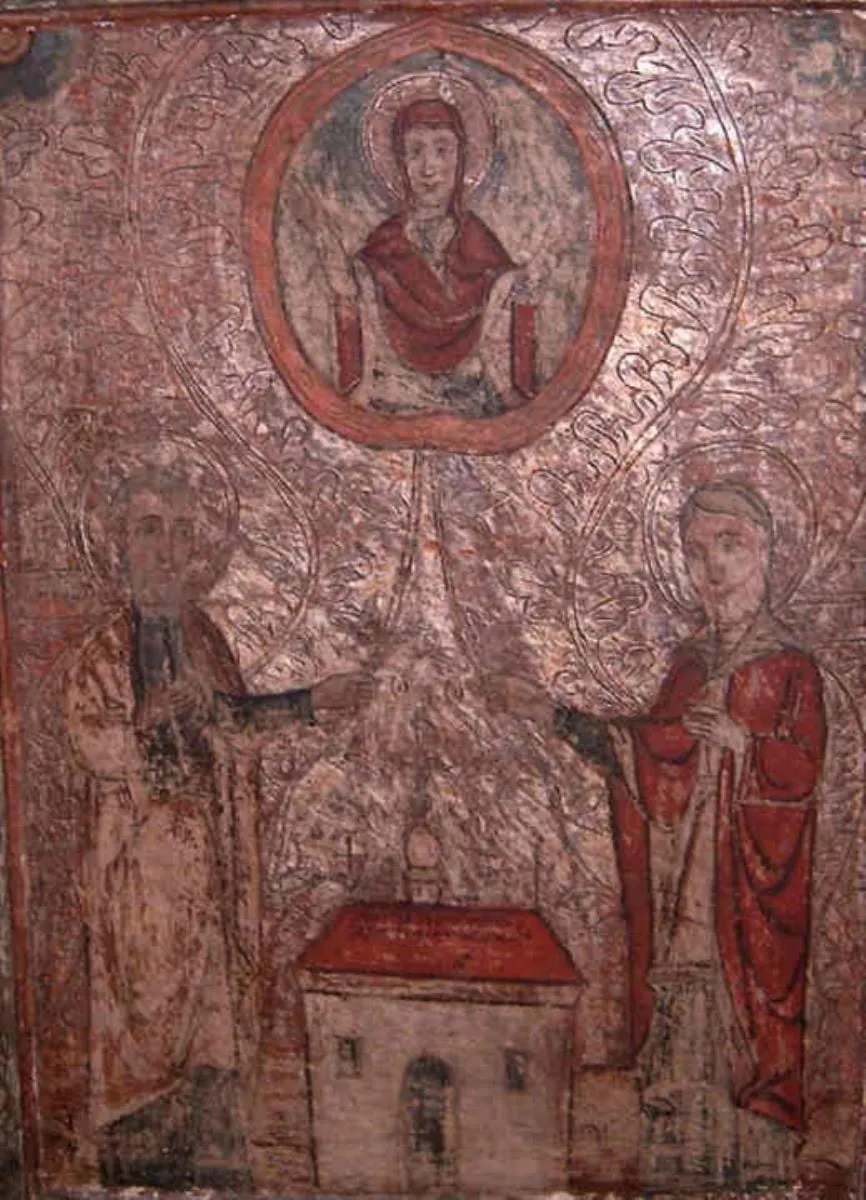
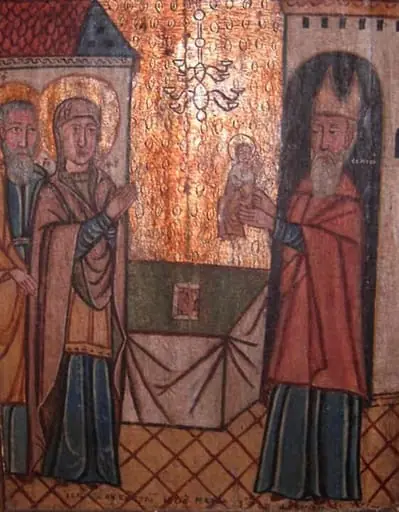
Zămislirea Fecioarei Maria is a drawing by Unknown. It dates from 1850 and is held in the collection of the Maramureș Village Museum. A faint, deteriorated drawing depicts a religious scene with three figures arranged vertically.
About this work
Overview
The palette is limited to muted reds, browns, and grays, with visible signs of aging and surface loss across the composition.
A faint, deteriorated drawing depicts a religious scene with three figures arranged vertically. The central figure, enclosed in a circular frame, is seated and holds an object in her lap. Two standing figures flank her, dressed in elongated robes. The background suggests architectural elements, including a small doorway. The palette is limited to muted reds, browns, and grays, with visible signs of aging and surface loss across the composition.
Subject & Meaning
The central figure within the circle is likely the Virgin Mary, identified by her position and enclosure, common in devotional imagery. The two flanking figures may represent saints or angels, their posture suggesting reverence. The circular frame, a traditional symbol of eternity, emphasizes her spiritual significance. The modest setting and worn condition imply a devotional object, possibly used for private prayer or liturgical display.
Technique & Style
The drawing employs a simplified, almost schematic approach, with minimal modeling and flat forms. Lines are loose and unrefined, suggesting hand-drawn execution rather than polished painting. The use of a circular frame to isolate the central figure reflects medieval and early Renaissance conventions, where symbolic geometry guided visual hierarchy. The subdued colors and fragile state indicate materials of limited durability, typical of humble workshop production.
History & Provenance
The work’s condition suggests it was once part of a larger devotional panel or manuscript, now fragmented. Its deterioration points to prolonged exposure to environmental factors or repeated handling. No documented provenance exists, but its style aligns with regional religious art from the late medieval period in Eastern Europe, likely created for local ecclesiastical use rather than elite patronage.
Context
In late medieval religious art, circular compositions—known as roundels—were frequently used to highlight sacred figures in manuscripts, altarpieces, and wall paintings. This piece fits within a broader tradition where symbolic framing and hierarchical scaling conveyed theological meaning. Its simplicity reflects the resources and training available in smaller communities, where devotional imagery prioritized spiritual clarity over artistic elaboration.
Legacy
Though obscure and incomplete, the drawing preserves a common visual language of medieval piety. Its survival, despite decay, offers insight into how ordinary communities engaged with sacred imagery. The use of the roundel here echoes wider European practices, demonstrating how standardized forms persisted across regions, even in modestly executed works.
Artist & collection

 Domestic Scene
 Giacomo and Cardinal Marco, investing Andrea, Abbot of San Zeno, with his Benefice
 The Nymph of Fontainebleau
 Portrait of a Woman
 Madonna and Child with Saints in the Enclosed Garden
 Venus and Minerva
 Family Group of Four on Sofa
 Wall painting from Room H of the Villa of P. Fannius Synistor at Boscoreale
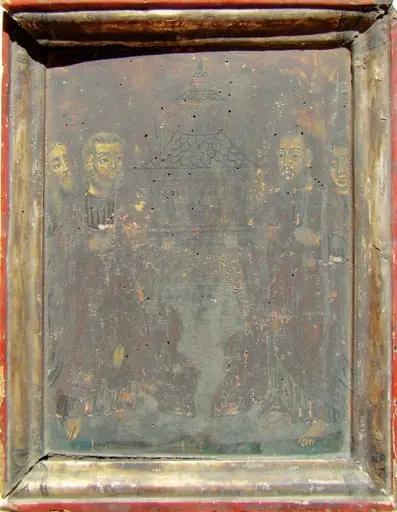 Soborul Sfinților Apostoli
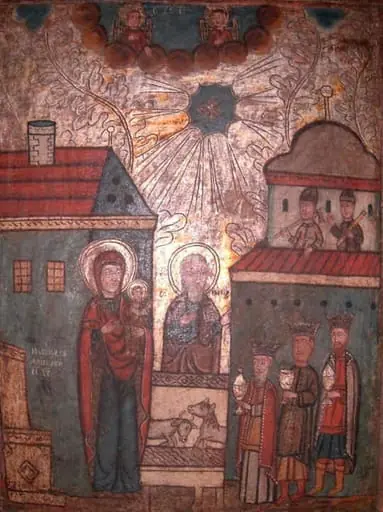 Nașterea Domnului
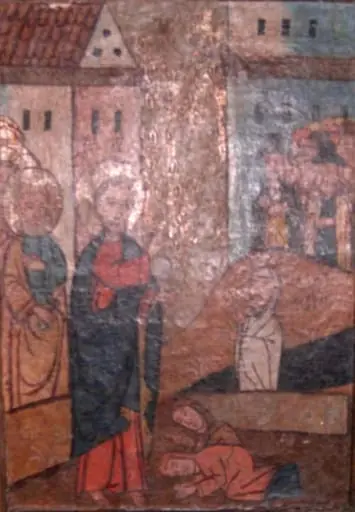 Învierea lui Lazăr
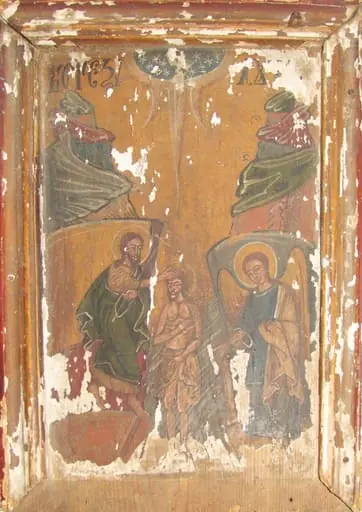 Botezul lui Iisus
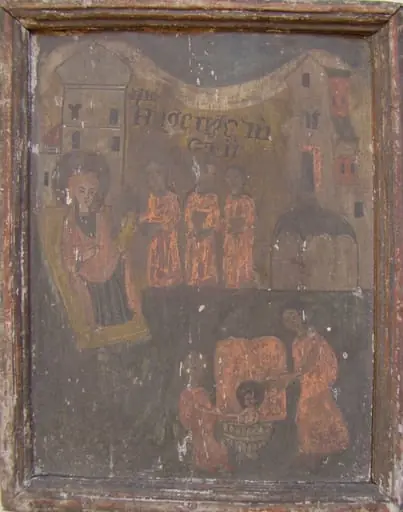 Nașterea Maicii Domnului
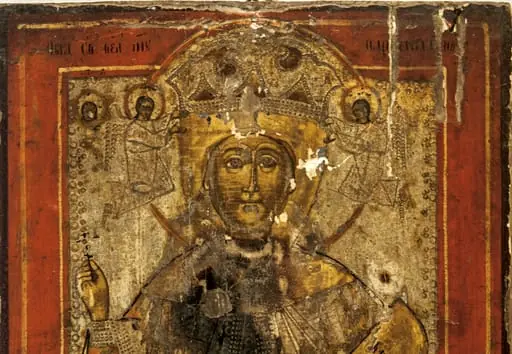 Sfânta Paraschiva este reprezentată frontal, 3/4, încoronată de doi arhangheli (după prescurtările de pe aureole) Nimbul trasat cu roșu depășește linia chenarului și partea superioară a coroanei. Ochii Sfintei, fin trasați, sunt îndreptați spre privitor, impunând un aer sever. Tehnica iluminării treptate cu elemente specifice: accentuarea zonei ochilor, tonurile de pământ ale umbrelor. Tunica decorată cu motive florale ample de culoare deschisă, incizate în stratul de grund. Mantie închisă în față, cu decor linar și bordură lată cu motive geometrice (4 rânduri de puncte și cerculețe incizate în grund). Pe cap, umeri lăsat pe spate, un maforion de culoare deschisă. În mâna dreaptă, Sfânta ține o cruce mică, rusească, în stânga un rotulus desfășurat cu inscripția scrisă în limba slavonă: Cred în unul Dumnezeu… alte inscripții: pe chenar de o parte și de alta a nimbului: Chipul Sf. Mucenițe Parascheva Vineri, în colțul stâng al icoanei IS HR și ѾOН pe nimbul cruciger al lui Iisus, reprezentat ca pe mahrama Veronicăi. Cromatica: Chenar roșu cu două linii galbene și mărginit cu brun; fond - foița metalică decorată prin incizare și ștanțare; Stratul pictural prezintă zgârieturi, arsură.În partea de sus un cui bătut necorespunzător. Pe spate, un bilet, cu ștampila Miliția oraș Deta, cu însemnarea: "Abandonate".
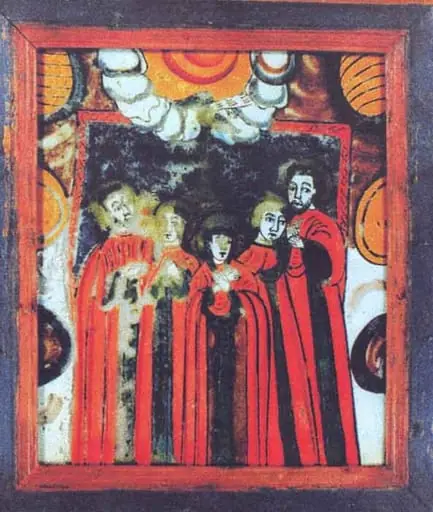 Înălțarea Maicii Domnului
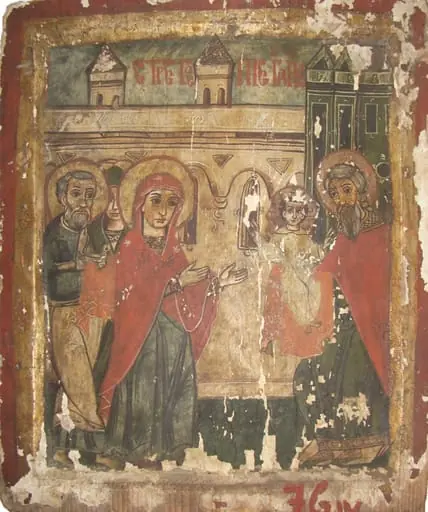 Întâmpinarea Domnului
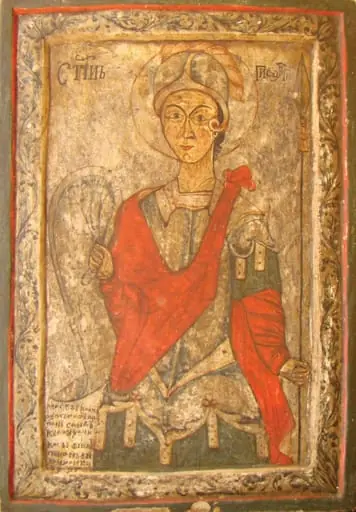 Sf. Gheorghe
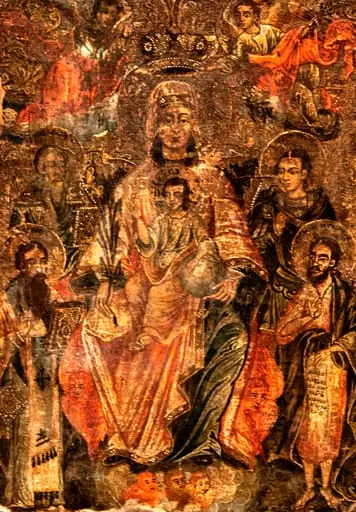 Mainchi
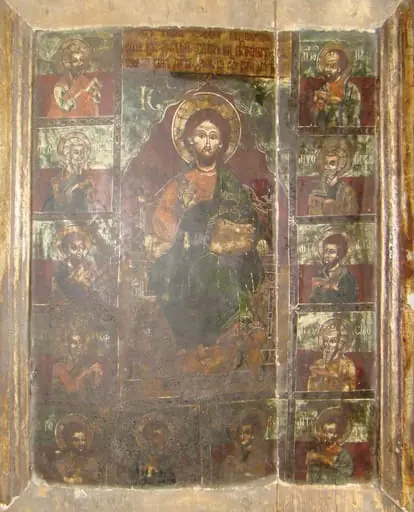 Iisus Hristos Pantocrator, înconjurat de apostoli
 Întâmpinarea Domnului