Artwork
Narasimha
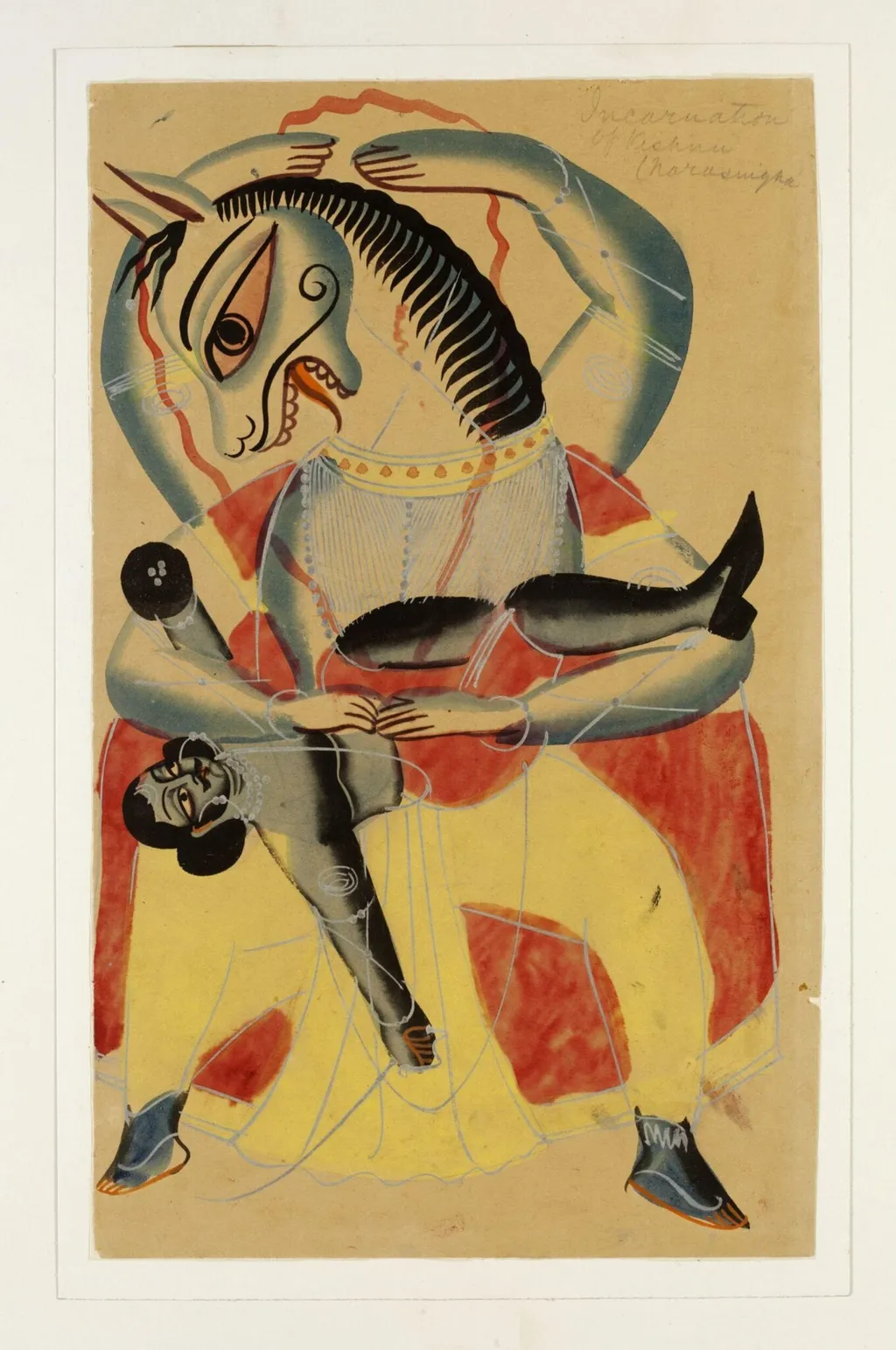
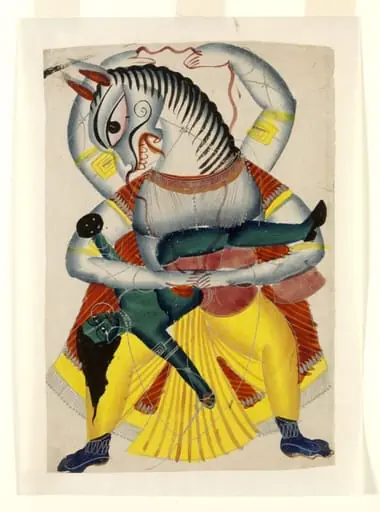
Narasimha is a paint painting by the Patna School of Painting artist Unknown. It dates from 1885 and is held in the collection of the Victoria and Albert Museum.
About this work
Overview
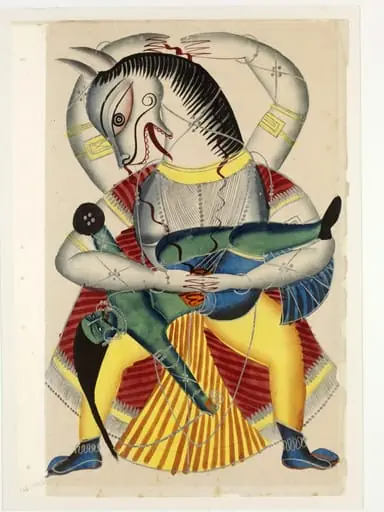
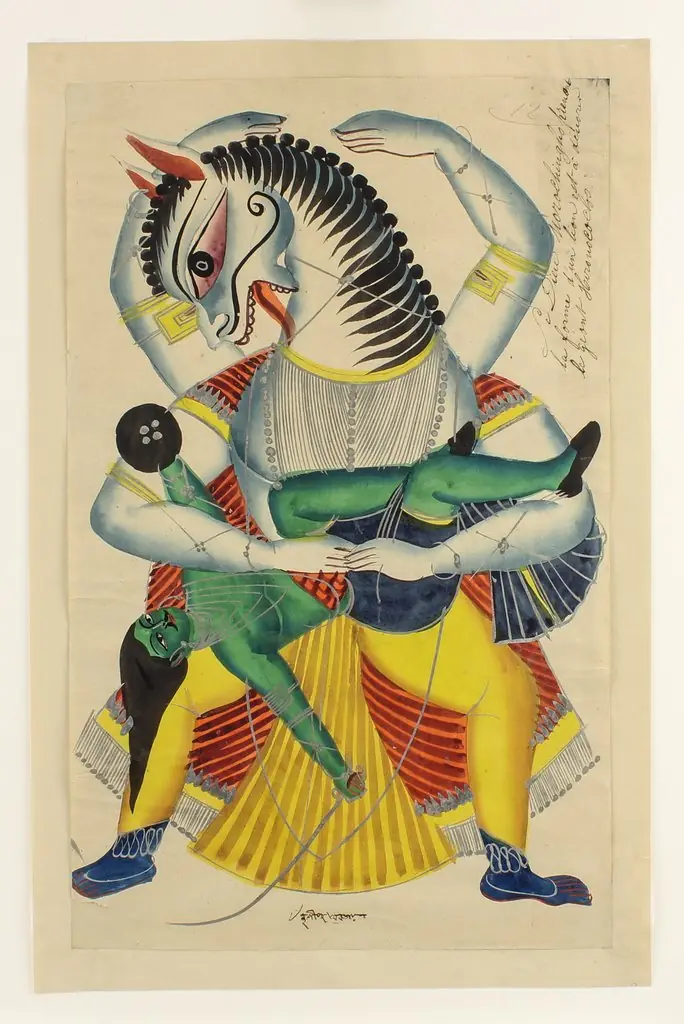
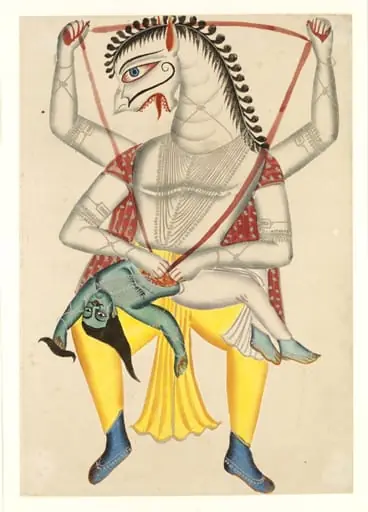
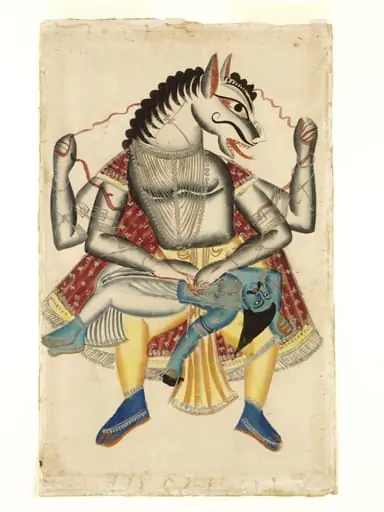
Created in 1885, this opaque watercolor on paper portrays Narasimha, the lion‑headed incarnation of the Hindu deity Vishnu, in the moment of slaying a demon. The composition captures the dramatic climax of the myth, emphasizing the violent act with vivid detail and a stark palette.
Subject & Meaning
The work illustrates the mythological episode in which Narasimha, half man and half lion, destroys the asura Hiranyakashipu to protect his devotee. By focusing on the ferocious gesture and the spilling blood, the painting underscores themes of divine retribution and the triumph of righteousness over tyranny.
Technique & Style
Executed in opaque watercolor, the piece combines the luminous, saturated hues typical of Impressionist painting with the precise, crisp rendering associated with Realist art. This hybrid approach highlights both the kinetic energy of the scene and the anatomical accuracy of the figures, a rare synthesis in 19th‑century depictions of Hindu subjects.
History & Provenance
The watercolor entered the museum’s collection in 1950, donated by Miss M. Steele. It formed part of a series inherited from her mother, a Sanskrit scholar at Cambridge, who had acquired the works in 1894. According to Miss Steele, the series may originally have been assembled by her grandmother, who spent time in India.
Context
During the late 19th century, British interest in Indian art and mythology grew alongside colonial encounters. This painting reflects that cross‑cultural fascination, presenting a traditional Hindu narrative through a Western artistic lens, thereby illustrating the period’s complex exchange of visual and scholarly ideas.
Artist & collection

 Domestic Scene
 Giacomo and Cardinal Marco, investing Andrea, Abbot of San Zeno, with his Benefice
 The Nymph of Fontainebleau
 Portrait of a Woman
 Madonna and Child with Saints in the Enclosed Garden
 Venus and Minerva
 Family Group of Four on Sofa
 Wall painting from Room H of the Villa of P. Fannius Synistor at Boscoreale