Artwork
Narasimha
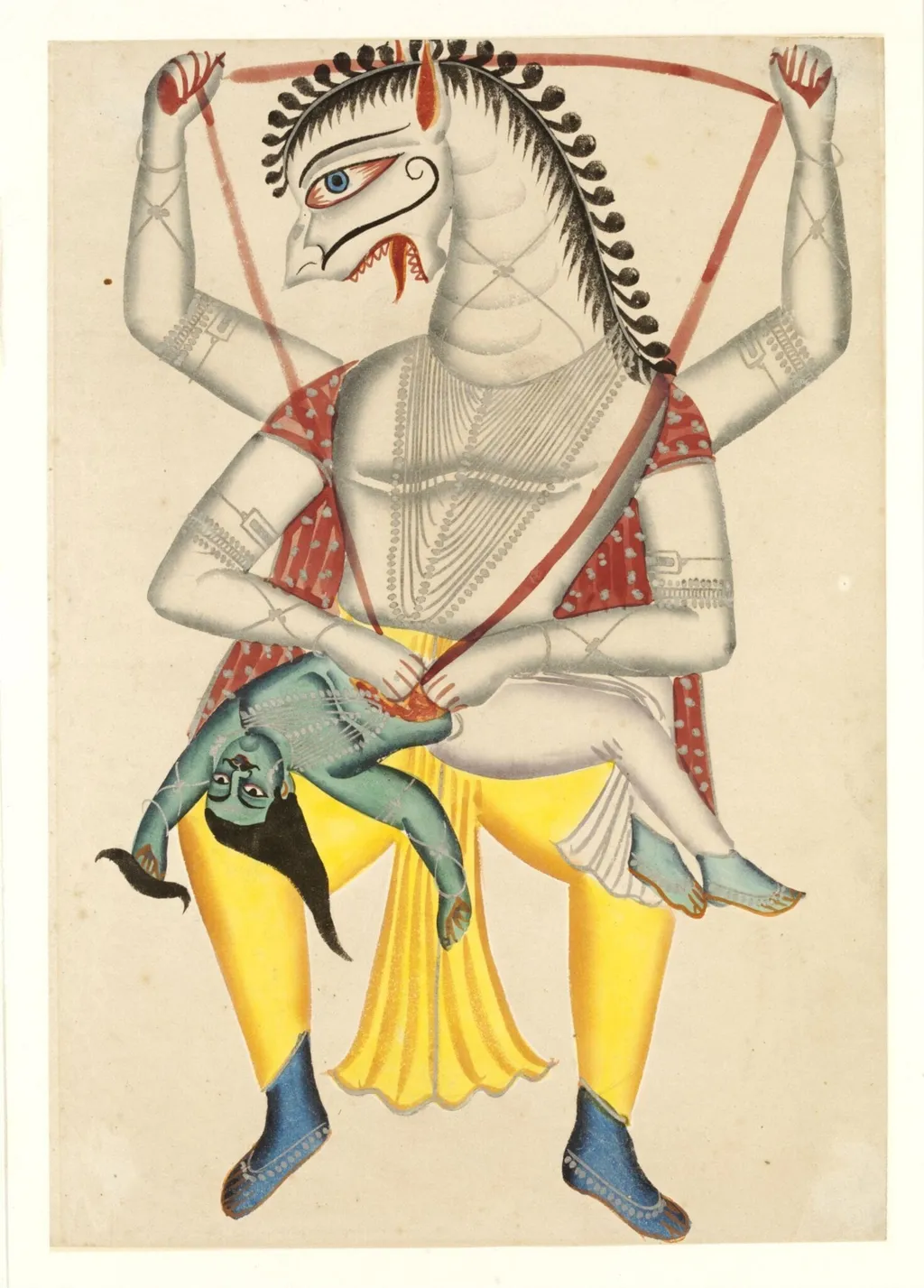
Narasimha is a paint painting by the Patna School of Painting artist Unknown. It dates from 1830 and is held in the collection of the Victoria and Albert Museum.
About this work
Overview
The work employs tin alloy accents to highlight decorative elements, a technique common in regional Indian painting traditions of the period.
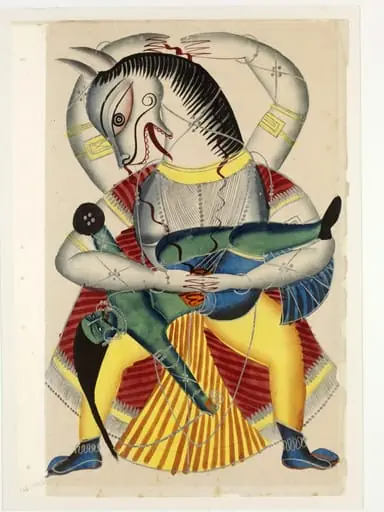
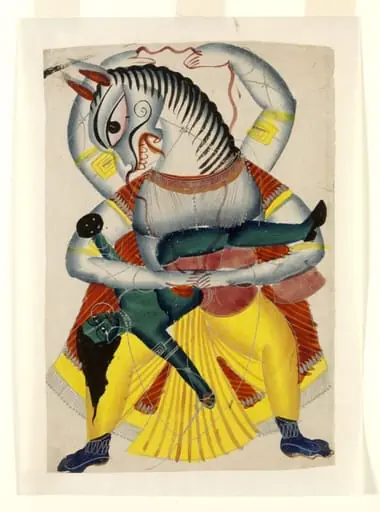
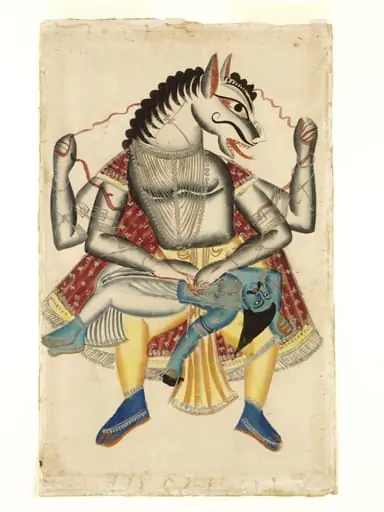
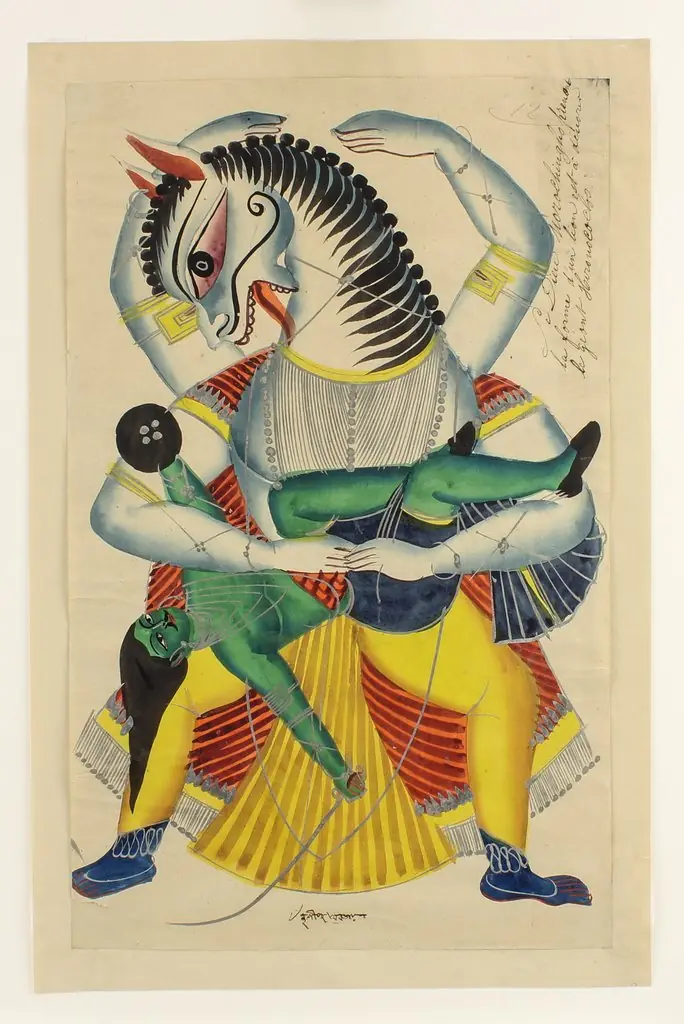
This opaque watercolour painting on paper, dated circa 1830, portrays Narasimha, the fourth avatar of Vishnu, in a dynamic confrontation with the demon king Hiranyakasipu. The work employs tin alloy accents to highlight decorative elements, a technique common in regional Indian painting traditions of the period. The composition is tightly focused, with no background distractions, emphasizing the intensity of the mythic moment.
Subject & Meaning
Narasimha, depicted with a lion’s head and human torso, embodies divine intervention to restore cosmic order. He tears apart Hiranyakasipu, a tyrant who defied the gods, symbolizing the triumph of dharma over arrogance. The demon’s green skin and ornate jewelry mark his moral corruption, while Narasimha’s fierce expression and muscular form convey unstoppable divine wrath.
Technique & Style
The artist used opaque watercolour with deliberate flatness and bold outlines to heighten emotional impact. Tin alloy was applied selectively to jewelry and adornments, adding luminous contrast against the pigments. The stylized mane, sharp claws, and exaggerated musculature reflect a regional aesthetic that prioritized symbolic power over naturalism, typical of early 19th-century Pahari or Rajasthani workshops.
History & Provenance
Created around 1830, the painting likely originated in a north Indian court atelier, possibly in the Punjab Hills or Rajasthan, where devotional imagery was routinely commissioned. Its preservation suggests it was valued within a religious or royal collection, though its specific early ownership remains undocumented. The use of tin alloy points to a workshop with access to specialized materials.
Context
This work emerged during a period when Hindu devotional art flourished under regional patronage, even as colonial influence grew. Artists continued to illustrate Puranic narratives with heightened drama, catering to both spiritual devotion and aesthetic appreciation. The emphasis on emotional intensity and symbolic color aligns with broader trends in Indian miniature painting of the era.
Legacy
The painting exemplifies how mythological themes were sustained in Indian visual culture through precise technique and symbolic language. Its preservation in institutional collections today reflects its role as a cultural artifact, offering insight into the visual theology and artisanal practices of early 19th-century India.
Artist & collection

 Domestic Scene
 Giacomo and Cardinal Marco, investing Andrea, Abbot of San Zeno, with his Benefice
 The Nymph of Fontainebleau
 Portrait of a Woman
 Madonna and Child with Saints in the Enclosed Garden
 Venus and Minerva
 Family Group of Four on Sofa
 Wall painting from Room H of the Villa of P. Fannius Synistor at Boscoreale