Artwork
Nau Nihal Singh
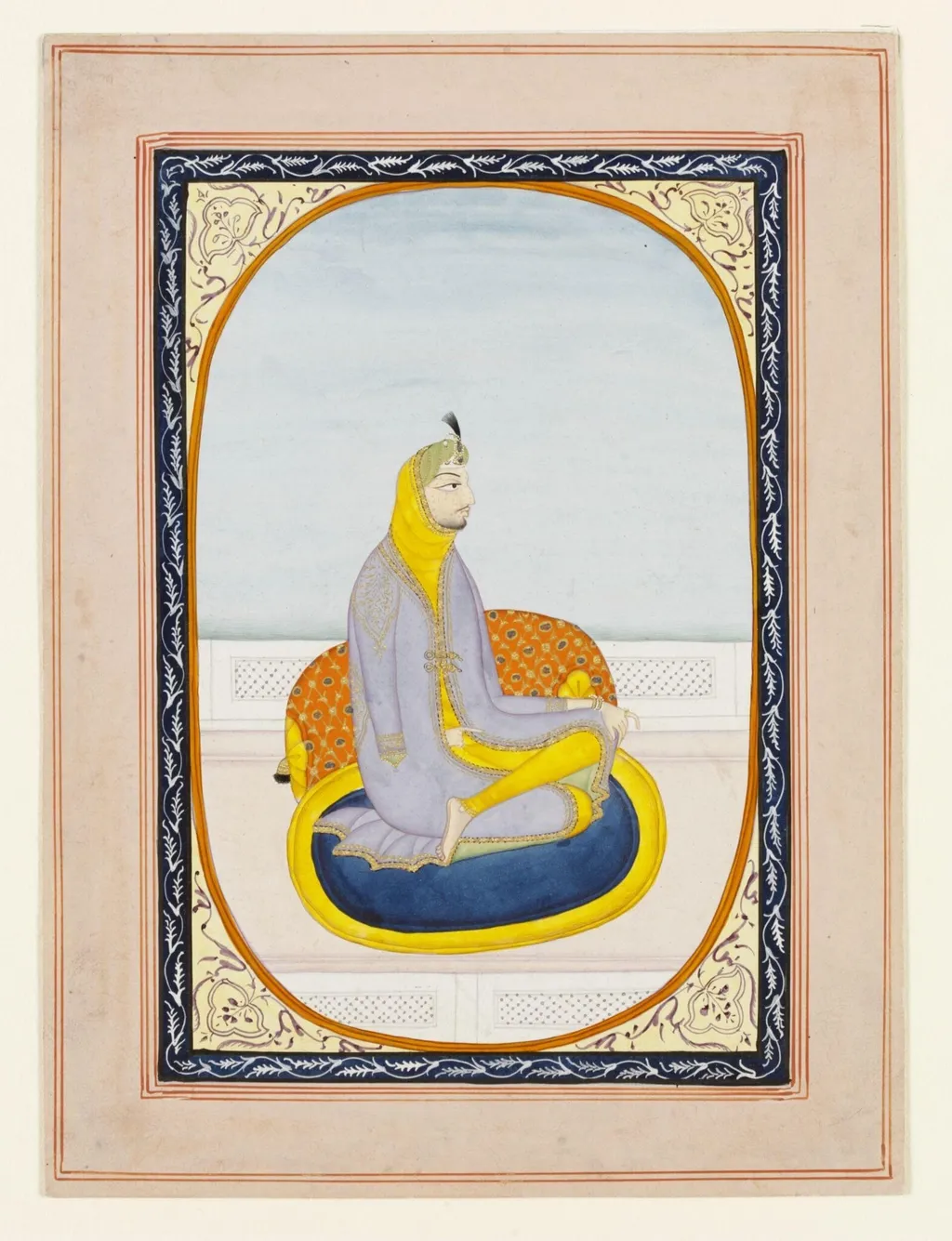
Nau Nihal Singh is a paint painting by the Patna School of Painting artist Unknown. It dates from 1840 and is held in the collection of the Victoria and Albert Museum.
About this work
Overview
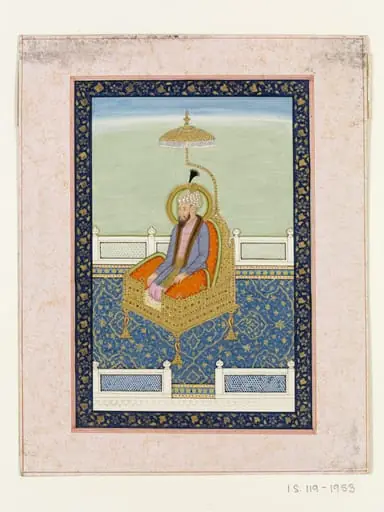
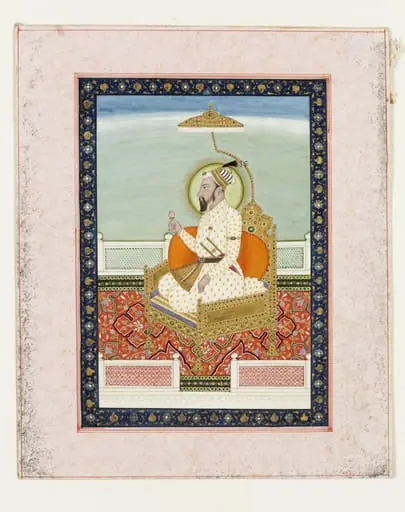
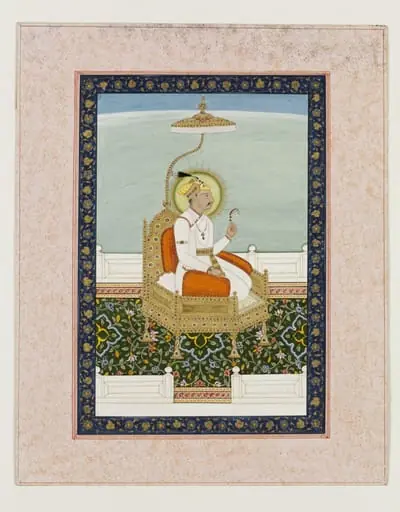
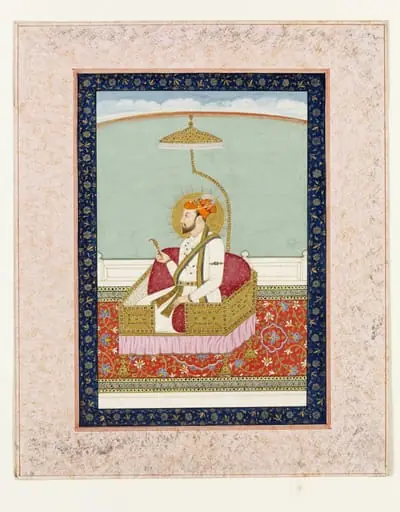
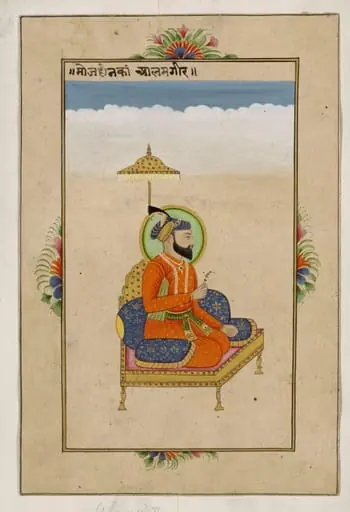
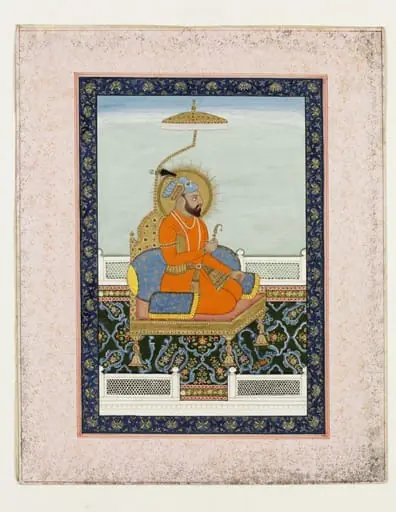
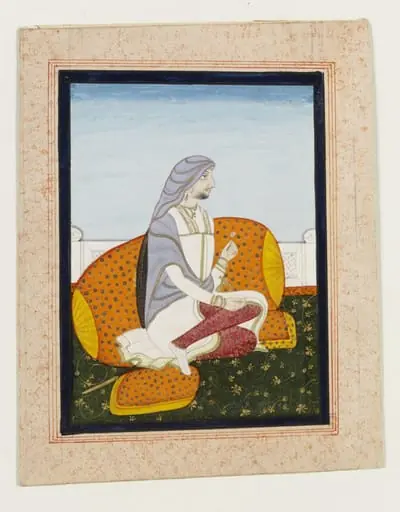
This portrait depicts Nau Nihal Singh, the grandson of Maharaja Ranjit Singh and heir to the Sikh Empire, painted shortly before his death in 1840.
This portrait depicts Nau Nihal Singh, the grandson of Maharaja Ranjit Singh and heir to the Sikh Empire, painted shortly before his death in 1840. Created between late 1839 and November 1840, the work was once in the collection of Queen Mary of England. The artist remains anonymous, but the rendering captures a distinct presence, likely produced in Lahore during a period of intense political instability within the Sikh court.
Subject & Meaning
Nau Nihal Singh, shown at age nineteen, is portrayed with quiet dignity, dressed in a white turban and a robe edged with gold, seated on a red cushion. His gaze is direct and composed, suggesting both royal bearing and personal gravity. The plain background focuses attention on his figure, emphasizing his role as a future sovereign amid rising court tensions. The painting serves as a visual record of a prince whose life was cut short by violence following his grandfather’s death.
Technique & Style
The painting employs a restrained palette and soft modeling to convey texture and form, with particular attention to the folds of fabric and the sheen of gold trim. The face is rendered with subtle gradations of tone, lending a lifelike presence that contrasts with the flat, unadorned background. This approach reflects a blend of Punjabi portraiture traditions and emerging influences from European naturalism, likely shaped by artists working in the Lahore court during the 1830s.
History & Provenance
The painting entered British royal collections after being acquired from the Lahore court, possibly during or after the annexation of the Punjab in 1849. Inscriptions on related works confirm a production window from October 1839 to November 1840, aligning with Nau Nihal Singh’s final months. It was later held by Queen Mary, wife of King George V, before being transferred to the Victoria and Albert Museum, where it remains today.
Context
Nau Nihal Singh’s death followed a pattern of violent succession struggles within the Sikh Empire after Ranjit Singh’s passing. His father, Kharak Singh, was poisoned, and Nau Nihal himself died under suspicious circumstances when a gateway collapsed during his return from funeral rites—later deemed an assassination. The painting captures a moment of fragile stability before the empire’s rapid decline and British intervention.
Legacy
As one of the few surviving portraits of Nau Nihal Singh, this work offers a rare visual testament to a prince whose brief tenure symbolized the end of an era. Its survival in a major British institution underscores the colonial appropriation of Sikh cultural artifacts. The portrait endures not as propaganda, but as a quiet, human record of a life interrupted by political turmoil.
Artist & collection

 Domestic Scene
 Giacomo and Cardinal Marco, investing Andrea, Abbot of San Zeno, with his Benefice
 The Nymph of Fontainebleau
 Portrait of a Woman
 Madonna and Child with Saints in the Enclosed Garden
 Venus and Minerva
 Family Group of Four on Sofa
 Wall painting from Room H of the Villa of P. Fannius Synistor at Boscoreale