Artwork
Nau Nihal Singh
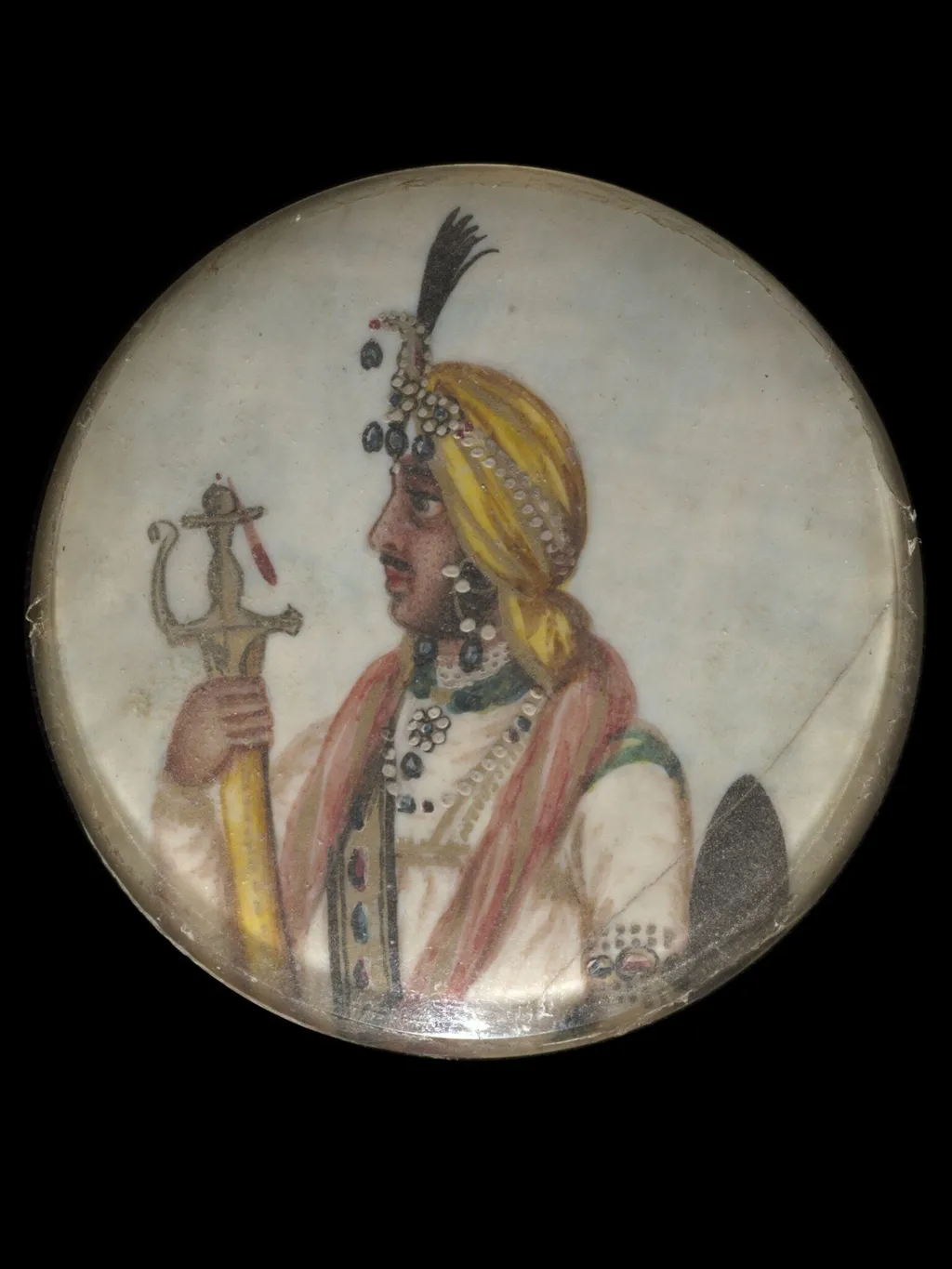
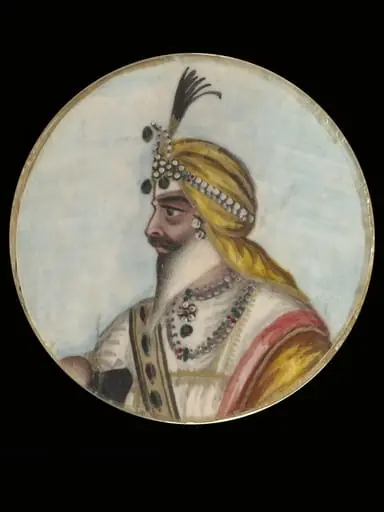
Nau Nihal Singh is a paint painting by the Patna School of Painting artist Unknown. It dates from 1850 and is held in the collection of the Victoria and Albert Museum.
About this work
The man's attire and the style of the painting suggest that it may be a portrait of a royal or noble figure from the 19th century.
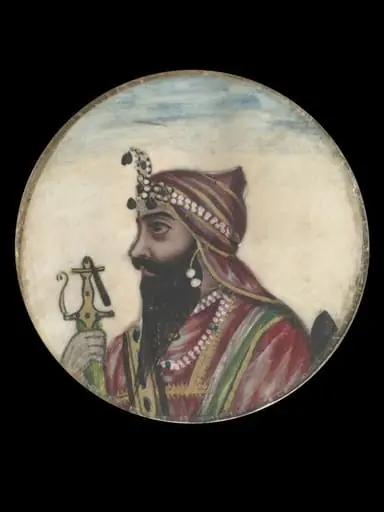
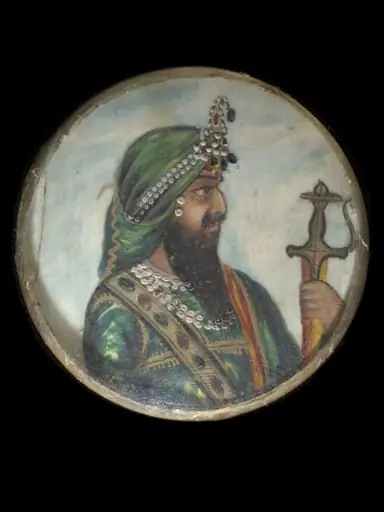
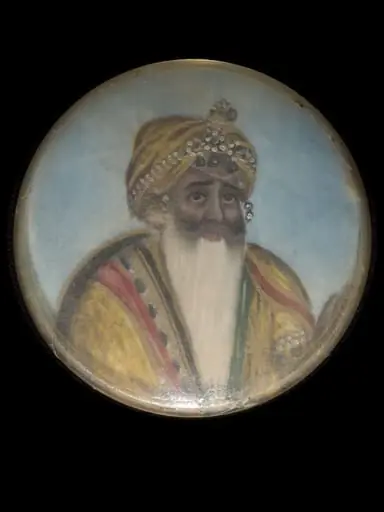
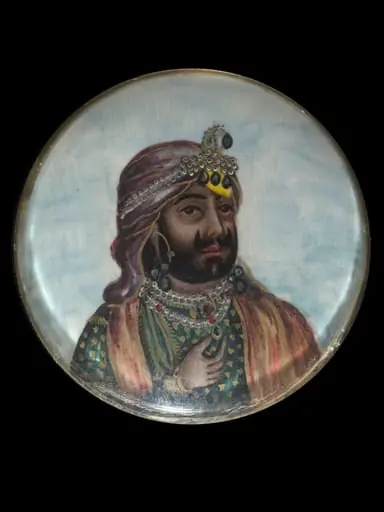
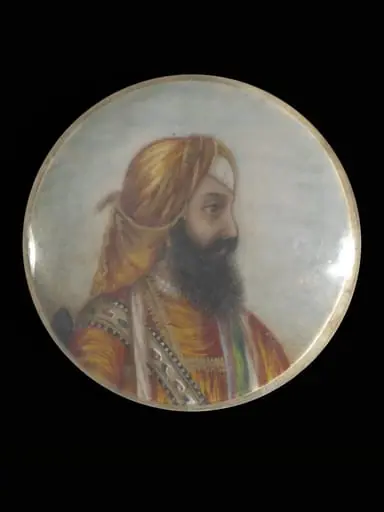
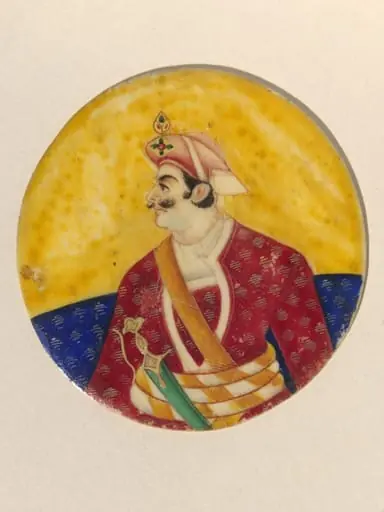
This painting depicts a man in profile, wearing a yellow turban adorned with a peacock feather and jewels. He is dressed in a white robe with a red sash and holds a sword in his right hand. The background of the painting is a plain white.
The man's attire and the style of the painting suggest that it may be a portrait of a royal or noble figure from the 19th century. The level of detail and realism in the painting also indicate that it was created by a skilled artist.
To learn more about the artistic style and techniques used in this painting, explore the Impressionism movement.
Overview
This miniature portrait on ivory captures Nau Nihal Singh, a Sikh nobleman of the early 19th century, rendered in profile facing right. Executed with fine brushwork, the painting emphasizes his regal bearing through precise detailing of costume and accessories. The limited palette and smooth surface reflect the tradition of courtly portraiture in the Punjab region during the Sikh Empire’s peak.
Subject & Meaning
Nau Nihal Singh, son of Maharaja Kharak Singh and heir to the Sikh throne, is depicted as a warrior-noble. His attire—white robe, red sash, and jeweled turban with a peacock feather—signals status and lineage. The sword in his right hand and the shield on his back underscore his martial role, while the restrained composition conveys dignity rather than grandeur, typical of Sikh aristocratic portraiture.
Technique & Style
The portrait employs ivory as a support, a material favored for its luminous surface in South Asian miniature painting. Fine brushstrokes define textures of fabric and metal, while subtle gradations in color model the face and hands. The flat, unadorned background focuses attention on the figure, aligning with regional conventions that prioritized clarity and symbolic detail over illusionistic space.
History & Provenance
Created during the 1830s, likely in Lahore or Amritsar, the portrait was probably commissioned by the Sikh court to affirm Nau Nihal Singh’s position as crown prince. After his death in 1840 under mysterious circumstances, such images became rare. The painting’s survival suggests it was preserved within royal circles or later collected by British officials during the annexation of the Punjab.
Context
This work emerges from a period when Sikh rulers blended Mughal artistic traditions with local Punjabi aesthetics. Portraits like this served political ends, reinforcing authority through visual representation. Unlike European oil portraits, these miniatures were intimate objects, often carried or displayed in private settings, reflecting a distinct cultural approach to power and identity.
Legacy
The portrait stands as a rare surviving example of Sikh court portraiture from the early 19th century. It contributes to scholarly understanding of how regional elites used visual culture to assert legitimacy amid political upheaval. Though overshadowed by larger imperial narratives, such works remain vital to reconstructing the visual language of the Sikh aristocracy before colonial reorganization.
Artist & collection

 Domestic Scene
 Giacomo and Cardinal Marco, investing Andrea, Abbot of San Zeno, with his Benefice
 The Nymph of Fontainebleau
 Portrait of a Woman
 Madonna and Child with Saints in the Enclosed Garden
 Venus and Minerva
 Family Group of Four on Sofa
 Wall painting from Room H of the Villa of P. Fannius Synistor at Boscoreale