Artwork
Har Day
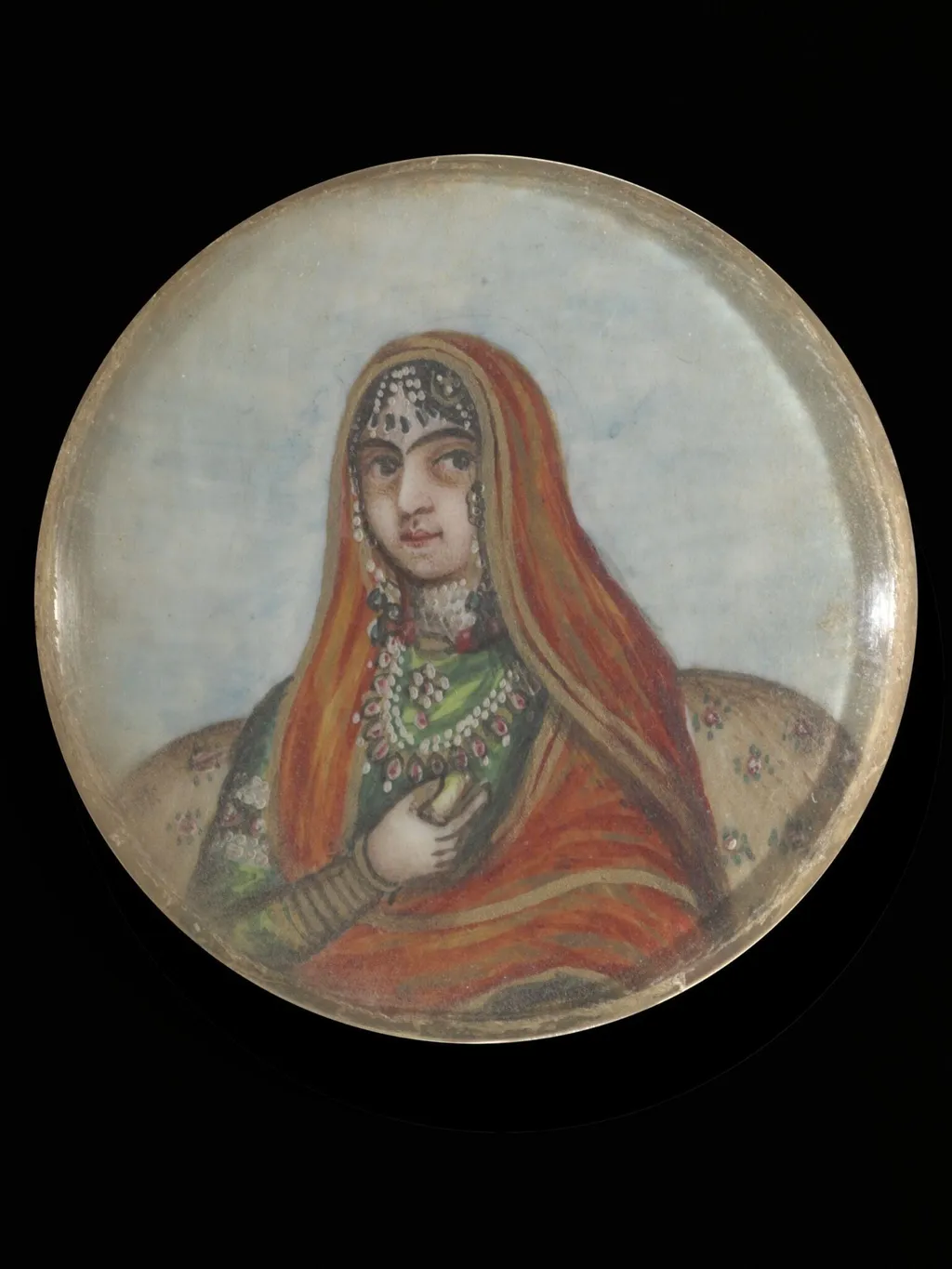
Har Day is a paint painting by the Impressionist artist Unknown. It dates from 1850 and is held in the collection of the Victoria and Albert Museum.
About this work
Overview
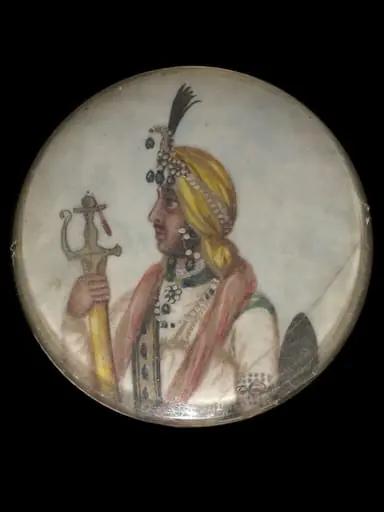
This miniature portrait on ivory captures Har Day, the Rani of Ranjit Singh, in a three-quarter pose facing left. Rendered with fine detail on a small scale, the work emphasizes her presence against a muted pale background. The medium’s delicacy enhances the intimacy of the depiction, typical of courtly portraiture in early 19th-century Punjab.
Subject & Meaning
Har Day, a royal consort, is portrayed with quiet dignity, her posture and attire signaling status rather than grandeur.
Har Day, a royal consort, is portrayed with quiet dignity, her posture and attire signaling status rather than grandeur. The inclusion of a small object in her hands suggests personal or ritual significance, while her adornments—beaded necklace, headpiece, and embroidered garments—convey wealth and cultural identity. The image functions as both likeness and symbol of noble femininity within the Sikh court.
Technique & Style
Executed in watercolor on ivory, the painting employs precise brushwork to render intricate textile patterns and delicate beadwork. The vibrant greens, purples, and reds of her clothing contrast subtly with the soft, neutral background, directing focus to her form. The fine detail in embroidery and jewelry reflects the influence of both indigenous Punjabi and Mughal miniature traditions.
History & Provenance
Created during the reign of Maharaja Ranjit Singh, the painting likely originated in his Lahore court, where artists produced intimate portraits of royalty. It entered the Victoria and Albert Museum’s collection through documented acquisitions of Sikh-era artifacts, preserving a rare visual record of courtly women often omitted in larger historical narratives.
Context
In early 19th-century Punjab, portraiture on ivory was a luxury practice reserved for elite figures. While European influences introduced new techniques, local artisans retained traditional methods of embellishment. This portrait reflects a cultural moment where Sikh royalty blended indigenous aesthetics with refined artistic forms to assert identity and authority.
Legacy
The portrait remains a key example of Sikh court art, offering insight into the visual culture of royal women during a period of political transformation. Its preservation in the Victoria and Albert Museum ensures continued scholarly access, contributing to broader recognition of regional artistic practices beyond mainstream colonial narratives.
Artist & collection

 Domestic Scene
 Giacomo and Cardinal Marco, investing Andrea, Abbot of San Zeno, with his Benefice
 The Nymph of Fontainebleau
 Portrait of a Woman
 Madonna and Child with Saints in the Enclosed Garden
 Venus and Minerva
 Family Group of Four on Sofa
 Wall painting from Room H of the Villa of P. Fannius Synistor at Boscoreale
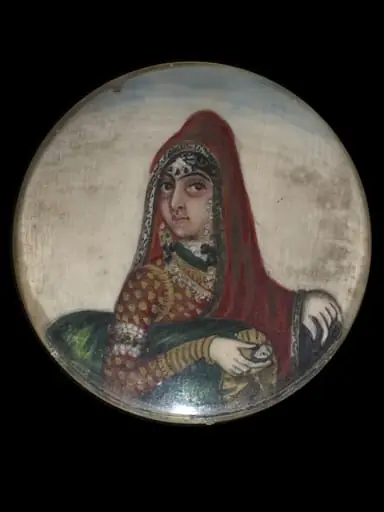 Rani Jindan
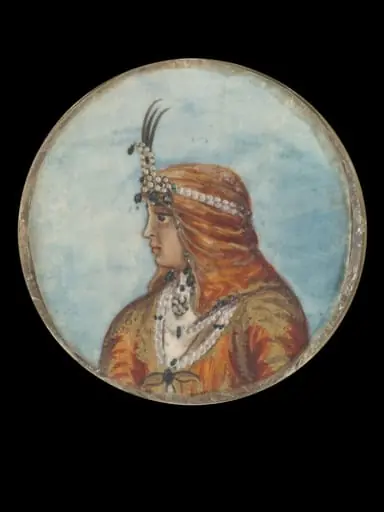 Pratap Singh
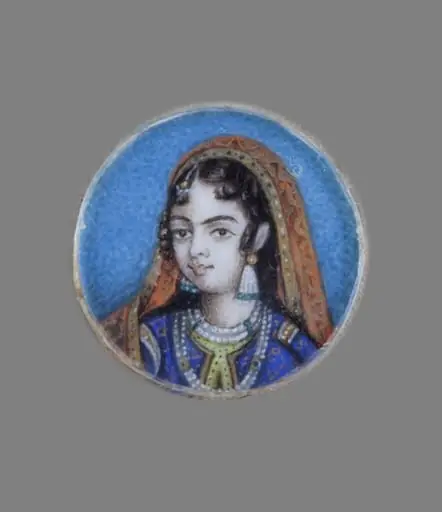 One of twelve tiny paintings depicting Mughal emperors, Afghan and Sikh nobles, and Mughal ladies.
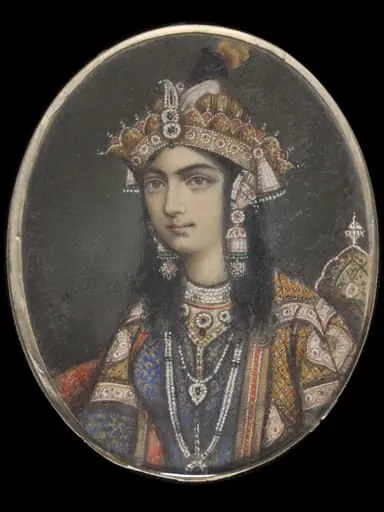 One of eleven bust portraits depicting Mughal ladies and princesses.
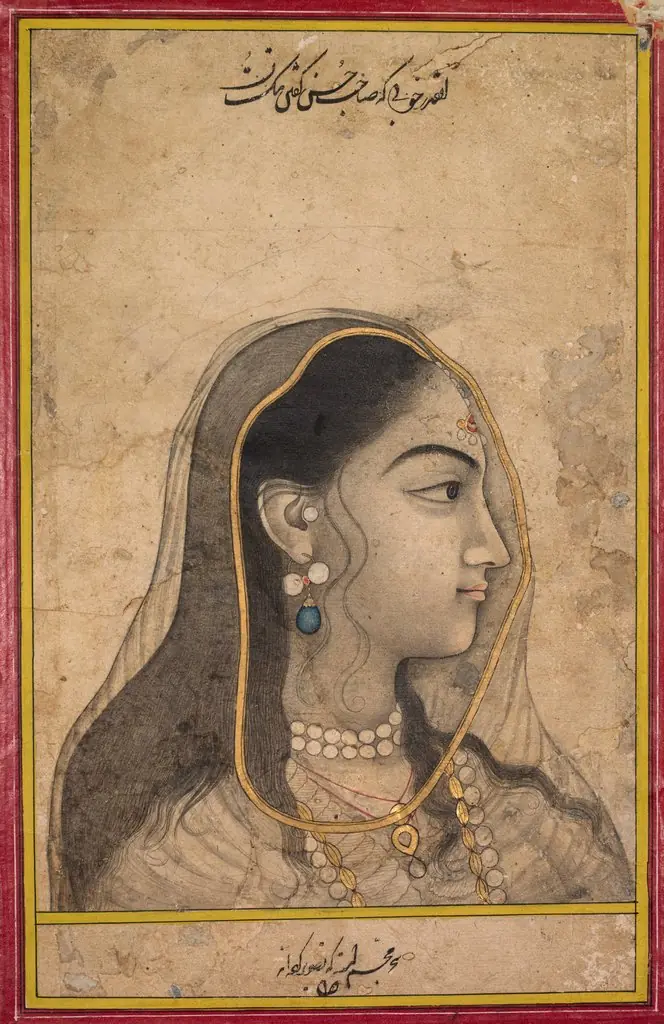 Head of a Beauty
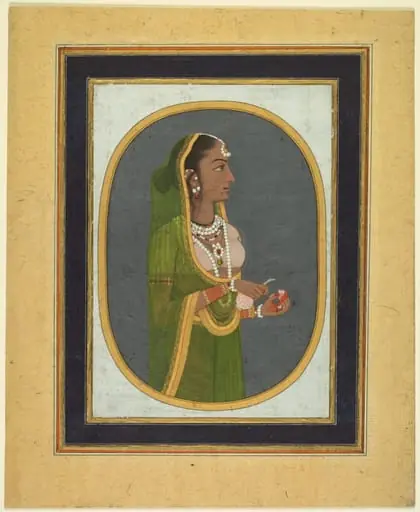 Court Lady Pouring Wine (recto)
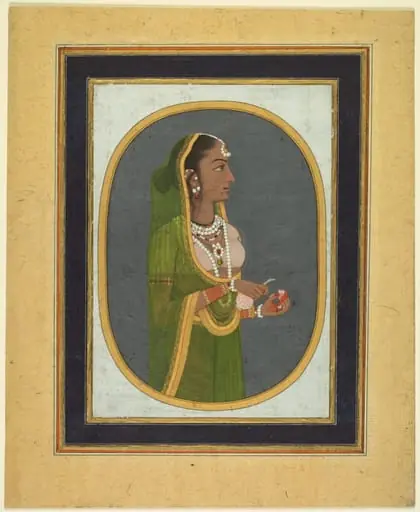 Court Lady Pouring Wine (recto); Calligraphy of Lyrical Quatrains (verso)
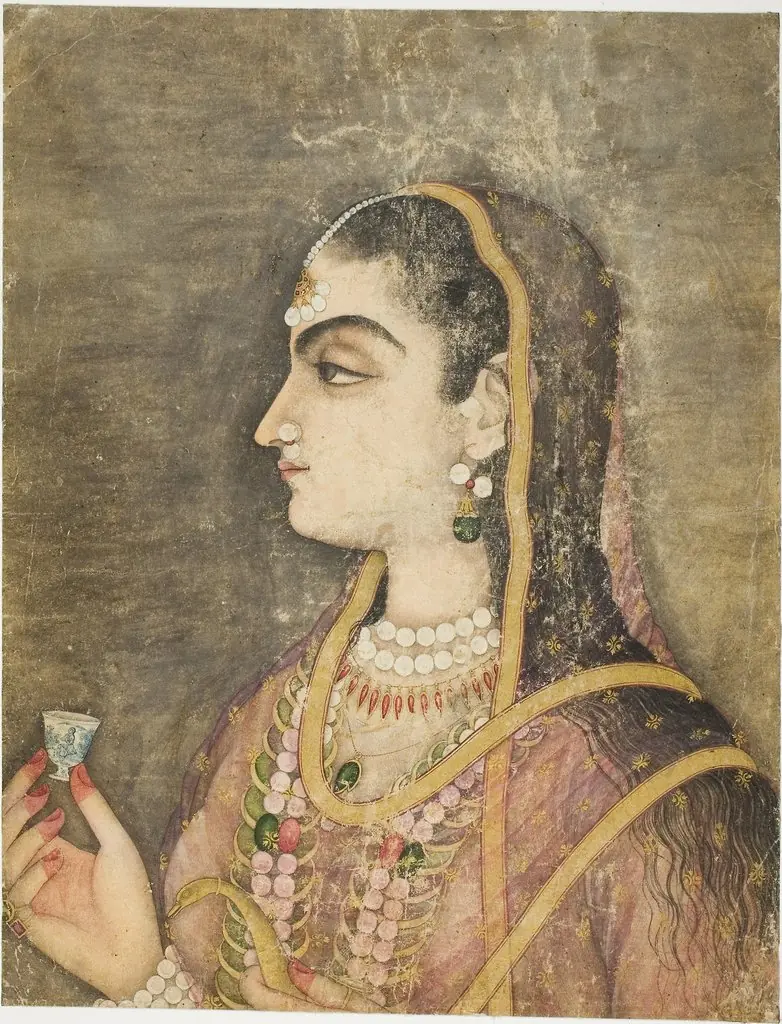 Portrait of a Princess
 Untitled
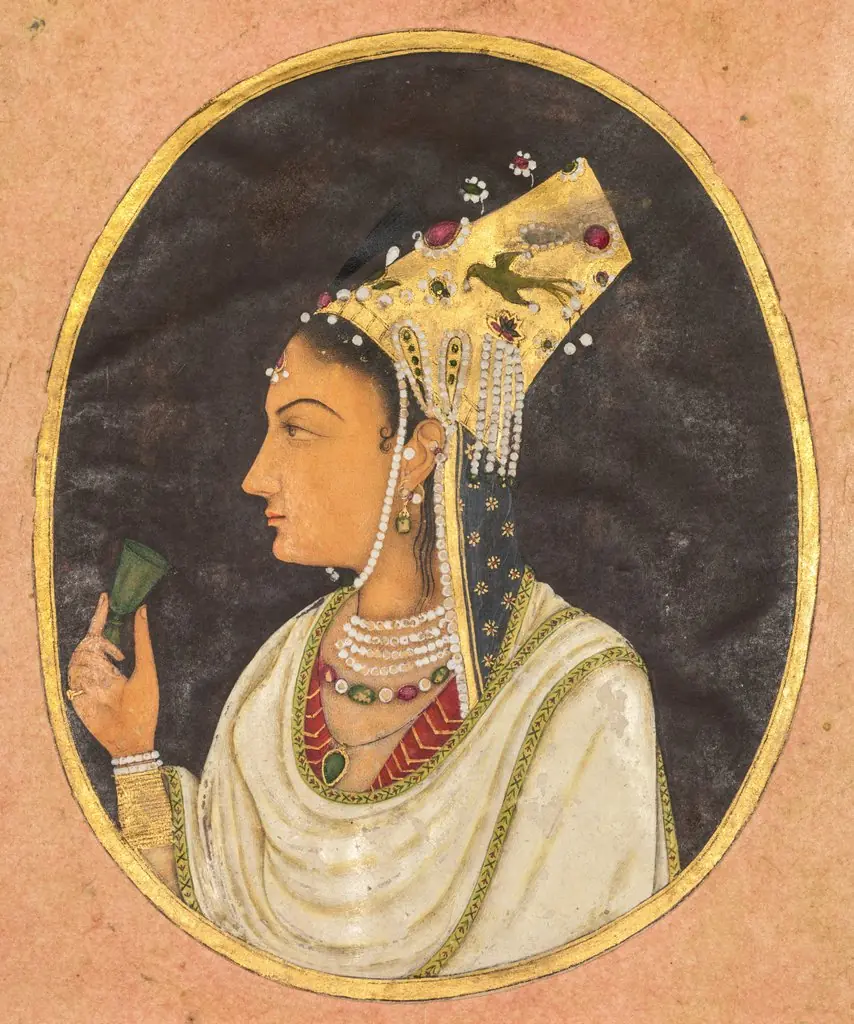 Oval portrait of a woman in a Chaghtai hat
 Dalip Singh
 Nau Nihal Singh