Artwork
Îngroparea lui Iisus (Prohodul Domnului)
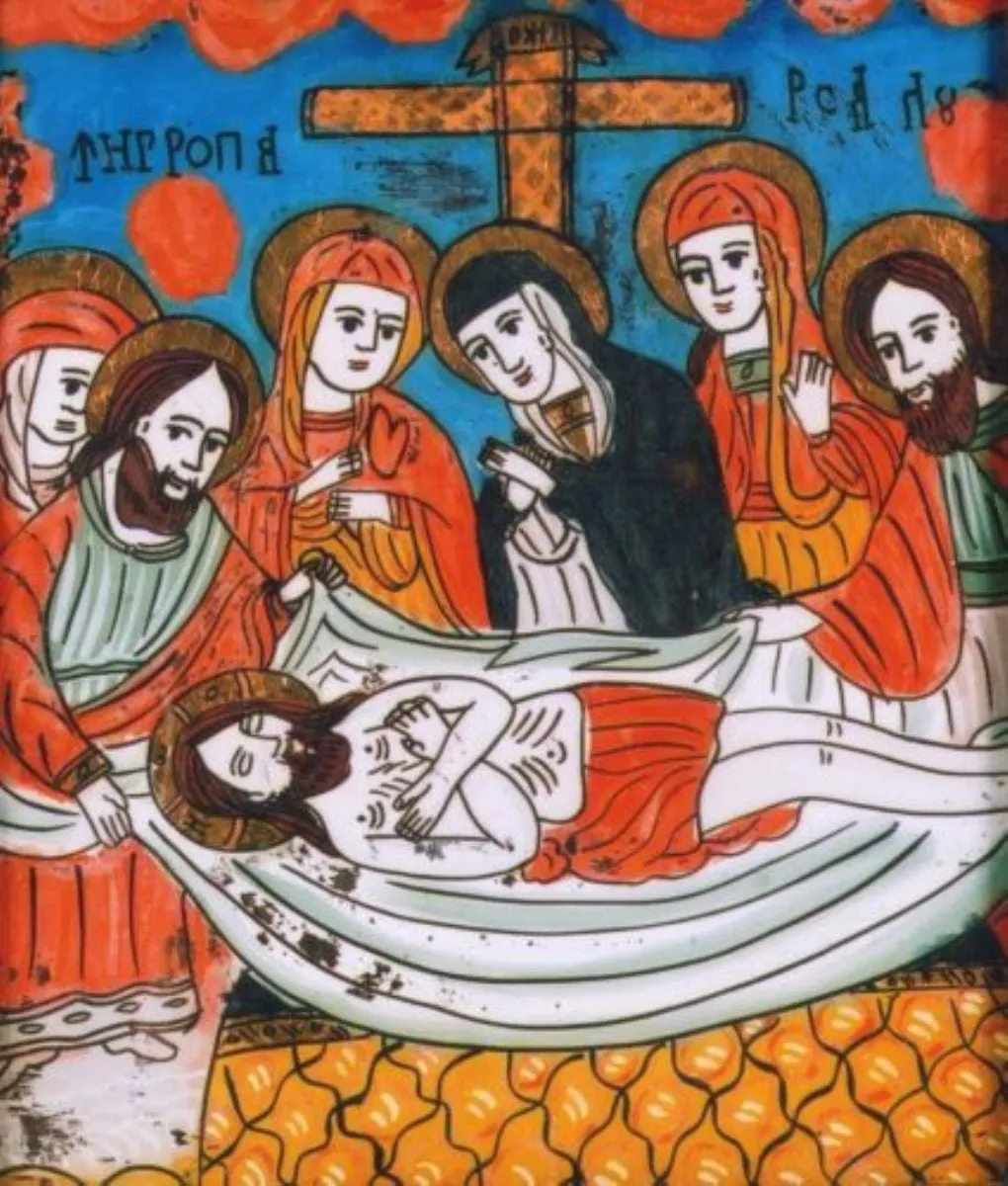
Îngroparea lui Iisus (Prohodul Domnului) is a drawing by Unknown. It dates from 1850 and is held in the collection of the Bran National Museum. This drawing depicts the burial of Jesus, rendered in a stylized, non-naturalistic manner.
About this work
Overview
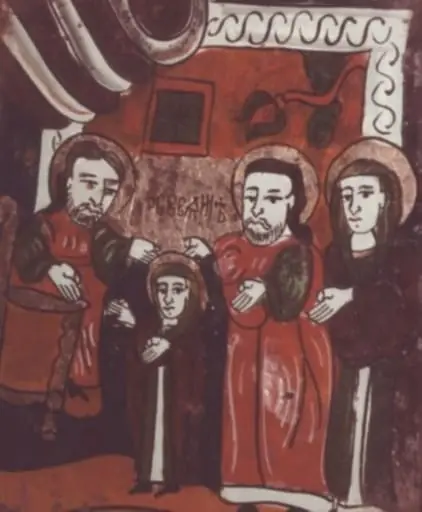
This drawing depicts the burial of Jesus, rendered in a stylized, non-naturalistic manner. Six figures in bright orange robes stand on a boat, surrounding a wrapped body. The composition is flat, with no attempt at perspective or shading. Above, a blue sky contains a cross and inscriptions in an unfamiliar script, suggesting a liturgical or symbolic context rather than a literal scene.
Subject & Meaning
The figures, though simplified, convey solemnity through their grouped posture and careful handling of the body.
The scene illustrates the entombment of Christ, a moment central to Christian liturgy. The figures, though simplified, convey solemnity through their grouped posture and careful handling of the body. The boat may symbolize the Church or a vessel of transition, while the cross and foreign script hint at sacred text or divine authority, reinforcing the ritual’s spiritual weight over historical accuracy.
Technique & Style
The artist employs flat, unmodulated colors and avoids shading or cross-hatching, creating a two-dimensional surface. Forms are outlined with clarity, and facial features are reduced to basic shapes. This deliberate simplification aligns with devotional iconography, prioritizing symbolic presence over realism. The bold orange robes contrast sharply with the pale sky, directing focus to the central act of burial.
History & Provenance
The work is attributed to a religious artist or community within the Eastern Orthodox tradition, likely from the 19th or early 20th century. Its style echoes folk iconography, where liturgical themes were rendered in accessible, repetitive forms. The drawing may have been used in private devotion or as a preparatory sketch for a larger icon, though its exact origin remains undocumented.
Context
In Orthodox Christian practice, the burial of Christ is commemorated during Holy Week with processions and hymns. This image reflects a visual tradition where sacred events are depicted with symbolic elements—boats, crosses, and untranslated script—rather than naturalistic settings. The lack of depth and perspective aligns with centuries-old iconographic conventions meant to evoke spiritual presence, not physical space.
Legacy
This drawing exemplifies how devotional imagery in rural or lesser-documented communities preserved theological narratives through simplified forms. Its stylistic choices—flat color, symbolic composition, and scriptural elements—connect it to broader Orthodox visual culture. Though not widely known, it contributes to understanding how sacred stories were transmitted visually beyond formal ecclesiastical art.
Artist & collection
 Domestic Scene
 Giacomo and Cardinal Marco, investing Andrea, Abbot of San Zeno, with his Benefice
 The Nymph of Fontainebleau
 Portrait of a Woman
 Madonna and Child with Saints in the Enclosed Garden
 Venus and Minerva
 Family Group of Four on Sofa
 Wall painting from Room H of the Villa of P. Fannius Synistor at Boscoreale
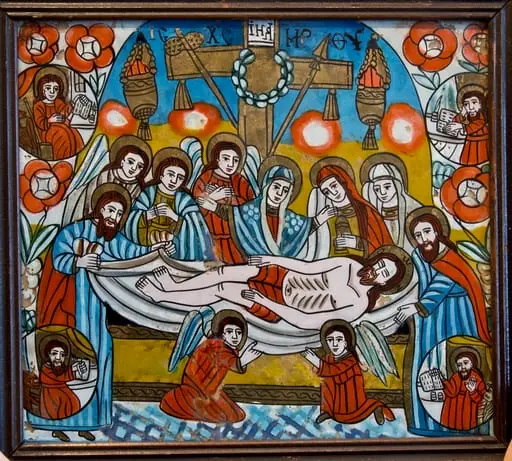 Punerea în mormânt; (Îngroparea lui Iisus, Prohodul)
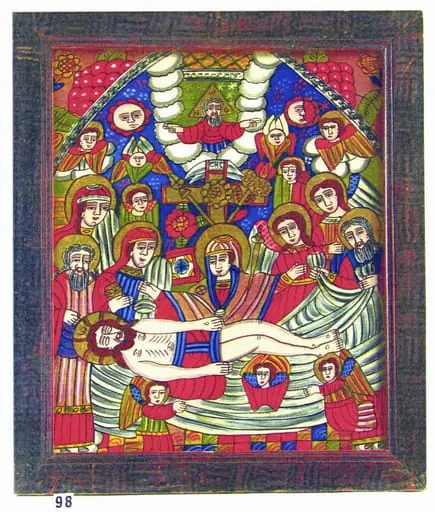 Punerea în Mormânt a Mântuitorului Iisus Hristos, Prohodul Lui Iisus
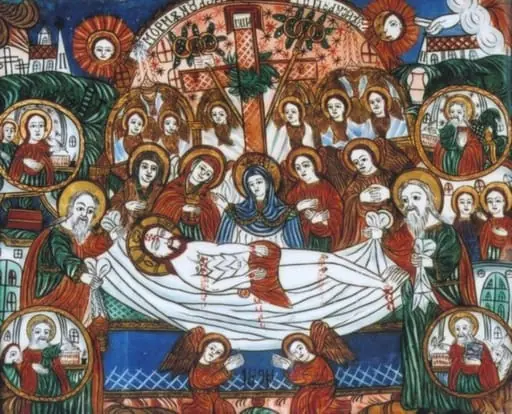 Îngroparea lui Iisus (Prohodul Domnului)
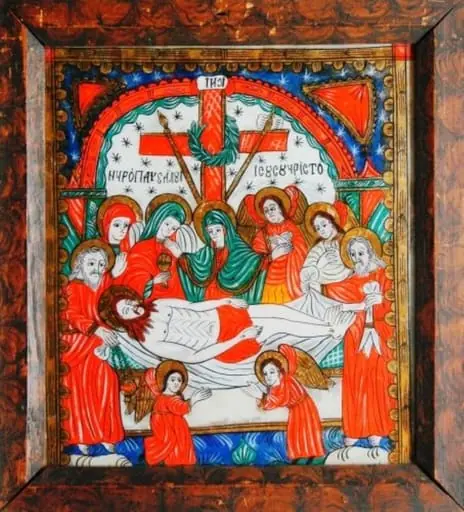 Îngroparea lui Iisus Hristos (Plângerea; Prohodul)
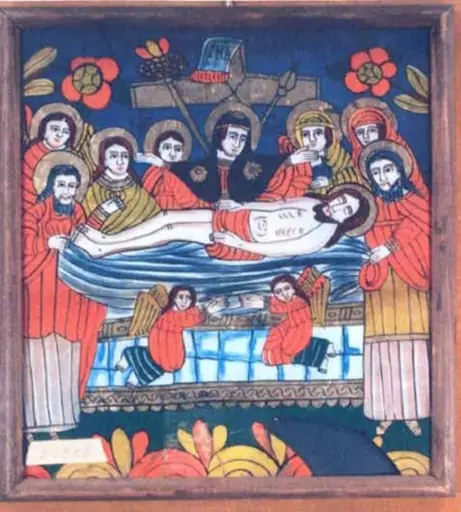 Punerea în mormânt
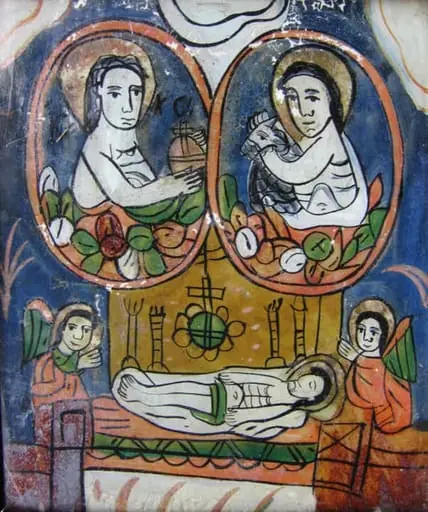 Ioan Botezătorul cu mielul și Iisus; Îngroparea lui Iisus
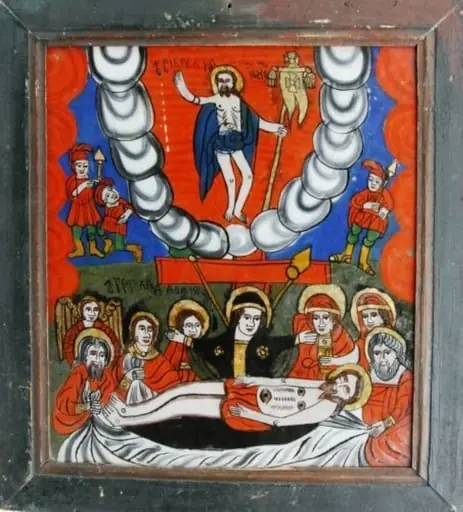 Îngroparea lui Iisus Hristos; Înălțarea lui Iisus Hristos la ceruri (Plângerea, Prohodul)
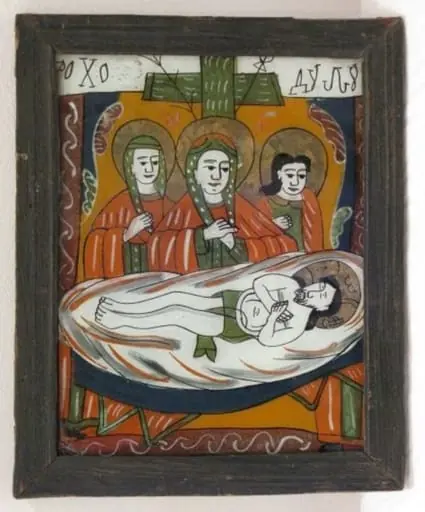 Plângerea lui Iisus
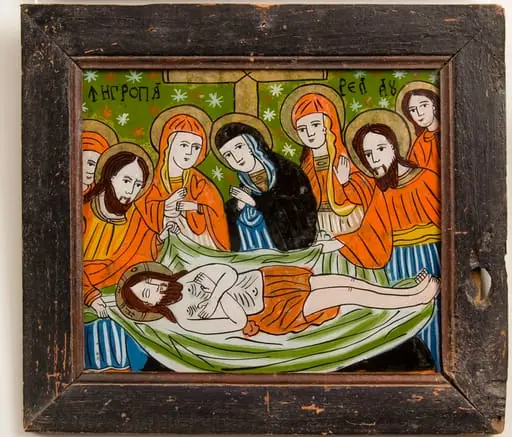 Punerea în mormânt; Îngroparea lui Iisus
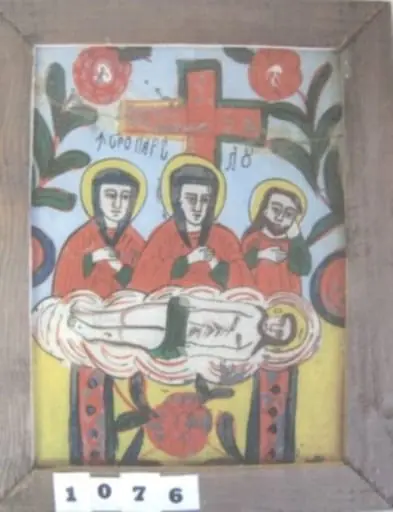 Îngroparea lui Iisus
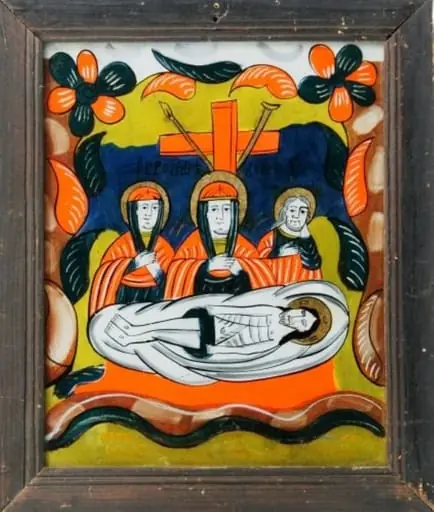 Plângerea lui Iisus (Prohodul)
 Intrarea în biserică a Maicii Domnului