Artwork
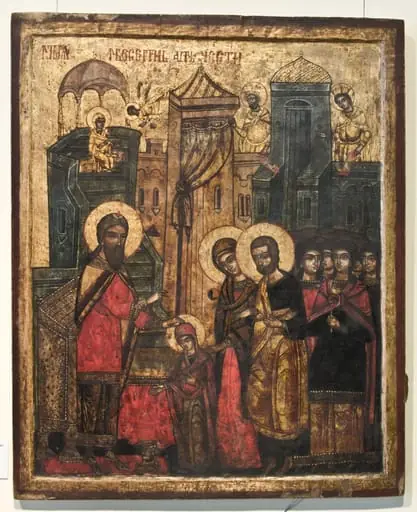
Intrarea în biserică a Maicii Domnului
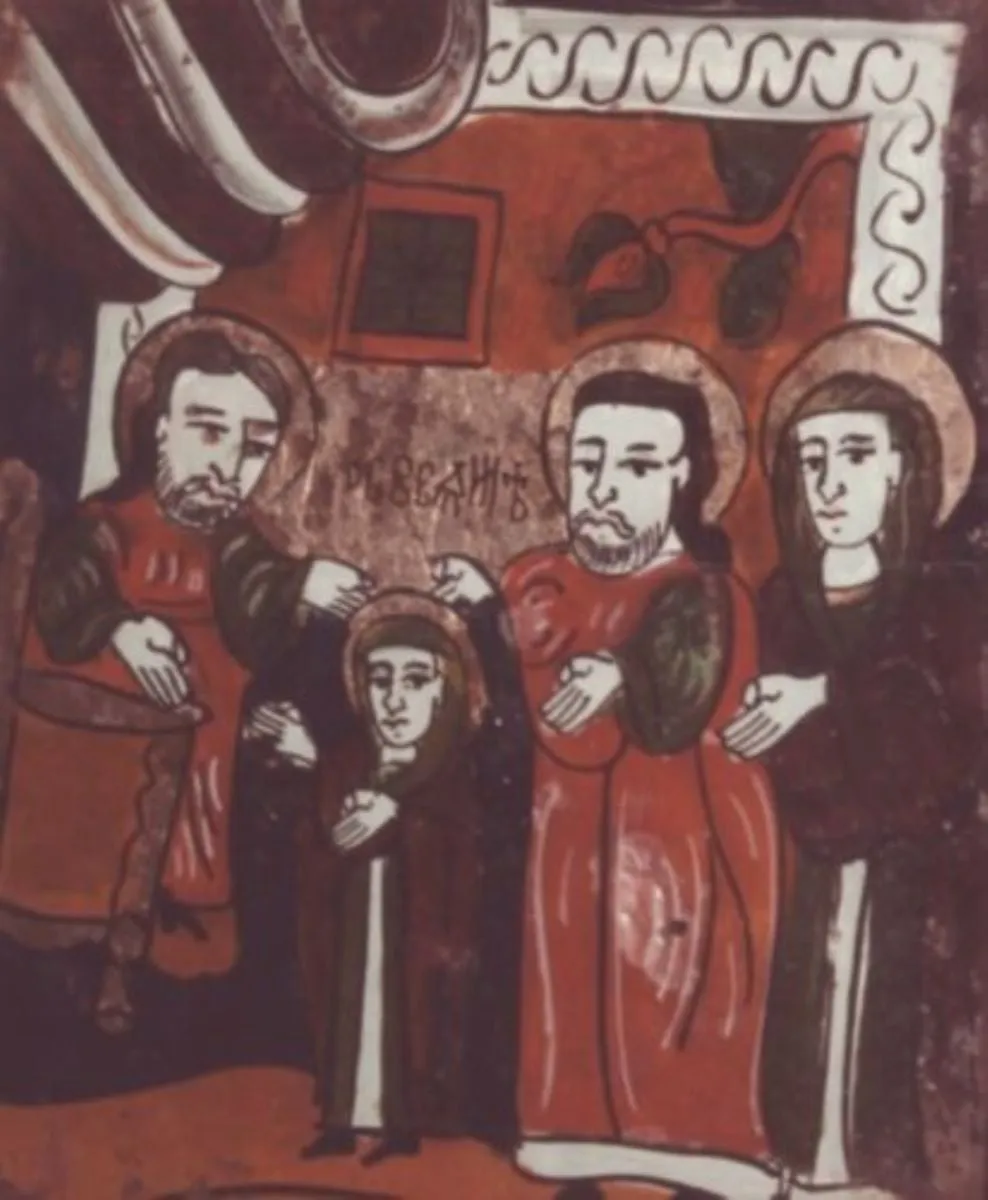
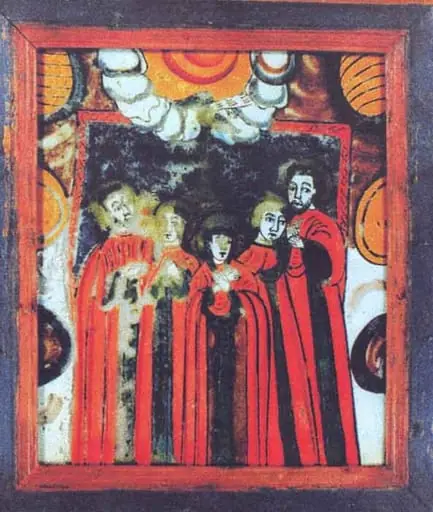
Intrarea în biserică a Maicii Domnului is a drawing by Unknown. It dates from 1850 and is held in the collection of the Ethnographical Museum of Transylvania. This drawing depicts a quiet religious moment involving four figures in red robes before a dark, textured surface.
About this work
Overview
This drawing depicts a quiet religious moment involving four figures in red robes before a dark, textured surface.
This drawing depicts a quiet religious moment involving four figures in red robes before a dark, textured surface. A central figure kneels, holding a staff, while the others stand with hands clasped. Halos mark their sacred status. Above, a white border frames the scene, and a subtle cross emerges at the top. The word 'BISERICĂ' is inscribed on the wall, anchoring the setting as a church interior. The composition emphasizes stillness and reverence.
Subject & Meaning
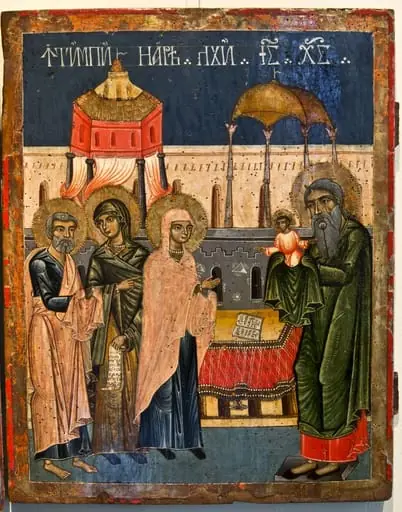
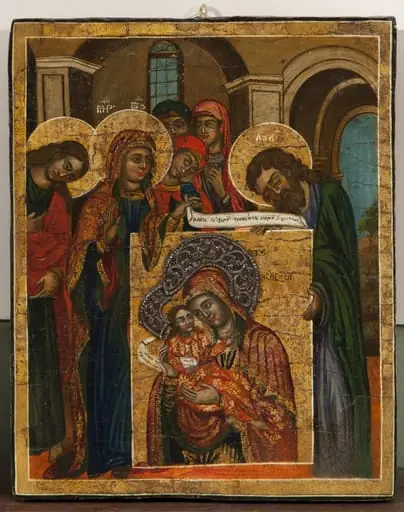
The scene likely illustrates the Entry of the Theotokos into the Temple, a traditional Eastern Christian event where the Virgin Mary, as a child, is presented to the priesthood. The kneeling figure may represent her, offering devotion, while the standing figures are priests or attendants. The halos and cross reinforce the sacred context. The inscription 'BISERICĂ' confirms the location, grounding the moment in a specific liturgical space.
Technique & Style
The artist uses minimal lines to define forms, favoring clarity over detail. Red robes contrast with the dark, textured background, likely rendered with hatched strokes to suggest depth and volume. Faces are simplified, with no individualizing features, focusing attention on posture and gesture. The white border and faint cross above suggest a devotional frame, common in liturgical drawings meant for contemplation.
History & Provenance
The drawing’s Romanian inscription and stylistic simplicity point to a regional religious context, possibly from a monastery or devotional workshop in the 18th or 19th century. Such works were often created as preparatory studies or liturgical aids, not for public display. Its survival suggests it was preserved within a religious community, valued for its spiritual function rather than artistic novelty.
Context
In Eastern Orthodox tradition, the Entry of the Theotokos was a significant feast, celebrated with processions and iconography. This drawing reflects a devotional culture where images served as aids to prayer and instruction, especially in communities with limited access to painted icons. The use of ink and paper, rather than tempera or gold leaf, indicates a more modest, perhaps local, artistic practice.
Legacy
Though not widely known outside regional collections, this drawing exemplifies how religious narratives were transmitted through accessible, hand-drawn forms. Its restrained aesthetic and clear symbolism align with a broader tradition of vernacular sacred art in Eastern Europe. It remains a quiet testament to the role of drawing in sustaining spiritual practice beyond grand ecclesiastical commissions.
Artist & collection
Museum
Ethnographical Museum of Transylvania
Continue through works from the same source collection.
 Domestic Scene
 Giacomo and Cardinal Marco, investing Andrea, Abbot of San Zeno, with his Benefice
 The Nymph of Fontainebleau
 Portrait of a Woman
 Madonna and Child with Saints in the Enclosed Garden
 Venus and Minerva
 Family Group of Four on Sofa
 Wall painting from Room H of the Villa of P. Fannius Synistor at Boscoreale