Artwork
Obiect de formă bitronconică cu gât alungit, toartă semicirculară și ”țâță”. Gura este bilobată cu strecurătoare. Vasul este smălțuit pe 80% din suprafață, cu excepția zonei inferioare. Ornamentat pe toată suprafața cu motive geometrice: linie dreaptă, linii verticale sub formă de val și rozete. Cromatică: galben; maro.
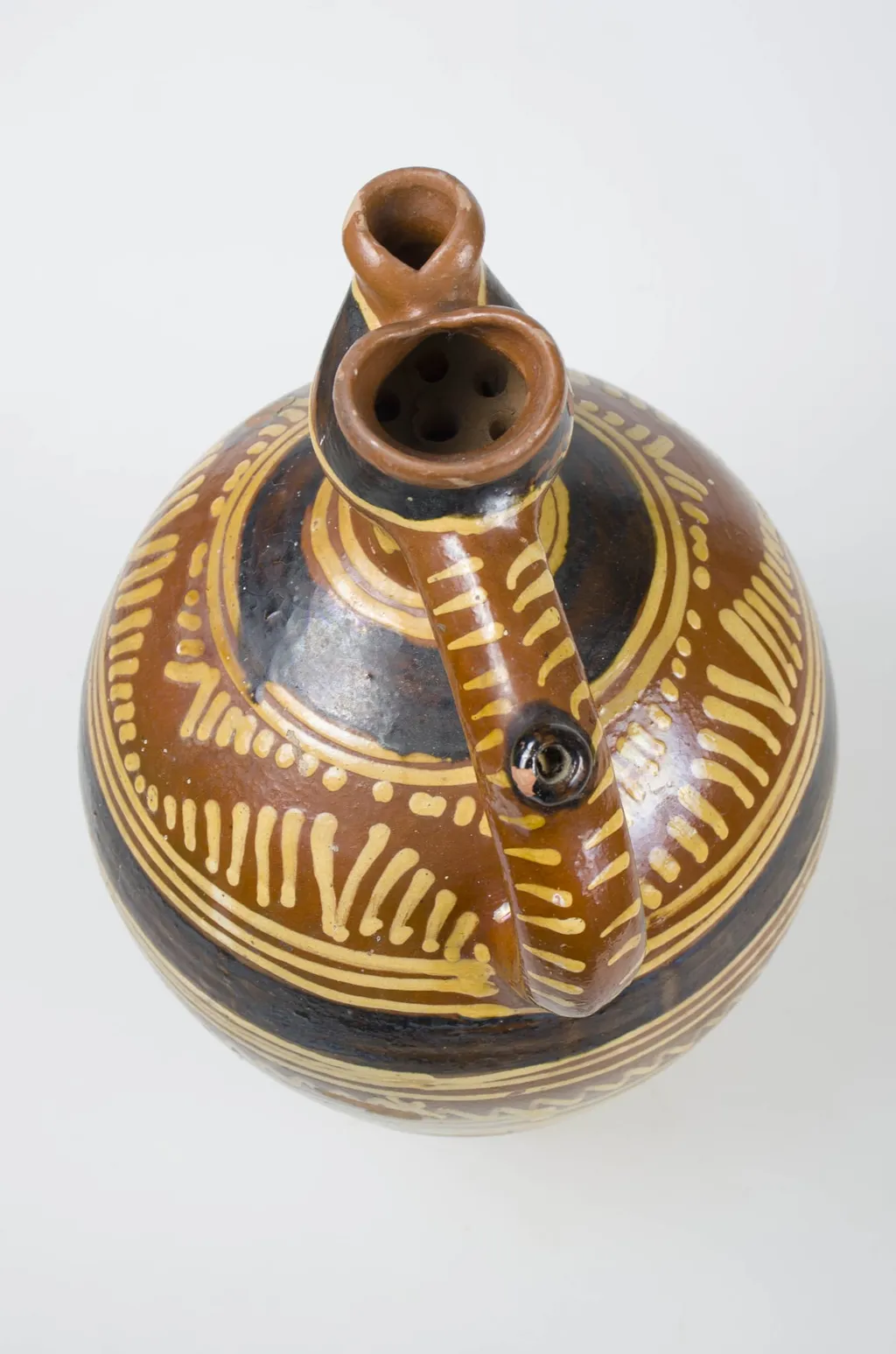
Obiect de formă bitronconică cu gât alungit, toartă semicirculară și ”țâță”. Gura este bilobată cu strecurătoare. Vasul este smălțuit pe 80% din suprafață, cu excepția zonei inferioare. Ornamentat pe toată suprafața cu motive geometrice: linie dreaptă, linii verticale sub formă de val și rozete. Cromatică: galben; maro. is a photography by Unknown. It dates from 1850 and is held in the collection of the ASTRA National Museum Complex.
About this work
Overview
This ancient ceramic vessel features a distinctive bitruncated form with an elongated neck, semicircular handle, and a protruding 'udder-like' element. The bilobated mouth includes a pouring spout.
Subject & Meaning
The vessel's purpose is inferred from its design, suggesting use for containing and pouring liquids. The 'udder' element may imply a thematic connection to fertility or livestock.
Technique & Style
The handmade piece exhibits a predominantly smooth, glossy glaze (covering ~80% of the surface), with a contrasting unglazed, rough lower section. Geometric ornamentation, including straight lines, vertical wave-form lines, and rosettes, dominates the design in a yellow and brown color scheme.
Context
The vessel's style, with its emphasis on geometric patterns (notably rosettes) and functional design, situates it within a broader tradition of ancient ceramic production that valued both utility and decorative motifs.
Legacy
While specific influence or direct descendants of this vessel's design are not detailed, its geometric motifs (e.g., rosettes, wave lines) reflect common elements in ancient ceramics, contributing to a shared visual language across periods and regions.
Artist & collection

 Domestic Scene
 Giacomo and Cardinal Marco, investing Andrea, Abbot of San Zeno, with his Benefice
 The Nymph of Fontainebleau
 Portrait of a Woman
 Madonna and Child with Saints in the Enclosed Garden
 Venus and Minerva
 Family Group of Four on Sofa
 Wall painting from Room H of the Villa of P. Fannius Synistor at Boscoreale
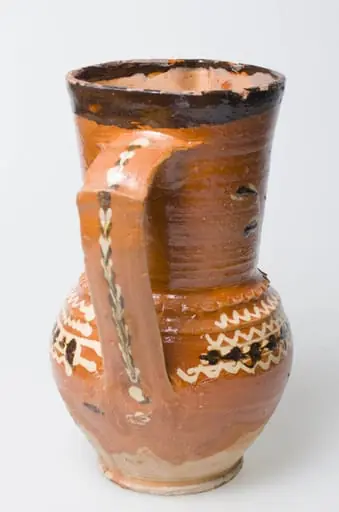 Vasul este confecționat din lut, având forma bitronconică, cu gura largă. Acesta este prevăzut cu o toartă pentru prindere fixată, în partea superioară de margine, iar în partea inferioară de zona bombată a vasului. Obiectul este decorat cu linii vălurite și motive florale. Cromatică: fond: maro; decor: alb; negru.
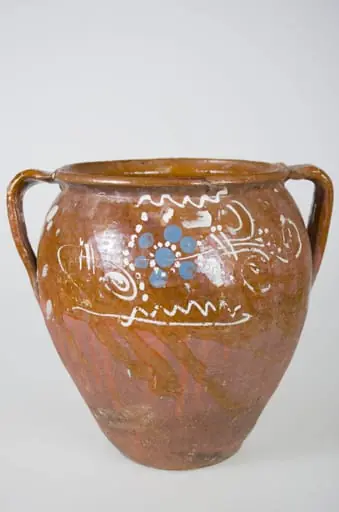 Vas de formă bitronconică și buză răsfrântă, smălțuit în partea superioară. Prezintă două toarte ce unesc partea cu gabarit maxim cu buza vasului. Decorații realizate în partea superioară, prin pictare cu pensula, într-un registru delimitat de o linie albă ondulată dispusă circular sub buză și o alta dublată de o linie dreaptă în zona diametrului maxim a vasului. Motive floral-vegetale, punctiforme și liniare, ilustrând două flori, câte una pe fiecare parte, cu petale albastre sugerate de puncte. Cromatică: fond: brun; motive: albastru; alb.
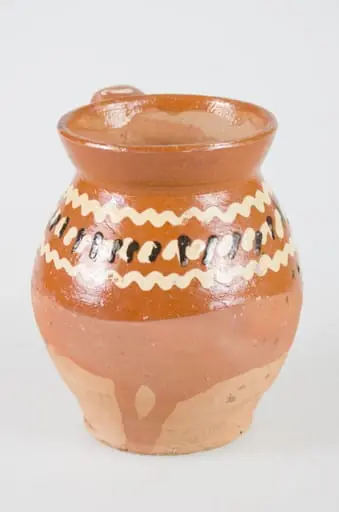 Recipientul este realizat din lut, are dimensiuni mici și formă bitronconică, cu gura mai largă decât baza și fundul plat. Obiectul este smălțuit la exterior, pe doar două treimi din suprafață. Acesta este prevăzut cu o toartă care pleacă din buză până aproape de partea inferioară a vasului. Cana este ornamenată în partea superioară cu pensula, cu motive geometrice: linii alternante albe și negre, dispuse oblic, încadrate de două rânduri de valuri pictate în alb. Din punct de vedere al cromaticii distingem fondul cărămiziu pe care sunt pictate motive cu alb și negru.
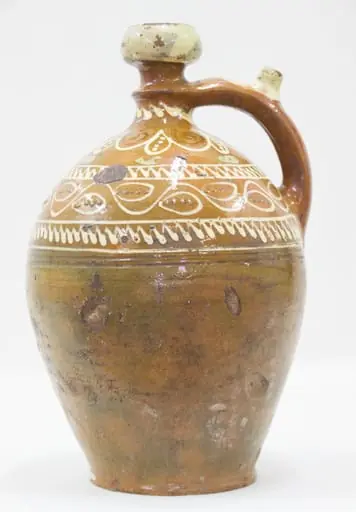 Ulcior de formă bitronconică cu gura îngustă și rotundă, cu o toartă și un orificiu pentru scurgerea lichidului, smălțuit și decorat pe jumătatea superioară cu motive vegetale (ghirlande) și geometrice (spirale; patru cercuri concentrice cu o linie șerpuită între ele).Cromatică: maro (fond), decor - galben, bej, alb, verde. Jumătatea inferioară a obiectului este nesmălțuită.
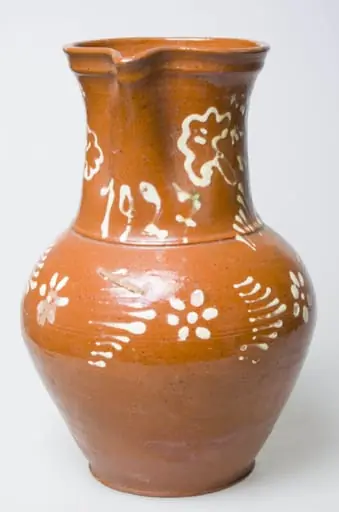 Vasul are forma tronconică, cu fund lat, gât gros, toartă și cioc opus acesteia. Decorul este unul floral, stilizat pe partea superioară imediat sub cioc. Obiectul este smălțuit pe ambele părti, fiind prevăzut cu o toartă pentru prindere. Cromatică: fondul este maro, iar motivele sunt pictate cu alb.
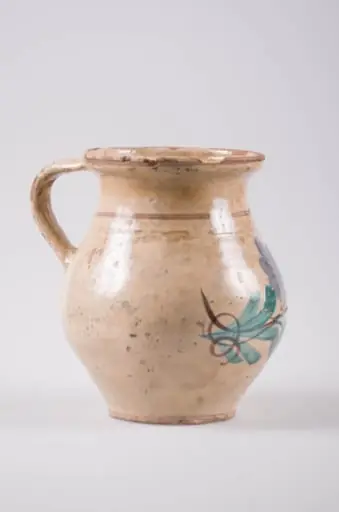 Oală de formă bitronconică de culoare bej. Decorul este reprezentat de motive florale: floarea este încadrată de linii albe realizate cu degetul; motive vegetale, motive geometrice: în partea superioară decorație circulară, linii. Prezintă toartă curbată. Smălțuită. Cromatică: fond: bej; motive: verde; albastru; maroniu.
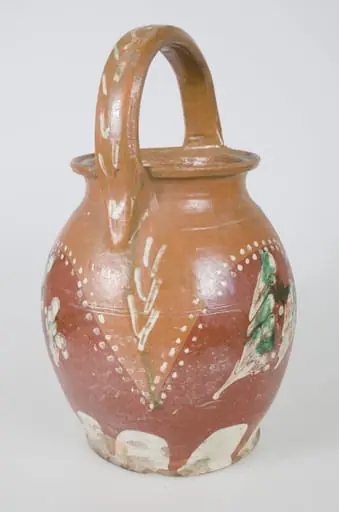 Vas smălțuit de formă ovoidală, bombat la mijloc, gât scurt cu buza dreaptă și evazată. Prevăzut cu o toartă semicirculară care pornește din buză, peste gură, și se prinde diametral opus (mănușar). Pe toartă este prezent motivul bradului realizat din linii albe unite în forma literei ”V”, înșiruite una după alta. Pe corpul vasului se găsesc trei registre circulare convexe, conturate cu câte două șiruri de puncte albe. În interiorul registrelor sunt decorații cu motive florale-vegetale stilizate. Între registre se găsesc câte trei decorații cu motivul bradului. La bază este conturat cu un șir de semicerucri pline. Cromatică: fond: cărămiziu; motive: brun; verde; alb.
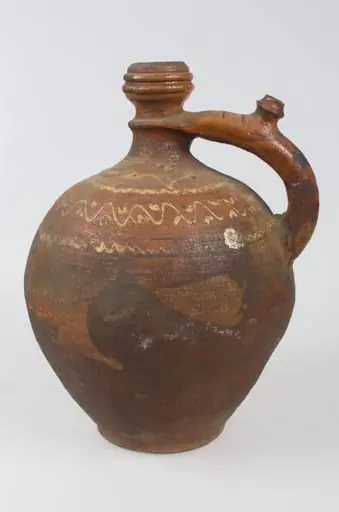 Vas de formă bitronconică prevăzut cun un gât ușor alungit și cu buză pe care se identifică două brâuri profilate. Pe toarta de formă semicirculară se identifică un orificiu pentru consumarea lichidului (”țâță”). Toarta pleacă din zona mediană a orificiului de umplere și se unește cu corpul vasului pe zona diametrului maxim. Vasul prezintă smalț la exterior cu urme de degradare. Decorul se identifică la baza gâtului și constă din motive geometrice: linii curbe, brâuri și motive vegetale. Cromatică: fond: cărămiziu: motive: crem; maron închis
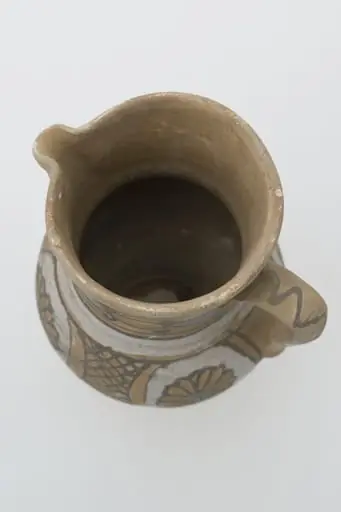 Cană de vin de formă bitronconică cu gâtul lung și buză dreaptă cu cioc. Registrele ornamentale se succed de jos în sus, delimitate de cercuri concentrice, și prezintă pe corpul vasului motive florale și geometrice sub formă de hașură întrerupte de partea de sus de o zonă cerc alb mai gros și mai apoi continuat cu cercuri concentrice ce delimitează de mijloc și de sub buză două cercuri albe groase (angoba). Cromatică: fond: alb; cărămiziu; motive: maro; gri; albastru.