Artwork
Cană de vin de formă bitronconică cu gâtul lung și buză dreaptă cu cioc. Registrele ornamentale se succed de jos în sus, delimitate de cercuri concentrice, și prezintă pe corpul vasului motive florale și geometrice sub formă de hașură întrerupte de partea de sus de o zonă cerc alb mai gros și mai apoi continuat cu cercuri concentrice ce delimitează de mijloc și de sub buză două cercuri albe groase (angoba). Cromatică: fond: alb; cărămiziu; motive: maro; gri; albastru.
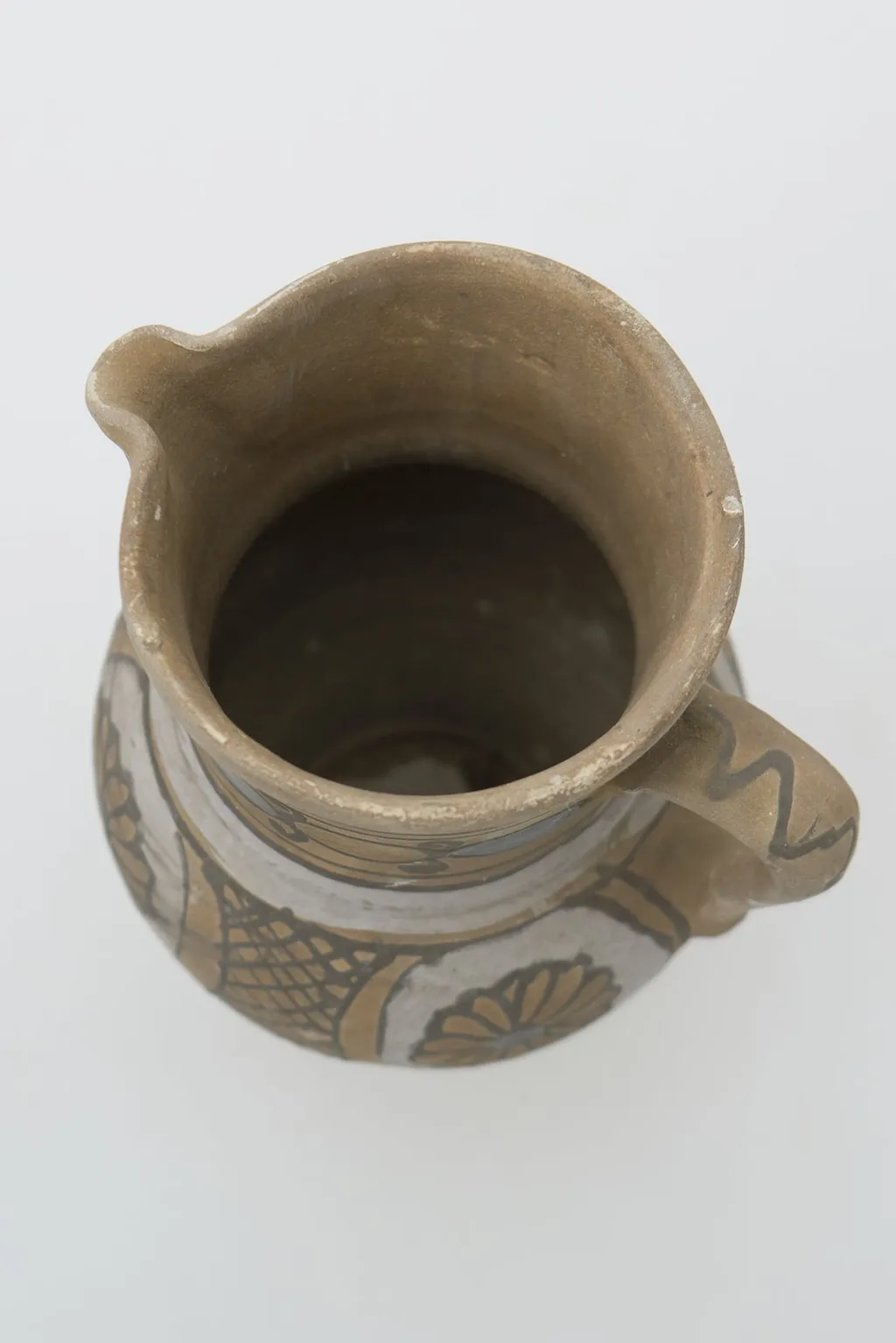
Cană de vin de formă bitronconică cu gâtul lung și buză dreaptă cu cioc. Registrele ornamentale se succed de jos în sus, delimitate de cercuri concentrice, și prezintă pe corpul vasului motive florale și geometrice sub formă de hașură întrerupte de partea de sus de o zonă cerc alb mai gros și mai apoi continuat cu cercuri concentrice ce delimitează de mijloc și de sub buză două cercuri albe groase (angoba). Cromatică: fond: alb; cărămiziu; motive: maro; gri; albastru. is a photography by Pall Antal. It is held in the collection of the ASTRA National Museum Complex. This clay pitcher features a double-conical body with a long neck and straight rim, designed for pouring.
About this work
Overview
This clay pitcher features a double-conical body with a long neck and straight rim, designed for pouring. Its surface is adorned with concentric decorative bands, separated by thick white rings that act as visual dividers. The overall form is functional yet carefully composed, with ornamentation arranged in horizontal registers that guide the eye along the vessel’s vertical axis.
Subject & Meaning
The decoration includes stylized floral and geometric motifs rendered in interrupted hatching, suggesting natural forms without direct representation. The use of white bands may denote symbolic boundaries or ritual significance, common in vessels used for ceremonial or communal functions. The absence of figural imagery points to an abstract or symbolic aesthetic rather than narrative intent.
Technique & Style
The vessel was formed from clay and coated with slip to create a light background, upon which pigments in brown, gray, and blue were applied to form patterns.
The vessel was formed from clay and coated with slip to create a light background, upon which pigments in brown, gray, and blue were applied to form patterns. Concentric circles and hatched bands were carefully painted by hand, with precision in spacing and alignment. The white rings, likely achieved through resist techniques or layered slip, serve both decorative and structural roles in the composition.
History & Provenance
This pitcher originates from a region where ceramic traditions emphasized geometric ornamentation, likely dating to the late Neolithic or early Bronze Age. Its form and decoration align with regional pottery styles found in the Carpathian Basin or adjacent areas. It was likely produced in a local workshop and used for storage or ritual pouring, later entering museum collections through archaeological excavation.
Context
Similar vessels appear in contemporaneous settlements across Southeastern Europe, where pottery served both daily and ceremonial roles. The emphasis on layered bands and non-figurative motifs reflects broader cultural preferences for abstraction and repetition, possibly tied to cosmological beliefs or communal identity. The pitcher’s design shares affinities with other regional ceramics that prioritize rhythm over realism.
Legacy
This pitcher exemplifies a widespread ceramic tradition that valued precision in pattern and material contrast. Its preservation allows study of early decorative systems and the transmission of artisanal techniques across generations. Though not unique, its clarity of form and composition makes it a representative artifact for understanding prehistoric material culture in Eastern Europe.
Artist & collection
Artist
Antal Pall stamped simple clay pots in a Hungarian village where everyone knew his touch.

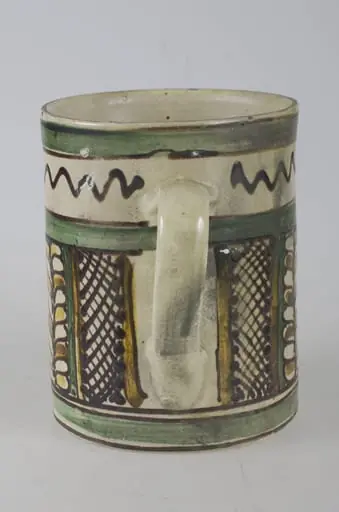 Vas cilindric înalt prevăzut cu o toartă. Smălțuit în interior și exterior. Cana este decorată pe întreaga suprafață cu motive geometrice și florale după cum urmează: sub buză este pictată o bandă verde între două linii concentrice maro sub care se regăsește o linie în val; pe restul corpului între două linii maro se repetă pe toată suprafața două registre verticale primul format din două linii drepte de care se lipesc două șiruri de puncte care încadrează un fagure; al doilea registru conține o floare cu petale albe și galbene mărginite de două linii verticale verzi. Deasupra decorului central se regăsește o bandă de culoare verde mărginită de o linie maro. Baza vasului este decorată cu o bandă verde mărginită de două linii maro. Cromatică: fond: alb; motive: verde; maro; galben.
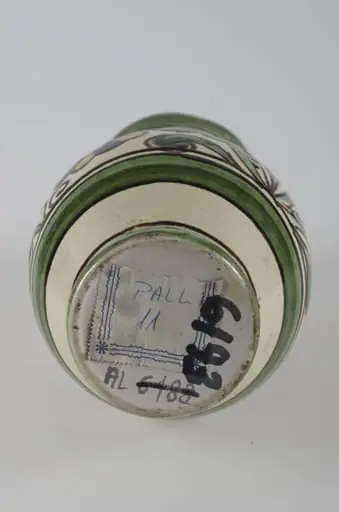 Cană cu gât lung, buza evazată și o toartă. Este smălțuită în interior și în exterior. Decorată pe toată suprafața cu motive fitomorfe, motive florale și motive geometrice: linie, punct; de asemenea este decorată cu motive zoomorfe: șarpe (pe toartă) și avimorfe (pe corp); Cromatică: fond: alb; motive: verde; galben; bleumarin; maro.
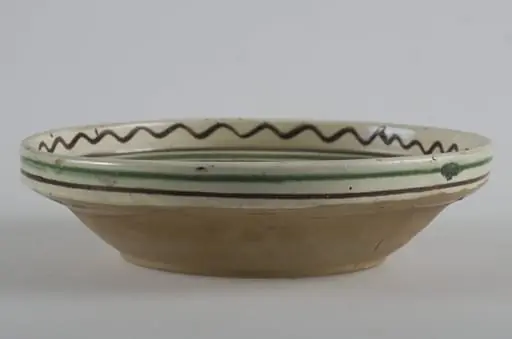 Blid adânc cu margini drepte și buza verticală. Decor în registre concetrice; pe marginea exterioară o linie verde și o linie maron. Pe buză, în interior, avem o linie ondulată și două linii maron cu o bandă verde între ele; brăduț și punct verde. Motiv central: lalea cu două frunze mari și două frunze mici; Cromatică: maron; galben; verde pe fond alb. Prezintă două găuri pentru agățare.
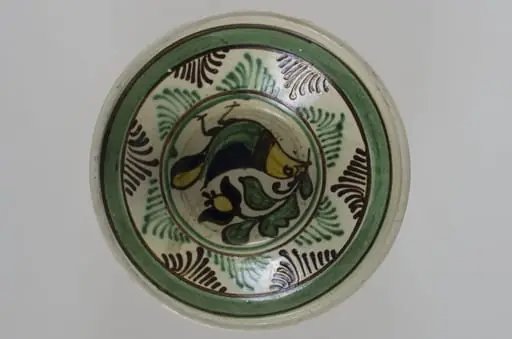 Blid de formă tronconică, adâncit, cu buza înălțată și ușor evazată. Este smălțuit în interior și în exterior (buza). Decorat la interior cu motive avimorfe și fitomorfe, încadrate de două cercuri concentrice; pe margine, în interior este decorată cu linii și brăduț stilizat, iar în exterior cu două linii; pe fund are două găuri pentru agățare. Cromatică: fond: gri (exterior); alb (interior); motive: maro; verde; galben; negru.
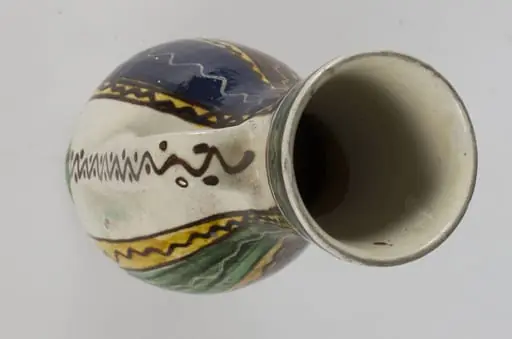 Vas piriform cu gât foarte înalt și gura largă și evazată, cu o toartă care pleacă din zona gâtului și se unește cu corpul deasupra diametrului maxim. Smălțuit în interior și exterior. Decorul este realizat din două registre orizontale ce încadrează unul vertical. Registrele orizontale prezintă un decor geometric format din două linii concentrice ce încadrează o linie în val toată de culoare maro pe un fond verde. Registrul vertical este împărțit în mai multe benzi cu fond verde, galben, maro, albastru alternante separate de linii drepte de culoare maro. Pe fondurile de culoare maro, verde, albastru sunt trasate linii în val de culoare albă dispuse vertical, iar pe cele de culoare galbenă linii în val de culoare maro. În dreptul torții corpul vasului nu este decorat. Toarta este decorată cu o linie în val dispusă vertical încadrată de două șiruri de puncte. În partea superioară și inferioară registrul vertical este încadrat de câte o linie maro. Baza vasului este pictată cu verde și mărginită în partea superioară tot cu o linie maro. Cromatică: fond: alb: motive: verde; maron; albastru; galben; alb.
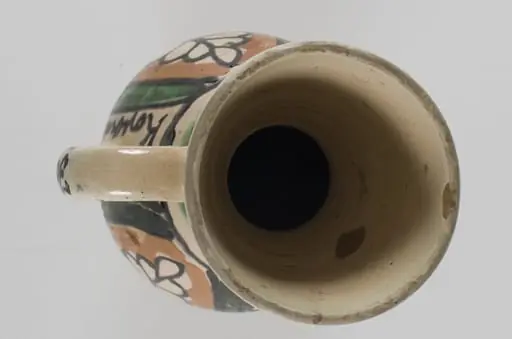 Cană cu gât lung, cu buza evazată și o toartă. Este smălțuită în interior și în exterior. Prezintă decor pe toată suprafața cu motive fitomorfe, motive florale stilizate și motive geometrice: linie, linie ondulată, punct, tablă de șah. Pe toartă scrie ”Jozsa Janos”, iar pe corp, chiar lângă toartă, scrie ”Korond 1974”. Cromatică: fond: alb; motive: bej, maro, verde, negru.
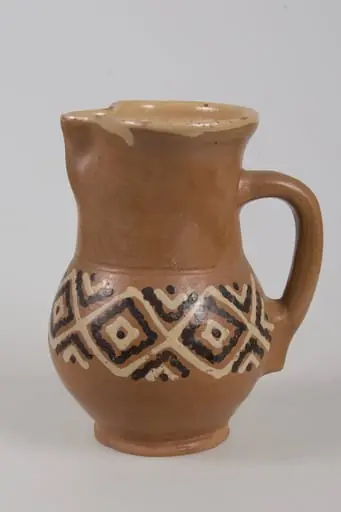 Vas din lut de formă sferoidală cu inel la bază, gât înalt și drept, cu toartă prinsă între gât și mijlocul vasului. Capătul inferior al toartei are un pinten. Angobat in interior cu smalț la exterior și interior. Decor cu motive geometrice: brâu de romburi pictat cu corn in hume naturale; două dungi imprimate cu piaptănul. Prezintă cioc de scurgere. Cromatică: fond: alb-crem în interior; cărămiziu în exterior; motive: alb; negre.
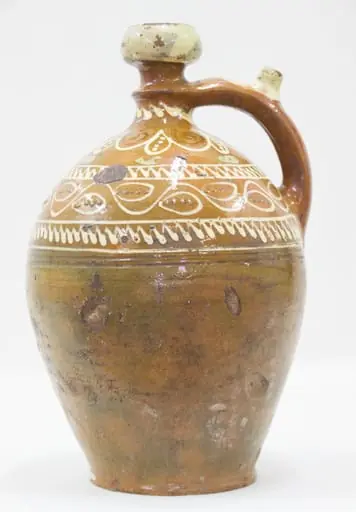 Ulcior de formă bitronconică cu gura îngustă și rotundă, cu o toartă și un orificiu pentru scurgerea lichidului, smălțuit și decorat pe jumătatea superioară cu motive vegetale (ghirlande) și geometrice (spirale; patru cercuri concentrice cu o linie șerpuită între ele).Cromatică: maro (fond), decor - galben, bej, alb, verde. Jumătatea inferioară a obiectului este nesmălțuită.
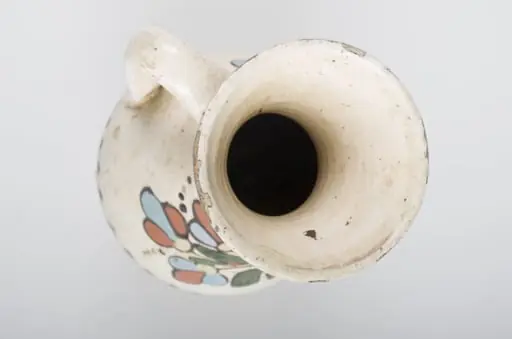 Vas bitronconic, cu gât arcuit spre interior și gura evazată spre exterior. O toartă unește mijlocul gâtului de mijlocul corpului. Vasul este decorat cu motive vegetale și florale prin pictare. Registrul decorativ principal este reprezentat de o floare cu petale și frunze alungite. Gâtul vasului este decorat cu motive geometrice (triunghiuri, arcuri de cerc, puncte, linie vălurită). Partea inferioară a vasului este decorat în aceeași manieră ca și gâtul. Vasul prezintă smălțuire. Cromatică: fond: alb; motive: roșu; albastru; verde; galben.
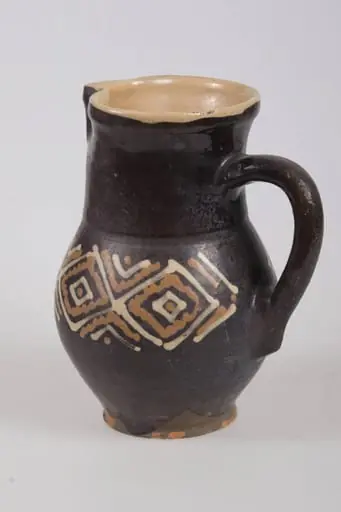 Cană de formă sferoidală cu inel la bază, gât înalt și drept cu gura bilobată. Toarta este fixată de la gât la mijlocul vasului. La capătul inferior al toartei avem un pinten. Gura este dreaptă cu buza ușor răsfrântă. Angobat, smălțuit în interior și în exterior. Decor format din motive geometrice: brâu de romburi colorate realizat cu cornul. Cromatică: fond: maro închis; motive: alb; galben; negru.
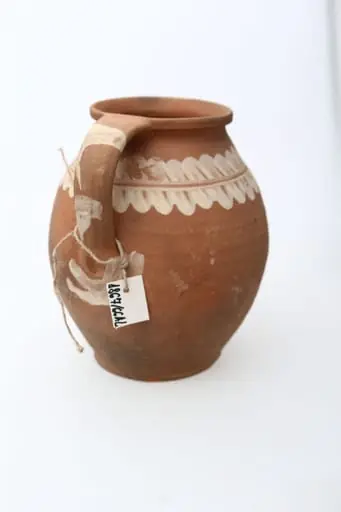 Recipient din lut nesmălțuit, de formă bitronconică, având gât îngust, gura ușor răsfrântă și buza dreaptă. Prevăzut cu o toartă lată și arcuită fixată la buză și la mijlocul vasului. Decorat cu degetul pe umeri cu motive zoomorfe (dintele de lup), și pe toartă cu motive geometrice neregulate. Decorat cu pastă de angobă, albă. Se folosește la fiertul mâncării pe vatră liberă în familii mai puțin numeroase. Cromatică:fundal cărămiziu,motive: alb.