Artwork
Vasul este confecționat din lut, având forma bitronconică, cu gura largă. Acesta este prevăzut cu o toartă pentru prindere fixată, în partea superioară de margine, iar în partea inferioară de zona bombată a vasului. Obiectul este decorat cu linii vălurite și motive florale. Cromatică: fond: maro; decor: alb; negru.
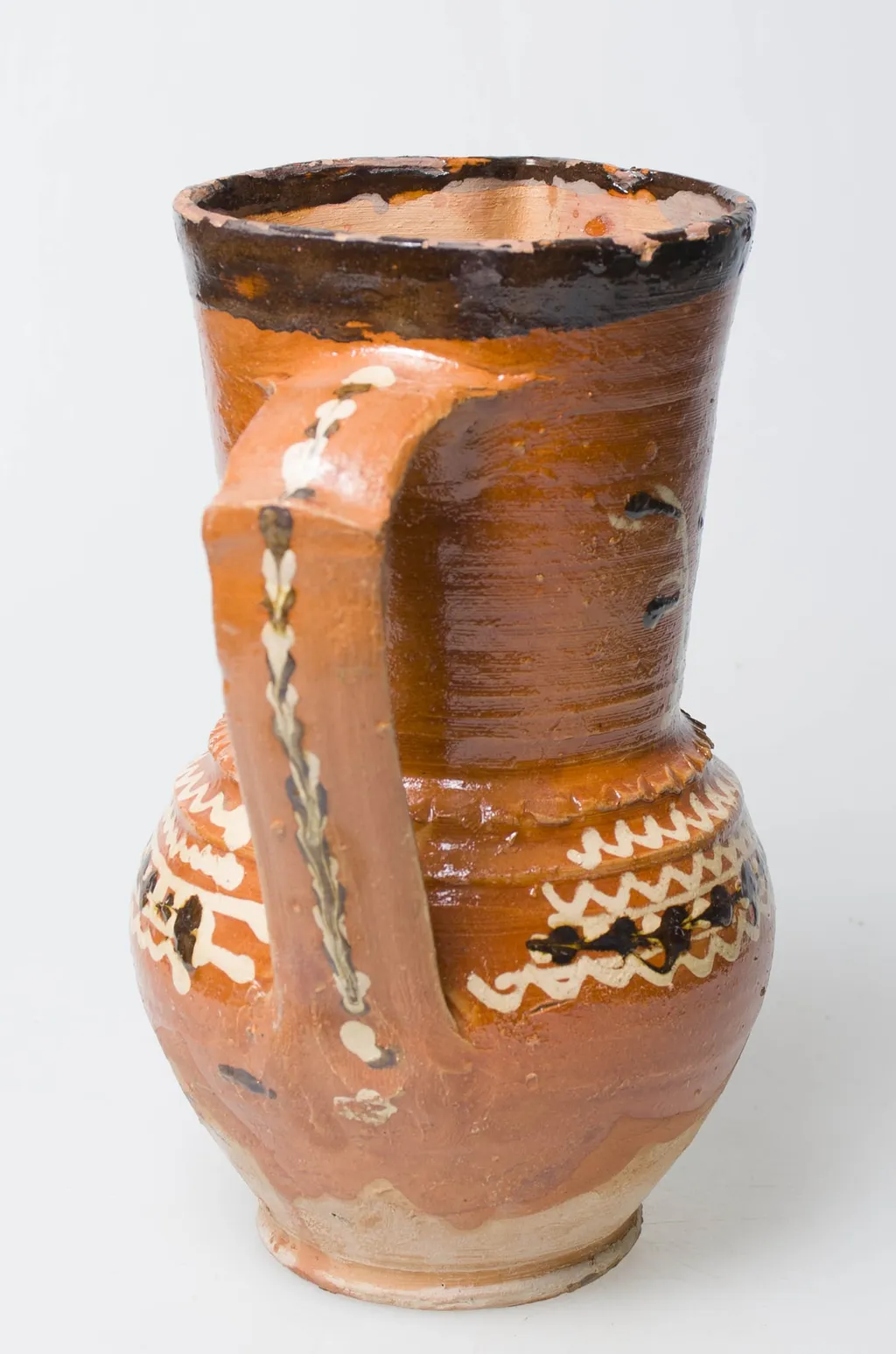
Vasul este confecționat din lut, având forma bitronconică, cu gura largă. Acesta este prevăzut cu o toartă pentru prindere fixată, în partea superioară de margine, iar în partea inferioară de zona bombată a vasului. Obiectul este decorat cu linii vălurite și motive florale. Cromatică: fond: maro; decor: alb; negru. is a photography by Unknown. It dates from 1850 and is held in the collection of the ASTRA National Museum Complex. This ceramic vessel is crafted from clay, characterized by a bitronconic shape with a wide mouth.
About this work
Overview
This ceramic vessel is crafted from clay, characterized by a bitronconic shape with a wide mouth. It features a fixed handle on the upper rim and another on the lower, bulged area of the body.
Subject & Meaning
The pot's decoration consists of wavy lines and floral motifs, suggesting a blend of organic and possibly symbolic elements, though specific meanings are not explicitly defined in the provided context.
Technique & Style
The vessel exhibits a predominantly brown hue with white and black accents. Its handmade construction is evident through the uneven edges and rough texture, particularly along the split side revealing its hollow interior.
History & Provenance
While the exact age, origin, or artist is unspecified, the pot shows signs of wear and faded colors, indicating potential use over time. Historical clay-working techniques, such as coiling or pinching, might have been employed in its creation.
Context
Understanding the full context requires additional historical or cultural information. However, the design and material point to traditional craftsmanship, possibly from a region with clay-rich resources.
Legacy
The legacy of this piece is not detailed in the provided information. Generally, such handmade ceramics contribute to the cultural heritage of their origin, influencing future artisans or serving as archaeological evidence.
Artist & collection

 Domestic Scene
 Giacomo and Cardinal Marco, investing Andrea, Abbot of San Zeno, with his Benefice
 The Nymph of Fontainebleau
 Portrait of a Woman
 Madonna and Child with Saints in the Enclosed Garden
 Venus and Minerva
 Family Group of Four on Sofa
 Wall painting from Room H of the Villa of P. Fannius Synistor at Boscoreale
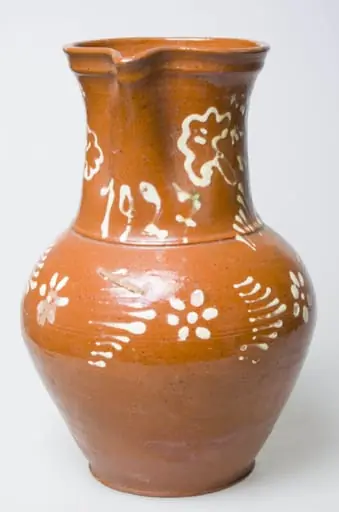 Vasul are forma tronconică, cu fund lat, gât gros, toartă și cioc opus acesteia. Decorul este unul floral, stilizat pe partea superioară imediat sub cioc. Obiectul este smălțuit pe ambele părti, fiind prevăzut cu o toartă pentru prindere. Cromatică: fondul este maro, iar motivele sunt pictate cu alb.
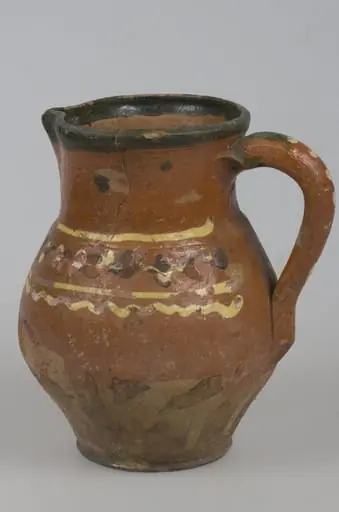 Vas de lut de mici dimensiuni, bombat, cu gât lung și puțin evazat, cu gură largă și cioc de scurgere. Toarta pornește de sub gură și coboară până în zona diametrului maxim al vasului. Este smălțuit în interior și exterior. Decorul dispus pe umărul vasului este format din: motive florale: o cunună din frunze încadrată de motive geometrice: o linie circulară în partea superioară și o linie circulară și una în val în partea inferioară. Buza vasului este vopsită în interior și exterior. Toarta este decorată cu puncte de culoare albă. Cromatică: fond: cărămiziu; motive: alb; verde; negru.
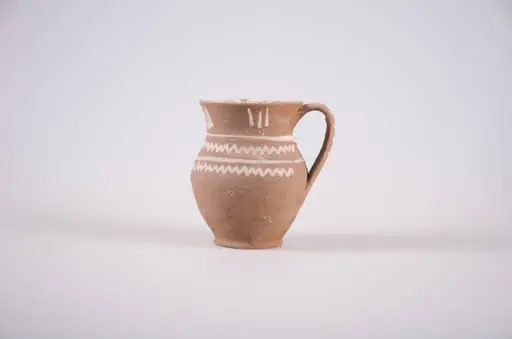 Recipient bitronconic cu gura largă. Are o toartă laterală care pleacă din buză până la diametrul maxim al vasului. Decor cu motive geometrice pe partea superioară a vasului și pe toartă: linii paralele, doua cercuri, linii ondulate. Cromatică: fond: cărămiziu; motive din angobă albă. Vasul este nesmălțuit.
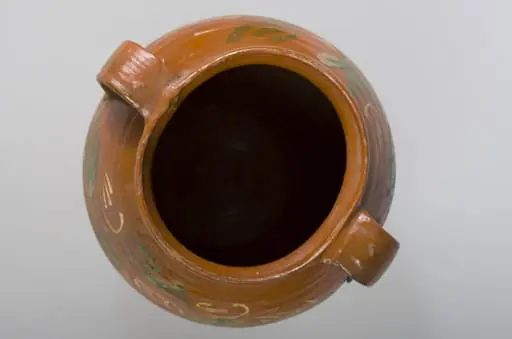 Vas de formă bitronconică, cu gât scurt cu buză rotunjită și evazată. Oala este smălțuită interior și pe 2/3 din exterior. Prezintă două toarte late ce unesc buza vasului de zona diametrului maxim. Decorații în registru floral-vegetal, dispuse concentric, în partea superioară a vasului, compuse din linii ondulate și palmate. Cromatică: fond: cărămiziu; motive: alb, verde.
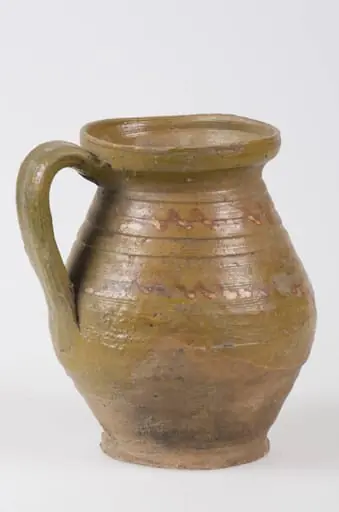 Vas bitronconic cu gât scurt și foarte profilat, cu gura înaltă și dreaptă. Prezintă o toartă care pleacă de sub buză și se unește cu corpul sub zona diametrului maxim. Este smălțuit în interior și la exterior (parțial nesmălțuit în partea de jos). În partea superioară prezintă un decor geometric realizat din cinci linii incizate și două linii în val pictate. Toarta este decorată cu puncte. Cromatică: fond: cărămiziu și pe alocuri verziu; motive: alb; maroniu. Prezintă uzură funcțională.
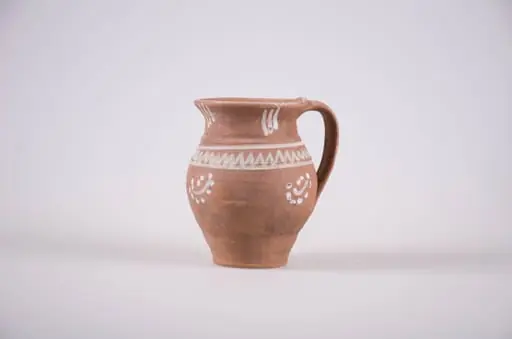 Recipient bitronconic cu gura largă. Prezintă toartă laterală care pleacă din buză până la diametrul maxim al vasului. Decor geometrizant pe partea superioară a vasului și pe toartă; linii paralele, cercuri, linie ondulată, puncte. Cromatică: fond: cărămiziu; motive trasate cu angobă albă. Vasul este nesmălțuit.
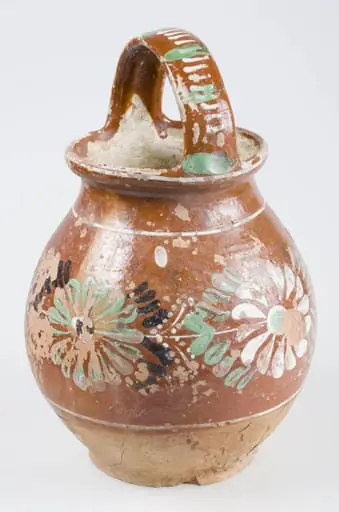 Oală de formă bitronconică modelată la roată, arsă, pictată cu pensula și smălțuită. Vasul prezintă o toartă dispusă diametral pe gură, denumită mănușă. Vasul prezintă smălțuire pe 2/3 din exterior, peste care este aplicat decorul. Ornamentația este realizată cu ajutorul motivelor geometrice, floarale și vegetale. Pe corpul vasului sunt aplicate trei linii orizontale la distanțe egale una față de cealaltă. Linia din mijloc are rolul de a face încadrarea modelului, linia trecând exact prin mijlocul modelului. Astfel între celelalte două linii este încadrat un rând format din flori cu petale mari, fiecare floare fiind înconjurată de un rând de petale, delimitata de câte două frunze. Pe mănușă sunt aplicate linii verticale, scurte cât lățimea acesteia. Vasul prezintă angobare și smălțuire la interior. Cromatică: cărămiziu; alb; verde; albastru.
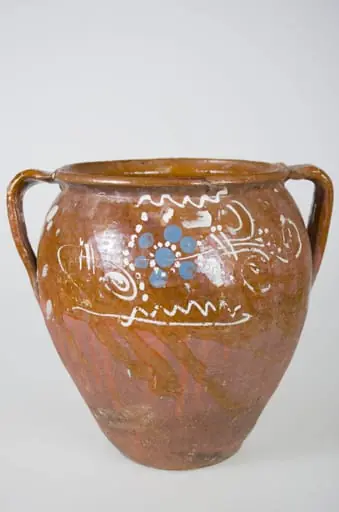 Vas de formă bitronconică și buză răsfrântă, smălțuit în partea superioară. Prezintă două toarte ce unesc partea cu gabarit maxim cu buza vasului. Decorații realizate în partea superioară, prin pictare cu pensula, într-un registru delimitat de o linie albă ondulată dispusă circular sub buză și o alta dublată de o linie dreaptă în zona diametrului maxim a vasului. Motive floral-vegetale, punctiforme și liniare, ilustrând două flori, câte una pe fiecare parte, cu petale albastre sugerate de puncte. Cromatică: fond: brun; motive: albastru; alb.
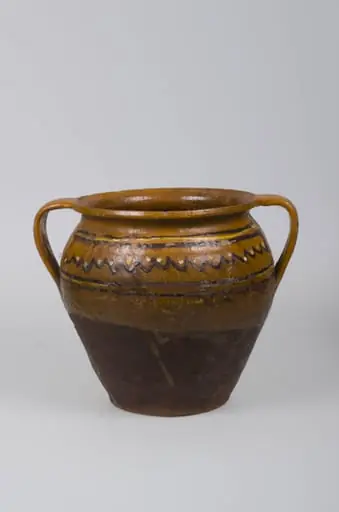 Vasul are formă bitronconică, prevăzut cu două toarte dispuse vertical în opoziție una față de cealalltă. Gâtul foarte profilat și buza evazată. Toartele pornesc din buza vasului și se unesc cu corpul în zona diametrului vasului, fiind aplatizate. Oala are urme de ardere secundară; este smălțuită în interior și în exterior (doar jumătatea superioară). Este folosită atât la pregătirea hranei cât și pentru păstrarea alimentelor și pentru transportul hranei la câmp. Oala este decorată pe umăr cu motive geometrice: linii drepte, linie în val, puncte. Cromatică cărămiziu; galben; maro închis.
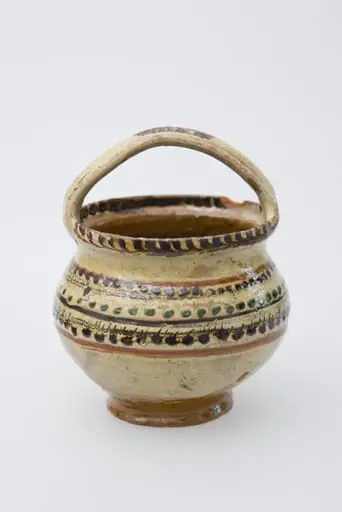 Vas ceramic de mici dimensiuni, pe bază inelară, pântecos, cu fundul și gura late. Deasupra gurii vasului a fost pusă o toartă de prindere. Buza vasului a fost pictată printr-un brâu de crenguțe. Pe pântecul vasului brâuri de puncte și două benzi subțiri jirăvite. Smălțuit în interior și exterior. Cromatică: fond: crem; motive: verde; maro; bej.