Artwork
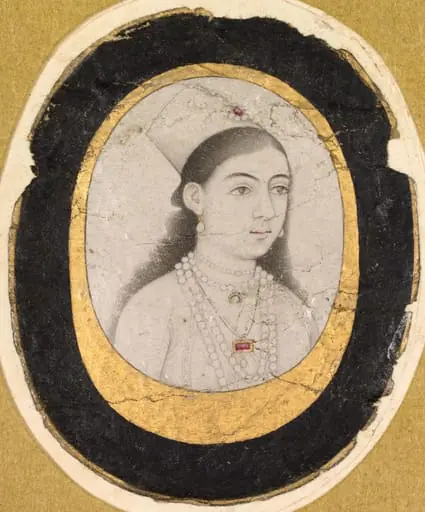
One of eleven bust portraits depicting Mughal ladies and princesses.
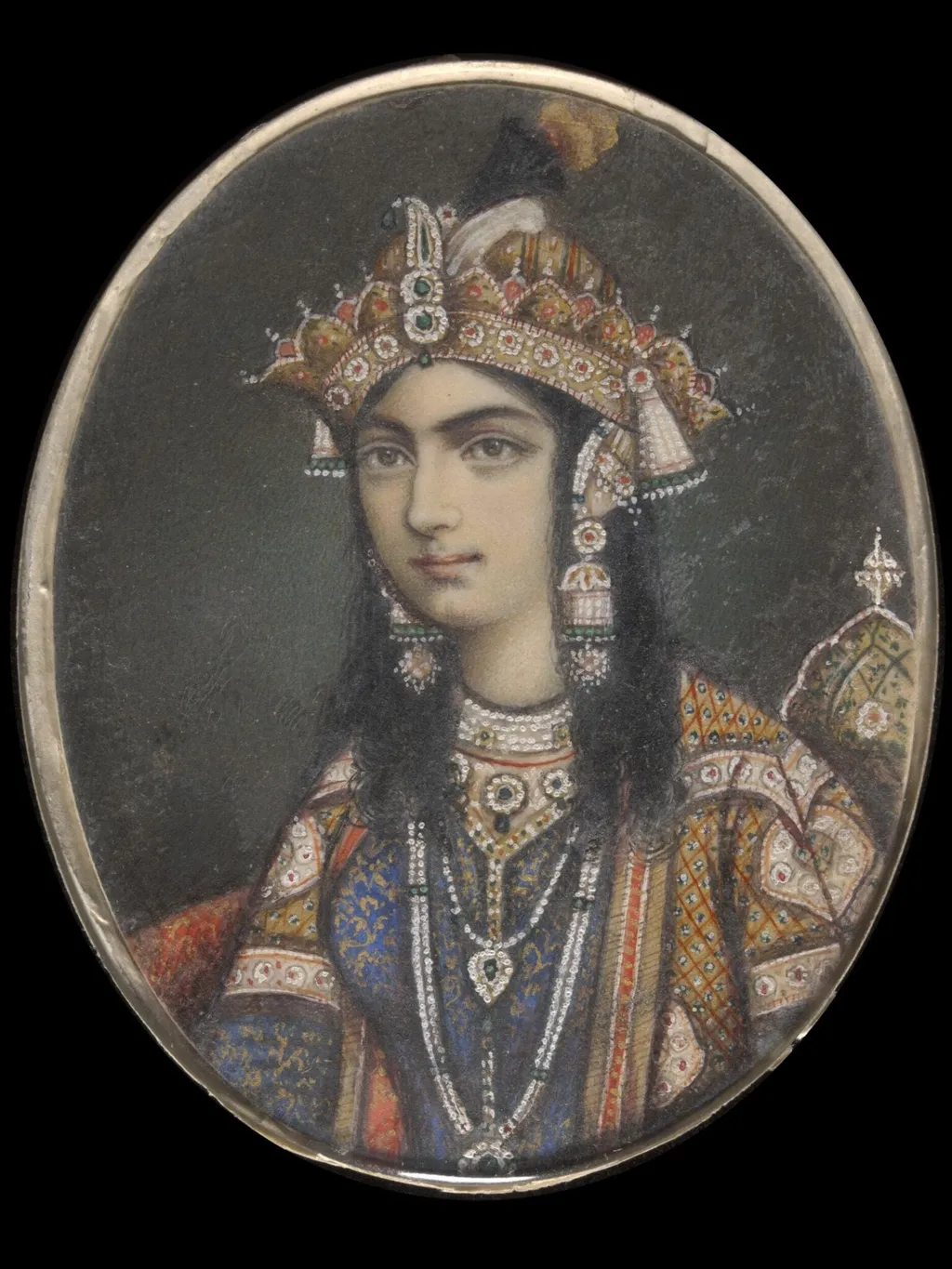
One of eleven bust portraits depicting Mughal ladies and princesses. is a paint painting by the Impressionist artist Unknown. It dates from 1865 and is held in the collection of the Victoria and Albert Museum. This painting is one of eleven portrait busts of Mughal royal women, created to honor female members of the imperial court.
About this work
Overview
The palette features vivid gold, blue, and red, though pigments have softened with time, lending the work a muted, aged quality.
This painting is one of eleven portrait busts of Mughal royal women, created to honor female members of the imperial court. Each depicts a single figure against a dark, unadorned background, emphasizing the subject’s attire and adornments. The composition is formal and intimate, designed to convey status rather than narrative. The palette features vivid gold, blue, and red, though pigments have softened with time, lending the work a muted, aged quality.
Subject & Meaning
The woman portrayed is likely a princess or noblewoman, identified by her elaborate crown, heavy jewelry, and richly patterned garments. These elements were not merely decorative but served as visual markers of lineage, rank, and imperial connection. The absence of context or setting directs attention to her identity as defined by material wealth and ceremonial dress, reinforcing the role of appearance in Mughal courtly hierarchy.
Technique & Style
Executed in opaque watercolor on paper, the painting employs fine brushwork to render intricate textile patterns and delicate jewelry details. The artist uses flat planes of color with minimal shading, characteristic of Mughal portraiture of the period. The dark background isolates the figure, enhancing the luminosity of her garments and ornaments, while the restrained composition reflects a preference for dignified stillness over dynamism.
History & Provenance
The painting likely originated in a Mughal atelier during the late 16th or early 17th century, a time when portraiture of royal women became more systematic. It entered the Victoria and Albert Museum’s collection as part of a larger group of Mughal miniatures acquired in the 19th century, possibly through colonial networks. Its preservation suggests it was valued as a cultural artifact even before its institutional acquisition.
Context
These bust portraits emerged during a period when Mughal rulers increasingly documented their court through visual means. Unlike earlier Persian traditions, Mughal portraiture began to individualize subjects, particularly women of the harem, whose public visibility was limited. This series may have functioned as an imperial archive, asserting dynastic continuity through the representation of female kin.
Legacy
The series of eleven busts remains a rare visual record of Mughal royal women, offering insight into their material culture and symbolic representation. While individual identities are often lost, the group as a whole illustrates how power was visually encoded in dress and adornment. These works continue to inform scholarly understanding of gender, status, and artistic patronage in early modern South Asia.
Artist & collection

 Domestic Scene
 Giacomo and Cardinal Marco, investing Andrea, Abbot of San Zeno, with his Benefice
 The Nymph of Fontainebleau
 Portrait of a Woman
 Madonna and Child with Saints in the Enclosed Garden
 Venus and Minerva
 Family Group of Four on Sofa
 Wall painting from Room H of the Villa of P. Fannius Synistor at Boscoreale
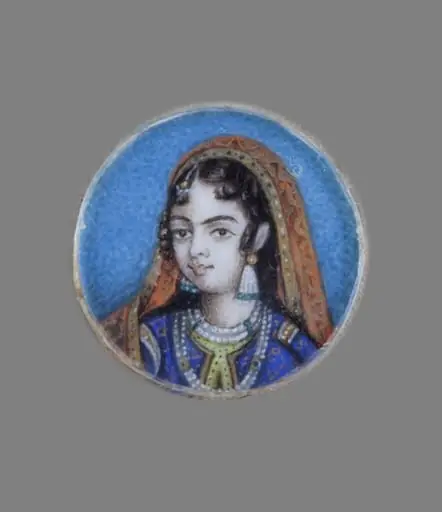 One of twelve tiny paintings depicting Mughal emperors, Afghan and Sikh nobles, and Mughal ladies.
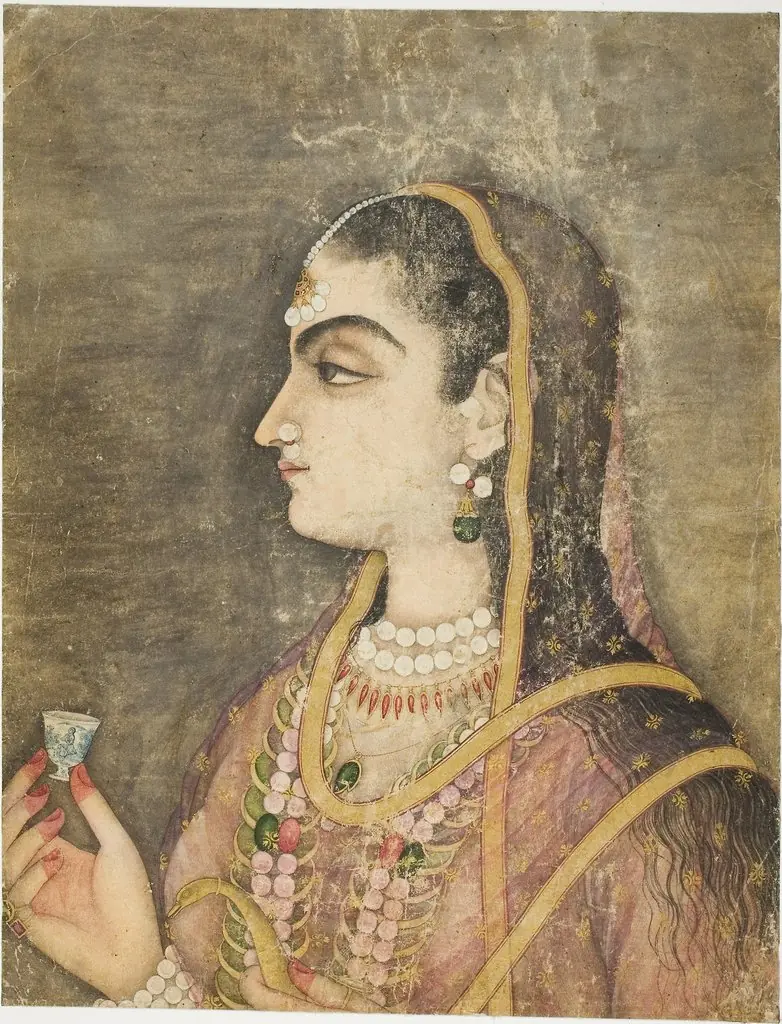 Portrait of a Princess
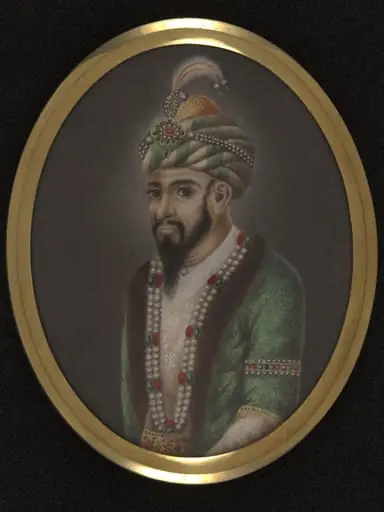 One of twelve miniatures depicting Mughal rulers of India; head and shoulders in profile.
 Jewel Portrait of a Young Girl
 Portrait of a Prince (Possibly Mohammad Mirza)
 Head and shoulders portrait of an Indian lady