Artwork
One of Fifteen drawings depicting household servants
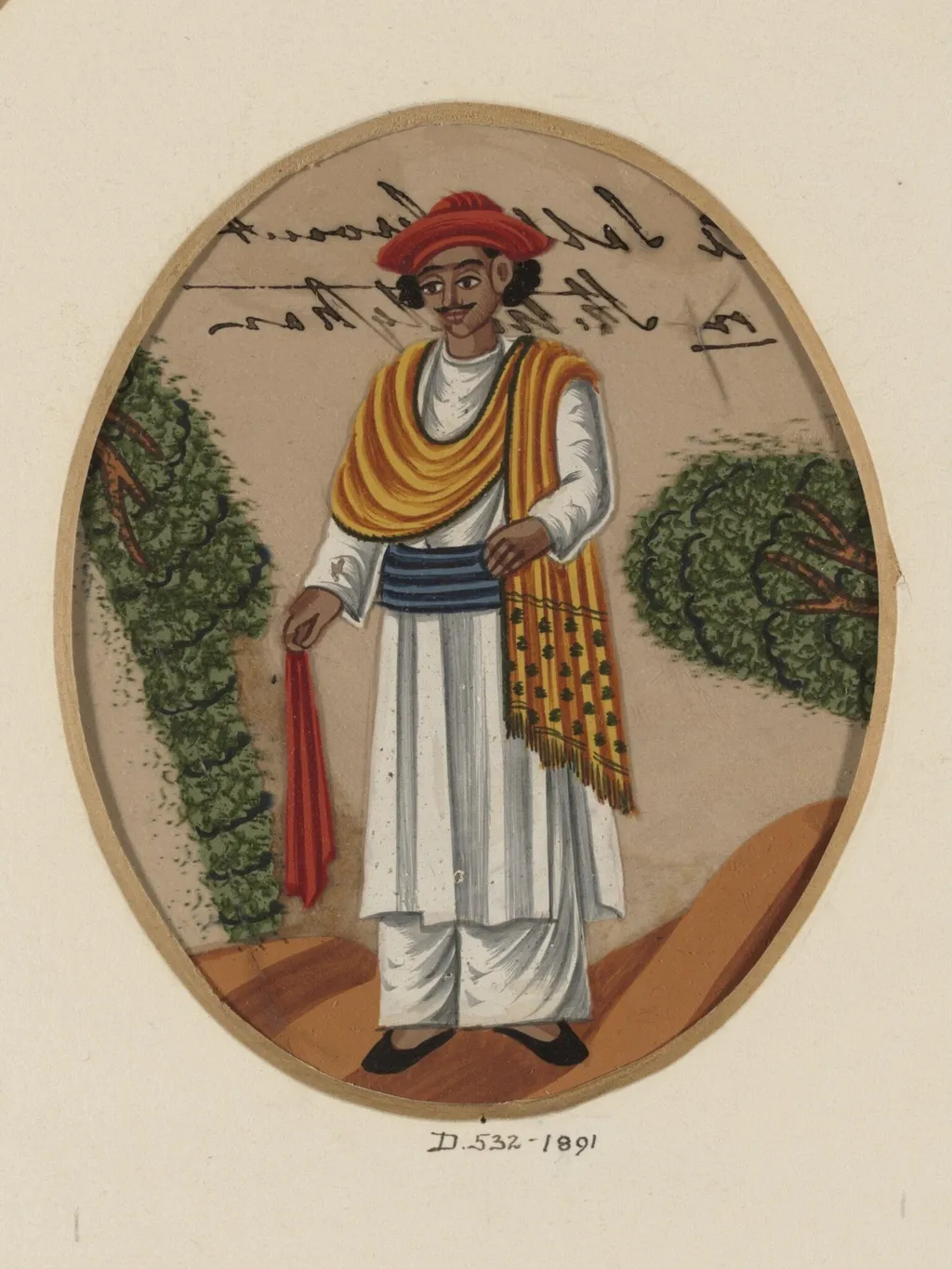
One of Fifteen drawings depicting household servants is a paint painting by the Impressionist artist Unknown. It dates from 1850 and is held in the collection of the Victoria and Albert Museum.
About this work
Overview
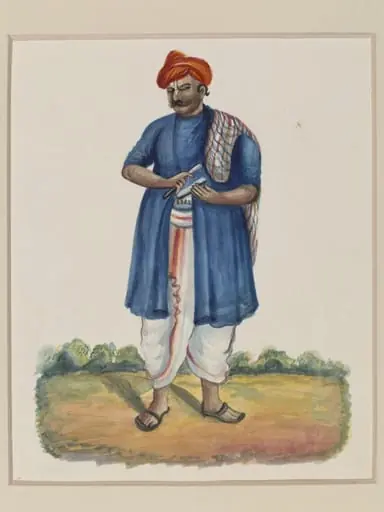
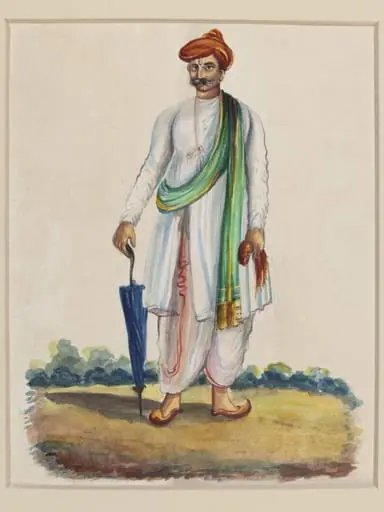
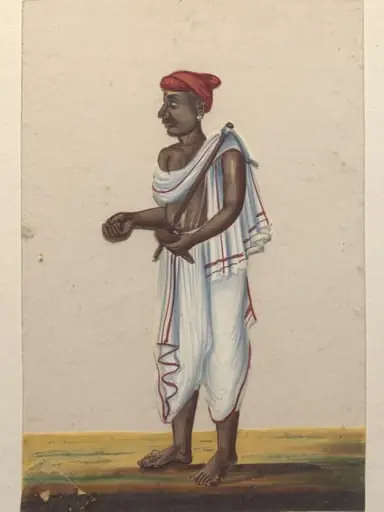
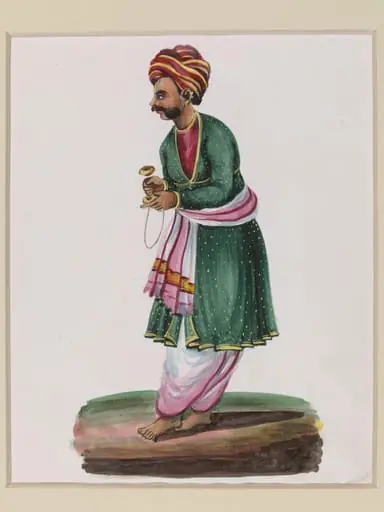
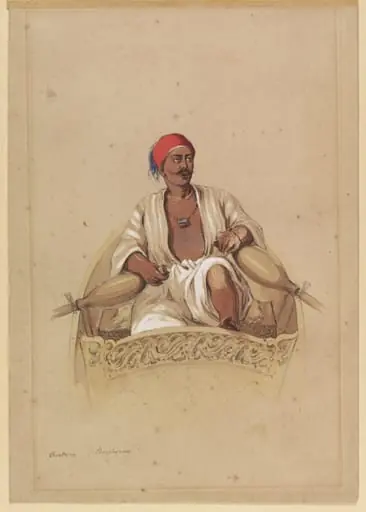
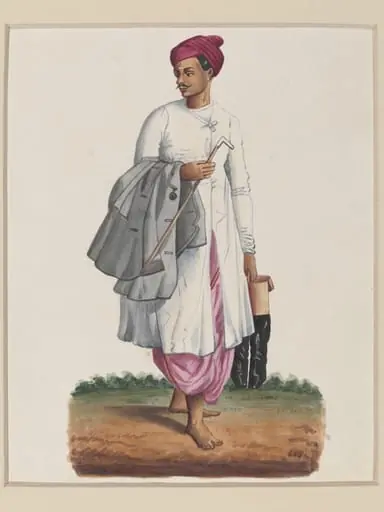
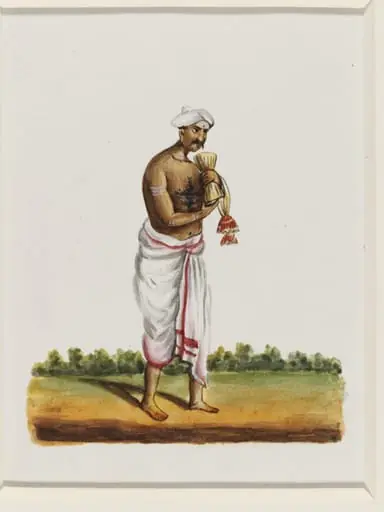
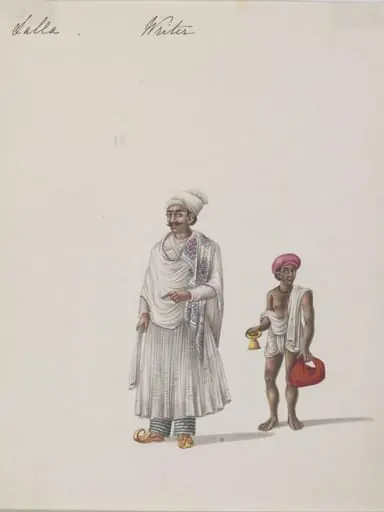
This 1850 drawing, part of a series of fifteen depicting domestic staff, portrays a khitmatgar—a servant in South Asian households—standing in a garden.
This 1850 drawing, part of a series of fifteen depicting domestic staff, portrays a khitmatgar—a servant in South Asian households—standing in a garden. Executed in ink or pencil on paper, it was transferred from the Victoria and Albert Museum’s Department of Engraving, Illustration & Design under the reference RP 51/2237. The work is unattributed, and its purpose appears documentary rather than decorative.
Subject & Meaning
The figure is identified as a khitmatgar, a role often associated with serving at table or managing household duties. His attire—white robe, yellow shawl, and red hat—signals both function and status within domestic service. The red cloth he holds may indicate readiness to serve, perhaps as a napkin or tray covering. The garden setting suggests a liminal space between private residence and service labor.
Technique & Style
Rendered with careful linework and restrained tonal variation, the drawing emphasizes clarity over ornamentation. The figure is rendered in profile or three-quarter view, with attention to the drapery of fabric and the texture of the path. Background elements like bushes and earth are simplified, focusing attention on the subject’s posture and dress, reflecting a observational, ethnographic approach.
History & Provenance
The drawing entered the Victoria and Albert Museum’s collection through its Department of Engraving, Illustration & Design, likely acquired during the mid-19th century as part of a broader effort to document material culture across the British Empire. Its specific origin remains undocumented, but its inclusion among fifteen similar works implies a systematic, if informal, record of domestic roles in colonial India.
Context
Created during the height of British colonial administration in India, the drawing reflects a growing European interest in cataloging local customs and labor structures. Such images were often produced for administrative, educational, or ethnographic purposes, offering glimpses into the lives of service classes rarely represented in formal portraiture of the era.
Legacy
As part of a small group of works focused on domestic servants, this drawing contributes to a historical archive of everyday life in colonial South Asia. Though not widely exhibited, it remains a quiet testament to the visibility of labor within imperial visual culture, preserving the appearance and role of individuals otherwise absent from official records.
Artist & collection

 Domestic Scene
 Giacomo and Cardinal Marco, investing Andrea, Abbot of San Zeno, with his Benefice
 The Nymph of Fontainebleau
 Portrait of a Woman
 Madonna and Child with Saints in the Enclosed Garden
 Venus and Minerva
 Family Group of Four on Sofa
 Wall painting from Room H of the Villa of P. Fannius Synistor at Boscoreale