Artwork
Boatman/ Bosphorus
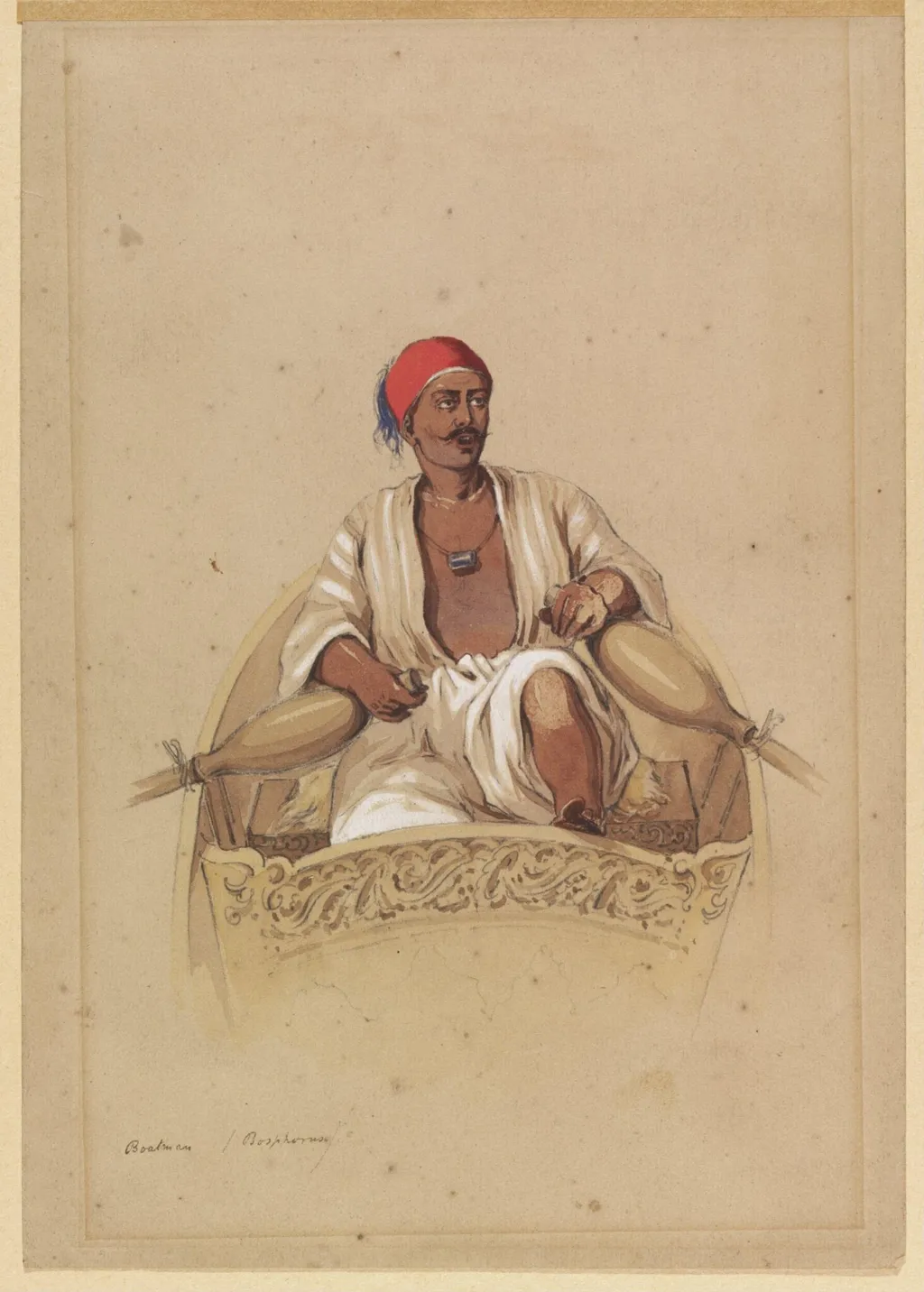
Boatman/ Bosphorus is a watercolor work on paper by the Impressionist artist Aloysius Rosarius Amadeus Raymondus Andreas Preziosi. It dates from 1855 and is held in the collection of the Victoria and Albert Museum. The watercolor portrays a solitary figure seated in a small boat on the Bosphorus.
About this work
Overview
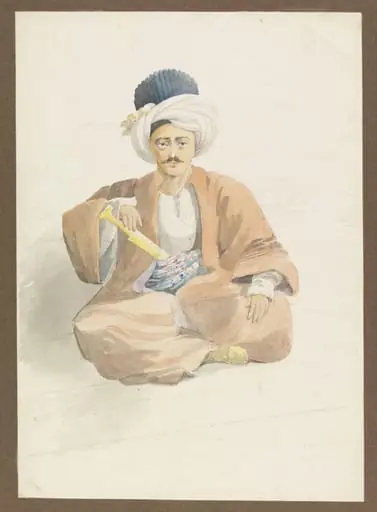
The watercolor portrays a solitary figure seated in a small boat on the Bosphorus. He wears a white, loosely draped garment and a red head covering, his face framed by a moustache and a prominent necklace with a large pendant. The composition is set against a muted beige background, with the boat’s decorative hull visible at the lower edge.
Subject & Meaning
The sitter represents a traditional Bosphorus boatman, known locally as a caiquegi. His attire—a silk gauze shirt and headscarf—matches contemporary descriptions of Ottoman watermen who ferried passengers across the strait. The relaxed pose, one arm resting on the gunwale and the other near his torso, suggests a moment of quiet labor or brief respite during his duties.
Technique & Style
Executed in transparent watercolor, the work balances delicate washes with precise line work, especially in the intricate pattern of the boat’s hull. The handling of light and color reflects a synthesis of Realist observation and Impressionist sensitivity, capturing both the figure’s material texture and the atmospheric tone of the surrounding water.
History & Provenance
Created in the mid‑19th century, the piece belongs to a series of single‑figure studies of Ottoman and Greek subjects. Multiple versions of this composition are recorded in various collections, indicating it was reproduced or revisited by the artist or his workshop. The work is unsigned, leaving open the question of whether it was painted by the principal artist or an assistant within his circle.
Context
During the 1800s, Western artists were drawn to the exoticism of the Ottoman Empire, often depicting everyday laborers as emblematic of the region’s cultural landscape. This watercolor fits within that broader trend, offering a documentary glimpse of Bosphorus life while also engaging with contemporary artistic movements that emphasized direct observation and fleeting visual impressions.
Artist & collection
Artist
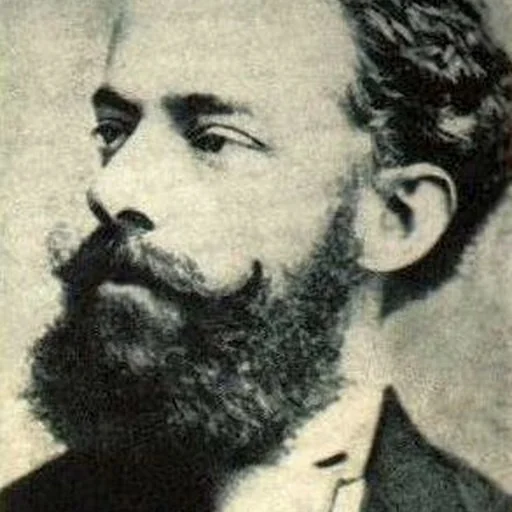
Aloysius Rosarius Amadeus Raymondus Andreas Preziosi
Amedeo Preziosi (2 December 1816 – 27 September 1882) was a Maltese painter and traveler known for his watercolours and prints of Constantinople, the Balkans, Ottoman Empire, and Romania.

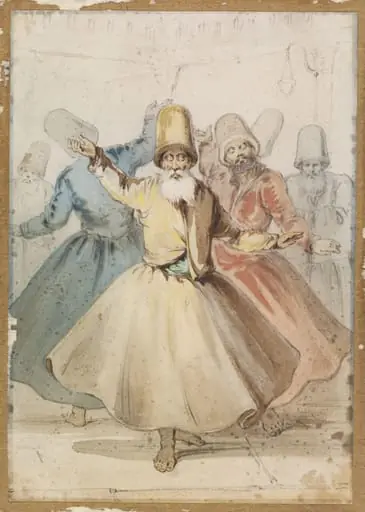
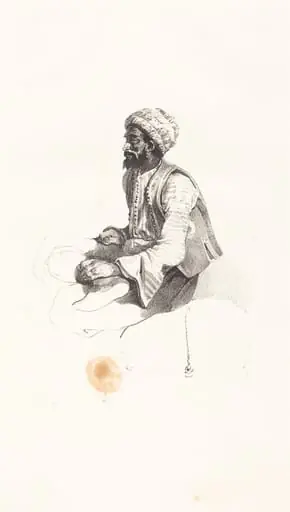
![Portrait of Trehem[?]Walid 'Abdullah, an Arab from Iraq, by Aloysius Rosarius Amadeus Raymondus Andreas Preziosi](https://artifactworldgallery.com/img/aloysius-rosarius-amadeus-raymondus-andreas-preziosi--portrait-of-trehem-walid-abdullah-an-arab-from-iraq--2476a3692d0929a5-w320.webp)
![A Seller of Milk-puddings [Mahallebi], by Aloysius Rosarius Amadeus Raymondus Andreas Preziosi](https://artifactworldgallery.com/img/aloysius-rosarius-amadeus-raymondus-andreas-preziosi--a-seller-of-milk-puddings-mahallebi--3da9fd2db017402d-w320.webp)