Artwork
Ayyanar
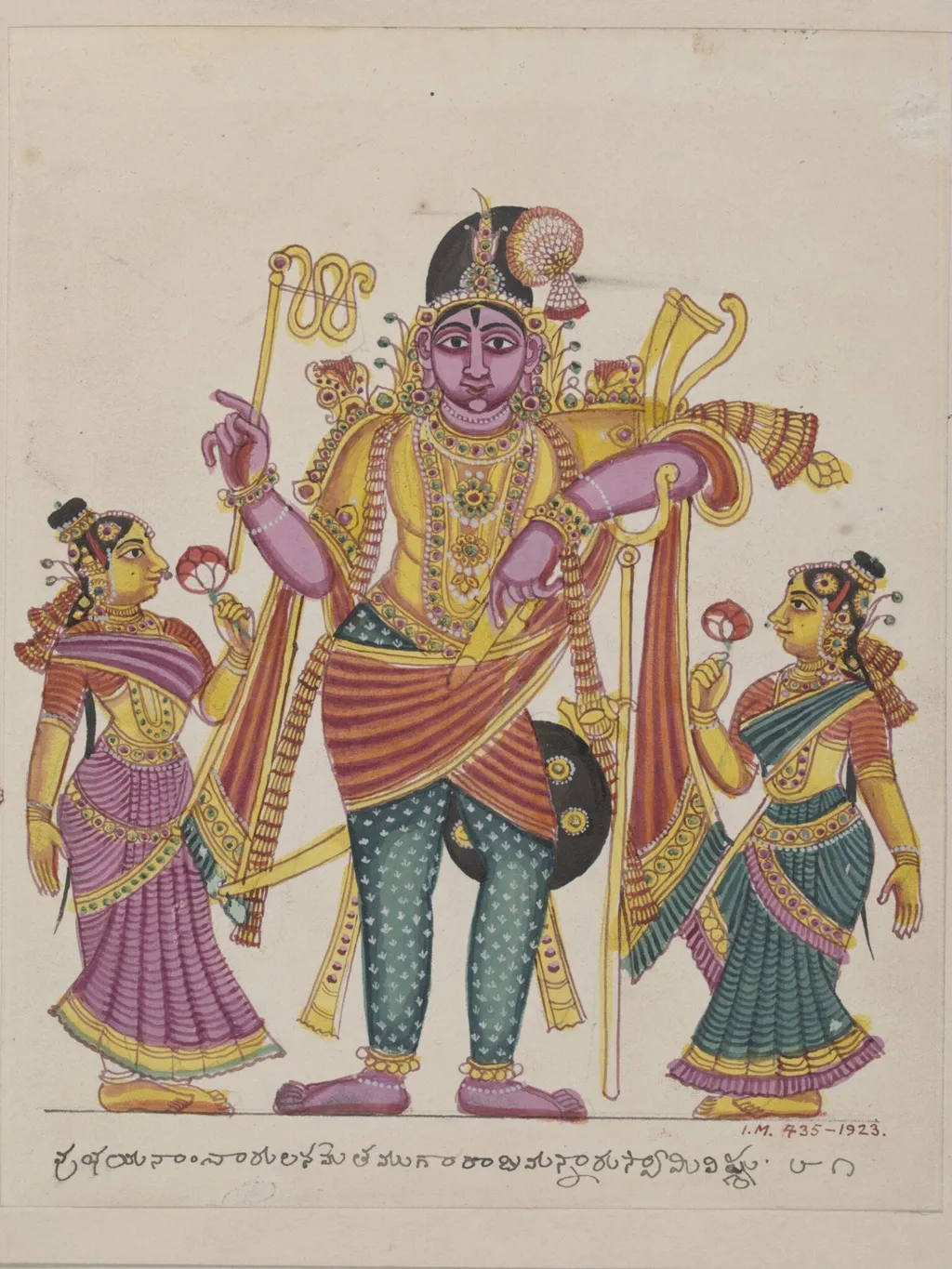
Ayyanar is a paint painting by the Romanticist artist Unknown. It dates from 1820 and is held in the collection of the Victoria and Albert Museum.
About this work
Overview
This 19th-century South Indian painting depicts a central male deity figure, identifiable by his attributes as a form of Ayyanar or similar Hindu deity, flanked by two female attendants. The composition showcases vibrant, bold colors with sharp outlines and flat color areas, characteristic of regional artistic traditions.
Subject & Meaning
The central figure, likely Ayyanar, holds a bow and discus, symbols commonly associated with divine authority and protection in Hindu iconography. The two female figures, possibly shaktis (embodiments of divine feminine power), stand in attendant poses, suggesting a scene of devotion or divine presence.
Technique & Style
The painting features bold, vibrant colors (notably reds, yellows, and greens) applied in flat areas with sharp outlines, typical of South Indian artistic styles during the period. The use of gold jewelry, intricate sashes, and distinctive headdresses adds to the work's visual richness.
History & Provenance
Created in the early 19th century (circa 1820) as part of a larger series of drawings depicting Hindu deities, the painting's specific provenance and exhibition history before its current location are not detailed here.
Context
Similar works can be found in collections like the Victoria and Albert Museum, highlighting the painting's place within a broader tradition of South Indian religious art from the time.
Artist & collection

 Domestic Scene
 Giacomo and Cardinal Marco, investing Andrea, Abbot of San Zeno, with his Benefice
 The Nymph of Fontainebleau
 Portrait of a Woman
 Madonna and Child with Saints in the Enclosed Garden
 Venus and Minerva
 Family Group of Four on Sofa
 Wall painting from Room H of the Villa of P. Fannius Synistor at Boscoreale
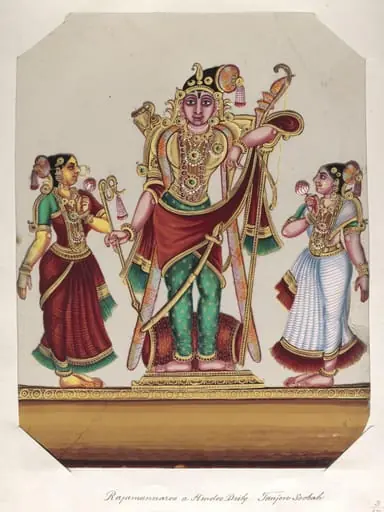 One of seventeen mica paintings depicting Hindu deities.
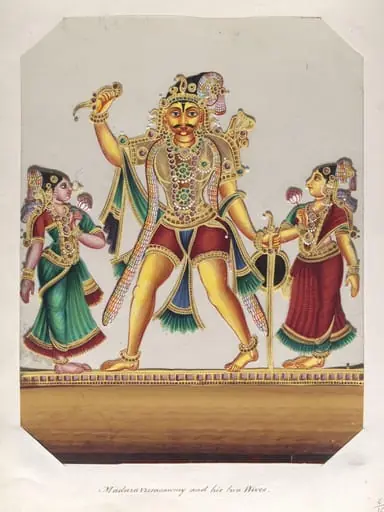 One of sixteen mica paintings depicting Hindu deities and festival processions with decorated cars.
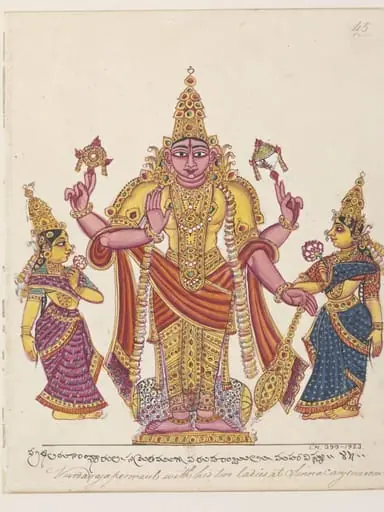 Vishnu as Varadarajaswami with his two 'shaktis', Shri Devi and Bhumi Devi.
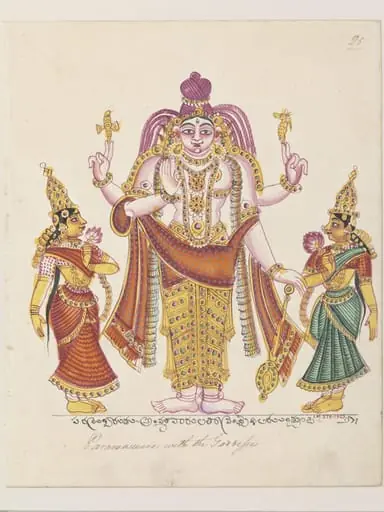 Harihara attended by Parvati and Lakshmi
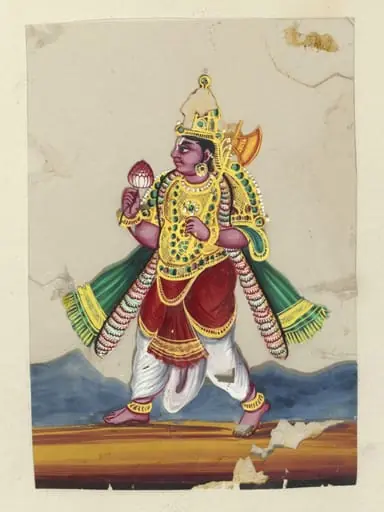 One of five paintings of Hindu deities.
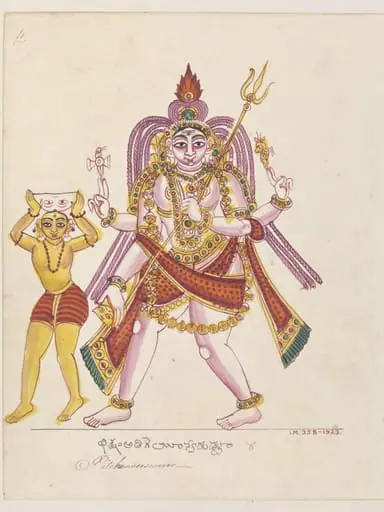 Shiva in his form as Bichandi or Bhikshatana
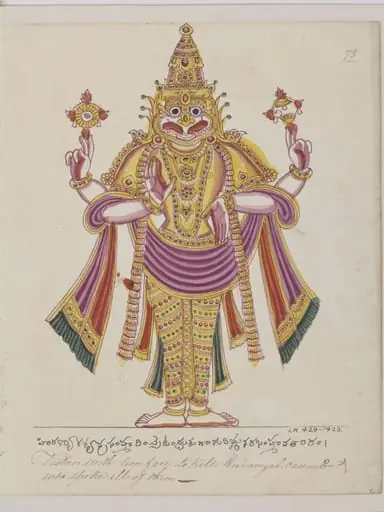 Narasimha, the man-lion, the fourth avatar (incarnation) of Vishnu
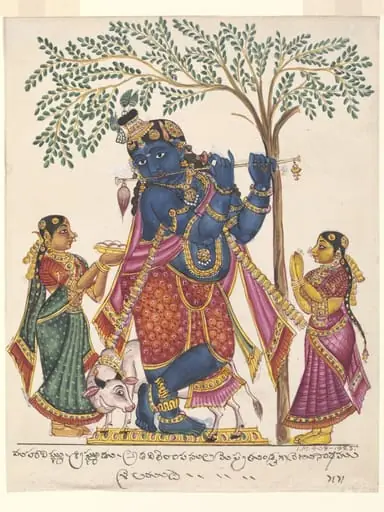 Krishna in his form as Venu-Gopala, fluting beneath the kadam tree
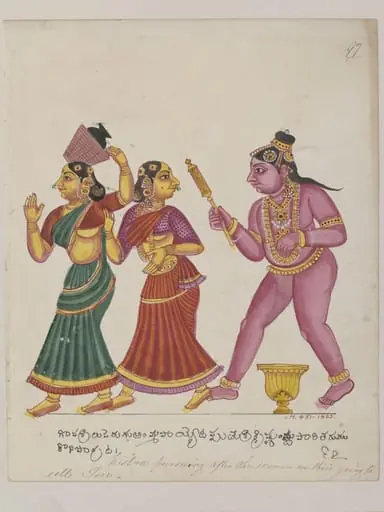 Krishna pursuing the gopis