Artwork
One of forty-five drawings of Muharram scenes, occupations, festivals and ceremonies.
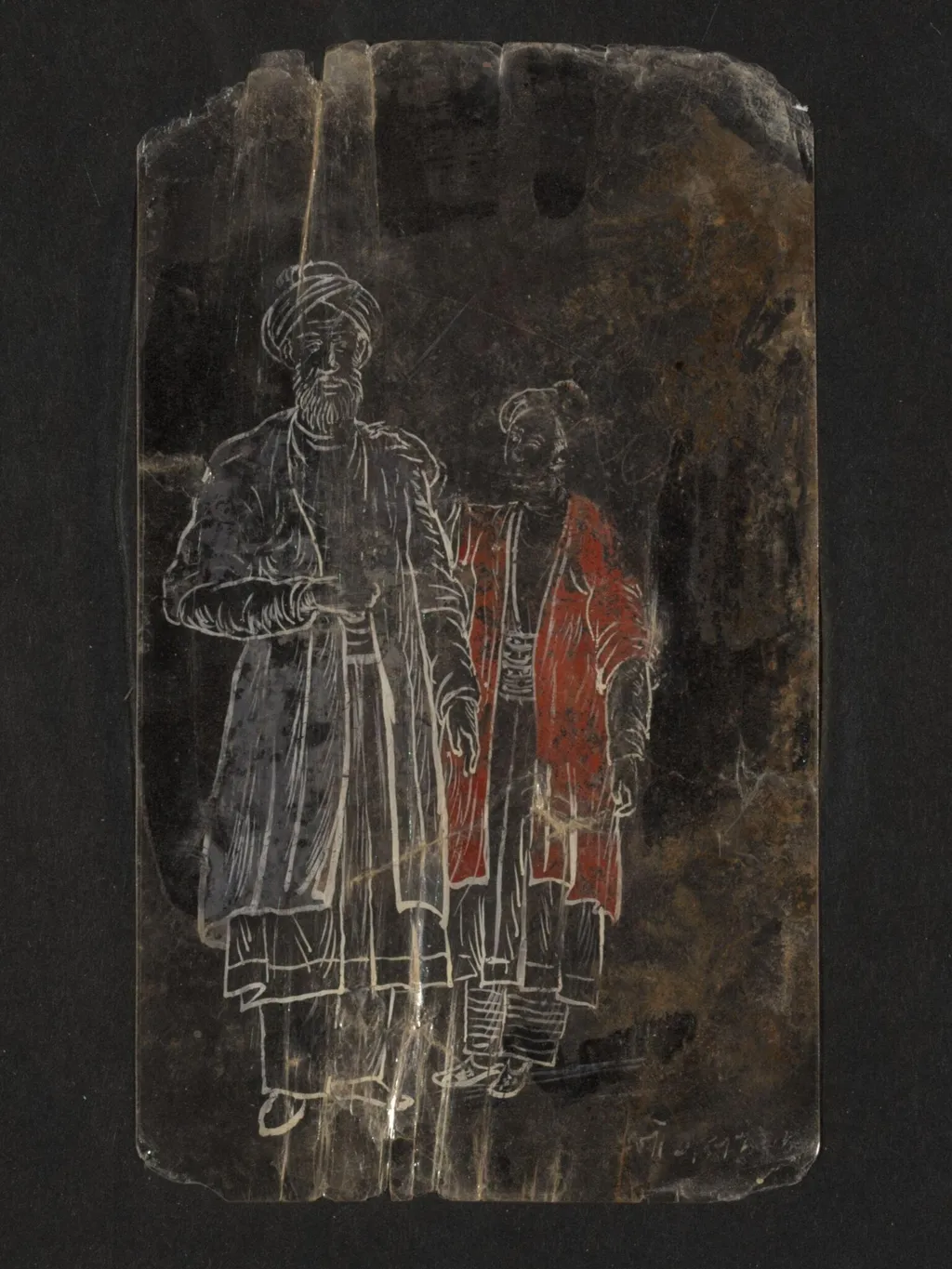
One of forty-five drawings of Muharram scenes, occupations, festivals and ceremonies. is a paint painting by the Romanticist artist Unknown. It dates from 1800 and is held in the collection of the Victoria and Albert Museum.
About this work
Overview
The drawings entered institutional collections in 1948 after acquisition in Patna from a family that had maintained them as preparatory tracings.
This work belongs to a group of forty-five mica drawings created around 1800, illustrating Muharram observances alongside depictions of trades, celebrations, and rituals. Executed in opaque watercolor, the series captures formal and quotidian moments with equal attention. The drawings entered institutional collections in 1948 after acquisition in Patna from a family that had maintained them as preparatory tracings.
Subject & Meaning
The image presents two male figures in solemn, frontal alignment. The left figure wears a flowing robe and turban, while the right dons a shorter red garment. Their postures and slight mutual orientation suggest a ceremonial or diplomatic exchange. The scene likely records a specific rank or role within Muharram processions or courtly protocol, emphasizing hierarchy and decorum.
Technique & Style
Painted on mica—a translucent mineral support—the work employs bold contours and saturated hues to heighten legibility. The artist contrasts the figures’ garments against a darkened backdrop, directing focus to their attire and gesture. Line work remains crisp, while color application is direct, avoiding gradation. This approach aligns with regional traditions of narrative painting, prioritizing clarity over atmospheric effect.
History & Provenance
Originally part of a private collection in Patna, the drawings were preserved as white-line tracings by the family of Ishwari Prasad, possibly serving as templates for later compositions. In 1948, the entire set was acquired by a public institution, where it has since been cataloged as a cohesive series documenting early nineteenth-century social and religious practices.
Context
Produced in a period of heightened artistic exchange between South Asian courts and European traders, these drawings reflect both local customs and broader aesthetic currents. Muharram scenes, in particular, held significance as public expressions of Shia devotion, while occupational and festival imagery offered a visual record of contemporary life. The use of mica, though less common, underscores the adaptability of materials in colonial-era workshops.
Artist & collection

 Domestic Scene
 Giacomo and Cardinal Marco, investing Andrea, Abbot of San Zeno, with his Benefice
 The Nymph of Fontainebleau
 Portrait of a Woman
 Madonna and Child with Saints in the Enclosed Garden
 Venus and Minerva
 Family Group of Four on Sofa
 Wall painting from Room H of the Villa of P. Fannius Synistor at Boscoreale
 Three Studies of Costume
 Madonna and Child
 Krishna and Radha
 Tomyris with the Head of Cyrus (verso)
 Indra and Dantiniki
 Krishna and Radha Under Mt. Govardhan
 Untitled
 Nuori ruhtinas seurueineen maisemassa, persialainen miniatyyri
 Untitled
 Ensemble de modèles de la collection
 Shaykh Sanan and the Christian Maiden
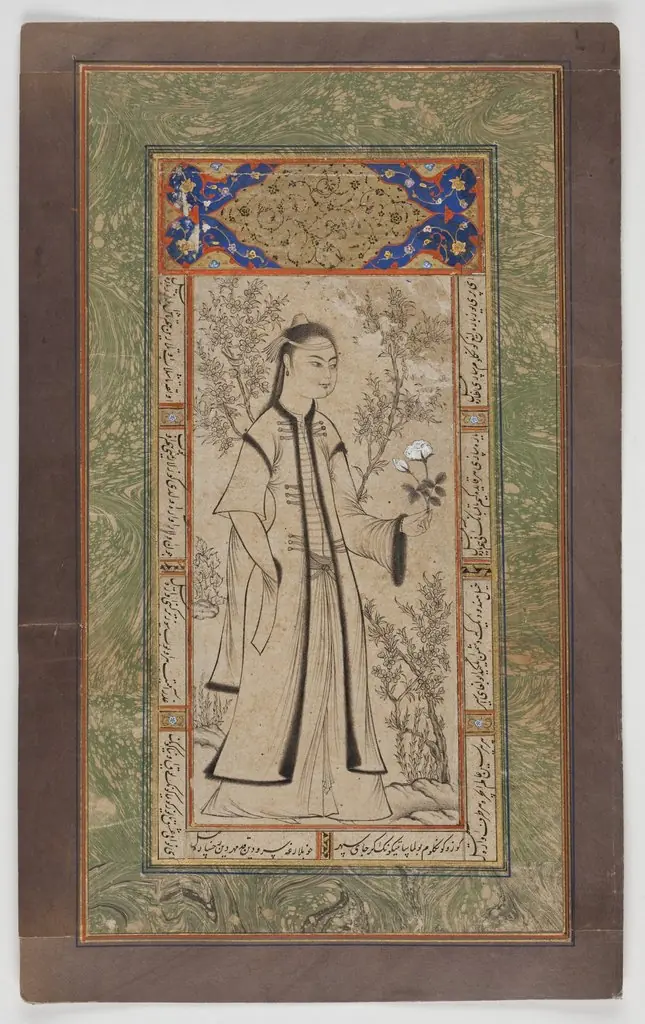 Lady with a Rose