Artwork
Untitled
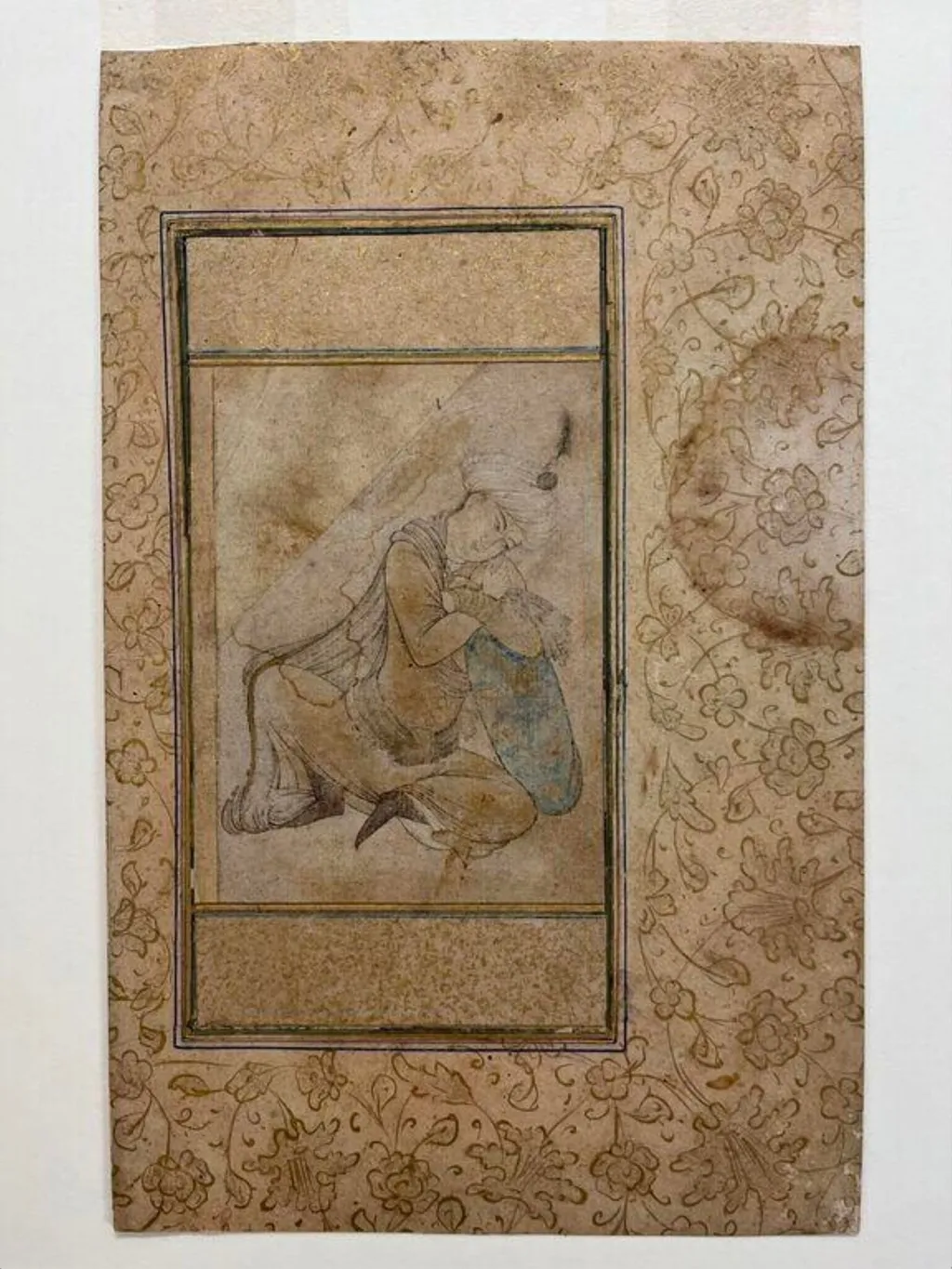
Untitled is a paint painting by the Baroque artist Reza `Abbasi. It is held in the collection of the Victoria and Albert Museum.
About this work
Overview
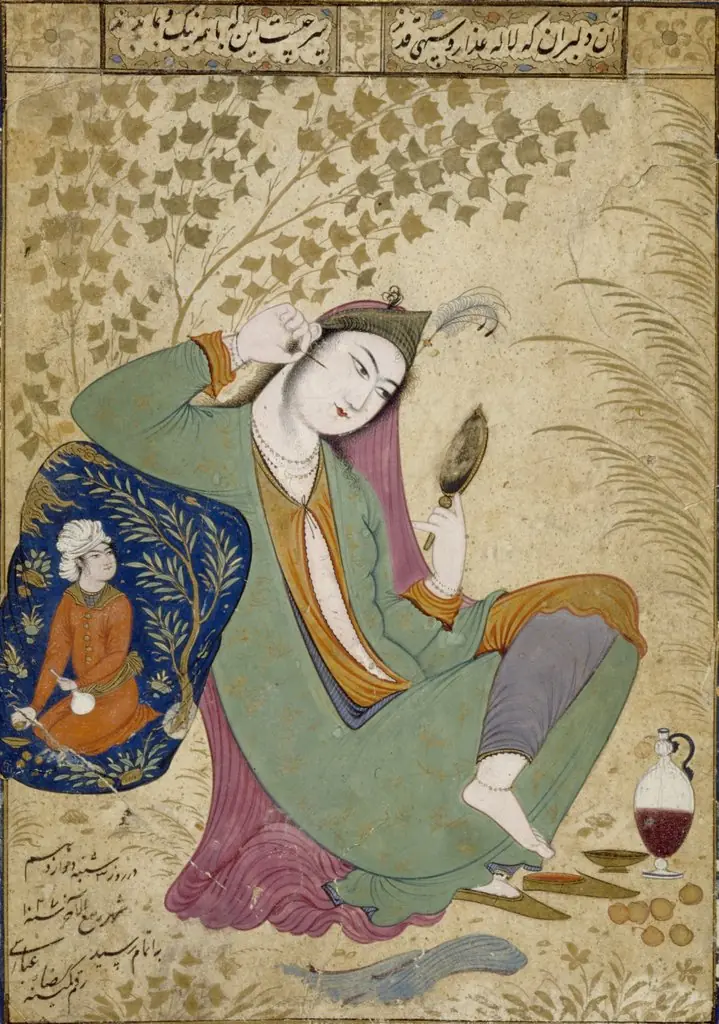
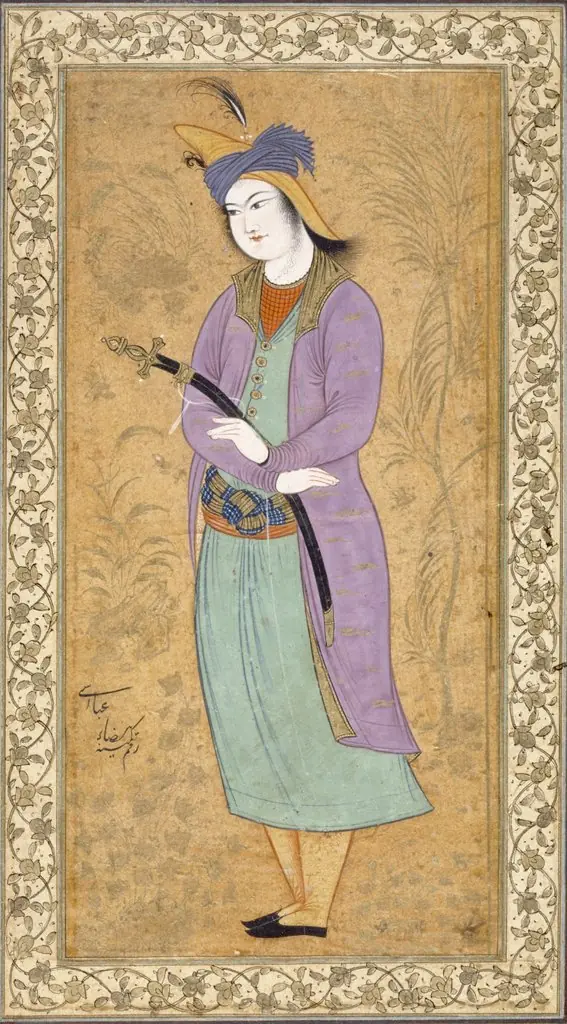
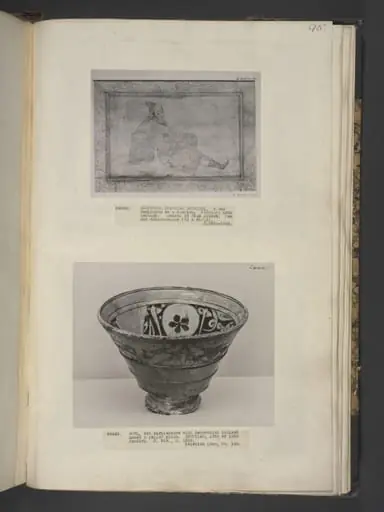
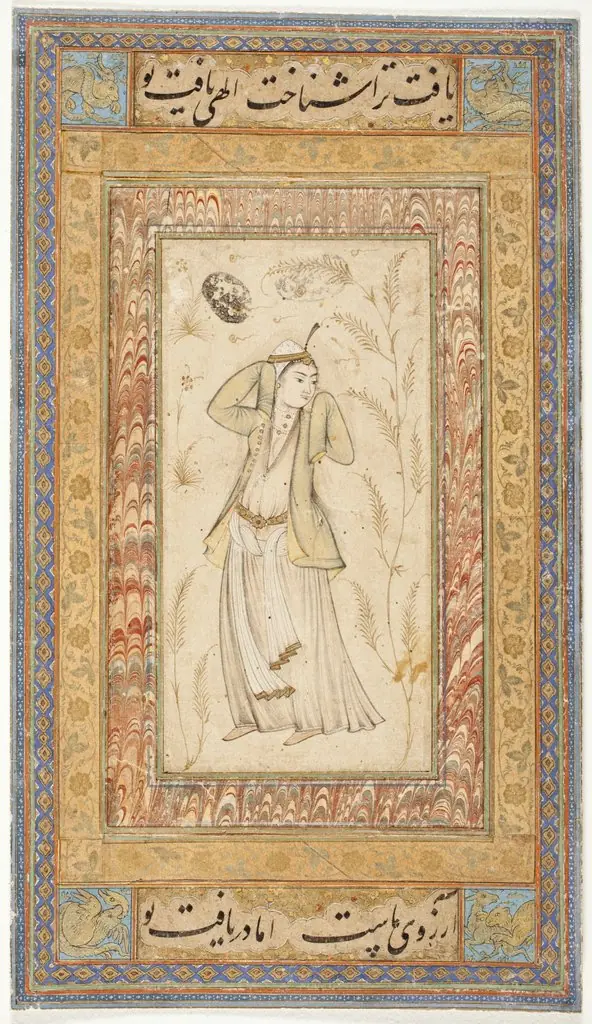
This 1640 painting by Riza Abbasi presents a solitary figure in a contemplative pose, rendered with subtle tonal shifts and minimal background detail.
This 1640 painting by Riza Abbasi presents a solitary figure in a contemplative pose, rendered with subtle tonal shifts and minimal background detail. The composition is framed by an ornate border of gold and brown leaf motifs, typical of Persian manuscript illumination. The figure, seated with legs drawn close, holds an indistinct object, while the surrounding space remains largely empty, emphasizing introspection over narrative.
Subject & Meaning
The figure, likely a young man, is depicted in a state of quiet solitude, his blurred facial features suggesting emotional distance or transience. The absence of clear context invites interpretation as a meditation on impermanence or inner reflection. The modest attire and unadorned setting align with Sufi ideals of humility, while the object in his lap remains ambiguous, possibly symbolizing a book, instrument, or spiritual token.
Technique & Style
Abbasi employs soft, muted pigments with delicate brushwork, favoring atmospheric gradation over sharp definition. The robe’s blue-green border contrasts gently with earth-toned surroundings, drawing focus without disruption. The background’s faint architectural outline and the gold-leaf border reflect the artist’s training in courtly illustration, merging miniature traditions with a more personal, lyrical approach.
History & Provenance
Created during the later Safavid period, the work reflects the shift in Persian painting toward intimate, individualized subjects as court patronage waned. Its survival with the original decorative mount suggests it was once part of a codex or album, valued for its aesthetic rather than narrative function. The circular discoloration on the right may indicate past exposure to moisture or light.
Context
In early 17th-century Persia, artists like Abbasi moved away from grand historical scenes toward quiet, psychological portraits suited for private contemplation. This shift paralleled broader cultural trends favoring poetry and mysticism over imperial spectacle. The work’s restrained palette and focus on mood align with literary traditions of the time, where emotion was conveyed through suggestion rather than detail.
Legacy
Abbasi’s approach influenced later Persian and Mughal artists who prioritized emotional nuance over formal grandeur. While not widely exhibited in Western collections, this piece exemplifies a quiet revolution in Islamic painting — one that valued stillness and ambiguity, anticipating later developments in individual expression across artistic traditions.
Artist & collection
Artist
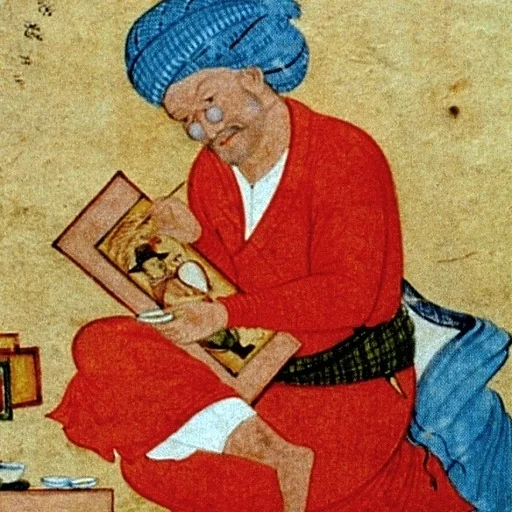
Reza Abbasi (Persian: رضا عباسی), also known as Agha Reza (c. 1565 – 1635), was the leading Persian miniaturist of the Isfahan School during the later Safavid period, spending most of his career working for Shah Abbas…

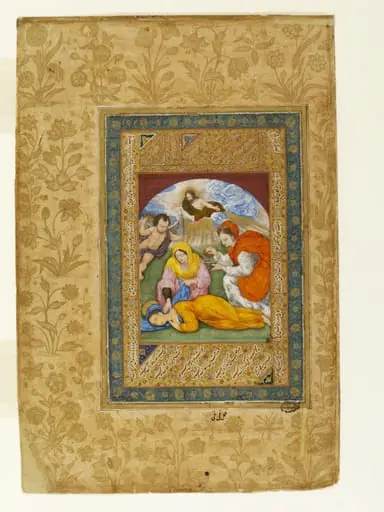 Saint Cecilia
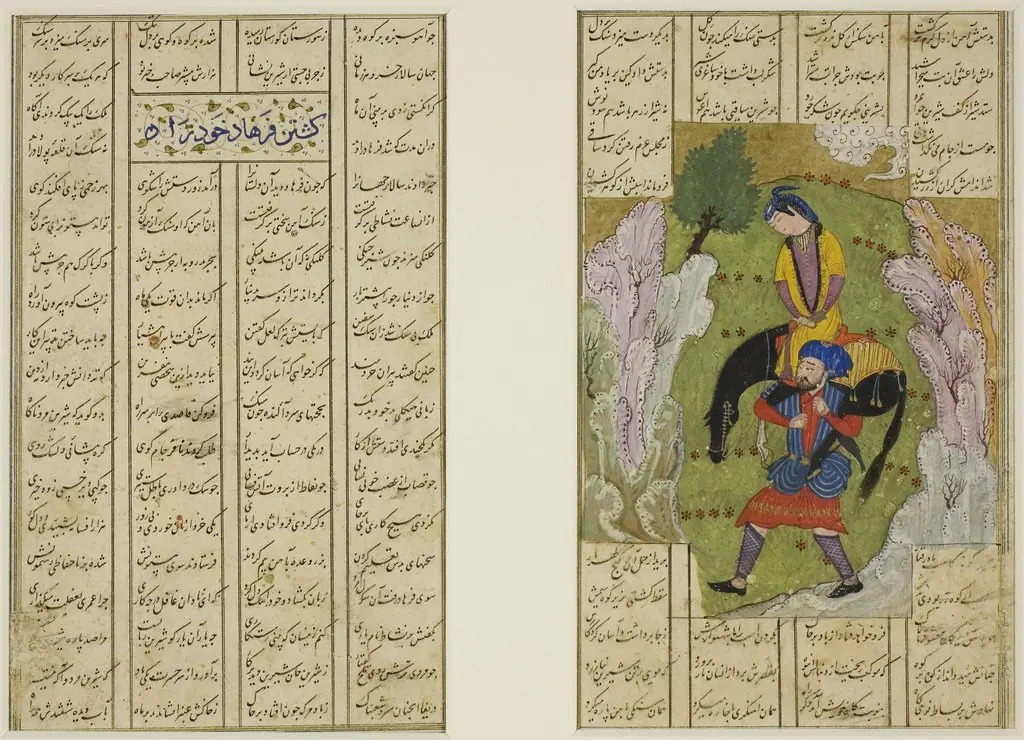 Farhad Carrying Shirin and Her Horse, from a copy of the Khamsa of Nizami
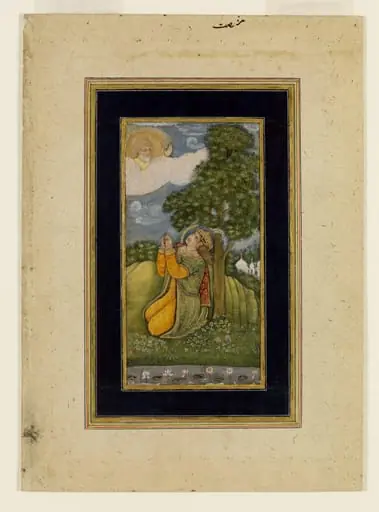 Jehovah
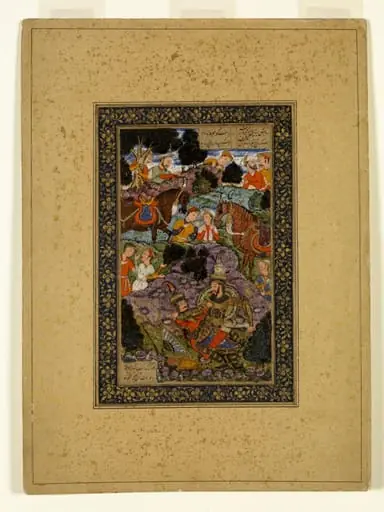 Rustam and Sohrab
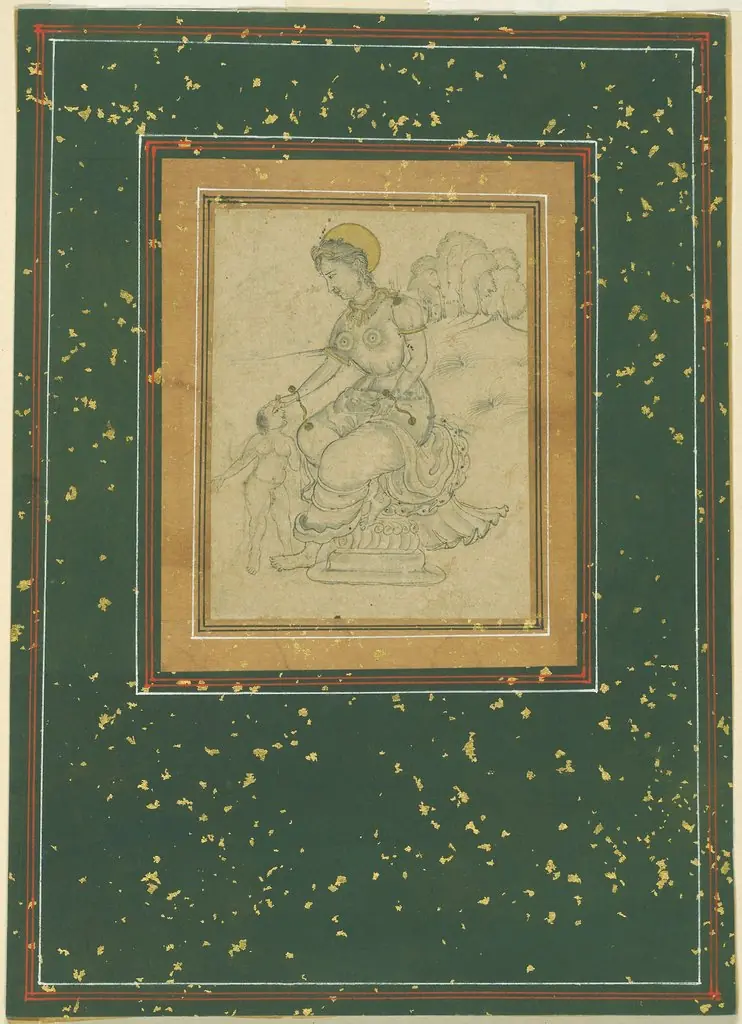 Mother and Child
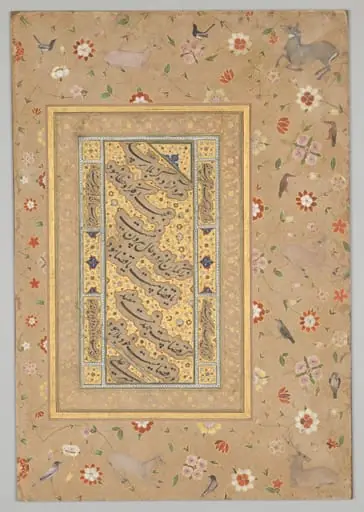 Persian calligraphy framed by an ornamental border of flowers, birds, and deer, from the Late Shah Jahan Album
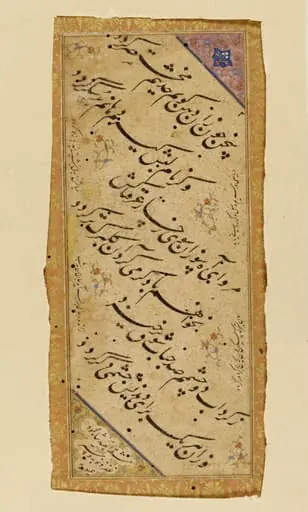 Untitled
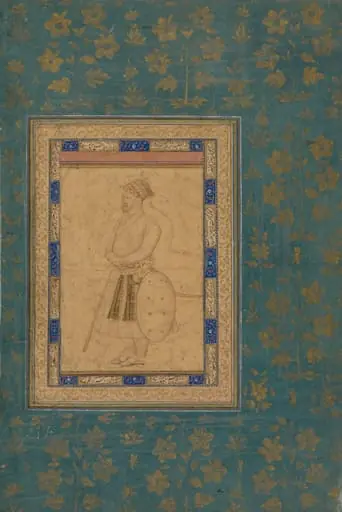 Portrait of an Unidentified Noble from Shah Jahan's Court
 Untitled
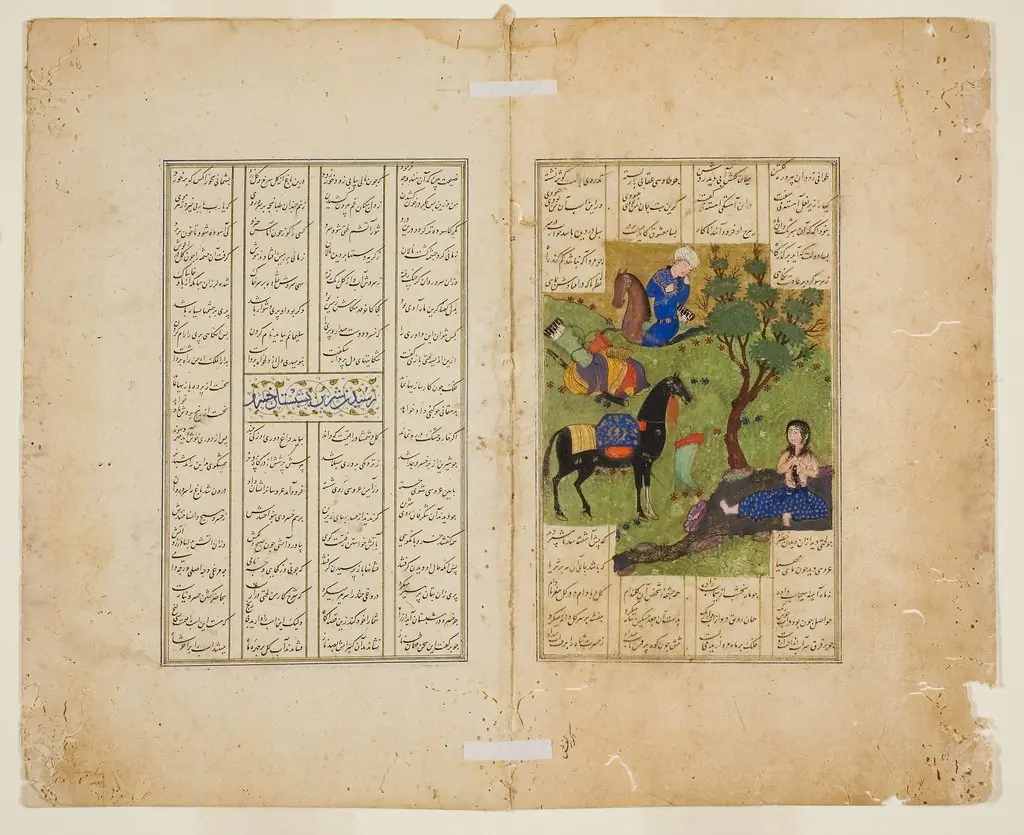 Khusrau Gazing at Shirin, from a copy of the Khamsa of Nizami
 Untitled
 Female Dancer