Artwork
One of sixteen paintings of unidentified South Indian temples.
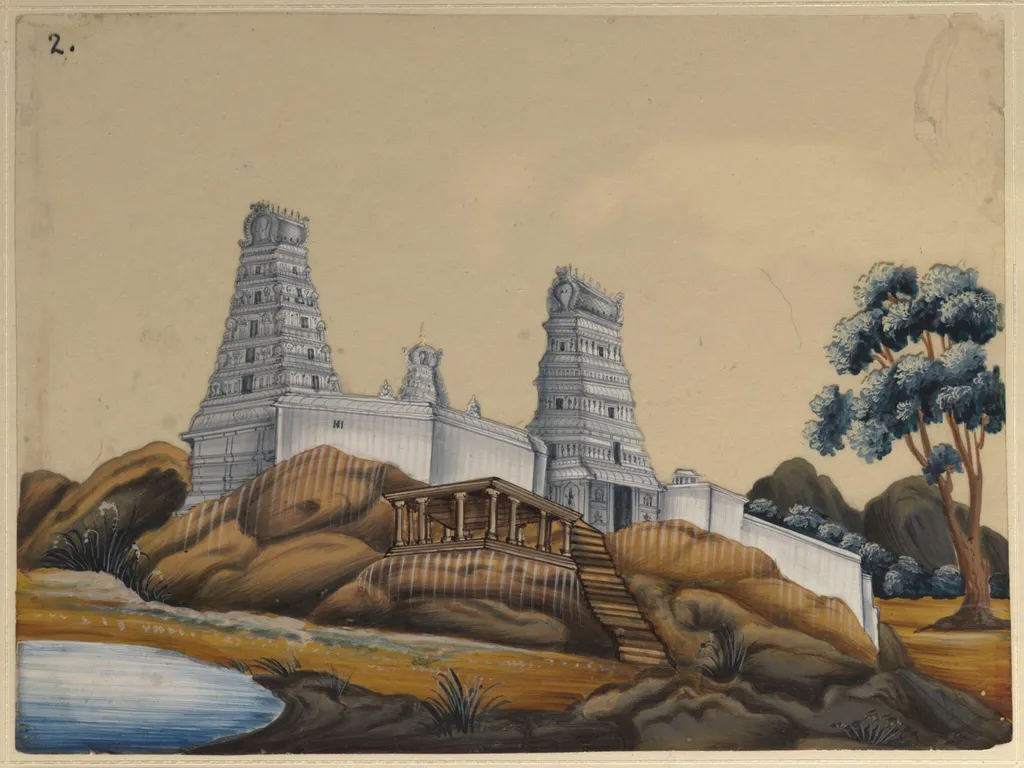
One of sixteen paintings of unidentified South Indian temples. is a paint painting by the Patna School of Painting artist Unknown. It dates from 1860 and is held in the collection of the Victoria and Albert Museum. This painting is one of sixteen known works depicting unidentified South Indian temples, all dated to 1860.
About this work
Overview
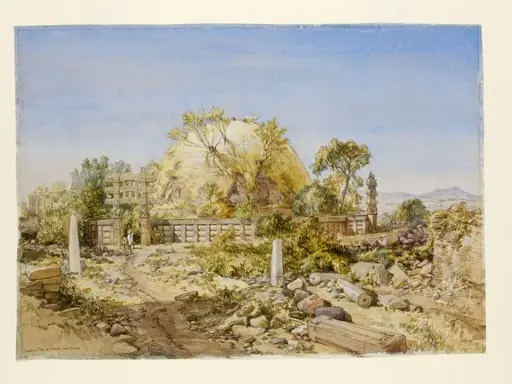
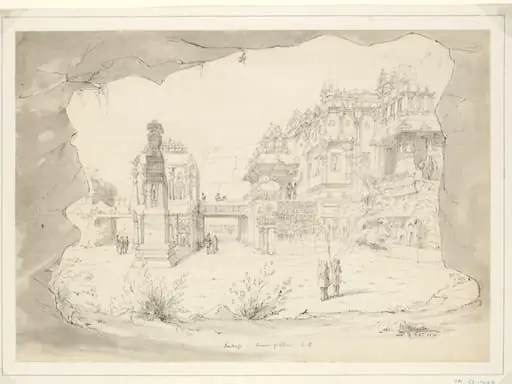
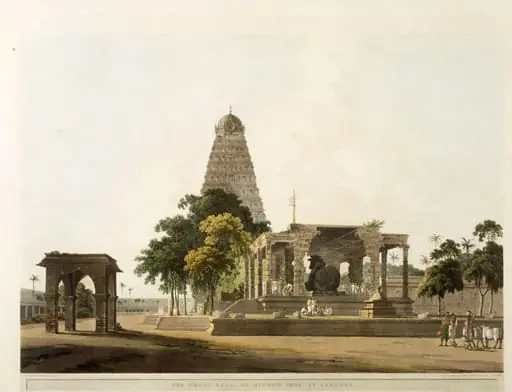
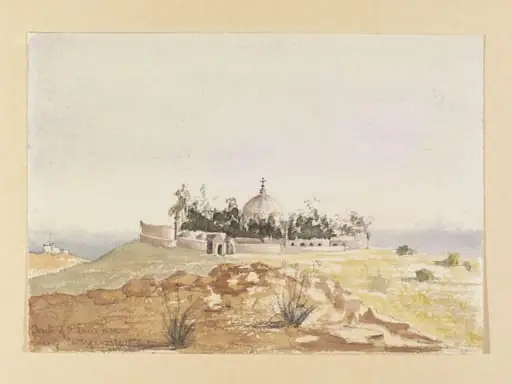
This painting is one of sixteen known works depicting unidentified South Indian temples, all dated to 1860. Executed by an anonymous artist, the piece captures a tranquil temple complex perched on a rocky outcrop. The composition emphasizes architectural verticality and harmonious integration with the natural terrain, rendered in muted tones of pale blue, warm brown, and soft green.
Subject & Meaning
The subject is a temple complex with two tiered gopurams rising above a rugged hillside. A small pavilion with steps leading to water suggests ritual or ceremonial use, though no specific deity or cult is indicated. The absence of figures or inscriptions shifts focus to the structure’s presence within the landscape, implying reverence for sacred architecture as an enduring feature of the land.
Technique & Style
The artist employed delicate washes and subtle gradations to convey light on the temple’s white surfaces and the texture of rock. Soft, atmospheric colors and minimal detail in the background create a sense of quiet depth. The framing of the temple by natural elements—rocks, water, and foliage—reflects a compositional sensitivity to balance and spatial harmony rather than documentary precision.
History & Provenance
The painting was produced in 1860, likely during the British colonial period in South India, when local architectural forms were frequently recorded by both Indian and European artists. Its origin remains undocumented, but it is part of a small group of similar works now held in institutional collections, including the Victoria and Albert Museum, suggesting a shared commission or patronage context.
Context
These temple paintings emerged amid growing interest in India’s architectural heritage during the 19th century. While some works served ethnographic or topographical purposes, this series appears more contemplative, avoiding overt colonial framing. The focus on serene, unpopulated landscapes may reflect a desire to preserve or idealize sacred sites amid rapid social change.
Legacy
Though the artist’s identity is lost, the group of sixteen paintings contributes to a visual record of South Indian temple architecture from a period before widespread photographic documentation. Their quiet aesthetic and emphasis on form over narrative offer a counterpoint to more overtly colonial imagery, preserving a sense of place through understated observation.
Artist & collection

 Domestic Scene
 Giacomo and Cardinal Marco, investing Andrea, Abbot of San Zeno, with his Benefice
 The Nymph of Fontainebleau
 Portrait of a Woman
 Madonna and Child with Saints in the Enclosed Garden
 Venus and Minerva
 Family Group of Four on Sofa
 Wall painting from Room H of the Villa of P. Fannius Synistor at Boscoreale