Artwork
Album of topographical views in India
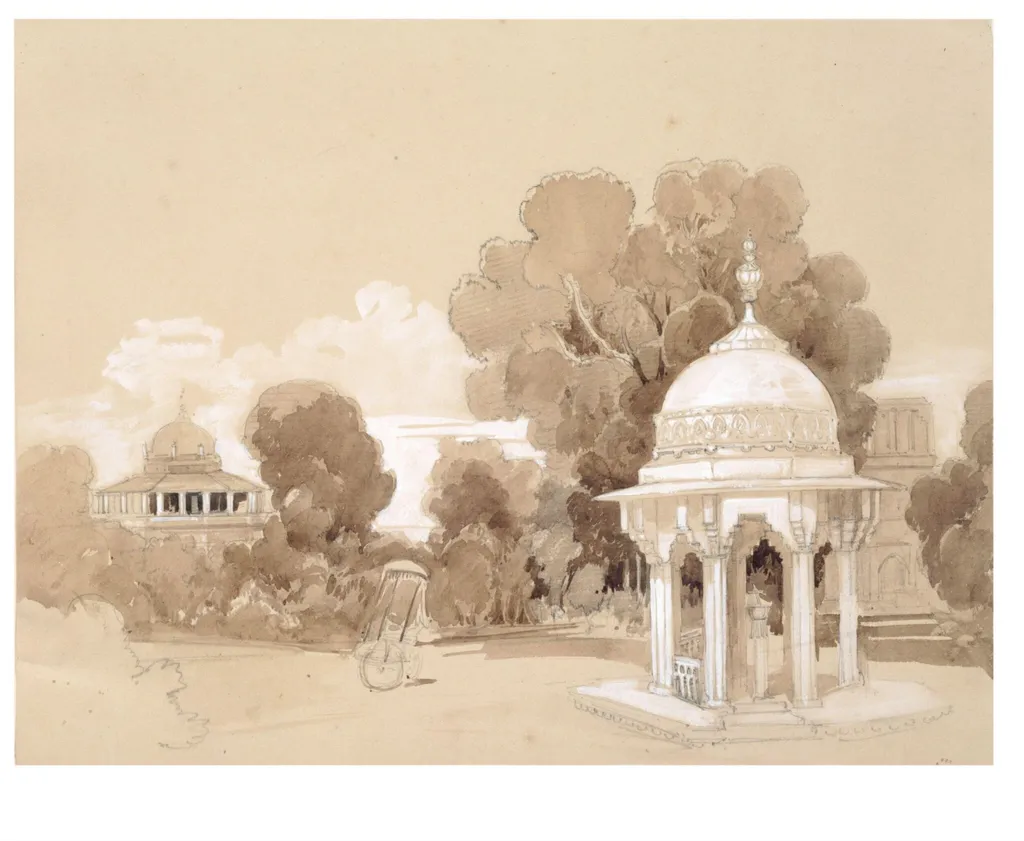
Album of topographical views in India is a watercolor work on paper by the Patna School of Painting artist Lady Charlotte Canning. It dates from 1858 and is held in the collection of the Victoria and Albert Museum.
About this work
Overview
A label inside records that the binding was carried out by Martin of Calcutta.
The album is a compact collection of 48 pages of topographical sketches from India, executed primarily in watercolour with supplementary pencil, pen and ink, and wash. The pages are mounted on cream‑coloured wove paper and bound in dark green cloth‑covered boards, finished with quarter leather and marbled endpapers, and secured with leather ties. A label inside records that the binding was carried out by Martin of Calcutta.
Subject & Meaning
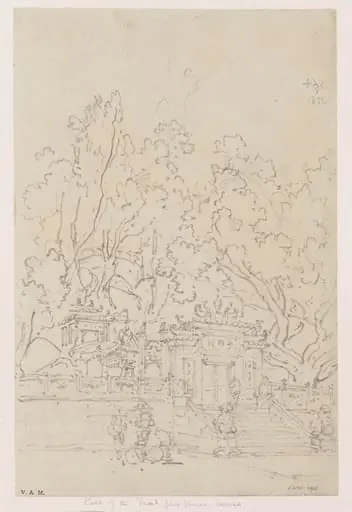
The drawings depict architectural and garden scenes, such as a pair of modest domed pavilions set amid a grove of trees, a bench placed beneath the smaller structure, and surrounding foliage. The compositions convey a tranquil, observational record of the built environment and landscape, reflecting the interests of travelers and officials documenting Indian locales.
Technique & Style
The artist employed loose, rapid brushstrokes to suggest light and shadow, allowing colour to remain soft and atmospheric—light browns, pale greens, and a faint sky dominate the palette. The combination of watercolour washes with pencil and ink line work creates a sketch‑like immediacy typical of 19th‑century travel drawing practices.
History & Provenance
The album bears a binding label identifying Martin of Calcutta as the bookbinder, situating its production within the colonial trade networks that linked India and European markets. The presence of leather ties and marbled endpapers indicates a level of care appropriate for a personal or official travel record.
Context
Topographical sketchbooks were a common means for British officials, merchants, and artists in the 1800s to document the geography, architecture, and natural scenery of the subcontinent. Such albums served both practical purposes—surveying and planning—and aesthetic ones, providing visual material for publications and exhibitions back in Europe.
Artist & collection
Artist
Lady Charlotte Canning painted gentle scenes in watercolor while traveling through India in the 1850s and 1860s.

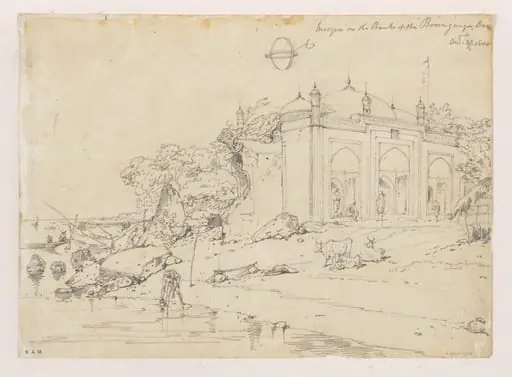 A mosque on the banks of the Buriganga River, Dhaka, Bangladesh
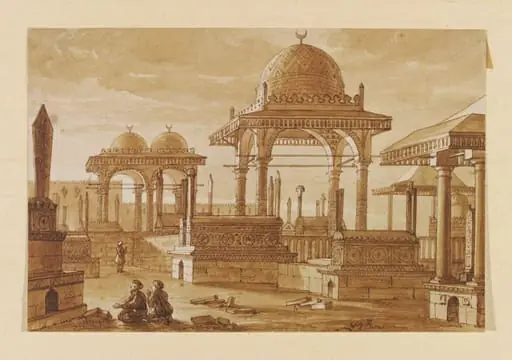 Part of the City of Tombs at Cairo
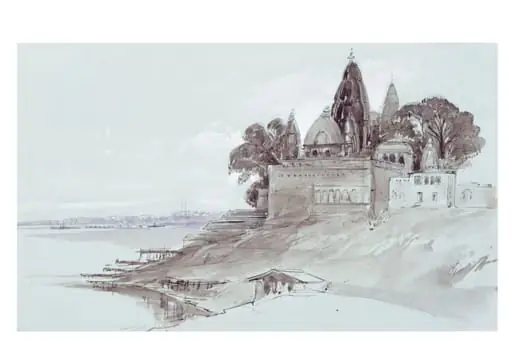 'Rough Sketches 1860-61'
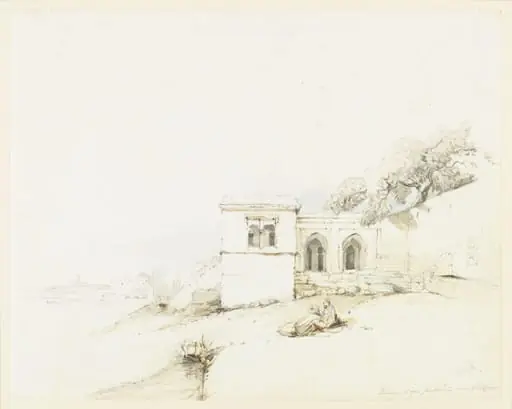 Ruines dune fontaine près dAlger
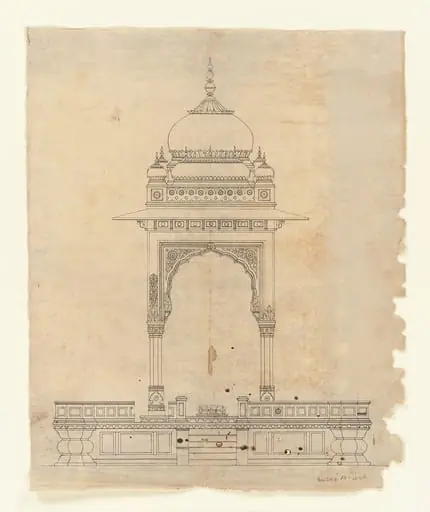 Untitled
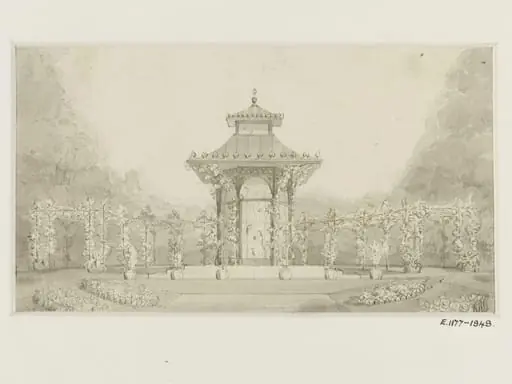 Repton for Ackermann's Repository
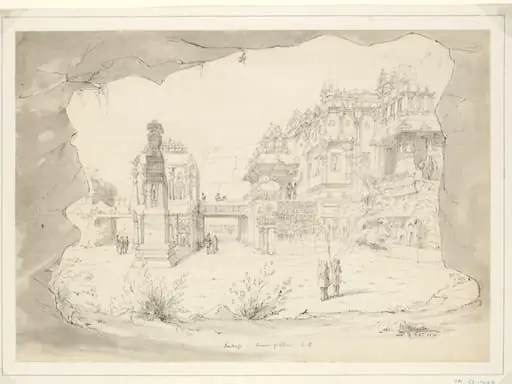 Kailasanatha Temple, Ellora
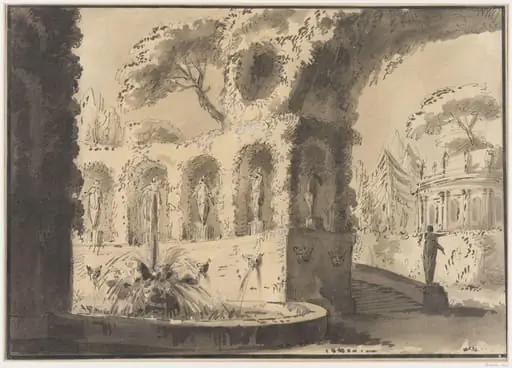 Landscape
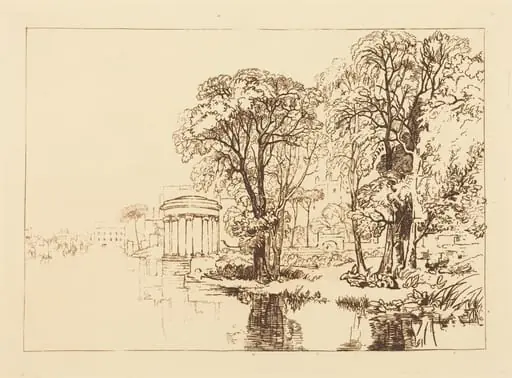 Isleworth
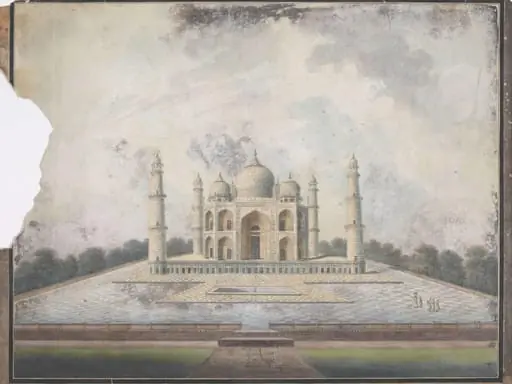 The Taj Mahal, Agra
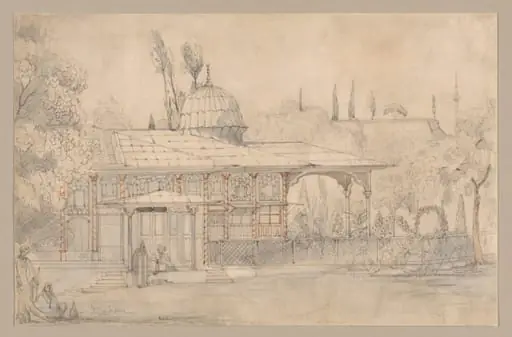 Pavilion Near a Mosque (recto)
 Part of the A-Ma Temple, Macau