Artwork
The Central Tower of the Great Pagoda
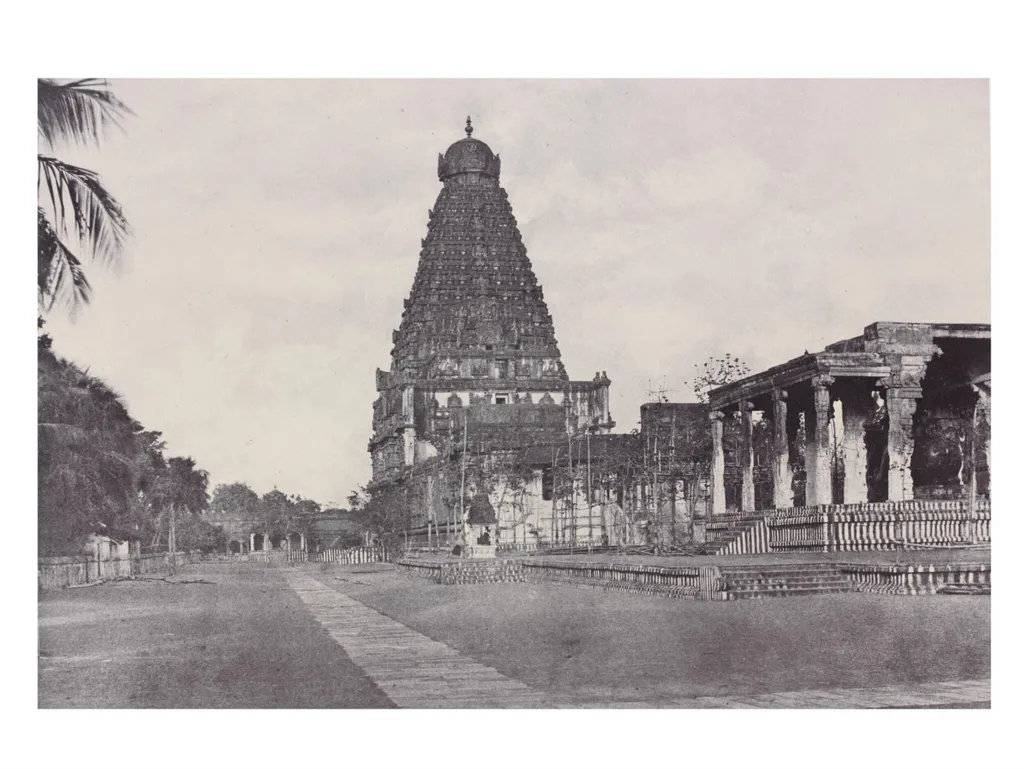
The Central Tower of the Great Pagoda is a photographic photography by the Impressionist artist Linnaeus Tripe. It dates from 1858 and is held in the collection of the Victoria and Albert Museum. This black‑and‑white photograph captures the soaring central tower, or vimana, of the Brihadisvara Temple in Thanjavur.
About this work
The text with this photo says none of the temple’s sculptures should shock even modest viewers.
This is a photograph by Linnaeus Tripe. It shows the tallest vimana in India, part of the Brihadisvara temple. The tower rises 62 meters high.
Tripe was the Madras government’s official photographer from 1856 to 1860. He spent months documenting Tanjore’s architecture. The text with this photo says none of the temple’s sculptures should shock even modest viewers.
See more of his work at the Victoria and Albert Museum.
Overview
This black‑and‑white photograph captures the soaring central tower, or vimana, of the Brihadisvara Temple in Thanjavur. The structure rises to a height of about 62 metres, making it the tallest temple tower in India. The image is part of a larger visual record produced in the mid‑19th century, documenting the architectural grandeur of South Indian sacred sites.
Subject & Meaning
The tower forms the sanctuary’s apex, crowning a complex celebrated for its intricate stone sculpture. Contemporary commentary noted that, despite the profusion of figurative reliefs covering the edifice, the decorative program was deemed modest enough not to offend even the most conservative observers, reflecting a balance between artistic richness and religious decorum.
Technique & Style
Captured with a wet‑collodion glass plate camera, the photograph exhibits the high contrast and fine detail characteristic of mid‑19th‑century photographic processes. The composition frames the vertical thrust of the vimana against a clear sky, emphasizing its monumental scale while preserving the texture of the stone surface and the surrounding architectural context.
History & Provenance
The image was taken by Linnaeus Tripe, who served as the official photographer for the Madras Presidency between 1856 and 1860. During his tenure he undertook extensive fieldwork in Thanjavur, producing an album of photographs that later entered public collections, including the Victoria and Albert Museum, where the work is currently held.
Context
The Brihadisvara Temple was commissioned by Chola king Rajaraja I and completed around 1000 AD. As a UNESCO World Heritage site, it exemplifies the zenith of Chola temple architecture, integrating massive stone construction with elaborate sculptural programs. Tripe’s photographs provide a rare visual record of the monument before later restoration interventions altered its appearance.
Artist & collection
Artist
Linnaeus Tripe made early photographs of Burma for the British government between 1855 and 1858.

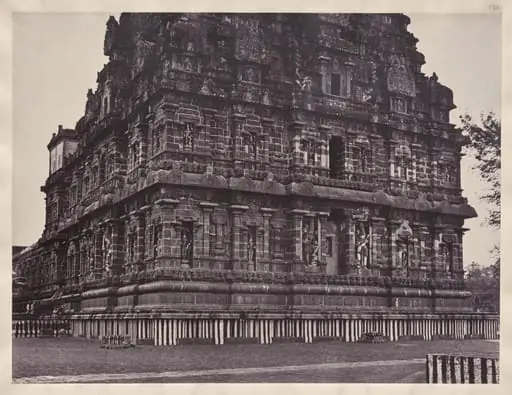 West and South Sides of the Vimana Walls, Great Temple (Brihadeshvara) at Tanjore (Thanjavur)
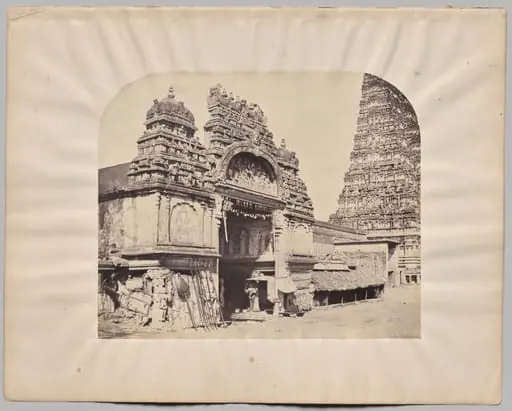 Entrance to the Minakshi Sundareshvara Temple, Madurai
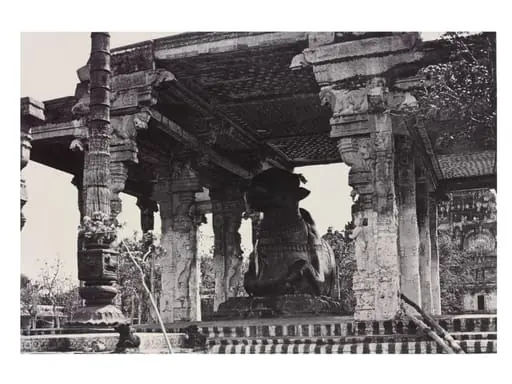
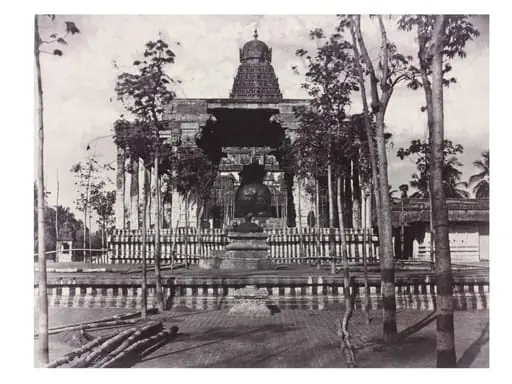
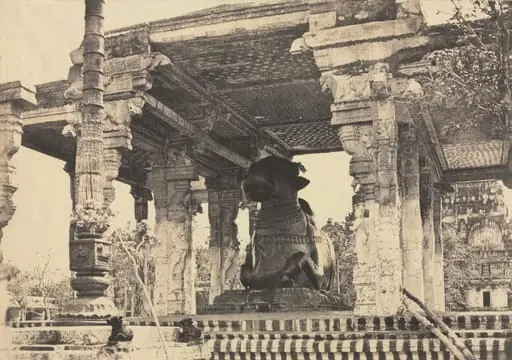 Great Pagoda, Great Bull, Front View, Tanjore, India (Rajarajeshvara Temple), plate 12 from Photographic Views of Tanjore and Trivady (Madras: Madras Presidency)
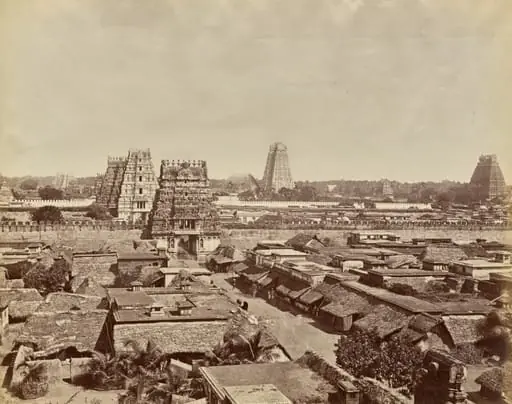 View from the Top of the Rock, looking over the native Town, Trichinopoly, India
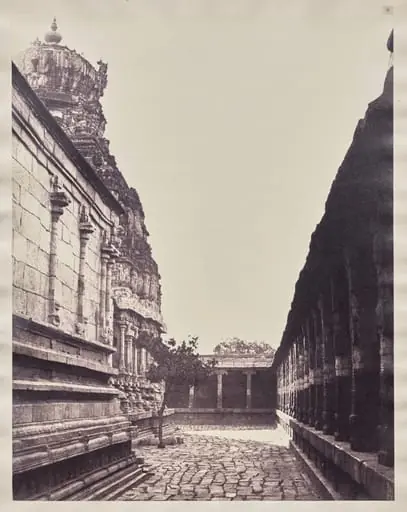 Perumal Temple Vimana from Corner of Court, Madurai
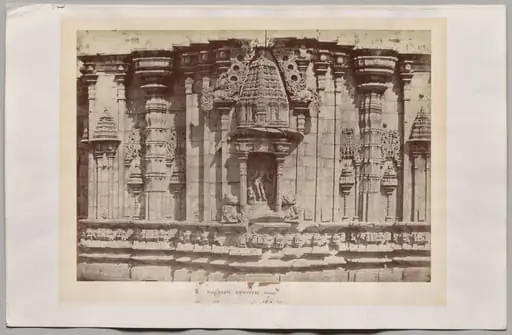 Kirwuttee, A Temple, India
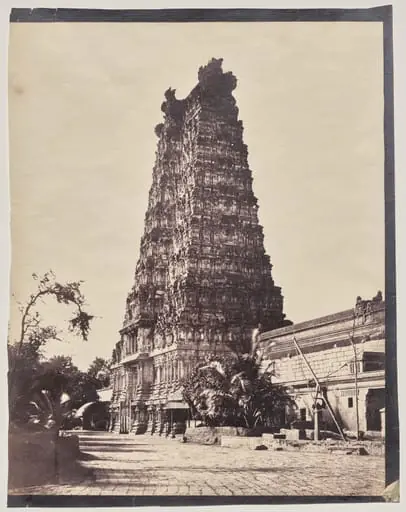 Western Gateway (Gopuram) of the Minakshi Sundareshvara Temple, Madurai
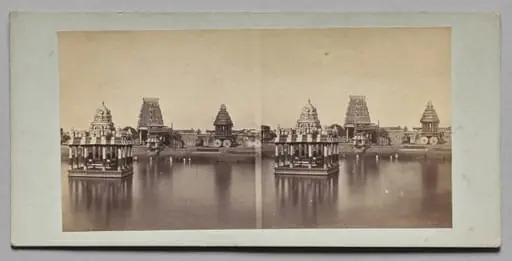 Temple Tank, Tamil Nadu
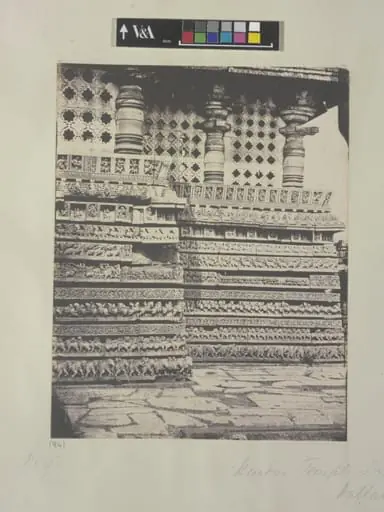 Hindoo Temple Sculpture, Southern India, Hullabeed
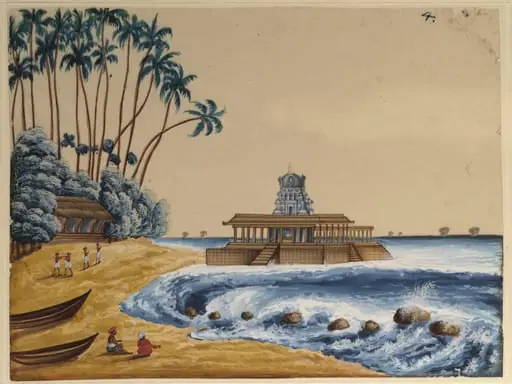 One of sixteen paintings of South Indian temples.