Artwork
Opening Page of Book IX of Valerius Maximus's Facta et dicta memorabilia
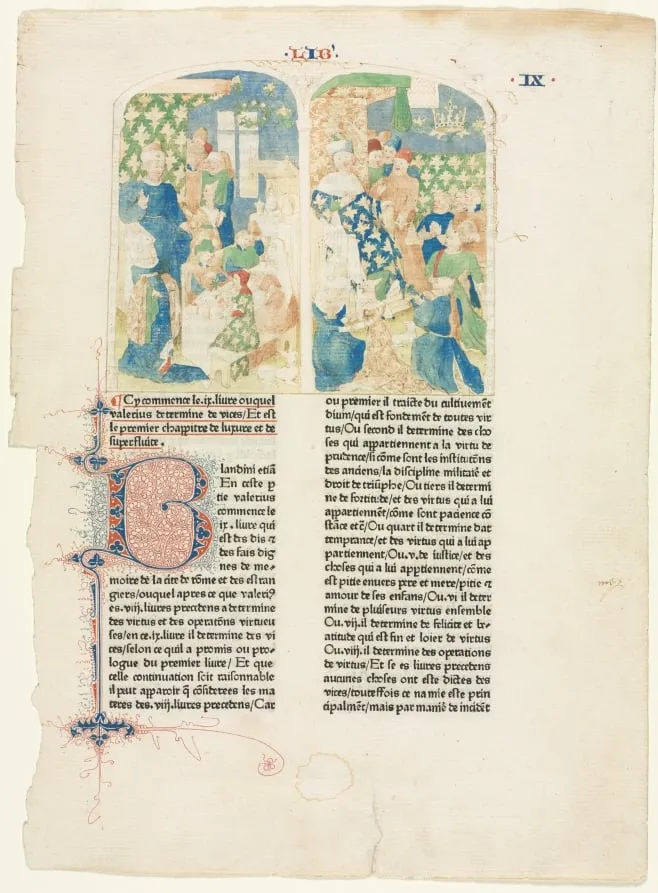
Opening Page of Book IX of Valerius Maximus's Facta et dicta memorabilia is a drawing by the Renaissance artist Unknown. It dates from 1476 and is held in the collection of the Cleveland Museum of Art. The work is a hand‑drawn opening page from Book IX of Valerius Maximus’s *Facta et dicta memorabilia*.
About this work
Overview
The work is a hand‑drawn opening page from Book IX of Valerius Maximus’s *Facta et dicta memorabilia*. Executed as a single sheet, it combines two colored vignettes with a block of antiquated script that is partially illegible. The composition functions as both an illustration and a textual introduction to the manuscript.
Subject & Meaning
The left vignette portrays a gathering of figures within an interior space, suggesting a communal or deliberative scene. The right vignette focuses on an individual clad in a blue garment patterned with white, positioned before an assembled group, perhaps indicating a speaker or authority figure delivering a narrative.
Technique & Style
The drawings employ a Renaissance‑inspired visual language, characterized by careful modeling, precise line work, and a palette of vivid hues. The intricate detailing of clothing, architecture, and gestures reflects the period’s emphasis on realism and decorative richness.
History & Provenance
Created as part of a manuscript copy of Valerius Maximus, the page likely dates from a later Renaissance workshop that reproduced classical texts. Its exact origin and ownership trail remain undocumented, though the style aligns with Northern European manuscript illumination of the 15th–16th centuries.
Context
*Facta et dicta memorabilia* is a collection of moral anecdotes from antiquity, widely used in humanist education. Illustrating such works was common in Renaissance studios, where visual commentary aided the study of classical moral exempla.
Artist & collection

 Domestic Scene
 Giacomo and Cardinal Marco, investing Andrea, Abbot of San Zeno, with his Benefice
 The Nymph of Fontainebleau
 Portrait of a Woman
 Madonna and Child with Saints in the Enclosed Garden
 Venus and Minerva
 Family Group of Four on Sofa
 Wall painting from Room H of the Villa of P. Fannius Synistor at Boscoreale
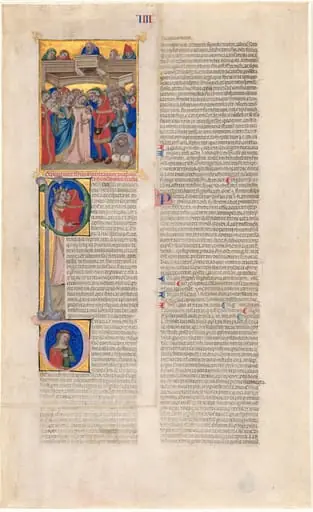 The Marriage; the Kiss of the Bride (initial P); the Bride Abandoned (initial D)
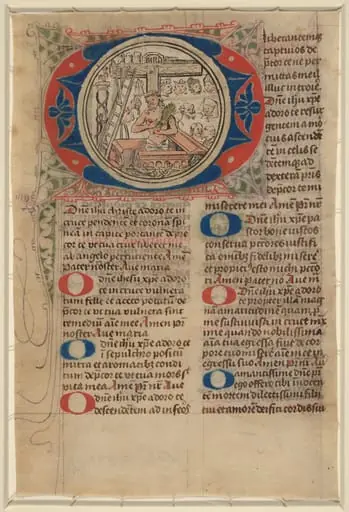 Christ as the Man of Sorrows
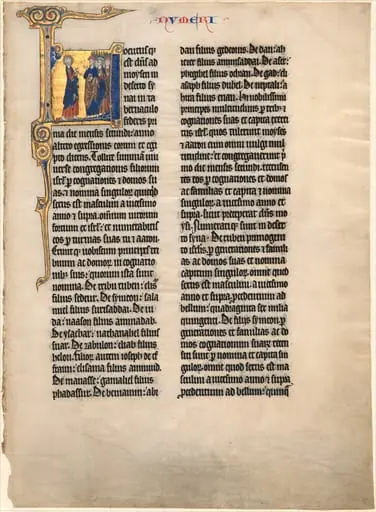 Moses Counting the Children of Israel
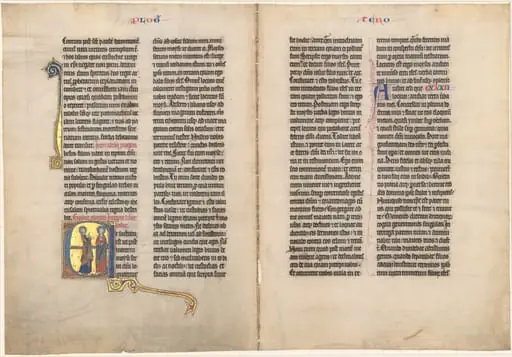 Joshua before the Lord
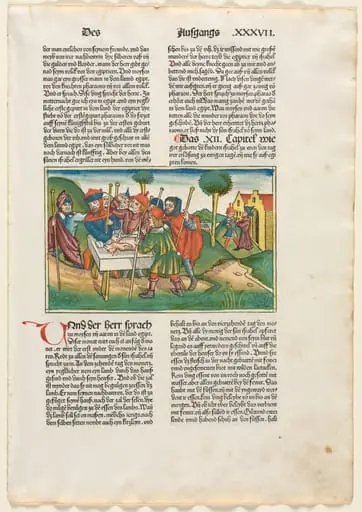 Offering of the Paschal Lamb from the German Bible published by Anton Koberger, Nürnberg
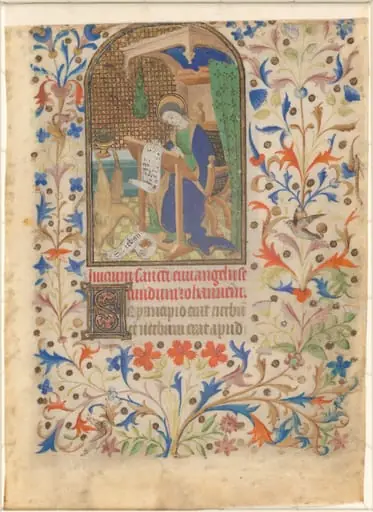 Saint John
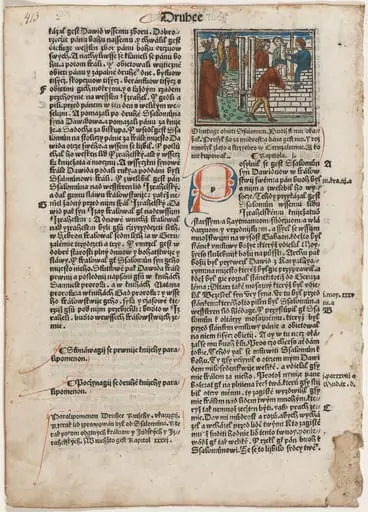 page from the Holy Bible in Bohemian
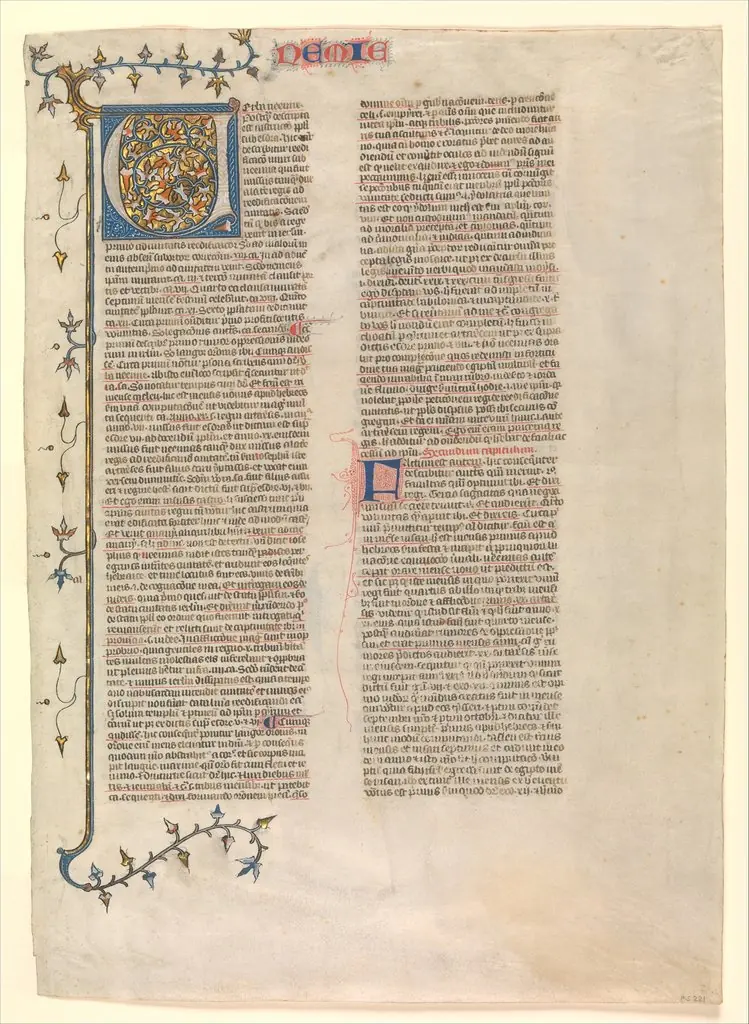 Initial "V" from the commentary of Nehemiah, one of six illustrated leaves from the Postilla Litteralis (Literal Commentary) of Nicholas of Lyra
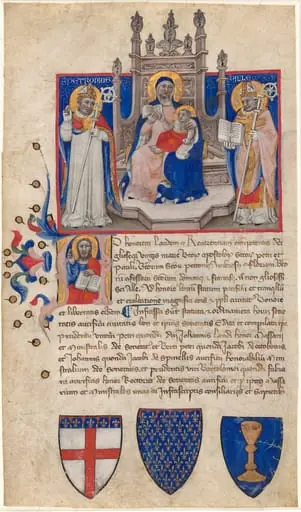 Madonna and Child Enthroned between Saints Petronius and Alle (Eligius); Christ in the Initial A
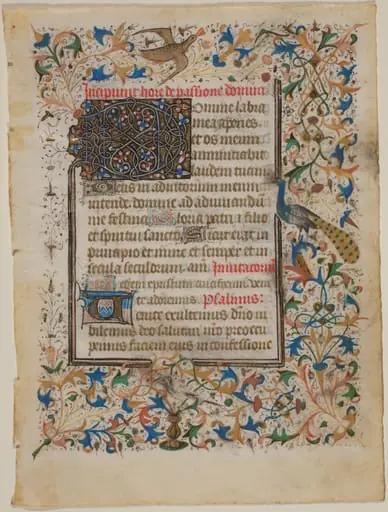 Manuscript Leaf from a Book of Hours (incip. Passionis)