Artwork
Court Lady Pouring Wine (recto); Calligraphy of Lyrical Quatrains (verso)
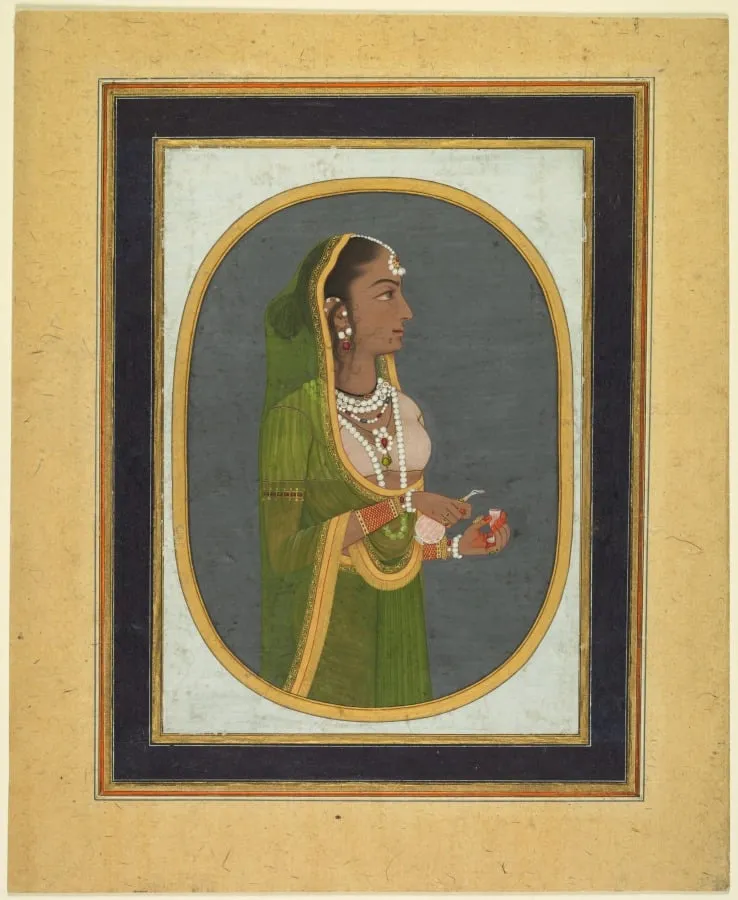
Court Lady Pouring Wine (recto); Calligraphy of Lyrical Quatrains (verso) is an unspecified painting by the Mughal Painting artist Unknown. It dates from 1704 and is held in the collection of the Cleveland Museum of Art.
About this work
Overview
Court Lady Pouring Wine (recto); Calligraphy of Lyrical Quatrains (verso) is a dual-sided artwork featuring a painting on the front and calligraphic poetry on the back. The recto depicts a court lady pouring red wine from a distinctive duck-headed decanter into a small cup, while the verso showcases a central calligraphic piece surrounded by floral motifs and poetic verses.
Subject & Meaning
The duck-headed decanter, adorned with gilded grapevines, references ancient Persian court rituals involving bird-shaped vessels for sacrificial liquids.
The recto's subject, a court lady serving wine, alludes to the fusion of daily life with ancestral traditions. The duck-headed decanter, adorned with gilded grapevines, references ancient Persian court rituals involving bird-shaped vessels for sacrificial liquids. The verso's calligraphy focuses on themes of beauty and longing for a beloved, framing the artwork within the emotional and aesthetic realms of its time.
Technique & Style
The painting on the recto demonstrates meticulous detail, evident in the intricate gold vines on the decanter and the dynamic flow of red wine. The style suggests influences from Mughal Indian art, particularly from Lucknow, characterized by the blend of precision and elegance. The verso's calligraphy, with its neat handwriting and bordering floral sprigs, highlights the artist's versatility in combining textual and visual elements.
History & Provenance
While specific historical provenance details are not provided, the artwork's style and themes strongly suggest origins in Mughal India, likely Lucknow, indicating a creation period influenced by both Persian and Indian artistic traditions.
Context
This artwork reflects the cultural exchange and synthesis characteristic of Mughal India. The combination of a daily court scene with elements of ancient Persian rituals, alongside poetic expressions of love, situates the piece within a broader tradition of blending heritage with contemporary life in Indian art of the time.
Legacy
As a representation of Mughal artistic fusion, Court Lady Pouring Wine contributes to the understanding of how Indian artists during this period creatively integrated ancestral traditions with everyday themes, influencing subsequent generations in the depiction of court life and the use of symbolic motifs.
Artist & collection

 Domestic Scene
 Giacomo and Cardinal Marco, investing Andrea, Abbot of San Zeno, with his Benefice
 The Nymph of Fontainebleau
 Portrait of a Woman
 Madonna and Child with Saints in the Enclosed Garden
 Venus and Minerva
 Family Group of Four on Sofa
 Wall painting from Room H of the Villa of P. Fannius Synistor at Boscoreale
 Untitled
 Court lady singing and playing the vina
 Court lady singing and playing the vina (recto)
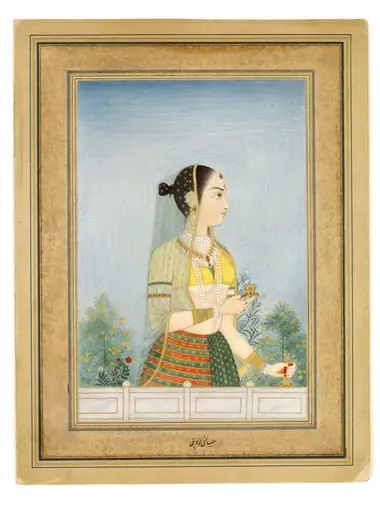 Rani Golapati
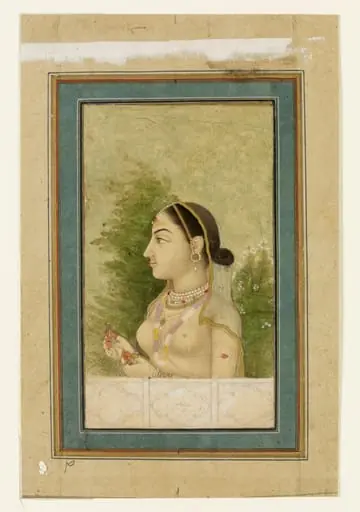 Untitled
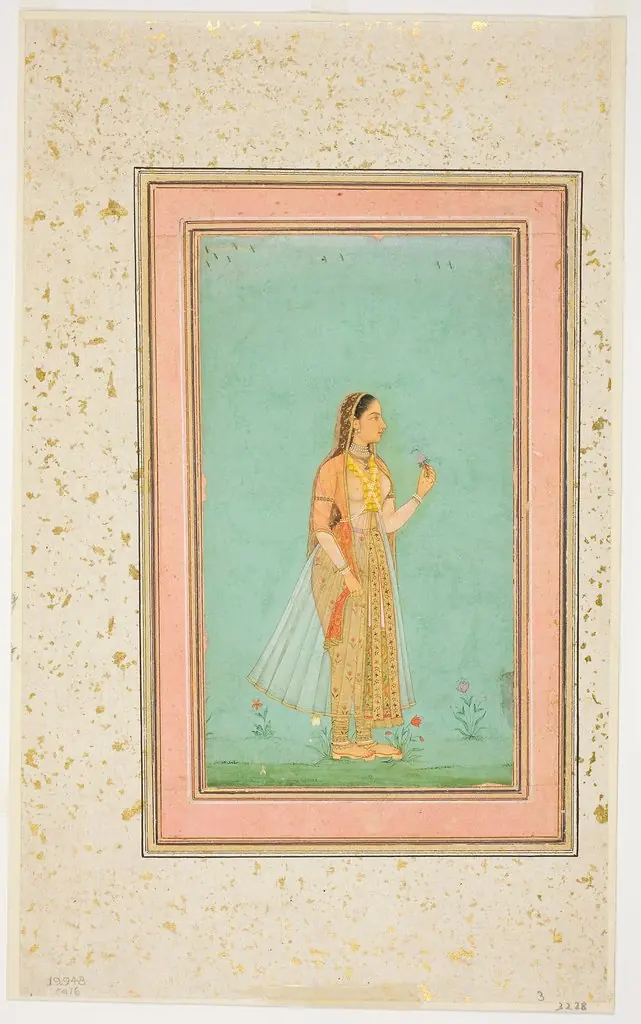 Beauty Holding a Flower
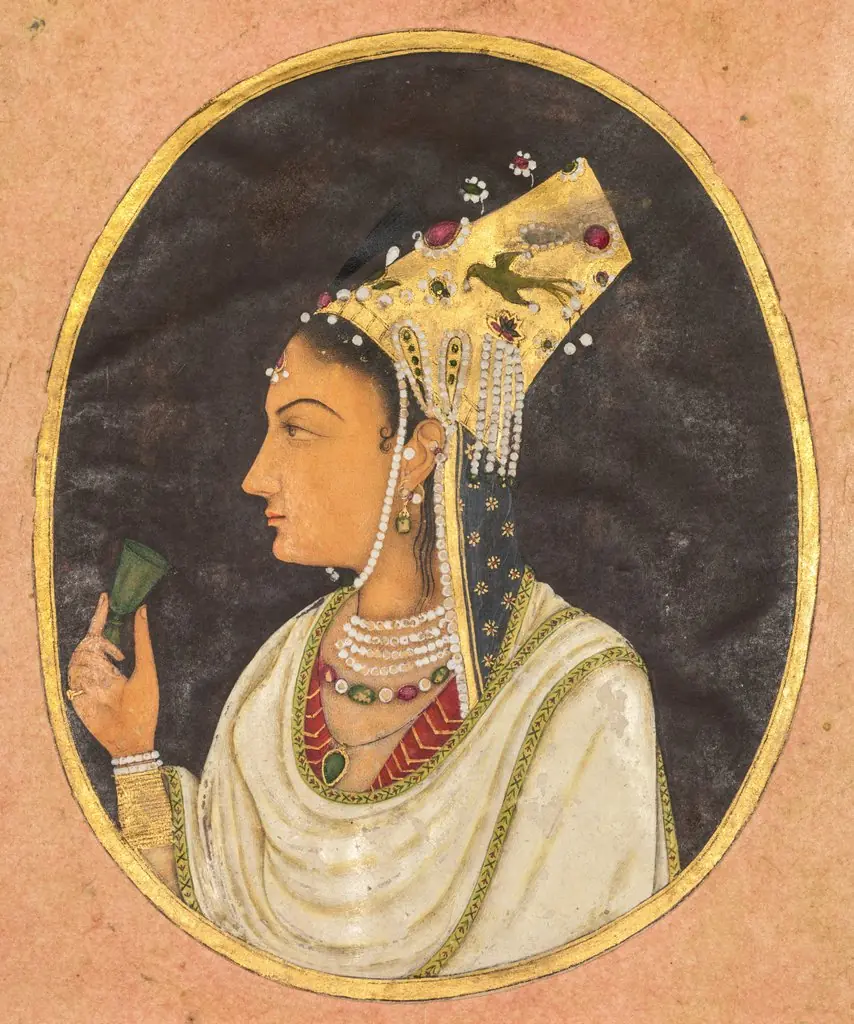 Oval portrait of a woman in a Chaghtai hat
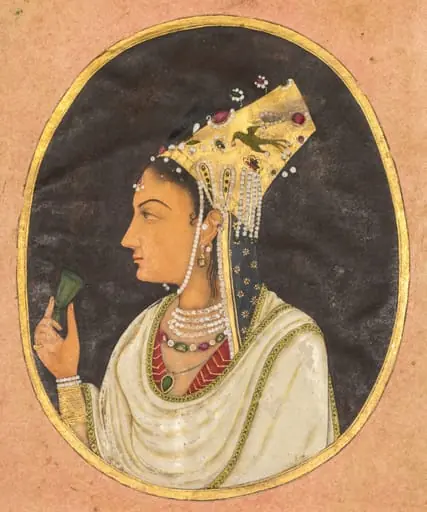 Oval portrait of a woman in a Chaghtai hat
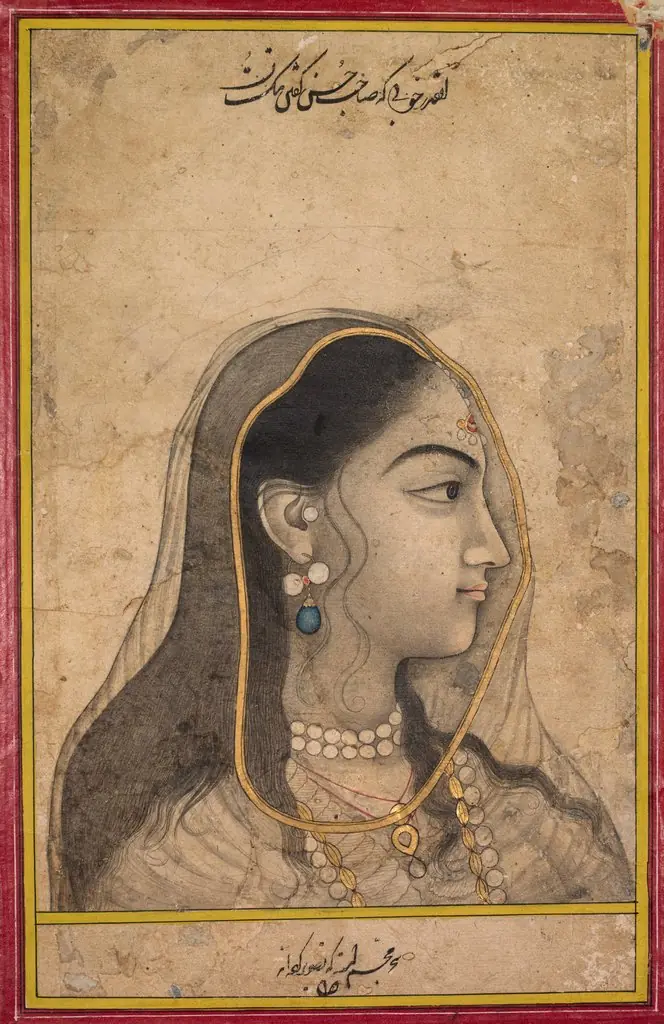 Head of a Beauty
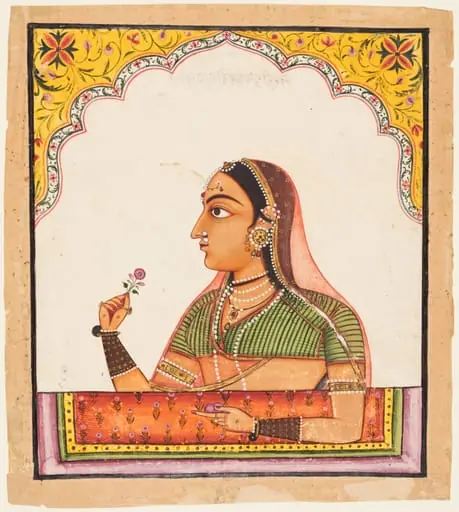 Noblewoman at a Jharokha Window Holding a Rose, from a Portraits of Women series
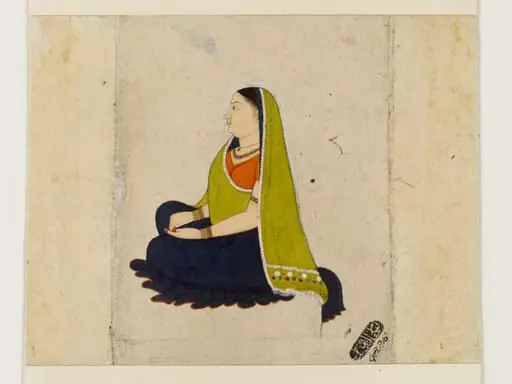 Ladvai Sketch
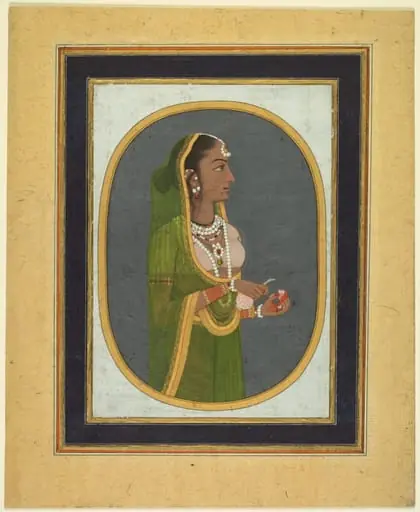 Court Lady Pouring Wine (recto)