Artwork
Oxen Treading China Stone in Pits
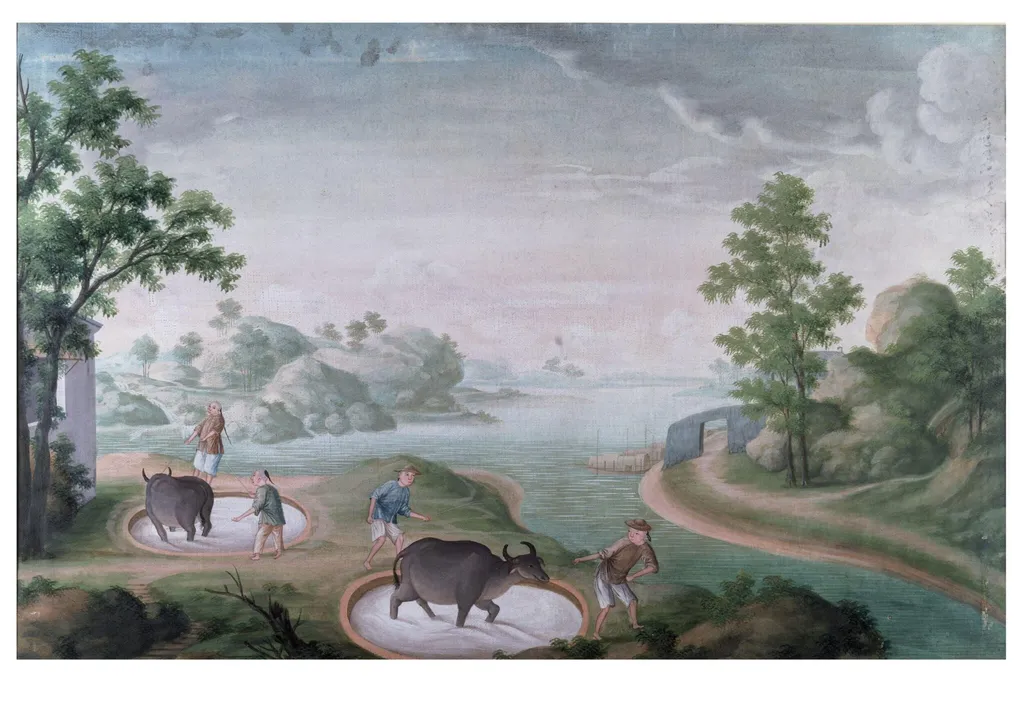
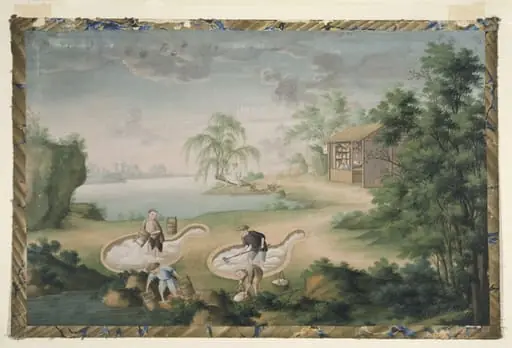
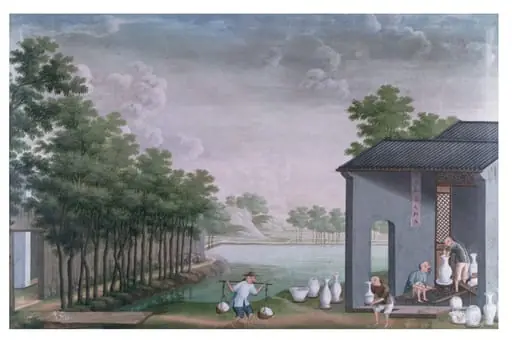
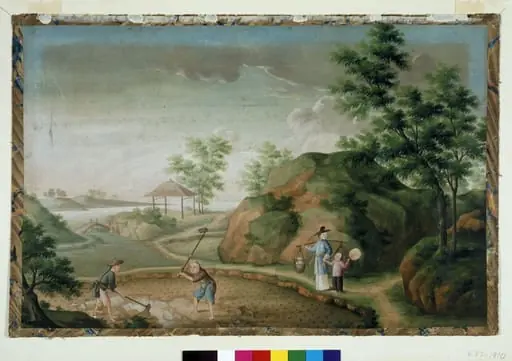
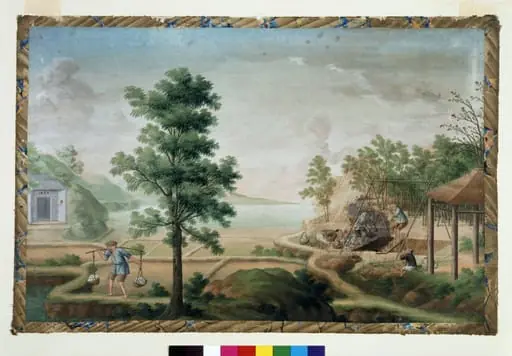
Oxen Treading China Stone in Pits is a paint painting by the Patna School of Painting artist Unknown. It dates from 1780 and is held in the collection of the Victoria and Albert Museum. This painting is one of twenty-four works documenting the porcelain-making process in 18th-century China.
About this work
Overview
This painting is one of twenty-four works documenting the porcelain-making process in 18th-century China. It captures a specific stage in raw material preparation: oxen walking in shallow pits to crush china stone into fine powder. Created for European audiences, the series aimed to reveal the labor-intensive methods behind Chinese ceramics, which remained unmatched in Europe until the 1700s.
Subject & Meaning
The scene depicts agricultural labor adapted to industrial preparation, with oxen trampling crushed rock to produce a key ingredient for porcelain.
The scene depicts agricultural labor adapted to industrial preparation, with oxen trampling crushed rock to produce a key ingredient for porcelain. The inclusion of animals underscores the reliance on animal power in pre-industrial manufacturing. The image carries no overt symbolism but functions as a documentary record, intended to demystify Chinese ceramic production for foreign viewers seeking technical knowledge.
Technique & Style
Rendered in traditional Chinese painting methods, the work employs ink and color on paper or silk, with careful attention to spatial arrangement and human activity. Figures and animals are rendered with restrained detail, emphasizing function over ornamentation. The composition is orderly and observational, reflecting a documentary impulse rather than dramatic expression.
History & Provenance
Commissioned during the Qing dynasty, likely for export to Europe, this series was produced in Jingdezhen, the center of porcelain production. European traders and collectors, unable to replicate Chinese porcelain, sought visual explanations of its creation. The paintings were likely acquired by institutions or private collectors in Britain and the Continent, with some surviving in collections such as the Victoria and Albert Museum.
Context
In the 17th and 18th centuries, European demand for Chinese porcelain outstripped supply, and attempts to replicate it failed until the discovery of kaolin deposits in Saxony. These paintings emerged as part of a broader cultural exchange, where visual documentation served as a substitute for industrial espionage. They reflect both Chinese craftsmanship and European curiosity about Eastern technologies.
Legacy
The series remains a rare visual archive of pre-industrial ceramic production in China. While not widely exhibited today, it contributes to scholarly understanding of global trade, technological transfer, and the role of visual media in cross-cultural knowledge exchange. Its value lies in its factual clarity rather than artistic innovation.
Artist & collection

 Domestic Scene
 Giacomo and Cardinal Marco, investing Andrea, Abbot of San Zeno, with his Benefice
 The Nymph of Fontainebleau
 Portrait of a Woman
 Madonna and Child with Saints in the Enclosed Garden
 Venus and Minerva
 Family Group of Four on Sofa
 Wall painting from Room H of the Villa of P. Fannius Synistor at Boscoreale