Artwork
Wrapping Porcelain in Rice Straw and Packing in Wooden Tubs
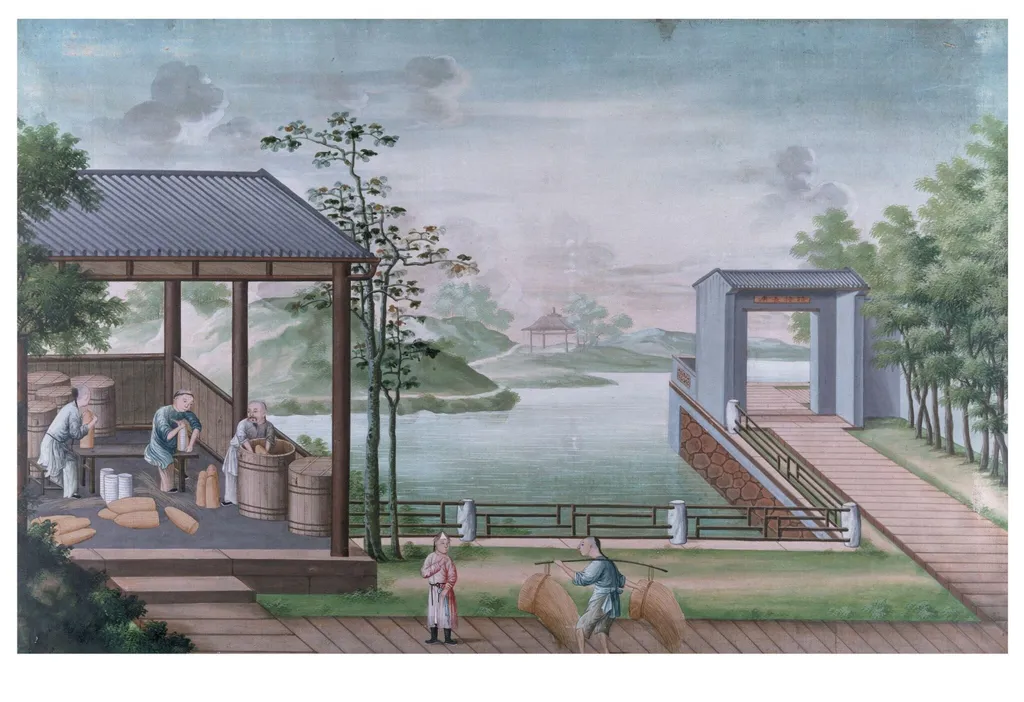
Wrapping Porcelain in Rice Straw and Packing in Wooden Tubs is a paint painting by the Rococo painting artist Unknown. It dates from 1780 and is held in the collection of the Victoria and Albert Museum. This painting belongs to a series of twenty-four works documenting the porcelain manufacturing process in China during the 18th century.
About this work
Overview
It focuses on the final stages of preparation before export: workers carefully wrapping fragile ceramics in rice straw and securing them in wooden tubs.
This painting belongs to a series of twenty-four works documenting the porcelain manufacturing process in China during the 18th century. It focuses on the final stages of preparation before export: workers carefully wrapping fragile ceramics in rice straw and securing them in wooden tubs. Created for European audiences unfamiliar with Chinese production methods, the series served as a visual record of an industry that remained mysterious outside Asia.
Subject & Meaning
The scene captures laborers engaged in the meticulous task of packing porcelain, emphasizing care and precision. The choice of rice straw—abundant, flexible, and protective—reflects local knowledge of material properties. The painting’s purpose was not decorative but educational: to reveal the craftsmanship behind a commodity Europe could not replicate, thereby satisfying curiosity and reinforcing China’s dominance in ceramic production.
Technique & Style
Rendered in a clear, observational style, the painting avoids dramatic lighting or idealization. Figures are depicted with functional detail, their postures and tools accurately rendered to convey process over emotion. The composition is orderly, prioritizing clarity of action over aesthetic flourish, aligning with the series’ documentary intent rather than artistic expression.
History & Provenance
The painting was likely produced in Guangzhou (Canton) for export to Europe, possibly commissioned by foreign traders or missionaries. It formed part of a larger visual catalog intended to demystify Chinese porcelain production. These works circulated among collectors and manufacturers seeking insight into the techniques behind the highly prized ceramics, though the exact origins of the full series remain partially undocumented.
Context
Before the discovery of kaolin deposits in Europe, true porcelain remained an exclusive Chinese export. European demand drove intense interest in its manufacture, leading to espionage, imitation attempts, and visual documentation. This painting emerged within a broader cultural exchange, where images of Chinese industry became tools of both fascination and practical knowledge for Western artisans and merchants.
Legacy
The series contributed to the European understanding of Chinese craftsmanship, influencing later ceramic production and shaping perceptions of Asian industry. While not widely exhibited today, these works remain valuable as historical records of pre-industrial labor and global trade networks. They document a moment when visual information played a role in technological transfer across continents.
Artist & collection

 Domestic Scene
 Giacomo and Cardinal Marco, investing Andrea, Abbot of San Zeno, with his Benefice
 The Nymph of Fontainebleau
 Portrait of a Woman
 Madonna and Child with Saints in the Enclosed Garden
 Venus and Minerva
 Family Group of Four on Sofa
 Wall painting from Room H of the Villa of P. Fannius Synistor at Boscoreale
 Making Vases
 Packing Tea Into Pewter Tins With Straw Wrapping
 Chopping Wood and Stocking the Kiln
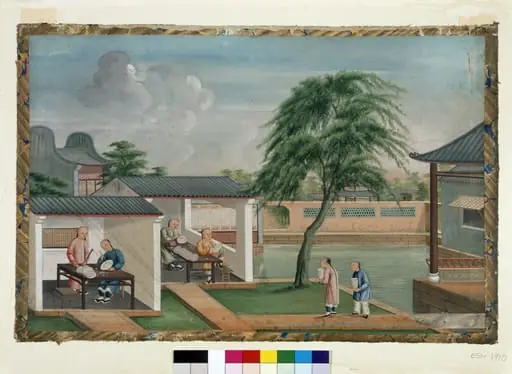 Potters Painting in Enamel Colours
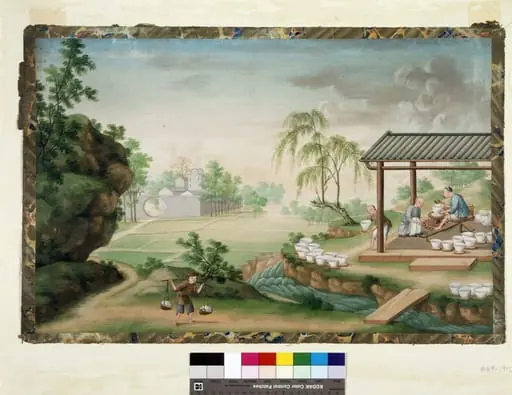 Making Basins
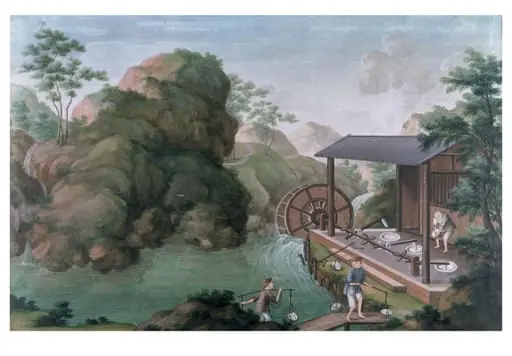 Breaking China Stone With Water-Powered Trip Hammers
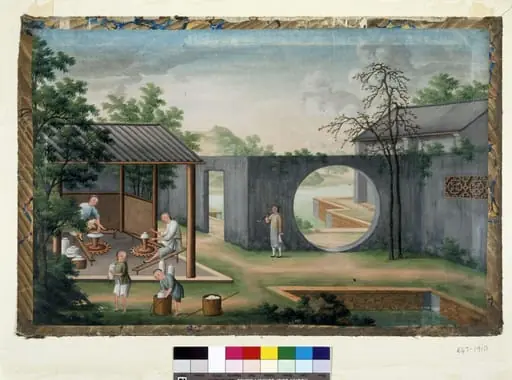 Shaping Outsides and Footrims of Bowls
 Firing Enamelled Ware in Muffle Kiln
 Porcelain Shop in Canton
 Potters Painting in Underglaze Blue
 Applying Fertiliser