Artwork
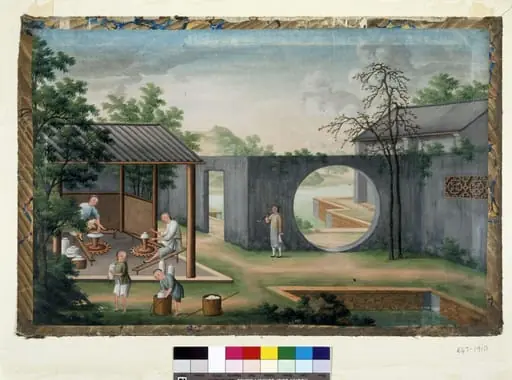
Men Treading China Clay in Pits
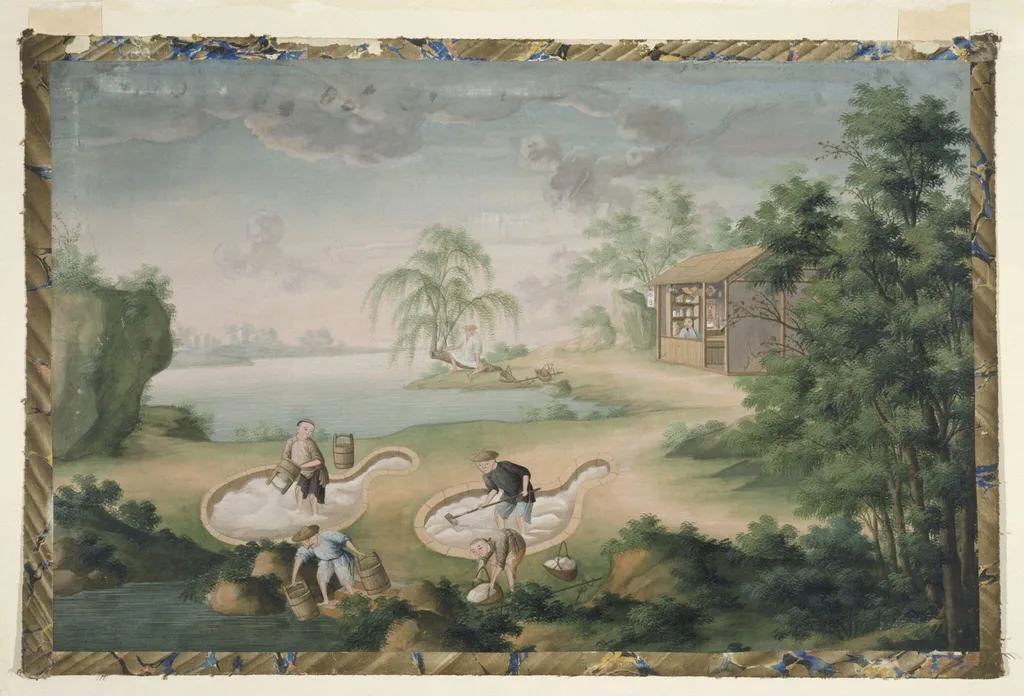
Men Treading China Clay in Pits is a paint painting by the Patna School of Painting artist Unknown. It dates from 1780 and is held in the collection of the Victoria and Albert Museum. The work belongs to a series of twenty‑four paintings that illustrate the stages of porcelain production in China.
About this work
The painting is part of a set that shows how porcelain was made in China, which was a secret in Europe at the time.
This painting shows men treading china clay in pits.
They're adding water to the clay, which is an important step.
The painting is part of a set that shows how porcelain was made in China, which was a secret in Europe at the time.
The set of paintings was likely made to help Europeans understand how porcelain was made.
This knowledge was valuable because Europe couldn't produce true porcelain before the 18th century.
The scene is simple, but it tells us a lot about the process.
Check out the technique of chiaroscuro.
Overview
The work belongs to a series of twenty‑four paintings that illustrate the stages of porcelain production in China. In this particular image, laborers are shown treading a mixture of china clay and water within shallow pits, a preparatory phase essential to the material’s refinement.
Subject & Meaning
The scene captures workers engaged in the manual kneading of raw clay, emphasizing the hands‑on nature of the craft. By depicting this specific step, the painting conveys the labor-intensive process behind a material that was, at the time, a coveted secret in Europe.
Technique & Style
Rendered with a clear chiaroscuro, the composition uses contrasts of light and shadow to model the figures and the wet earth, giving the scene a three‑dimensional presence. The palette remains restrained, focusing attention on the physical action rather than decorative detail.
History & Provenance
Created for a European audience, the series was intended to inform viewers about Chinese porcelain manufacturing, a technology unavailable in Europe until the early eighteenth century. The paintings circulated among collectors and scholars eager to uncover the material’s production methods.
Context
During the seventeenth and eighteenth centuries, European demand for true porcelain outstripped local capabilities, prompting a fascination with Chinese techniques. Visual documents such as this series served both as educational tools and as exotic representations of a distant industry.
Artist & collection

 Domestic Scene
 Giacomo and Cardinal Marco, investing Andrea, Abbot of San Zeno, with his Benefice
 The Nymph of Fontainebleau
 Portrait of a Woman
 Madonna and Child with Saints in the Enclosed Garden
 Venus and Minerva
 Family Group of Four on Sofa
 Wall painting from Room H of the Villa of P. Fannius Synistor at Boscoreale
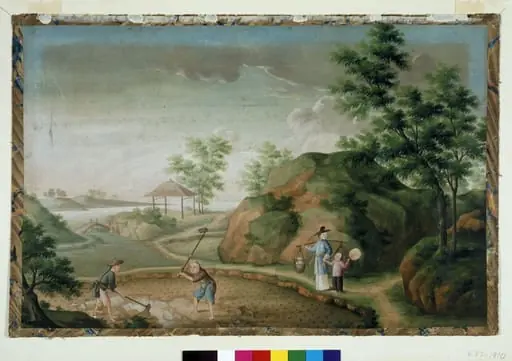 Digging China Clay
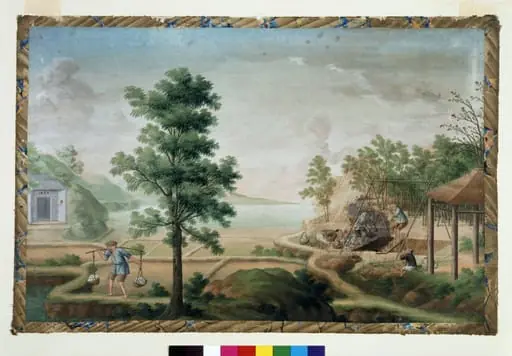 Mining China Stone
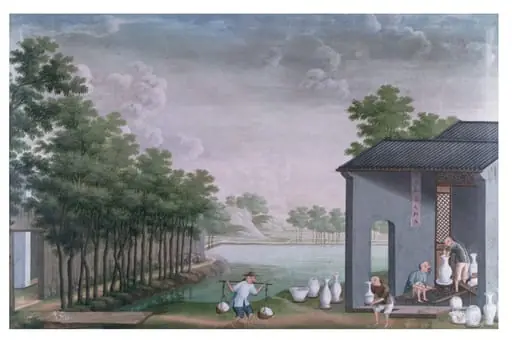 Making Vases
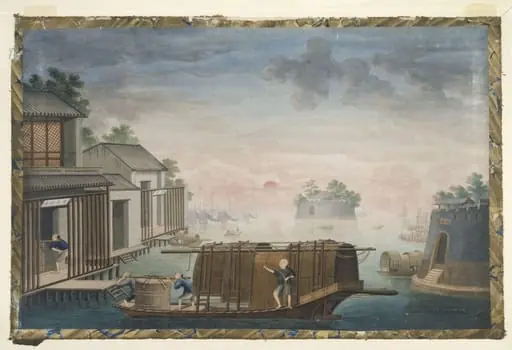 Porcelain Arriving at Canton Warehouse
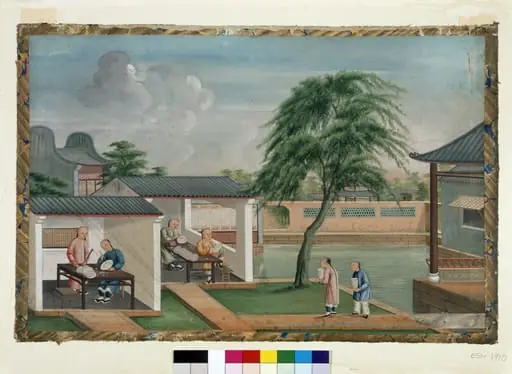 Potters Painting in Enamel Colours
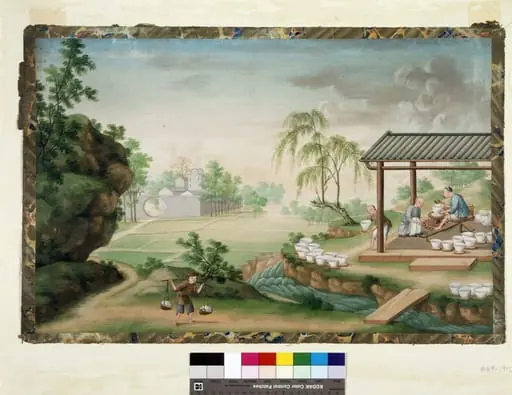 Making Basins
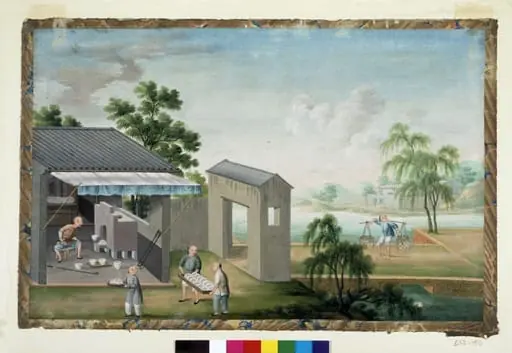 Firing Enamelled Ware in Muffle Kiln
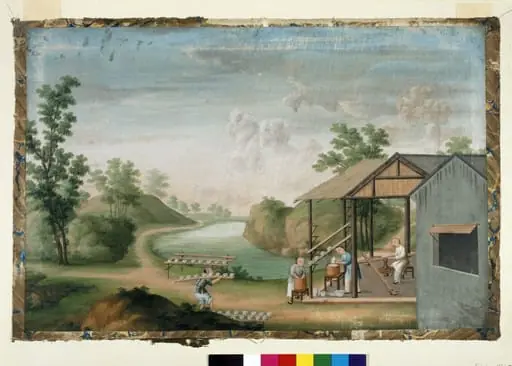 Applying Glaze
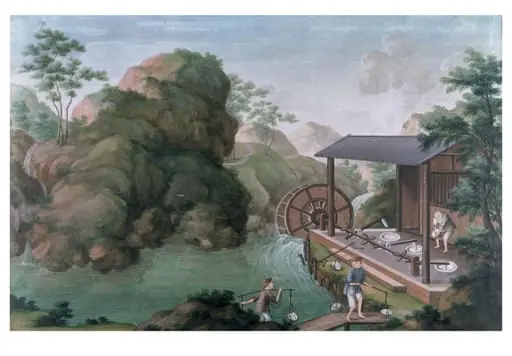 Breaking China Stone With Water-Powered Trip Hammers
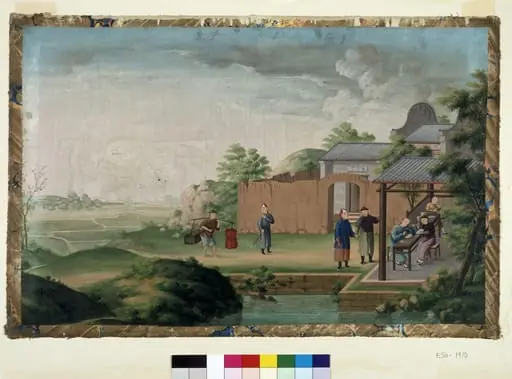 Potters Painting in Underglaze Blue
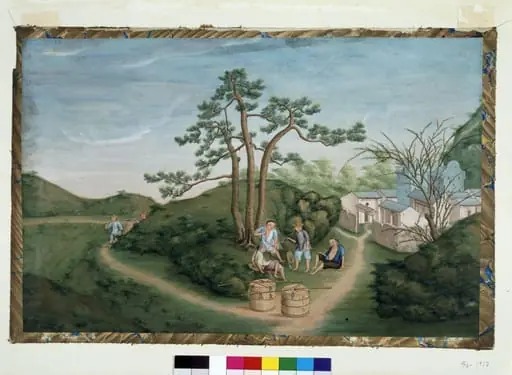 Transport of Porcelain Overland
 Shaping Outsides and Footrims of Bowls