Artwork
Oyster Shells Boat
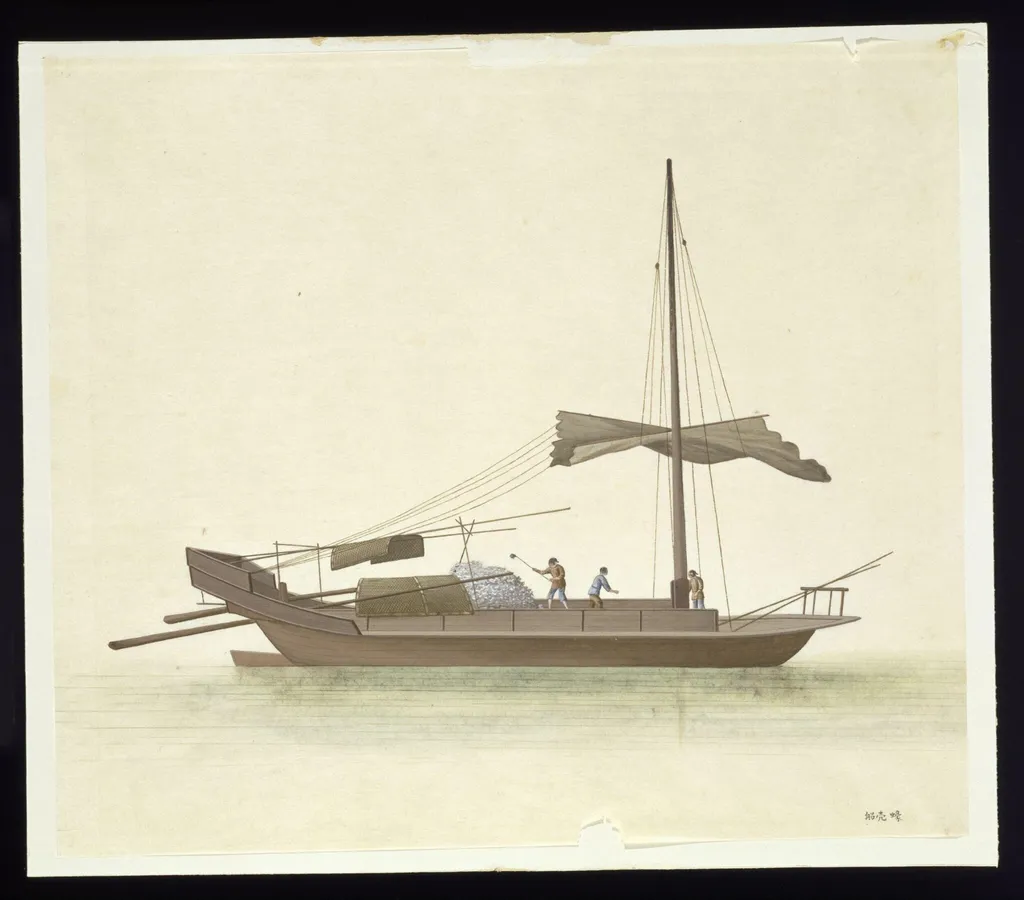
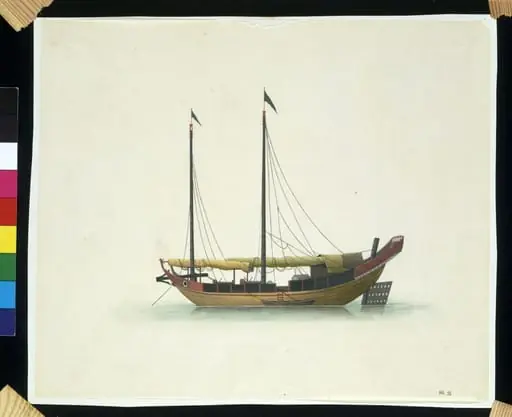
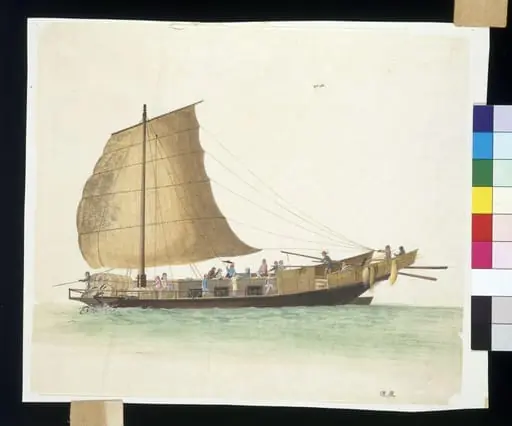
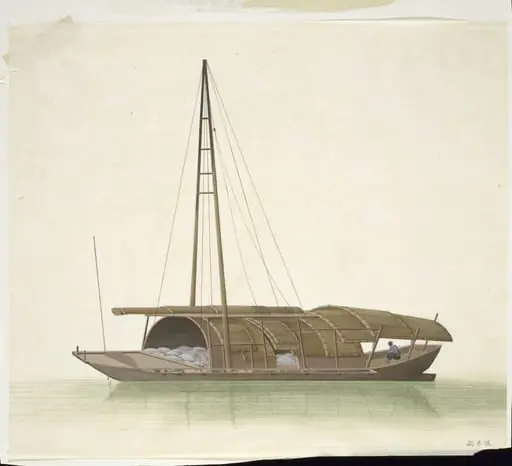
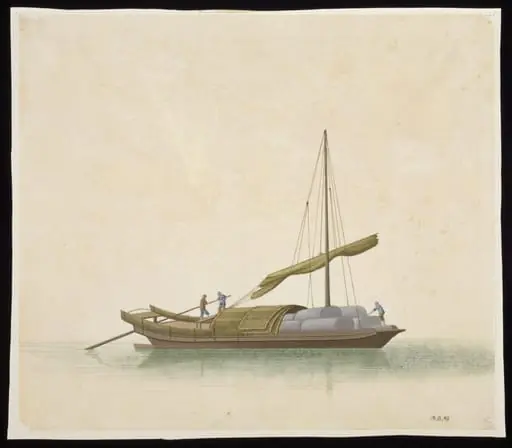
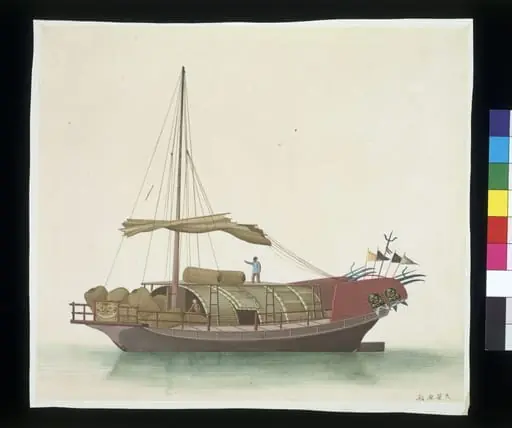
Oyster Shells Boat is a paint painting by the Romanticist artist Unknown. It dates from 1810 and is held in the collection of the Victoria and Albert Museum. This painting is one of fifty small works created to document the variety of vessels on the Pearl River near Canton.
About this work
Overview
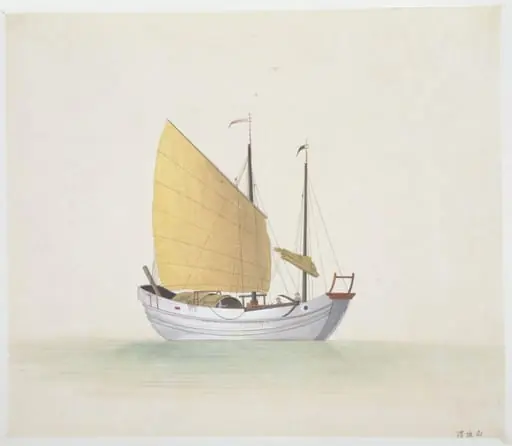
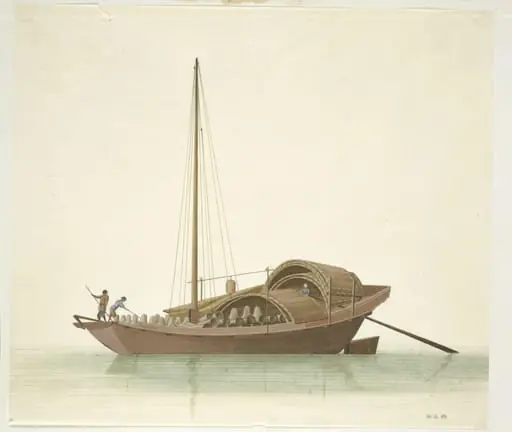
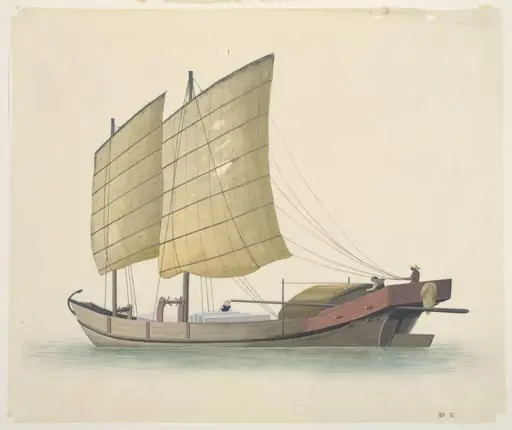
This painting is one of fifty small works created to document the variety of vessels on the Pearl River near Canton. Each piece captures a specific type of boat and its function, rendered in a straightforward, decorative style. Produced for foreign visitors, these images served as souvenirs, offering a glimpse into the bustling riverine economy of southern China in the late 18th century.
Subject & Meaning
The boat depicted carries a load of oyster shells, a common commodity in the region. These shells were not food but building material, often affixed to exterior walls to deter intruders due to their sharp, uneven surfaces. The painting highlights an everyday economic activity, revealing how natural resources were repurposed in domestic architecture, reflecting practical adaptations to urban life.
Technique & Style
Executed in watercolor or ink on paper, the painting employs flat planes of color and minimal shading, typical of export art produced for Western markets. Details are rendered with clarity rather than depth, prioritizing recognizability over realism. The composition is tightly framed, focusing attention on the boat and its cargo without embellishing the surrounding landscape.
History & Provenance
The painting likely originated in Canton during the late 1700s, a period of heightened foreign trade. It may have been acquired by Lord Macartney’s diplomatic mission, which visited China in 1793. Many such works entered European collections through British traders and envoys, later finding their way into institutions like the Victoria and Albert Museum.
Context
The Pearl River was a vital artery of commerce, lined with houseboats and cargo vessels that formed a floating community. Foreign observers noted the density of life on the water, where families lived, worked, and traded aboard their vessels. These paintings document a way of life shaped by riverine trade, before modernization altered the region’s transport networks.
Legacy
The series of fifty boat paintings remains a valuable visual record of 18th-century Chinese riverine culture. Though produced as commercial souvenirs, they now serve as historical documents, illustrating the intersection of local industry and global exchange. Their preservation in museums underscores their role as cultural artifacts beyond their original decorative function.
Artist & collection

 Domestic Scene
 Giacomo and Cardinal Marco, investing Andrea, Abbot of San Zeno, with his Benefice
 The Nymph of Fontainebleau
 Portrait of a Woman
 Madonna and Child with Saints in the Enclosed Garden
 Venus and Minerva
 Family Group of Four on Sofa
 Wall painting from Room H of the Villa of P. Fannius Synistor at Boscoreale