Artwork
Common Salt Junk
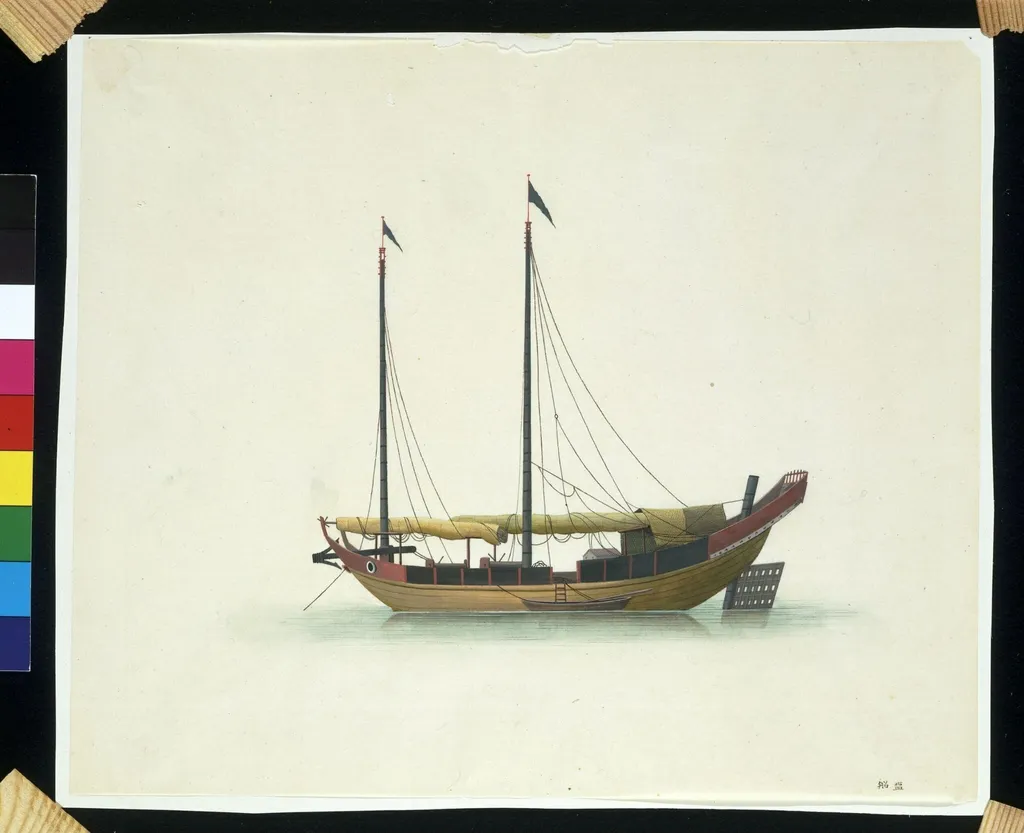
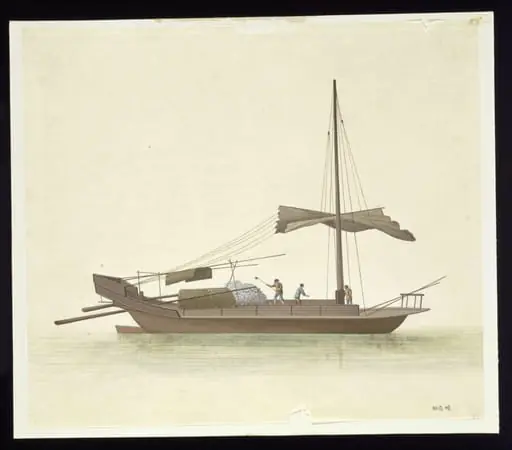
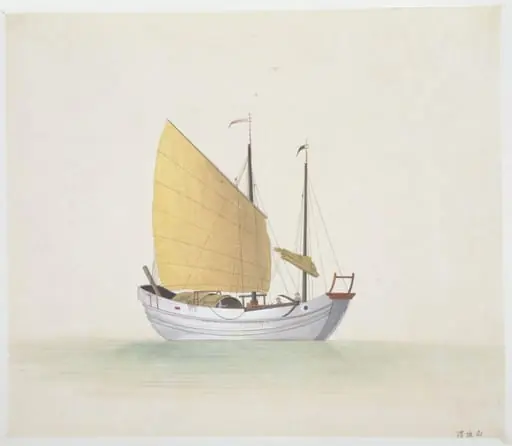
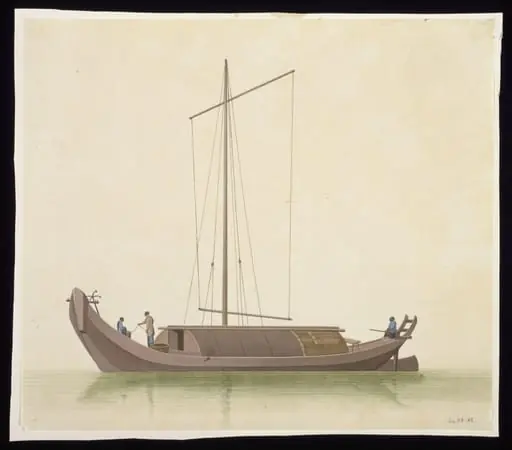
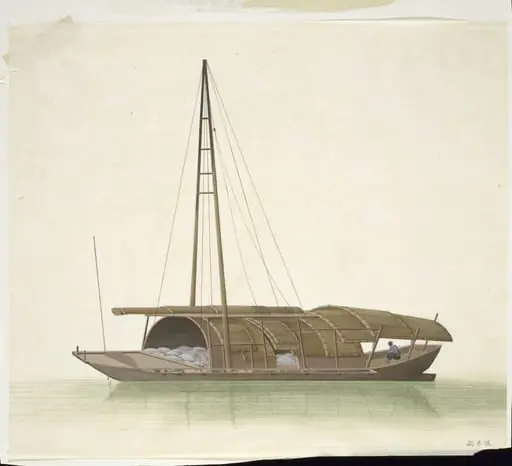
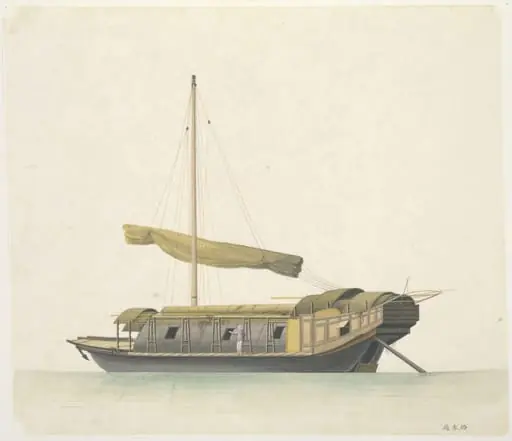
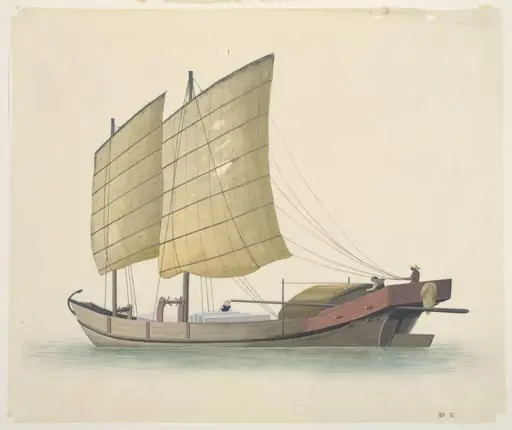
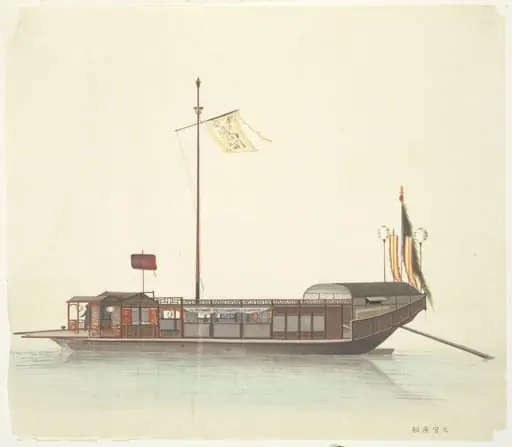
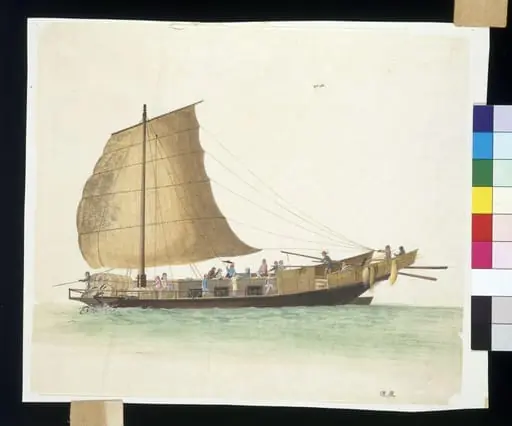
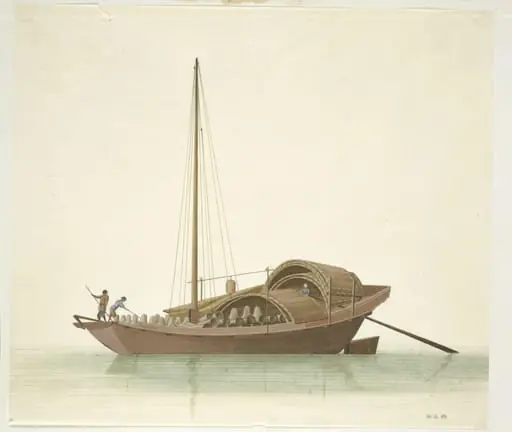
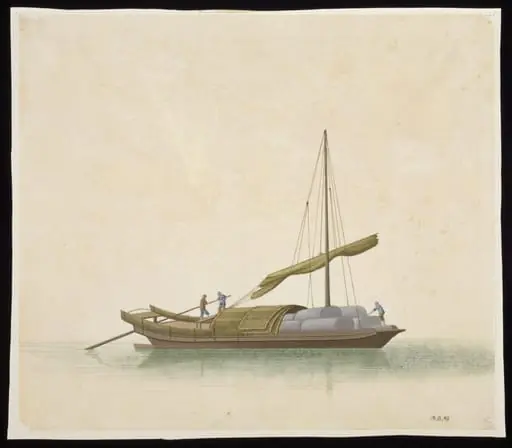
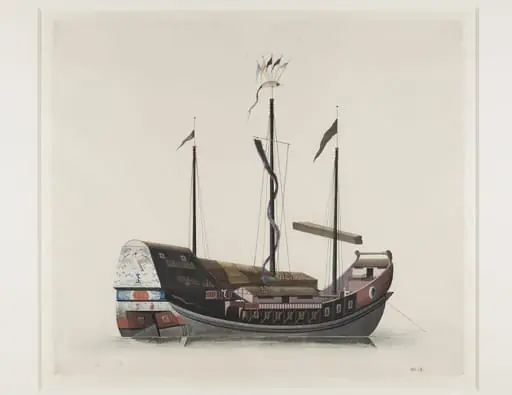
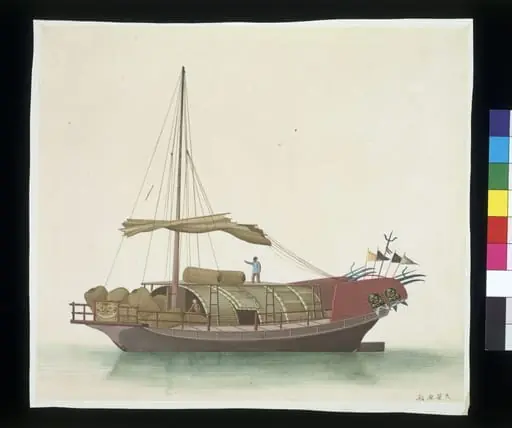
Common Salt Junk is a paint painting by the Romanticist artist Unknown. It dates from 1810 and is held in the collection of the Victoria and Albert Museum. This painting belongs to a series of fifty works documenting river vessels on the Pearl River in Guangdong.
About this work
Overview
This painting belongs to a series of fifty works documenting river vessels on the Pearl River in Guangdong. Created for export, it depicts a salt junk—a functional vessel used to transport salt between regional towns. Produced in quantity for foreign buyers, these images served as affordable mementos of China’s bustling waterways during the early 19th century.
Subject & Meaning
The vessel’s modest size and loaded deck emphasize utility over ornament, while the small flag signals local identity.
The salt junk is shown carrying salt, a vital commodity, along the Pearl River’s commercial routes. Its presence reflects the daily economic life of Guangdong’s riverine communities. The vessel’s modest size and loaded deck emphasize utility over ornament, while the small flag signals local identity. These boats were not exotic curiosities but essential transport, integral to regional trade networks.
Technique & Style
Executed in watercolor or ink on paper, the painting uses clear outlines and flat areas of color to render the boat and its surroundings. Details like stacked barrels and fishing nets are rendered with precision, but the background remains minimal. The style prioritizes clarity and recognizability over atmospheric depth, aligning with the demands of commercial export art.
History & Provenance
The painting likely originated in Guangzhou, where artists produced souvenirs for foreign traders and diplomats. Lord Macartney’s 1793 mission to China coincided with the peak of this trade, and his observations of the river’s dense vessel traffic corroborate the scene’s authenticity. These works entered European collections through diplomatic and commercial channels.
Context
During the Canton System, foreign access to China was restricted to Guangzhou, making the Pearl River a hub of international exchange. Local artisans responded to demand by creating visual records of river life for Western buyers. The salt junk, though ordinary to residents, became a symbol of Chinese commerce abroad, captured in hundreds of similar works.
Legacy
These export paintings now serve as historical documents of pre-colonial Chinese maritime life. They reveal how local subjects were framed for foreign consumption, blending observation with commercial intent. Collections such as those at the Victoria and Albert Museum preserve them as evidence of cross-cultural exchange, not as art for art’s sake, but as artifacts of global trade.
Artist & collection

 Domestic Scene
 Giacomo and Cardinal Marco, investing Andrea, Abbot of San Zeno, with his Benefice
 The Nymph of Fontainebleau
 Portrait of a Woman
 Madonna and Child with Saints in the Enclosed Garden
 Venus and Minerva
 Family Group of Four on Sofa
 Wall painting from Room H of the Villa of P. Fannius Synistor at Boscoreale