Artwork
Painted Snipe
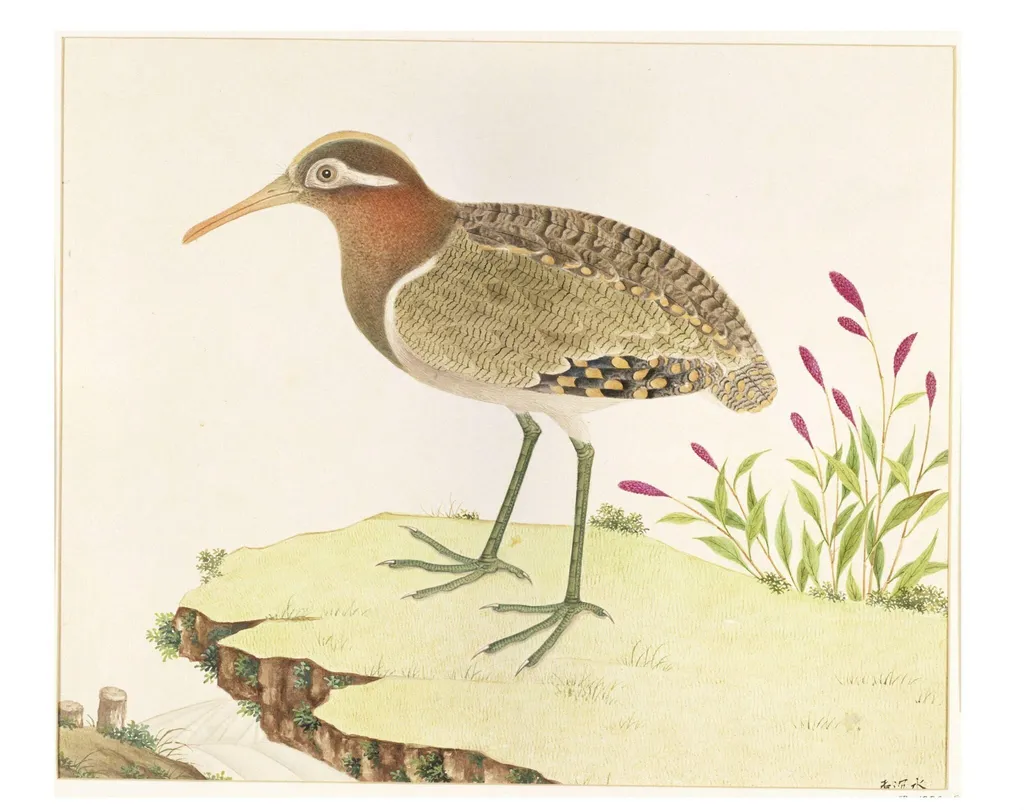
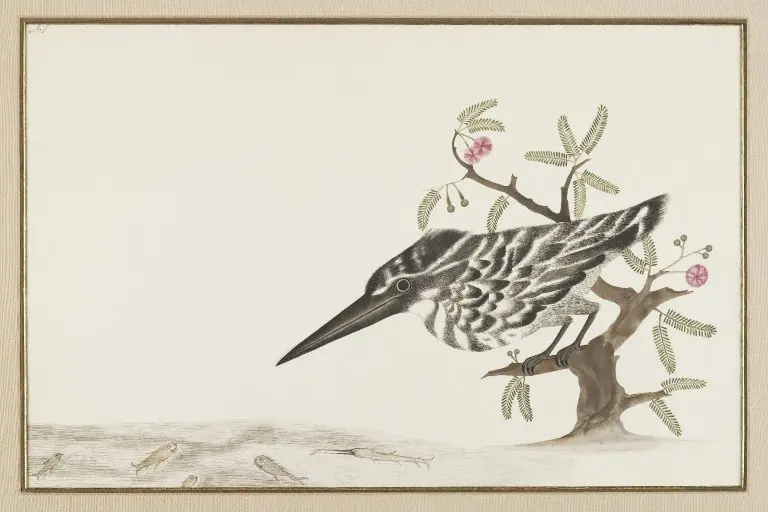
Painted Snipe is a watercolor painting by the Romanticist artist Unknown. It dates from 1800 and is held in the collection of the Victoria and Albert Museum. The work depicts a painted sniake rendered in watercolor and ink on paper, presenting the bird in a compact, upright pose.
About this work
Overview
The composition focuses on the bird’s elongated bill and the subtle striping of its plumage, rendered with precise line work that emphasizes anatomical detail.
The work depicts a painted sniake rendered in watercolor and ink on paper, presenting the bird in a compact, upright pose. The composition focuses on the bird’s elongated bill and the subtle striping of its plumage, rendered with precise line work that emphasizes anatomical detail. The piece serves as a representative example of the small-format natural studies produced for a market of European travelers during the nineteenth century.
Subject & Meaning
The subject is a painted sniake, a wading bird native to East Asia, portrayed with attention to its characteristic long beak and patterned feathers. While not a scientific illustration in the strict sense, the image conveys the exotic appeal of foreign wildlife that fascinated British audiences, offering a visual record of a species unfamiliar to most viewers at the time.
Technique & Style
Executed with watercolor washes for tonal variation and fine ink outlines for definition, the artist balances delicate coloration with crisp linear detail. The limited palette and swift brushwork suggest a rapid execution, typical of works intended for commercial reproduction rather than exhaustive study. The style merges naturalistic observation with a decorative simplicity suited to portable prints.
History & Provenance
Created in the nineteenth century, the painting was part of a broader series produced for European travelers returning from Asia. Such images were often sold to British collectors eager to augment their cabinets of curiosities with depictions of distant fauna. The work eventually entered the collection of the Victoria and Albert Museum, where it remains catalogued among similar travel-oriented natural illustrations.
Context
During the 1800s, British botanists and ornithologists cultivated a keen interest in foreign species, a curiosity that filtered into popular culture. Artists responded to this demand by generating affordable, reproducible images that could be displayed in homes or study rooms. The painted sniake thus reflects both the scientific enthusiasm of the era and the commercial mechanisms that disseminated visual knowledge of the natural world.
Artist & collection

 Domestic Scene
 Giacomo and Cardinal Marco, investing Andrea, Abbot of San Zeno, with his Benefice
 The Nymph of Fontainebleau
 Portrait of a Woman
 Madonna and Child with Saints in the Enclosed Garden
 Venus and Minerva
 Family Group of Four on Sofa
 Wall painting from Room H of the Villa of P. Fannius Synistor at Boscoreale
 Plate 52: Blue Tit with Three Wading Birds and a Fig Tree
 Purple Heron (Ardea purpurea)
 Plate 21: Swamp Hen and Woodcock with a Streaked Rosefinch, a Finch, and Oak Galls
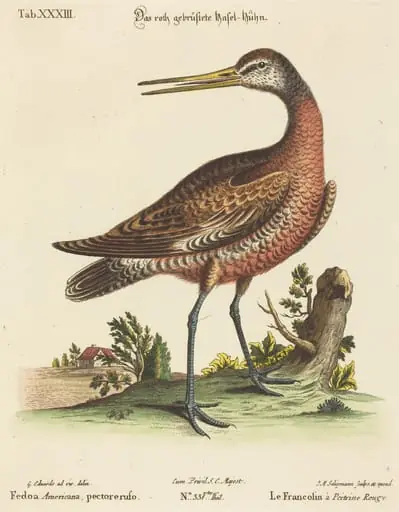 Fedoa Americana, pectore ruso
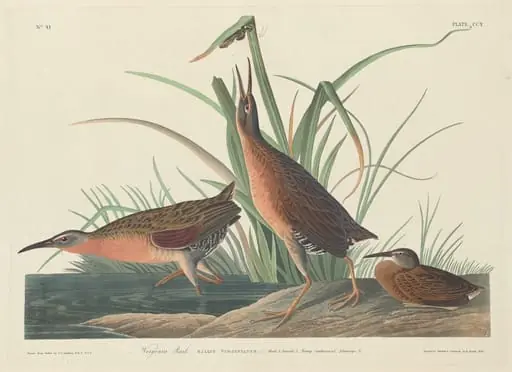 Virginia Rail
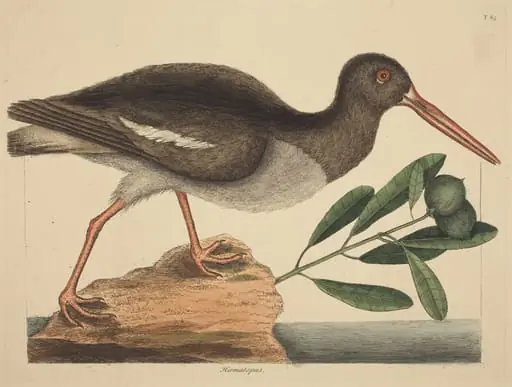 The Oyster-catcher (Hoematopus ostralegus)
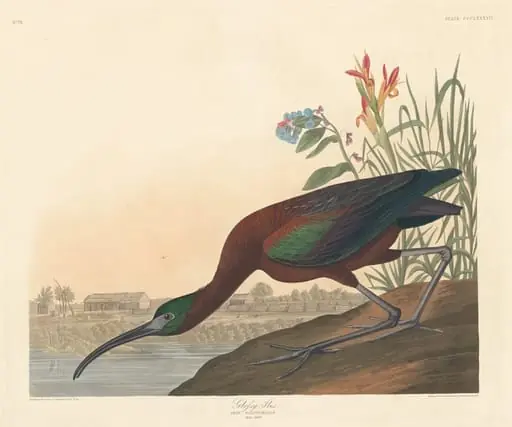 Glossy Ibis
 A Kingfisher Watching Fish
 Great Esquimaux Curlew