Artwork
The Oyster-catcher (Hoematopus ostralegus)
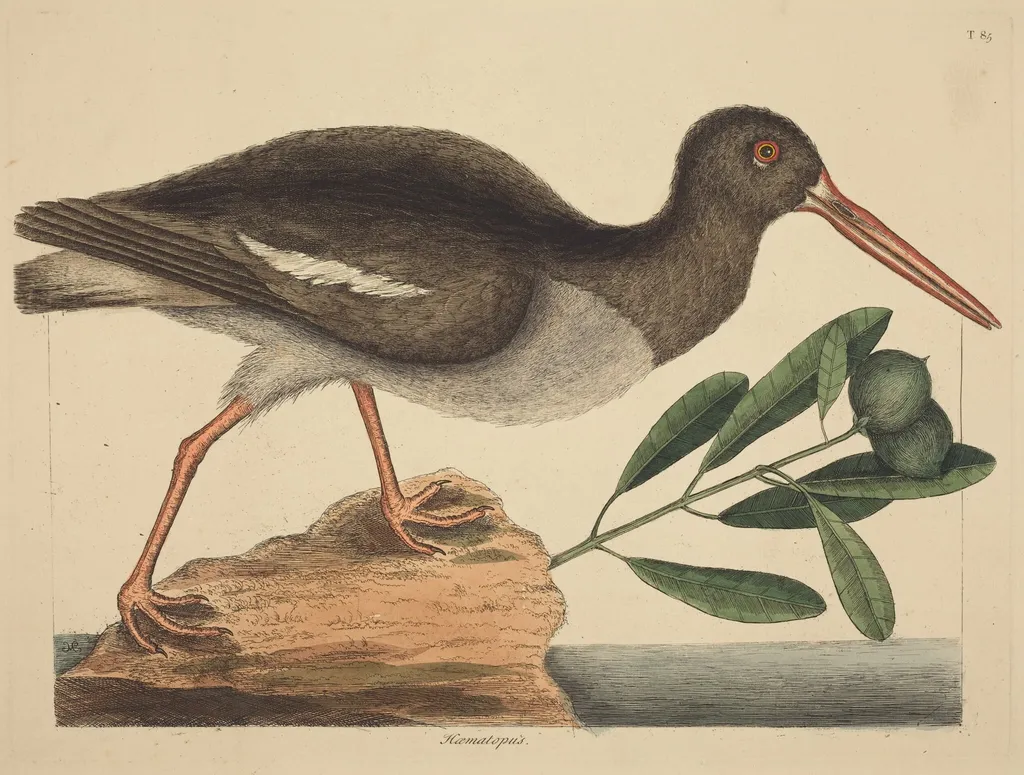
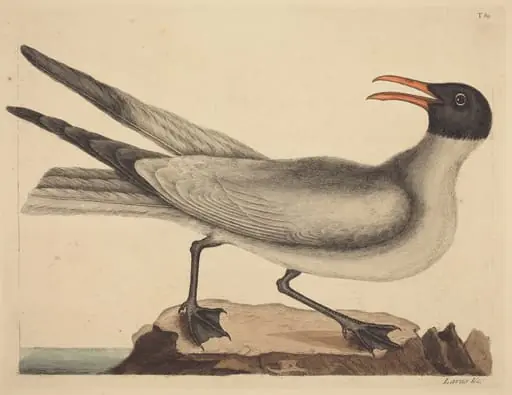
The Oyster-catcher (Hoematopus ostralegus) is an ink print by the Baroque artist Mark Catesby. It dates from 1737 and is held in the collection of the National Gallery of Art.
About this work
Overview
Mark Catesby’s 1737 plate titled *The Oyster‑catcher* portrays a wading bird perched on a rock beside a sparse shoreline.
Mark Catesby’s 1737 plate titled *The Oyster‑catcher* portrays a wading bird perched on a rock beside a sparse shoreline. Rendered in a naturalistic manner, the bird’s dark upper plumage contrasts with a lighter belly, while its long, orange‑tinged bill and slender legs are rendered with precise line work. The composition is set against a muted beige ground that emphasizes the figure and its immediate environment.
Subject & Meaning
The image records the Eurasian oystercatcher (Haematopus ostralegus), a coastal forager known for its bright bill and distinctive feeding behavior. By placing the bird within a simple rocky setting, Catesby highlights the creature’s adaptation to intertidal zones, offering viewers a clear visual reference for identification and an appreciation of its ecological niche.
Technique & Style
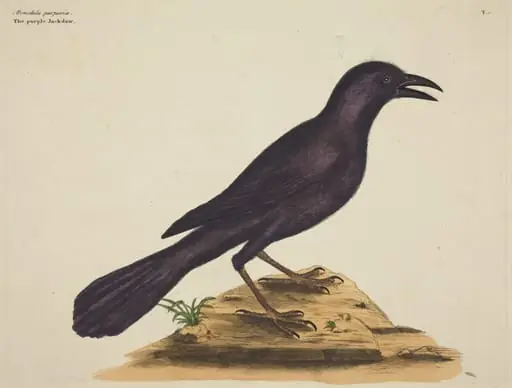
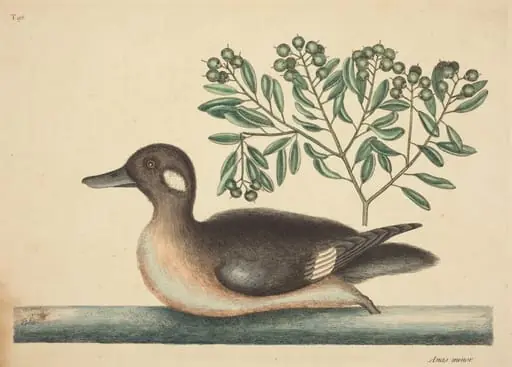
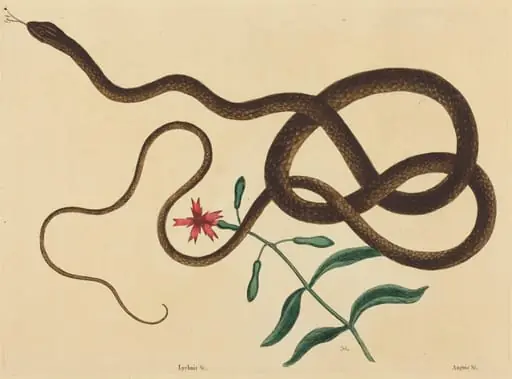
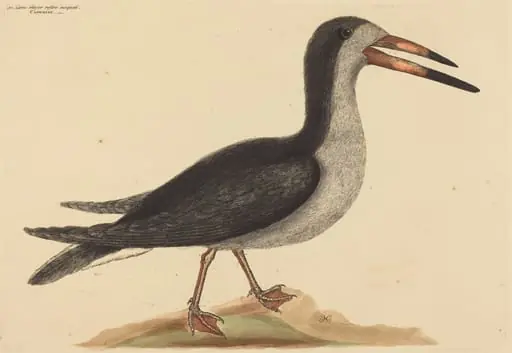
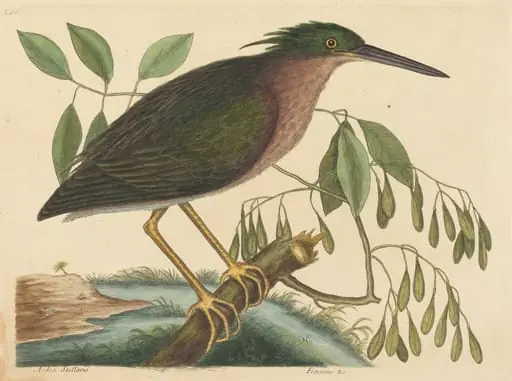
Catesby combined intaglio etching with engraving to achieve fine line detail, then applied hand‑applied watercolors to accentuate plumage tones and the surrounding foliage. The use of laid paper provides a textured surface that supports subtle shading, while the restrained palette and careful rendering reflect the eighteenth‑century tradition of scientific illustration that balances accuracy with aesthetic clarity.
History & Provenance
The plate appears in Catesby’s two‑volume *Natural History of Carolina, Florida and the Bahama Islands*, the first comprehensive illustrated survey of North American wildlife. Produced after years of field observation in the American colonies, the work includes 220 hand‑colored plates. Original copies of the volume are held in major research libraries and natural history collections, documenting early transatlantic scientific exchange.
Context
Catesby, an English naturalist, traveled extensively in the southeastern United States during the 1720s and 1730s, documenting flora and fauna for European audiences. His illustrations served both scientific and educational purposes, informing scholars such as Linnaeus. The oyster‑catcher plate exemplifies the period’s growing interest in cataloguing the New World’s biodiversity through detailed visual records.
Artist & collection

Artist
Mark Catesby (24 March 1683 – 23 December 1749) was an English naturalist who studied the flora and fauna of the New World.