Artwork
Glossy Ibis
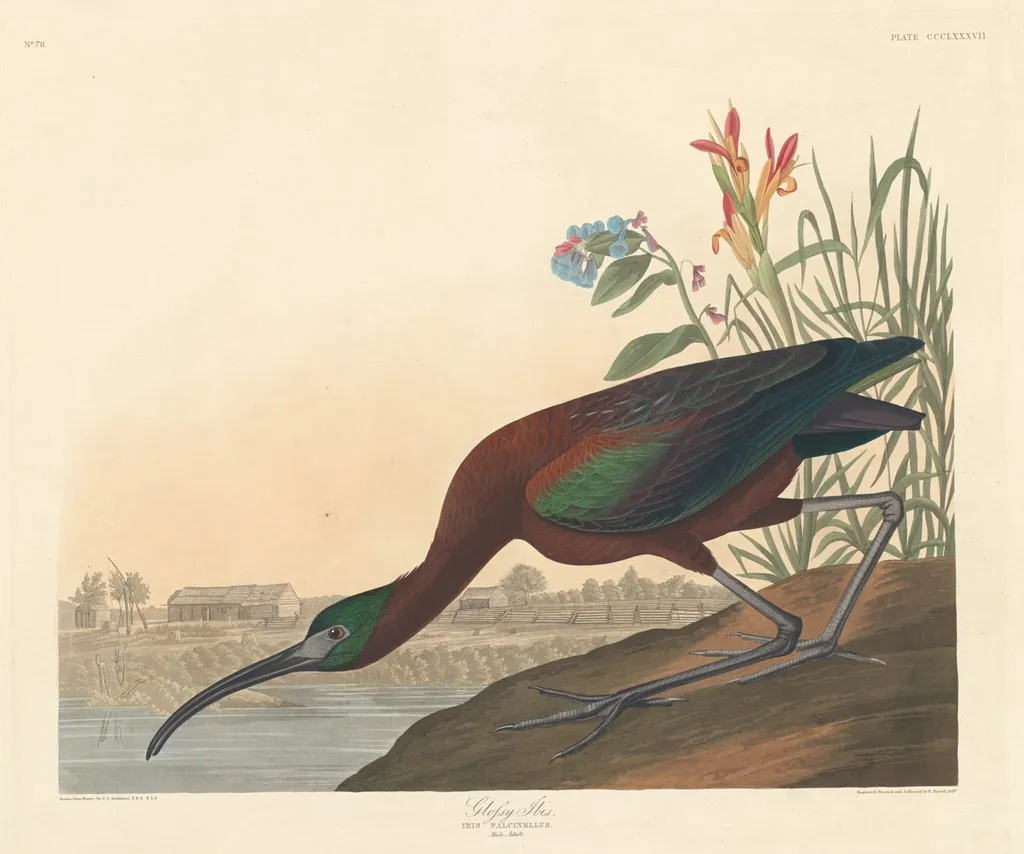
Glossy Ibis is an ink print by the Romanticist artist Robert Havell Jr.. It dates from 1837 and is held in the collection of the National Gallery of Art.
About this work
Overview
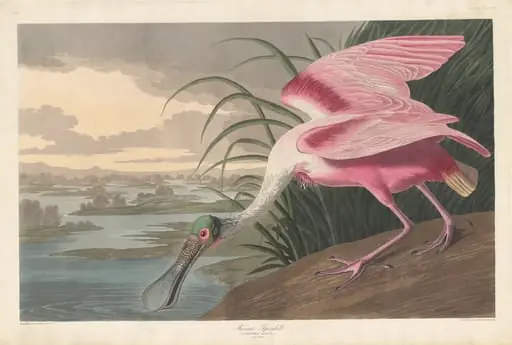
Glossy Ibis is a hand‑colored print produced in 1837 by English engraver Robert Havell Jr. The work combines engraving with aquatint on wove paper, presenting a naturalistic study of a waterbird perched on a rocky ledge. Its modest size and delicate coloration reflect the print‑making practices of early‑Victorian Britain.
Subject & Meaning
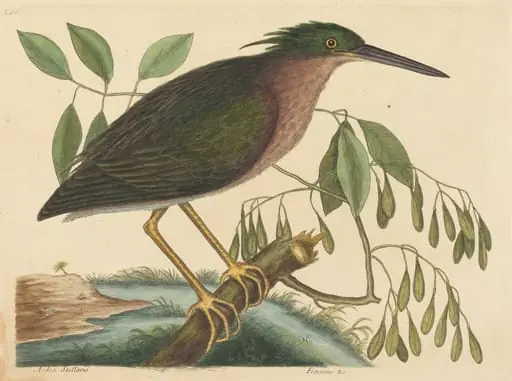
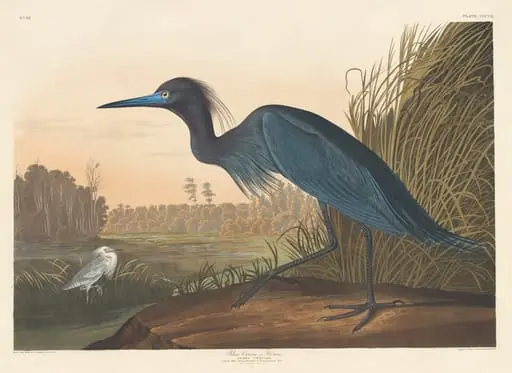
The image centers on a glossy ibis, identified by its long, curved bill and iridescent plumage of brown, green and blue tones, including a striking green patch on the head. The bird stands on a crag, its beak probing the ground, suggesting a moment of foraging within a tranquil riverside setting that includes water, grasses and a distant structure.
Technique & Style
Havell employed a layered aquatint process to achieve subtle tonal gradations, then applied hand‑applied colour to enhance the bird’s vivid feathers. The aquatint’s capacity for soft washes complements the precise line work of engraving, producing a balance between detailed texture and atmospheric depth typical of the Havell family’s print tradition.
History & Provenance
Robert Havell Jr. belonged to a Reading‑based lineage of engravers and etchers who were active in the early 19th century. The family’s workshop was known for collaborations with natural history illustrators and for incorporating influences from Indian artistic motifs, a connection that informed the decorative sensibility of this print.
Context
Created during a period of heightened interest in ornithological illustration, the print reflects contemporary scientific curiosity and the market for affordable, hand‑coloured reproductions of wildlife. Its production aligns with the broader Victorian endeavour to document and disseminate knowledge of exotic species through print media.
Artist & collection

Artist
The Havell family of Reading, Berkshire, England, included a number of notable engravers, etchers and painters, as well as writers, publishers, educators, and musicians.