Artwork
Pe un suport de lemn de brad de formă dreptunghiulară, în ax vertical este reprezentat Isus în ipostaza de Pantocrator.Cu dreapta binecuvintează, în stânga ține globul pământesc. Icoana a fost anterior acoperită cu ferecătură metalică, în momentul de față lipsește, fiind pictate doar zonele mâinilor și feței, restul fiind acoperit cu grund și un strat de culoare verzuie. Desenul este realizat coform canoanelor bizantine, tehnica iluminării treptate.Fața prelungă, barba scurtă, ochii mari, căprui, nasul lung, proporțiile fiind cele consacrate de tradiția bizantină.Părul castaniu, lucrat cu minuțiozitate, lăsat pe umeri. Desenul mâinilor foarte fin, contur roșcat. Se observă urme de cuie metalice în care a fost fixată ferecătura. Peste pictură a fost aplicat vernis.
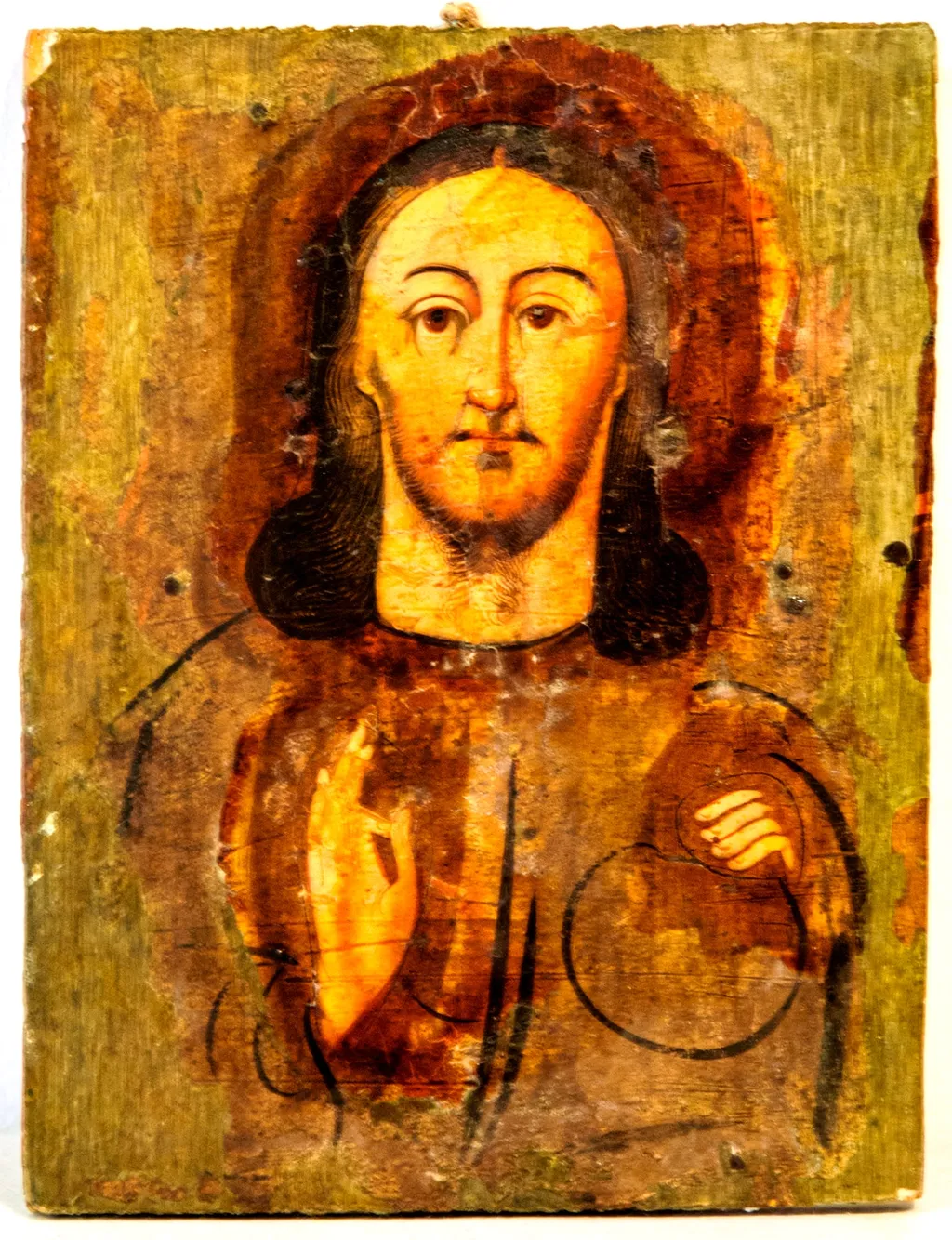
Pe un suport de lemn de brad de formă dreptunghiulară, în ax vertical este reprezentat Isus în ipostaza de Pantocrator.Cu dreapta binecuvintează, în stânga ține globul pământesc. Icoana a fost anterior acoperită cu ferecătură metalică, în momentul de față lipsește, fiind pictate doar zonele mâinilor și feței, restul fiind acoperit cu grund și un strat de culoare verzuie. Desenul este realizat coform canoanelor bizantine, tehnica iluminării treptate.Fața prelungă, barba scurtă, ochii mari, căprui, nasul lung, proporțiile fiind cele consacrate de tradiția bizantină.Părul castaniu, lucrat cu minuțiozitate, lăsat pe umeri. Desenul mâinilor foarte fin, contur roșcat. Se observă urme de cuie metalice în care a fost fixată ferecătura. Peste pictură a fost aplicat vernis. is a drawing by Unknown. It dates from 1850 and is held in the collection of the "Dimitrie Gusti" National Village Museum. This wooden icon depicts Christ Pantocrator, rendered in the traditional Byzantine style on a rectangular panel.
About this work
Overview
This wooden icon depicts Christ Pantocrator, rendered in the traditional Byzantine style on a rectangular panel.
This wooden icon depicts Christ Pantocrator, rendered in the traditional Byzantine style on a rectangular panel. The figure is frontal, with a solemn expression, raised right hand in blessing and a globe in the left. The original metal cover, now missing, once protected the surface; only the face and hands retain visible pigment, while the rest is obscured by a greenish ground layer and varnish. Traces of metal fastenings remain, indicating its former protective casing.
Subject & Meaning
Christ is portrayed as Pantocrator—ruler of all—embodying divine authority and judgment. The globe signifies his dominion over the earth, while the blessing gesture conveys grace and spiritual power. The icon’s austere composition and fixed gaze reflect its liturgical function: to mediate the sacred presence in worship. Its formal rigidity aligns with theological principles emphasizing Christ’s eternal, unchanging nature rather than human emotion.
Technique & Style
The painting follows strict Byzantine canons: elongated face, large brown eyes, narrow nose, and short beard conform to established iconographic norms. Hair is meticulously rendered in chestnut tones, falling symmetrically over the shoulders. Hands are delicately outlined in reddish pigment, with fine detailing suggesting anatomical precision within symbolic limits. Gradual tonal modeling, typical of tempera on wood, creates subtle volume without naturalistic shading.
History & Provenance
The icon was originally protected by a metal cover, likely of silver or gilded bronze, affixed with nails whose impressions remain visible. This protective layer was removed at some point, exposing the painted surface to environmental wear. The surviving pigment is limited to the face and hands, areas traditionally emphasized for veneration. A layer of varnish was applied post-removal, possibly to stabilize the remaining paint.
Context
Produced within the Eastern Orthodox tradition, this icon reflects the liturgical use of sacred images as objects of devotion. Its adherence to Byzantine models suggests origins in a region influenced by Constantinopolitan artistic norms, possibly the Balkans or Carpathian areas. Such icons were central to private and communal prayer, often placed in home altars or church sanctuaries to facilitate spiritual connection with the divine.
Legacy
Though partially damaged and altered by time, the icon preserves key elements of medieval Byzantine iconography. Its survival, despite the loss of its protective casing and much of its paint, underscores the enduring role of such images in religious practice. It remains a tangible link to a visual language that shaped Eastern Christian spirituality for centuries, valued more for its ritual function than its aesthetic completeness.
Artist & collection
Museum
"Dimitrie Gusti" National Village Museum
Continue through works from the same source collection.
 Domestic Scene
 Giacomo and Cardinal Marco, investing Andrea, Abbot of San Zeno, with his Benefice
 The Nymph of Fontainebleau
 Portrait of a Woman
 Madonna and Child with Saints in the Enclosed Garden
 Venus and Minerva
 Family Group of Four on Sofa
 Wall painting from Room H of the Villa of P. Fannius Synistor at Boscoreale
 Iisus Hristos Pantocrator
 Christ the Redeemer
 Isus Hristos Pantocrator
 Deisis
 Iisus Christos (Iisus Hristos)
 Head of Christ
 Deisis
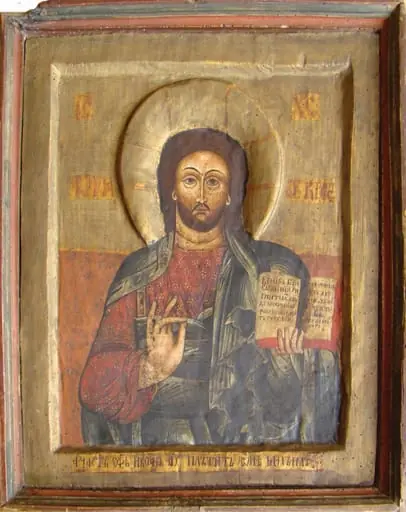 Iisus Hristos Învățător
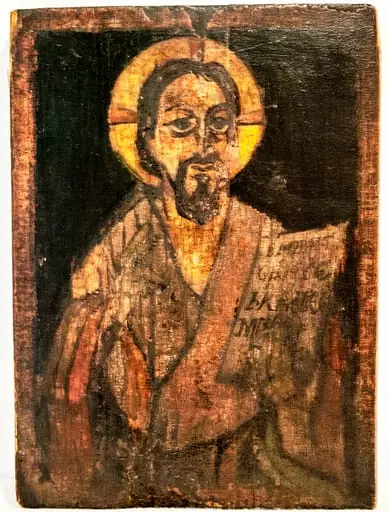 Pictura inițială, deteriorată, a suferit intervenții care e posibil să fi modoficat tema(în oferta făcută de Mihai Mihalcu în data de 8.10.2002)tema menționată este "Sfânt", deoarece acesta nu putea fi identificat).La intervenția peste pictura inițială i s-a atribuit personajului nimbul cruciger(fără însemne).Ochii sunt deasemenea modificați, mâna, și inscripția de pe rotulus, ilogică, scrisă cu litere chirilice și caractere latine.Sfântul poartă un veșmânt roșiatic(omofor), chiton și himation. Fondul este foarte întunecat, pe margine un chenar de culoare deschisă.
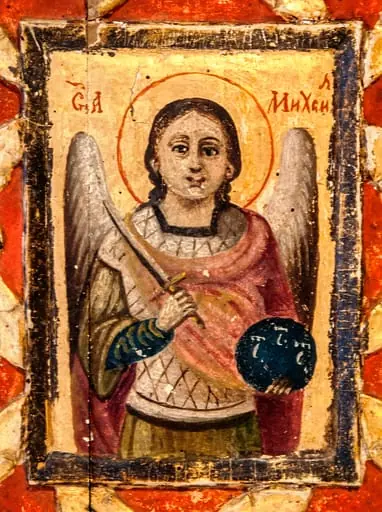 Într-un spațiu central dreptunghiular în relief este pictat Arhanghelul Mihail 3/4. Arhanghelul ține în mâna dreaptă sabia ridicată, în stânga globul pământesc cu însemnele dumnezeirii. Este redat tânăr, cu fața rotundă, expresivă, părul lung, lăsat pe umeri.Poartă o tunică verde, cămașă albastră și lorică argintie, peste care este prinsă mantia lungă, roșie.Aripile sint strânse, aureola conturată cu o linie roșie fină, se proiectează pe fondul auriu unde este scrisă în partea superioară inscripția, cu litere de culoare roșie.Chenar îngust, negru. Decorul ancadramentului, sculptat, în relief : 8 flori cu patru petale rotunde, pictate cu albastru, centrul cu roșu, iar frunzele aurii. Spațiul dintre flori. La nivelul suportului, pictat cu roșu. Suportul este crăpat, cele două bucăți care îl alcătuiesc nu se mai sudează. După modul de realizare se pare că icoana a aparținut unei biserici.