Artwork
Peasant with a glass jug
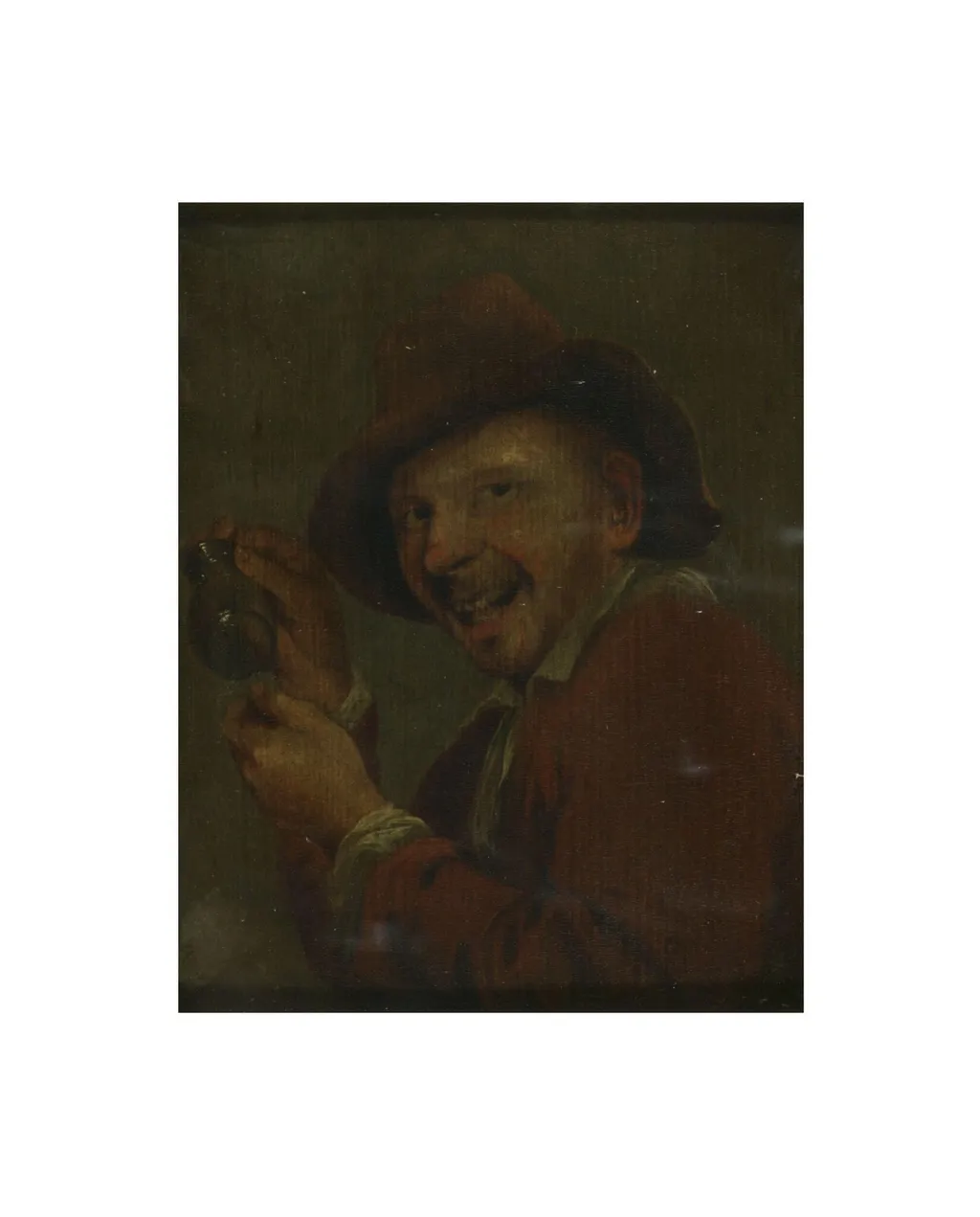
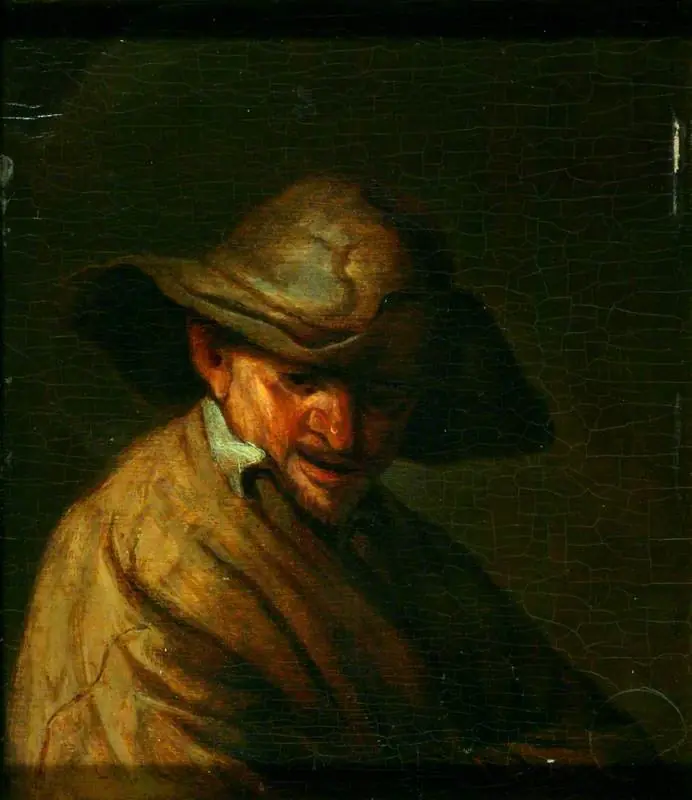
Peasant with a glass jug is an oil painting by Unknown. It dates from 1850 and is held in the collection of the Victoria and Albert Museum.
About this work
Overview
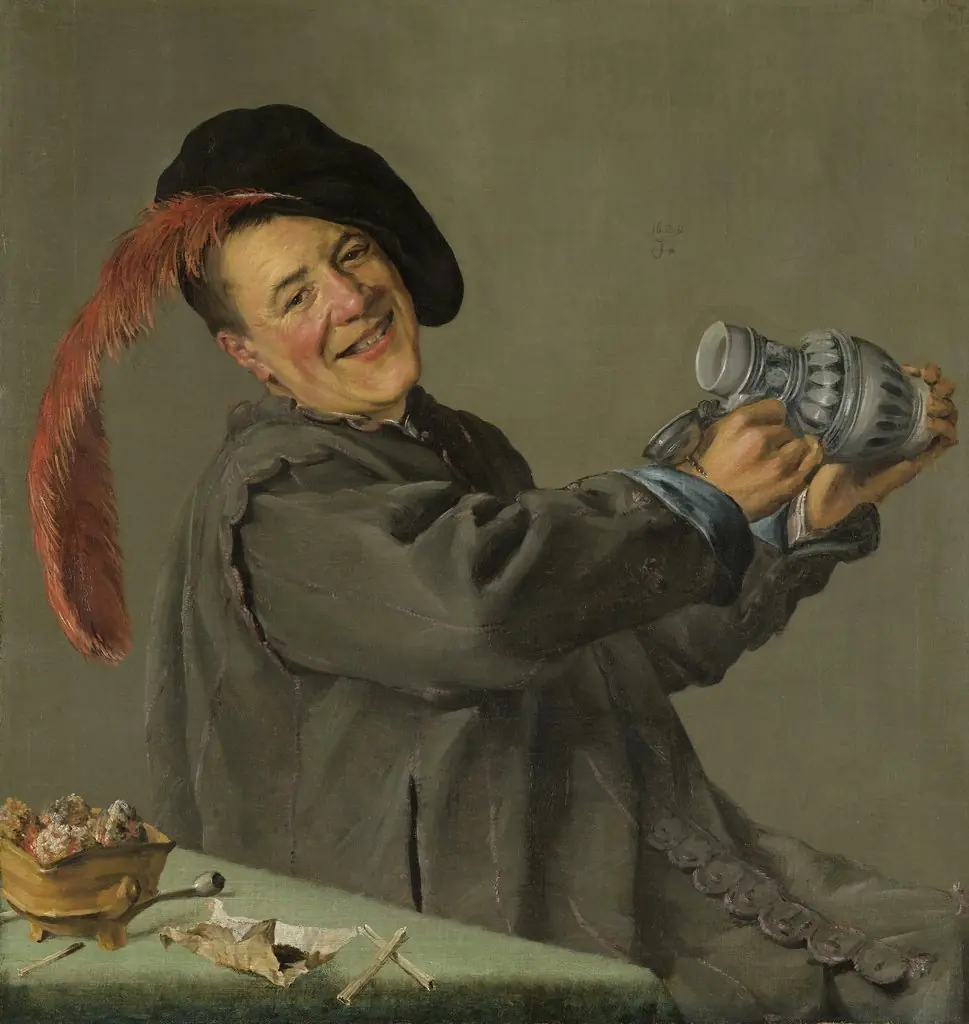
Peasant with a glass jug is an oil painting depicting a grinning peasant wearing a brown hat and red jacket, gesturing with an empty glass jug in his right hand.
Subject & Meaning
The subject represents 'Taste,' one of the five senses personified by peasants in a series originally designed by Petrus Staverenus. Notably, 'Taste' is the missing element from the known engravings by Abraham Blooteling, suggesting this painting may have been adapted from another source to complete the set.
Technique & Style
The work exhibits a distinct colour palette and less refined execution compared to a similar attributed panel by Staverenus. The use of chiaroscuro is notable, emphasizing the peasant's expressive pose and facial expression.
History & Provenance
Inspired by 17th-century mezzotint engravings (ca. 1670-1690) by Abraham Blooteling after Staverenus' designs. Part of a series where 'Hearing' is depicted in its pendant (309-1864), with other senses represented in engravings by Blooteling, Pieter Schenck, and Jan Verkolje.
Context
Created in a context where personifying the senses through everyday figures was popular, as evidenced by multiple artists and printmakers engaging with the theme across the 17th century.
Legacy
Contributes to the broader artistic exploration of the senses in 17th-century Dutch art, with its adaptation and representation of 'Taste' filling a gap in the original engraving series.
Artist & collection

 Domestic Scene
 Giacomo and Cardinal Marco, investing Andrea, Abbot of San Zeno, with his Benefice
 The Nymph of Fontainebleau
 Portrait of a Woman
 Madonna and Child with Saints in the Enclosed Garden
 Venus and Minerva
 Family Group of Four on Sofa
 Wall painting from Room H of the Villa of P. Fannius Synistor at Boscoreale