Artwork
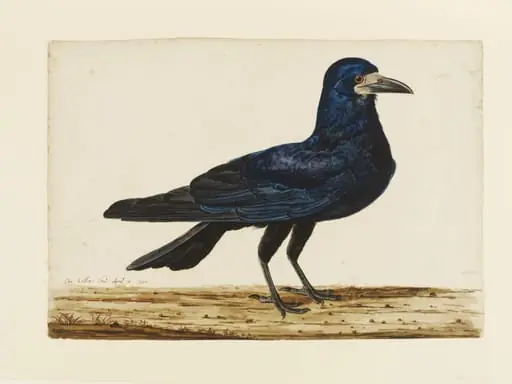
Piebald crow
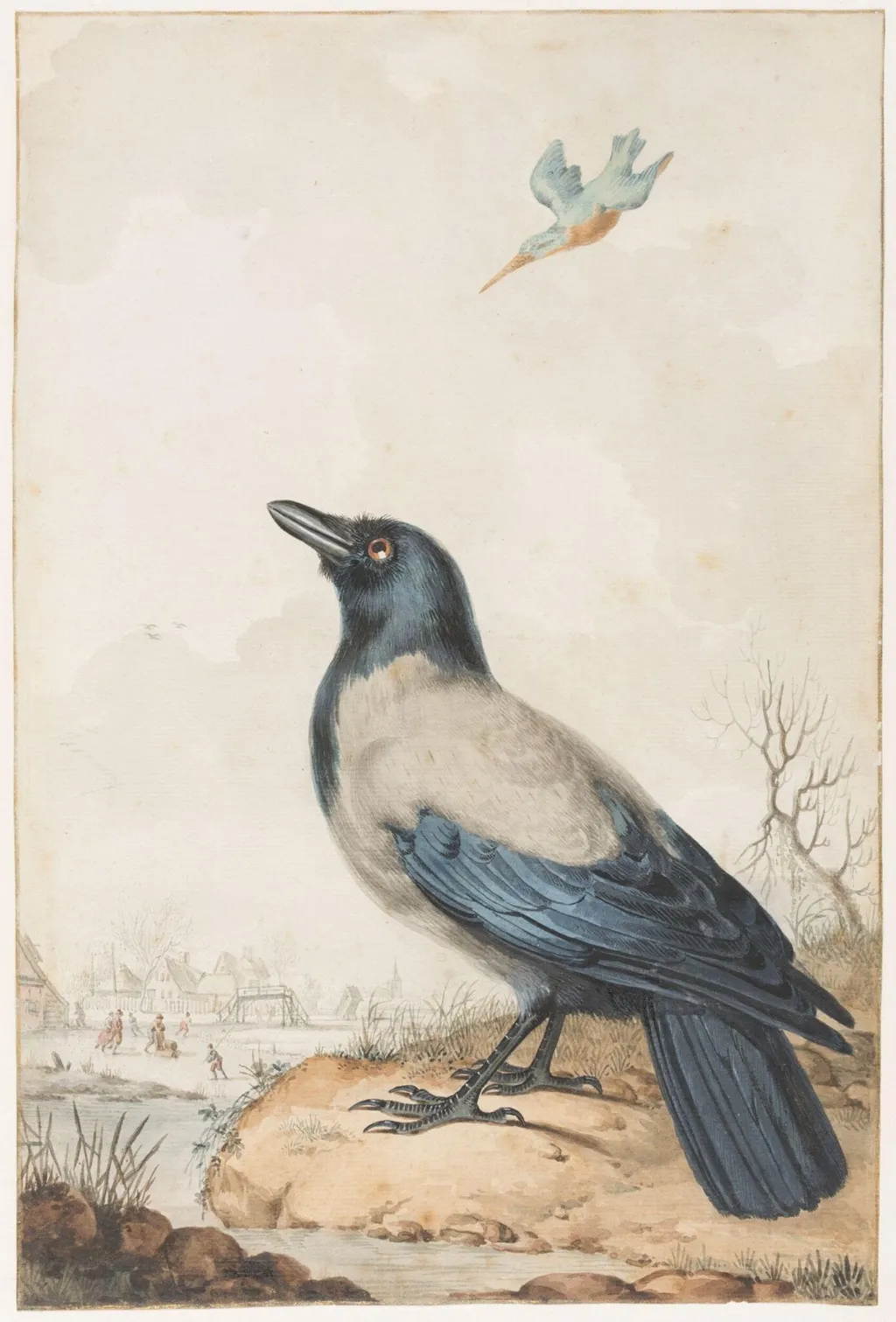
Piebald crow is a watercolor work on paper by Unknown. It dates from 1750 and is held in the collection of the Victoria and Albert Museum.
About this work
Overview
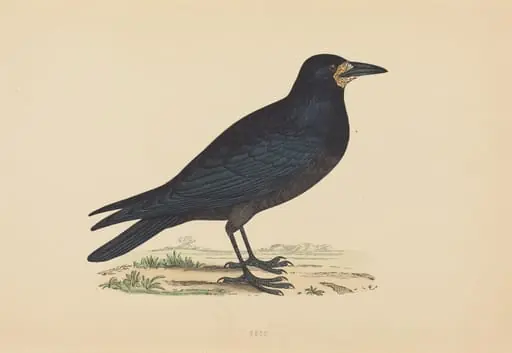
This watercolour depicts a piebald crow perched on a patch of earth near water, rendered with delicate precision. The bird’s plumage alternates between dark black and soft gray-white tones, while its bright red eye draws immediate attention. A faint background suggests a distant village and a second bird in flight, adding subtle narrative depth without overwhelming the central figure.
Subject & Meaning
The crow, often associated with ambiguity in cultural symbolism, is portrayed here with quiet realism rather than allegory. Its placement near water and a distant human settlement implies a boundary between wild and domesticated spaces. The absence of dramatic action invites contemplation of the bird’s presence in a quiet, everyday landscape.
Technique & Style
The artist employed fine, layered washes to capture the texture of individual feathers, creating a tactile sense of volume and softness. Muted, earthy tones dominate, with the crow’s dark areas sharply contrasted against a pale, airy background. The background village and flying bird are rendered with minimal detail, reinforcing focus on the subject through restraint.
History & Provenance
The work is held in the collection of the Victoria and Albert Museum, where it is categorized among 19th-century British watercolours. Its origin and artist remain undocumented, though its style aligns with naturalist traditions of the period, where close observation of wildlife was valued in amateur and professional circles alike.
Context
Created during a time when natural history illustration flourished, this piece reflects a broader interest in depicting native fauna with scientific accuracy and aesthetic sensitivity. Unlike ornithological plates meant for classification, this work emphasizes mood and atmosphere, suggesting an artist more engaged with poetic observation than academic documentation.
Legacy
Though unsigned and unattributed, the painting endures as an example of quiet, observational watercolour practice. Its preservation in a major museum collection underscores its value as a specimen of everyday naturalism, offering insight into how ordinary wildlife was perceived and recorded by artists outside formal institutions.
Artist & collection

 Domestic Scene
 Giacomo and Cardinal Marco, investing Andrea, Abbot of San Zeno, with his Benefice
 The Nymph of Fontainebleau
 Portrait of a Woman
 Madonna and Child with Saints in the Enclosed Garden
 Venus and Minerva
 Family Group of Four on Sofa
 Wall painting from Room H of the Villa of P. Fannius Synistor at Boscoreale