Artwork
Male Crossbill and a Female Magpie
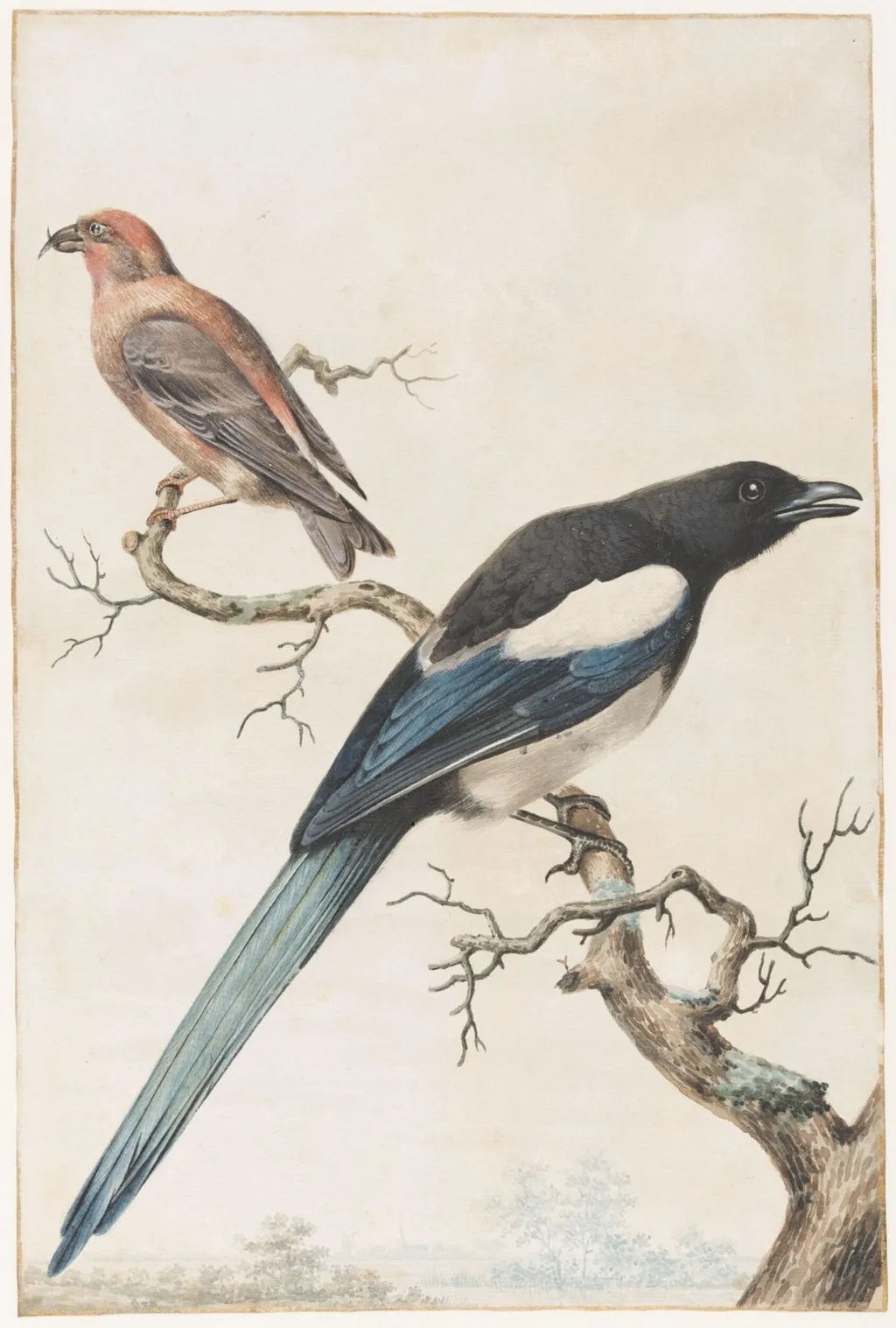
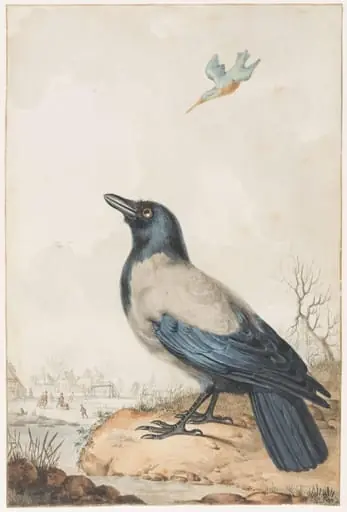
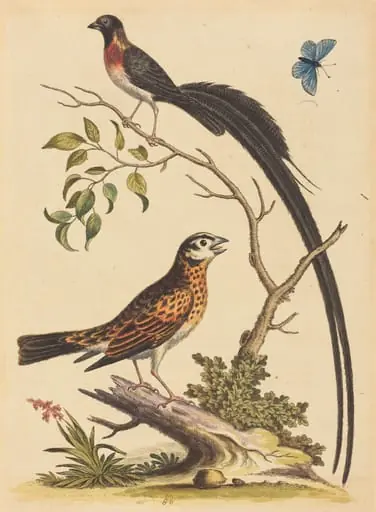
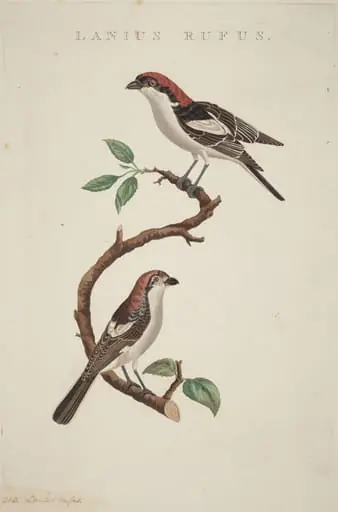
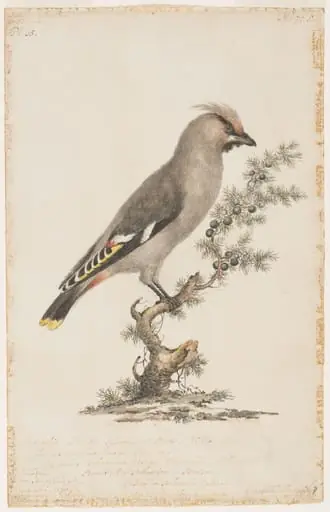
Male Crossbill and a Female Magpie is a watercolor work on paper by Unknown. It dates from 1750 and is held in the collection of the Victoria and Albert Museum. This 1750 watercolour presents a pair of birds—male crossbill and female magpie—rendered with careful observation and restrained palette.
About this work
Overview
This 1750 watercolour presents a pair of birds—male crossbill and female magpie—rendered with careful observation and restrained palette.
This 1750 watercolour presents a pair of birds—male crossbill and female magpie—rendered with careful observation and restrained palette. Executed in delicate washes, the composition isolates the subjects against a muted, atmospheric background, emphasizing anatomical accuracy over environmental context. The work reflects an 18th-century tradition of natural history illustration, where scientific clarity guided artistic choices.
Subject & Meaning
The male crossbill, identified by its reddish-brown plumage and distinctive crossed beak, is paired with the female magpie, whose black-and-white feather pattern is rendered with precision. Neither bird is depicted in action or symbolic context; their placement suggests a taxonomic study rather than narrative. The focus lies in distinguishing species through physical traits, aligning with contemporary efforts to classify avian life.
Technique & Style
The artist employed thin, layered watercolour washes to capture feather texture and subtle tonal shifts without heavy shading. Outlines are soft, contours defined by colour variation rather than line. Background elements are barely suggested—faint washes imply distant landscape, ensuring visual attention remains on the birds’ form. The absence of dramatic lighting or depth reinforces the work’s documentary intent.
History & Provenance
Created in 1750, the painting belongs to a broader corpus of British naturalist art from the mid-18th century, a period when detailed ornithological studies gained traction among collectors and scientists. While the artist’s identity remains unconfirmed, the work’s style and technique align with contemporaries associated with the Royal Society and private natural history collections, many later absorbed into institutional holdings.
Context
During the 1750s, European naturalists increasingly prioritized visual documentation of species as part of global exploration and classification efforts. This painting reflects a shift from ornamental bird depictions toward systematic representation, influenced by Linnaean taxonomy. Such works were often used as reference tools, circulated among scholars, and preserved as visual records before photographic technology.
Legacy
The painting contributes to a historical archive of avian illustration that informed later ornithological publications. Its restrained aesthetic and attention to morphological detail exemplify a pre-photographic approach to biological recording. Today, it stands as a quiet testament to the precision and patience of 18th-century naturalist artists, whose works laid groundwork for modern field guides.
Artist & collection

 Domestic Scene
 Giacomo and Cardinal Marco, investing Andrea, Abbot of San Zeno, with his Benefice
 The Nymph of Fontainebleau
 Portrait of a Woman
 Madonna and Child with Saints in the Enclosed Garden
 Venus and Minerva
 Family Group of Four on Sofa
 Wall painting from Room H of the Villa of P. Fannius Synistor at Boscoreale