Artwork
Stellar's Jay, Lapland Longspur and Female
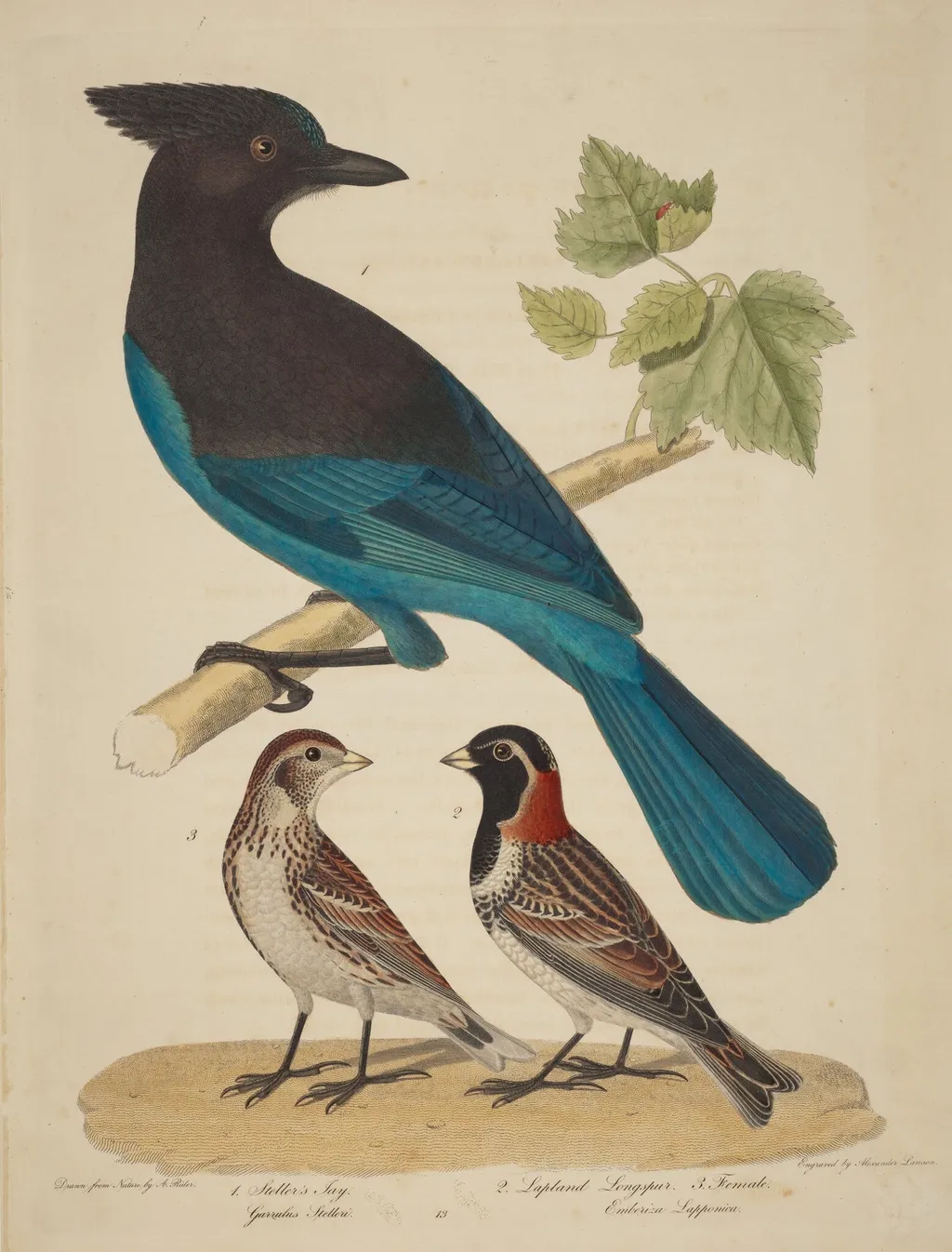
Stellar's Jay, Lapland Longspur and Female is an ink print by the Romanticist artist Alexander Lawson. It dates from 1810 and is held in the collection of the National Gallery of Art.
About this work
Overview
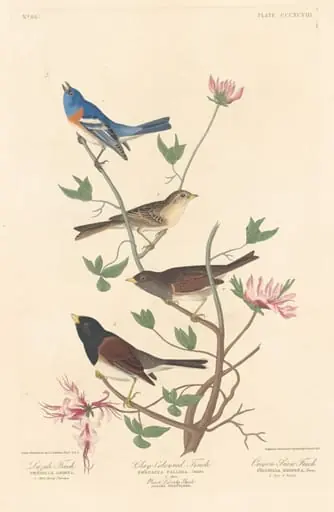
Alexander Lawson's 1810 color etching, Stellar's Jay, Lapland Longspur and Female, depicts three birds in a natural setting. The composition features a dominant bird alongside two smaller ones, set against a backdrop of foliage and berries.
Subject & Meaning
The species' accuracy and labeling suggest a blend of artistic and informative intent.
The print showcases three specifically identified bird species: the Stellar's Jay, recognizable by its glossy black head and bright blue wings, and two smaller birds, one with speckled brown feathers (unspecified in the label but contextually a female, possibly of the same or similar species as one of the others) and the other, a Lapland Longspur, distinguished by its black, white, and red facial markings. The species' accuracy and labeling suggest a blend of artistic and informative intent.
Technique & Style
The work employs color etching, characterized by soft yet precise colors and meticulous shading to convey texture. The technique allows for detailed representation, evident in the feather patterns and the subtle rendering of green leaves and red berries in the background.
History & Provenance
Created in 1810 by Alexander Lawson, specific provenance details (ownership history) are not provided in the available information.
Context
This etching reflects early 19th-century interests in natural history and ornithography, where accurate depiction of species was valued. The use of color etching suits this purpose, offering a detailed and somewhat accessible medium for illustrating bird life.
Legacy
While specific legacy details of this piece are not provided, it contributes to the broader legacy of early 19th-century ornithological art, influencing or reflecting contemporary practices in natural history illustration.
Artist & collection


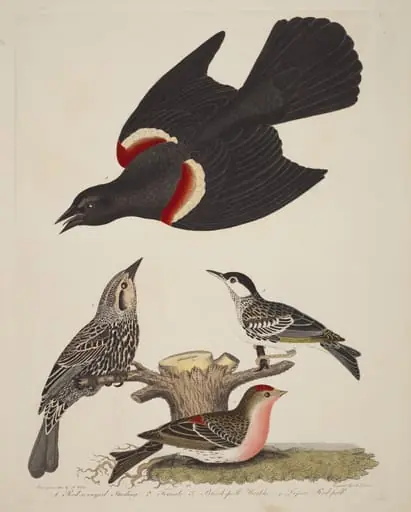 Red-winged Starling, Female Red-winged Starling, Black-poll Warbler, and Lesser Red-poll
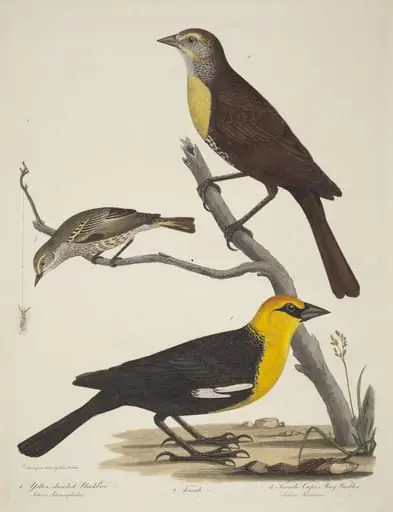 Yellow-headed Blackbird, Female Blackbird, and Female Cape May Warbler
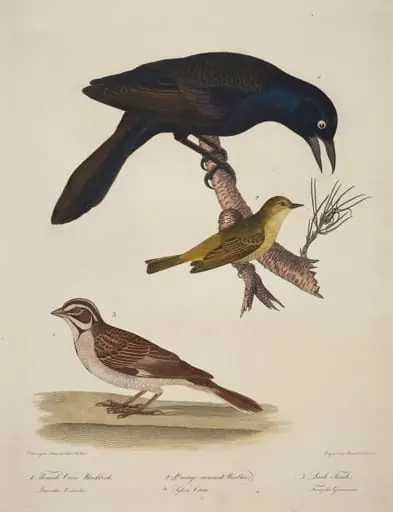 Female Crow Blackbird, Orange-Crowned Warbler, Lark Finch
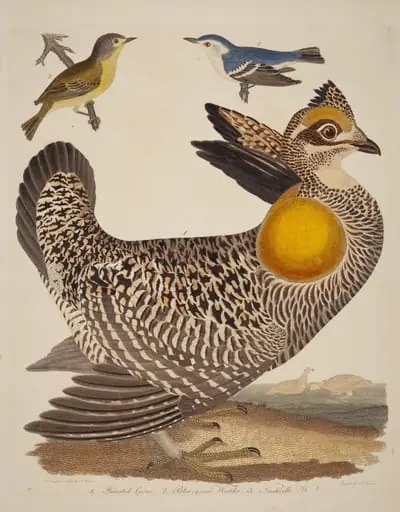 Pinnated Grous, Blue-green Warbler, and Nashville Warbler
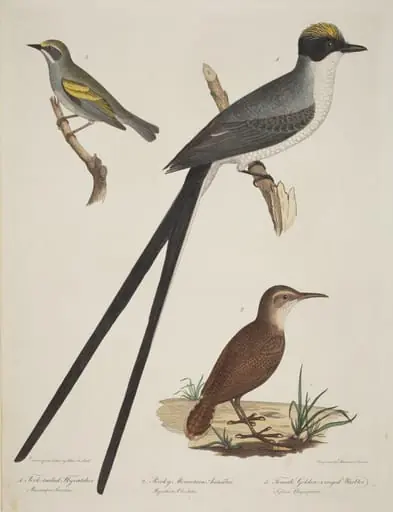 Fork-tailed Flycatcher, Rocky Mountain Anteater, and Female Golden-winged Warbler
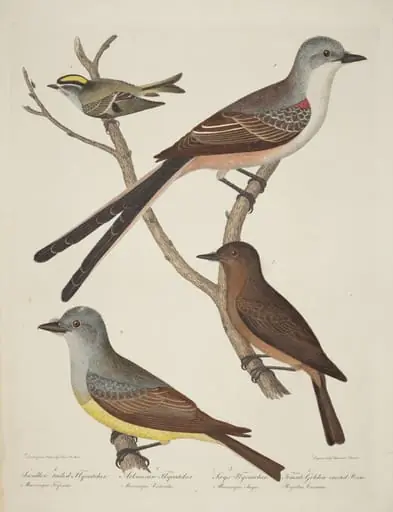 Swallow-tailed Flycatcher, Arkansas Flycatcher, Say's Flycatcher, and Female Golden-crested Wren
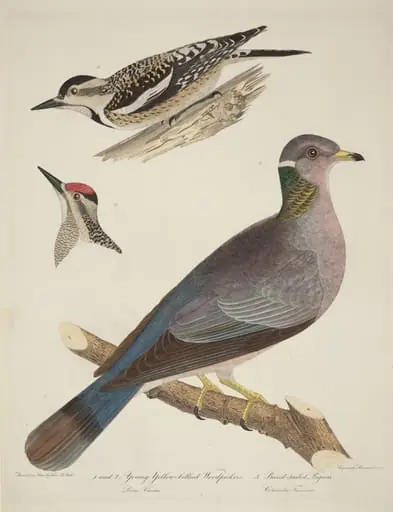 Young Yellow-bellied Woodpeckers and Band-tailed Pigeon
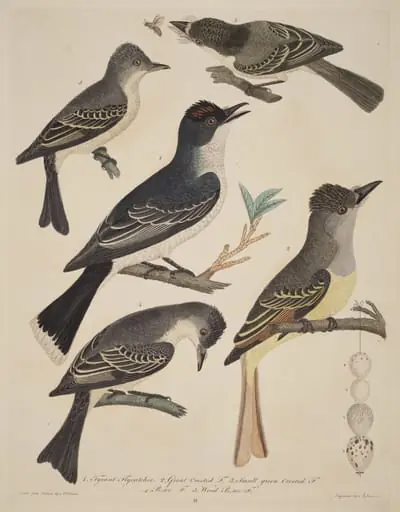 Five Birds with Their Eggs and an Insect
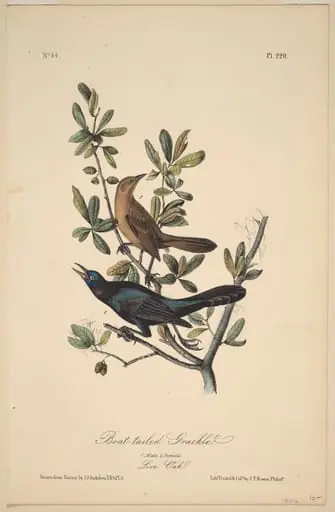 Boat-Tailed Grackle
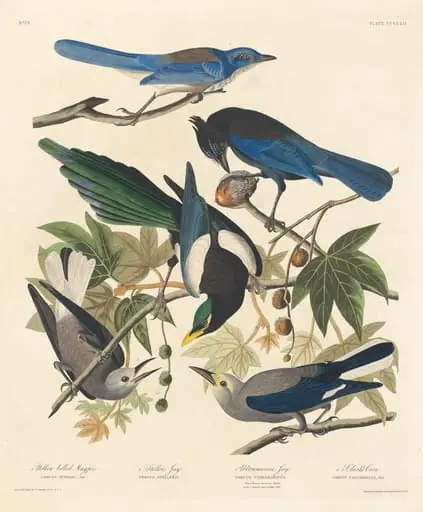 Yellow-billed Magpie, Stellers Jay, Ultramarine Jay and Clark's Crow
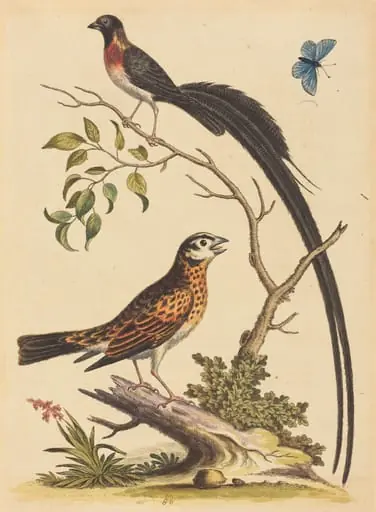 Two Birds, One with Very Long Tailfeathers, and Blue Butterfly
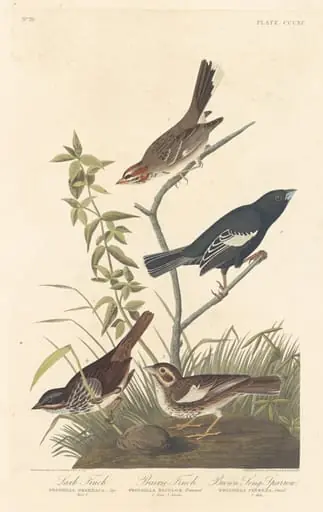 Lark Finch, Prairie Finch and Brown Song Sparrow
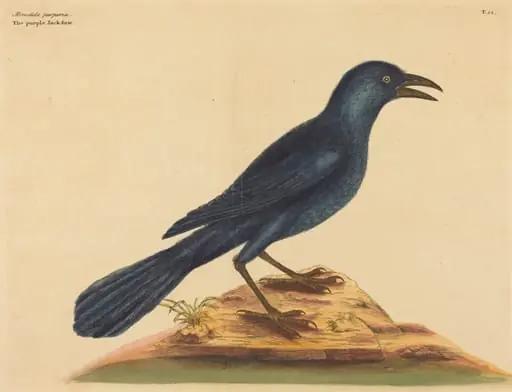 The Purple Jack Daw (Gracula Quiscula)
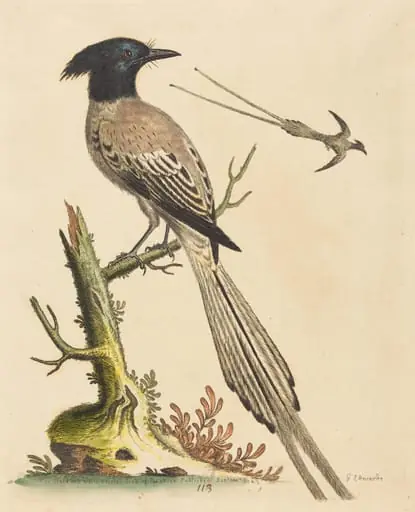 The Black and White Crested Bird of Paradise
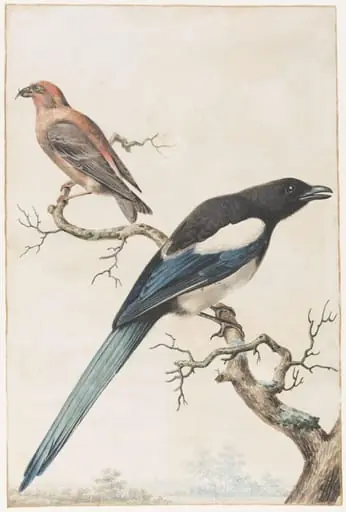 Male Crossbill and a Female Magpie
 Lazuli Finch, Clay-colored Finch and Oregon Snow Finch