Artwork
Piesă de formă dreptunghiulară, înfățișând imaginea a doi sfinți și Nașterea lui Iisus Christos. Scena este împărțită în trei registre: stânga sus - Sfântul Atanasie; dreapta sus - Sfântul Dumitru (cele două registre sunt despărțite de o ghirlandă); registrul inferior - în colțul din stânga sus al acestui registru se află un păstor cu oi, în stânga jos cei trei magi, în dreapta Iosif și Maria, iar central se află Pruncul Iisus. Deasupra capetelor Mariei și Iosif este scris cu litere chirilice - Nașterea lui Isus Hristos. Culori folosite: verde, negru, roșu, galben.
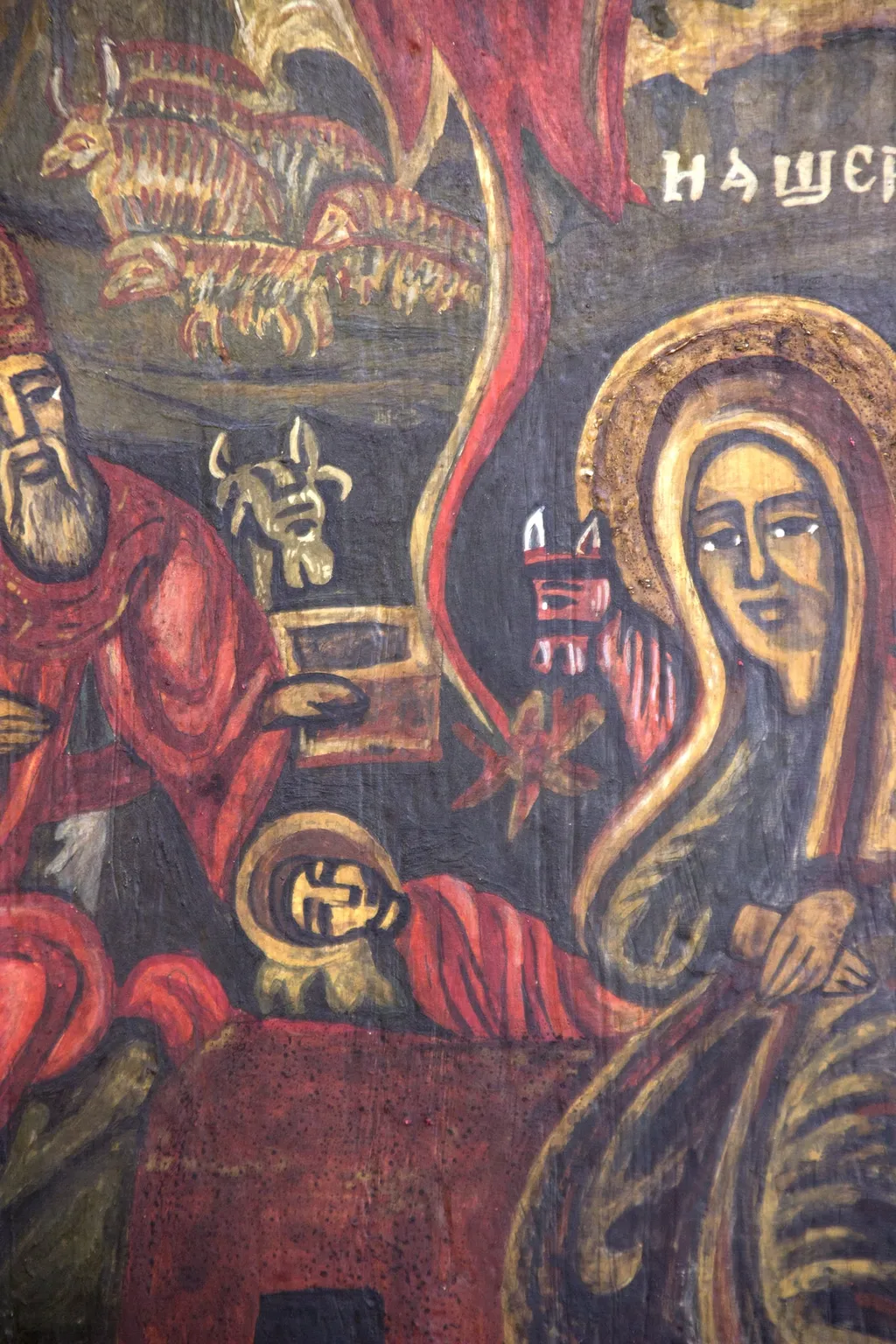
Piesă de formă dreptunghiulară, înfățișând imaginea a doi sfinți și Nașterea lui Iisus Christos. Scena este împărțită în trei registre: stânga sus - Sfântul Atanasie; dreapta sus - Sfântul Dumitru (cele două registre sunt despărțite de o ghirlandă); registrul inferior - în colțul din stânga sus al acestui registru se află un păstor cu oi, în stânga jos cei trei magi, în dreapta Iosif și Maria, iar central se află Pruncul Iisus. Deasupra capetelor Mariei și Iosif este scris cu litere chirilice - Nașterea lui Isus Hristos. Culori folosite: verde, negru, roșu, galben. is a drawing by Unknown. It dates from 1850 and is held in the collection of the "Dimitrie Gusti" National Village Museum. This rectangular drawing depicts a religious composition centered on the Nativity of Jesus Christ, flanked by two saints.
About this work
Overview
Divided into three horizontal bands, the upper registers feature Saint Athanasius and Saint Demetrius, separated by a floral motif.
This rectangular drawing depicts a religious composition centered on the Nativity of Jesus Christ, flanked by two saints. Divided into three horizontal bands, the upper registers feature Saint Athanasius and Saint Demetrius, separated by a floral motif. The lower register contains the Nativity scene, arranged with symbolic precision. Executed in a limited palette of green, black, red, and yellow, the work is rendered in ink or pigment on a flat surface, typical of devotional illustrations from the region.
Subject & Meaning
The composition merges hagiographic and nativity traditions, positioning Saint Athanasius and Saint Demetrius as protective intercessors above the sacred event below. The Nativity scene follows conventional iconography: the infant Christ at the center, flanked by Mary and Joseph, with the Magi and a shepherd representing the recognition of Christ’s birth by both learned and humble witnesses. The Cyrillic inscription above the figures explicitly names the event, reinforcing its liturgical purpose and devotional intent.
Technique & Style
The drawing employs flat, unmodulated areas of color with minimal shading, characteristic of folk or ecclesiastical illustration traditions. Lines are clear and deliberate, defining figures and spatial zones without perspective. The use of Cyrillic script for the inscription suggests a local liturgical context. The limited palette—green, black, red, and yellow—reflects material constraints and symbolic conventions, where red signifies divinity, green life, and black solemnity.
History & Provenance
The artist and date of creation remain undocumented. Its survival in the collection of the Museum of Ethnography indicates it was likely used in a domestic or parish setting rather than a formal church. Such works were often produced by itinerant painters or local artisans for private devotion. Its preservation suggests it held cultural or religious significance to its original owners, possibly as part of a larger set of religious images.
Context
This image belongs to a broader tradition of Orthodox Christian iconography in Eastern Europe, where narrative scenes were simplified for accessibility and devotional use. The inclusion of local saints alongside the Nativity reflects regional piety, blending universal Christian themes with venerated figures from the Eastern Church. Its format and style align with 18th- to 19th-century folk religious art, where literacy and liturgical knowledge were often conveyed visually.
Legacy
Though unsigned and undated, the drawing contributes to the understanding of vernacular religious expression in the region. It exemplifies how theological narratives were adapted for everyday spiritual life, outside formal ecclesiastical institutions. Its presence in an ethnographic museum underscores its value as a cultural artifact, preserving the visual language of faith among communities with limited access to formal religious art.
Artist & collection

Museum
"Dimitrie Gusti" National Village Museum
Continue through works from the same source collection.
 Domestic Scene
 Giacomo and Cardinal Marco, investing Andrea, Abbot of San Zeno, with his Benefice
 The Nymph of Fontainebleau
 Portrait of a Woman
 Madonna and Child with Saints in the Enclosed Garden
 Venus and Minerva
 Family Group of Four on Sofa
 Wall painting from Room H of the Villa of P. Fannius Synistor at Boscoreale
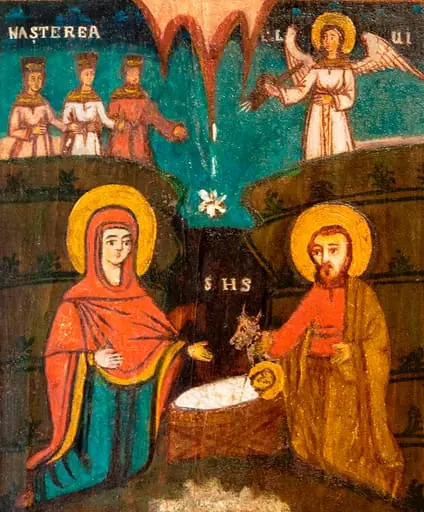
 Nașterea lui Iisus
 Scenlbas
 Tăierea împrejur
 Icoatere
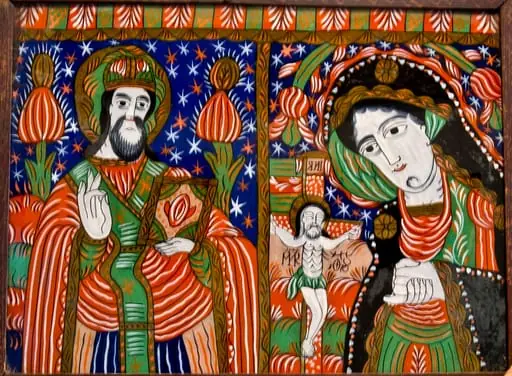 Sf. Nicolae și Maica Domnului îndurerată
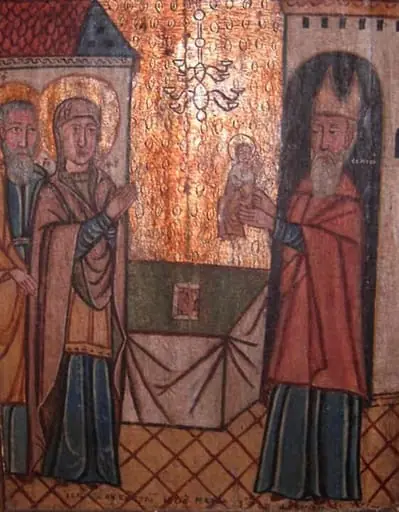 Întâmpinarea Domnului
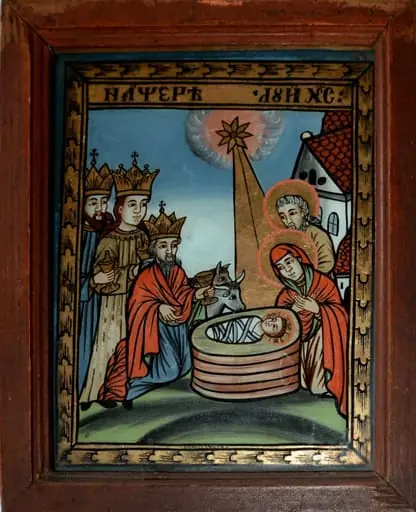 Nașterea Domnului
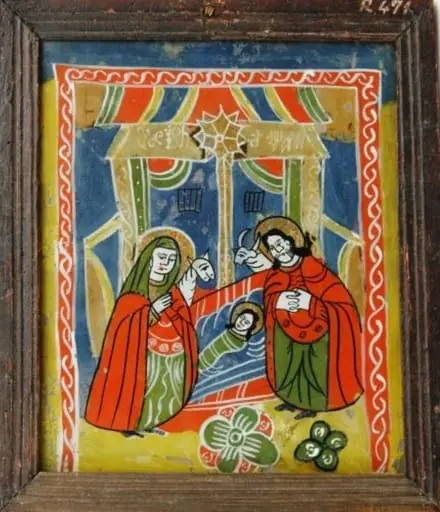 Nașterea lui Iisus Hristos
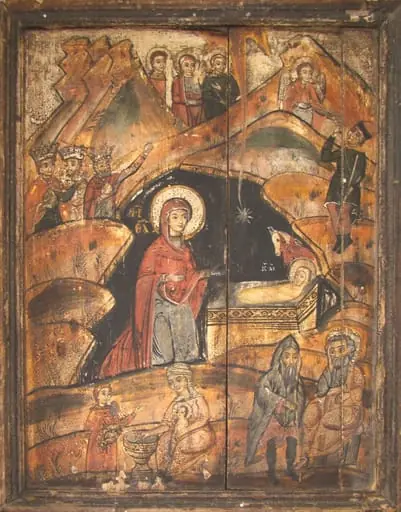
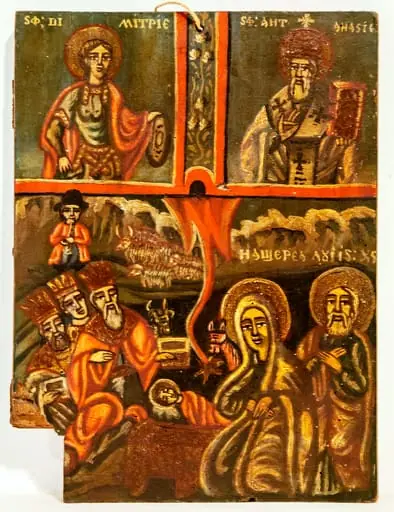 Câmpul icoanei împărțit în 2 registre orizontale inegale(cel de se 1/3 din suprafața icoanei, la rândul lui împărțit în 2 casete separate de o bandă verticală pe care este pictat un lujer cu flori albe. În registru inferior: Nașterea Domnului. În prim plan, Maria si Iosif îngenuncheați, central Pruncul Isus înfășat, așezat în iesle, în stânga lui cei trei magi, cu coroane împărătești pe cap, aducându-i daruri, în plan îndepărtat un cioban(în veșminte orășenești, cu pălărie neagră pe cap, cântând din fluier turmei de oi. În spatele Pruncului se văd capetele animalelor din grajd și o iesle. Steaua își revarsă razele asupra Pruncului(zonă incandescentă, terminată cu o stea deasupra acestuia). Pe fundalul întunecat, nori cu marginile albe. Sfinții din registrul superior sunt redați 3/4, sfântul Dimitrie tânăr, în veșminte militare, lorică, mantie roșie, scut în stânga, suliță în dreapta, Sfântul Atanasie, în veșminte arhierești, binecuvintează cu dreapta, în stânga ține cartea Evangheliilor ridicată. Părul și barba albe, mustățile lungi, veșmintele deschise la culoare, mitra înaltă, surmontată de o cruce albă. Cromatica: roșu, brun, alb, albastru, galben. Colț stânga jos lipsă. Stil naiv, popular.
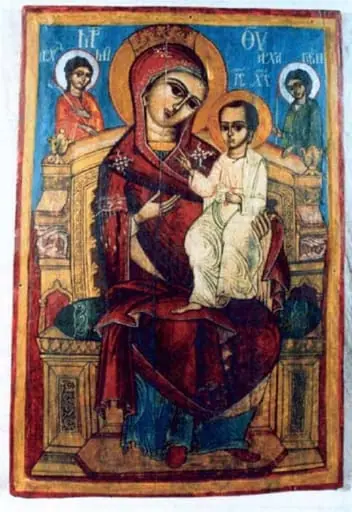 Maica cu Pruncul/Maica Împărăteasă-Doamnă