Artwork
Nașterea lui Iisus Hristos
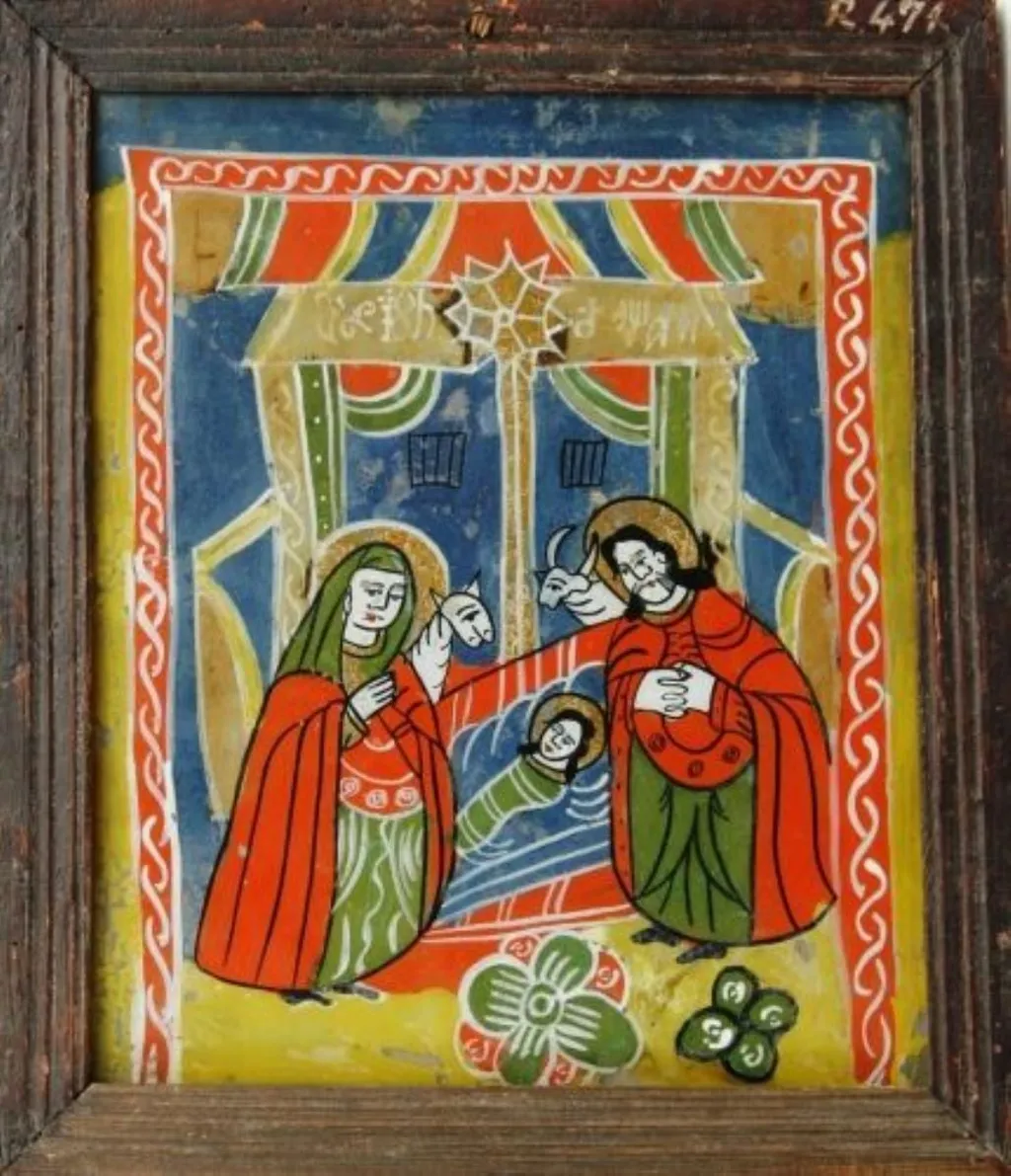
Nașterea lui Iisus Hristos is a drawing by Unknown. It dates from 1850 and is held in the collection of the Romanian Peasant Museum. This artwork depicts the Nativity of Jesus Christ, rendered in a stylized, non-naturalistic manner.
About this work
Overview
This artwork depicts the Nativity of Jesus Christ, rendered in a stylized, non-naturalistic manner.
This artwork depicts the Nativity of Jesus Christ, rendered in a stylized, non-naturalistic manner. Three figures surround a swaddled infant beneath a striped canopy, with a luminous star above. The composition is flat, lacking perspective or shading, and emphasizes bold, unmodulated colors. A decorative red-and-white border frames the scene, suggesting a liturgical or devotional purpose. The visual language is simplified, prioritizing symbolic clarity over realism.
Subject & Meaning
The scene centers on the newborn Christ, enveloped in blue cloth and surrounded by two figures who gesture toward him, one pointing in reverence. The glowing star above signifies divine guidance, echoing the biblical account of the Star of Bethlehem. The tent-like structure may represent humility or the manger, while the figures likely represent Mary and Joseph, or possibly shepherds. The focus on the child underscores the theological significance of the Incarnation.
Technique & Style
The painting employs flat areas of unshaded color with sharp outlines, avoiding chiaroscuro or spatial depth. Details such as fabric folds and facial features are suggested through cross-hatching rather than modeling. The use of vivid reds, greens, and blues creates visual harmony without naturalism. The decorative border and stylized background elements—such as wavy lines and simplified architecture—reflect a tradition rooted in iconography rather than Renaissance naturalism.
History & Provenance
The work’s origins are undocumented, but its stylistic features align with late medieval or early Renaissance devotional panels from Eastern Orthodox or Byzantine-influenced regions. The flat composition, symbolic color use, and border decoration suggest it was created for private or ecclesiastical veneration. No record of its commission or early ownership survives, though its preservation implies continued religious use or collector interest in folk or regional traditions.
Context
This image emerges from a broader tradition of religious imagery that prioritized spiritual meaning over physical accuracy. In regions where literacy was limited, such visuals served as tools for teaching scripture. The absence of depth and the emphasis on symbolic elements reflect a worldview in which sacred events transcended earthly realism. Similar compositions appear in illuminated manuscripts and portable icons from the Balkans and Anatolia during the 14th–16th centuries.
Legacy
Though not attributed to a known artist, the painting contributes to a continuum of vernacular religious art that preserved theological narratives through accessible visual forms. Its stylistic choices influenced later folk traditions in Eastern Europe, where simplified Nativity scenes remained common in household icons and festival decorations. The work stands as an example of how sacred stories were adapted to local aesthetic sensibilities beyond academic painting traditions.
Artist & collection

 Domestic Scene
 Giacomo and Cardinal Marco, investing Andrea, Abbot of San Zeno, with his Benefice
 The Nymph of Fontainebleau
 Portrait of a Woman
 Madonna and Child with Saints in the Enclosed Garden
 Venus and Minerva
 Family Group of Four on Sofa
 Wall painting from Room H of the Villa of P. Fannius Synistor at Boscoreale
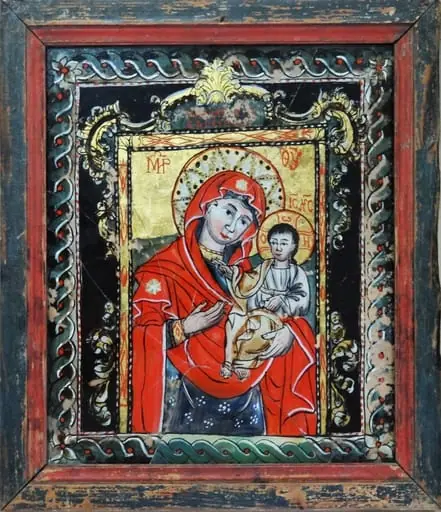 Maica Domnului cu Pruncul
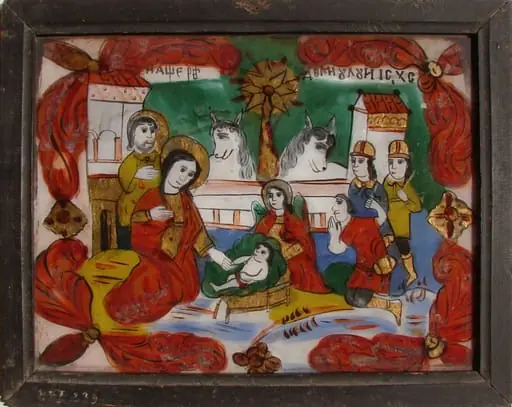 Nașterea lui Iisus
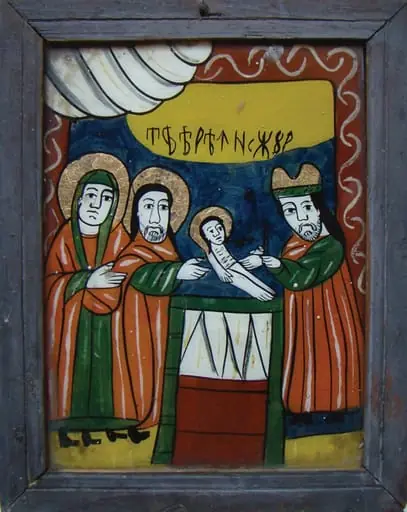 Tăierea împrejur
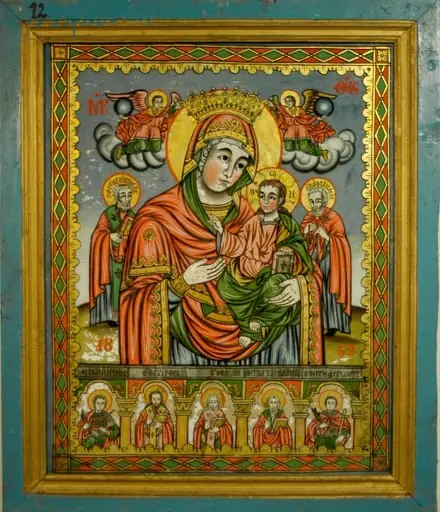 Maica Domnului cu Pruncul
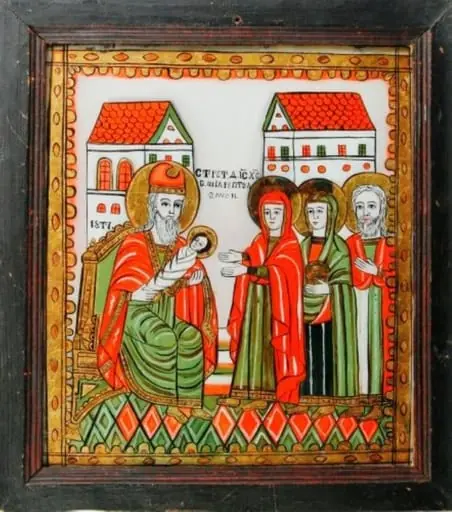 Stretenie (Întâmpinarea Domnului)
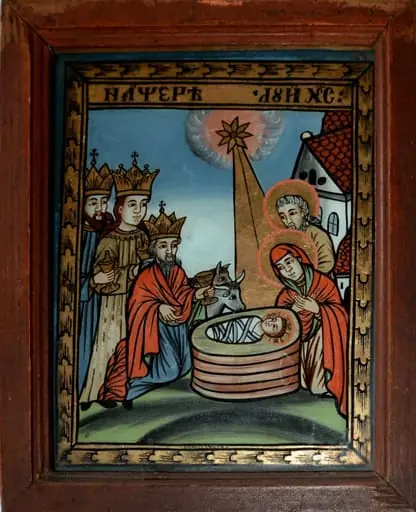 Nașterea Domnului
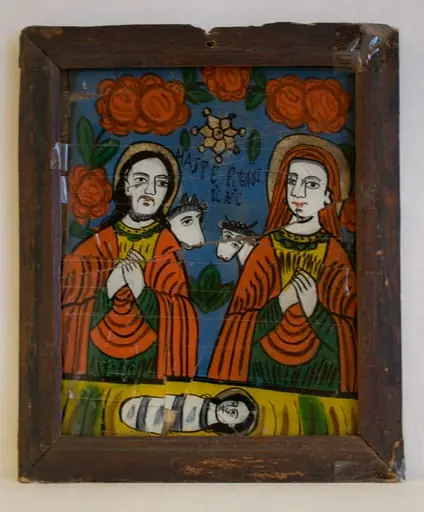 Naștiu s
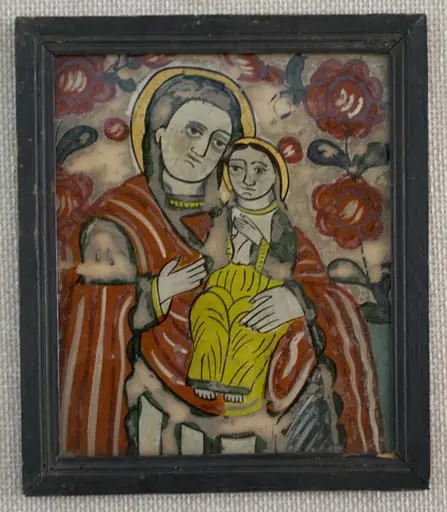 Icoana o reprezintă pe Maica Domnului cu Pruncul, tipul Hodighitria(Arătătoarea Căii). Cu mâna stângă susține Pruncul, cu dreapta arată către El. Maica are părul acoperit cu un văl verde.Veșmintele multicolore,(specific fazei de decadență a picturii de icoane pe sticlă)-roșu-mantia, cămașă, albă vrâstată cu verde, mâneci verzi, borduri diverse. Chipul cu umbre gri deschis, bărbia groasă, buze subțiri. Pruncul, cu amândouă mâinile la piept, are părul lung, castaniu și fața feminină. Aureolele sunt diforme, umplute cu bronz auriu. Câmp alb murdar decorat cu două ramuri cu flori roșii și boboci(ruje) care se unesc deasupra capului Maicii - 3/4 superior, bleu(1/4 inferior).Cromatica este dominată de roșu culorile stridente :alb, bleu, roșu, verde închis, ocru galben, brun, negru. Icoana are trăsăturile specifice picturii târzii din zona Nicula -Gherla: supraabundența detaliului, a decorului vegetal, apariția bronzului în locul foiței de aur, câmpul bicolor, sticla de proveniență industrială. Rama profilată este vopsită cu negru și încheiată oblic;dosul este din lemn subțire de brad;
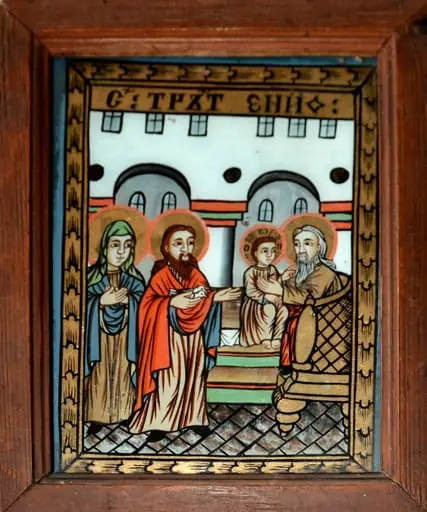 Întâmpinarea Domnului
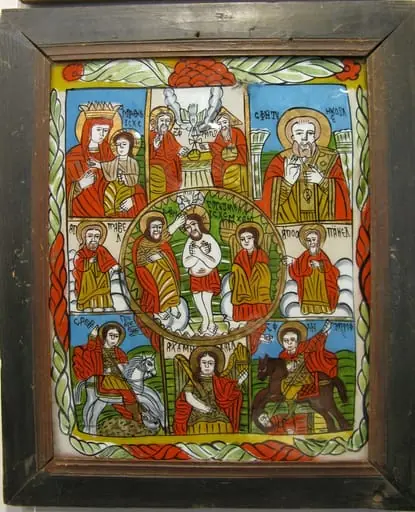 Prăznicar – Botezul lui IS HS