Artwork
Vas bitronconic cu gât scurt și foarte profilat, cu gura înaltă și dreaptă. Prezintă o toartă care pleacă de sub buză și se unește cu corpul sub zona diametrului maxim. Este smălțuit în interior și la exterior (parțial nesmălțuit în partea de jos). În partea superioară prezintă un decor geometric realizat din cinci linii incizate și două linii în val pictate. Toarta este decorată cu puncte. Cromatică: fond: cărămiziu și pe alocuri verziu; motive: alb; maroniu. Prezintă uzură funcțională.
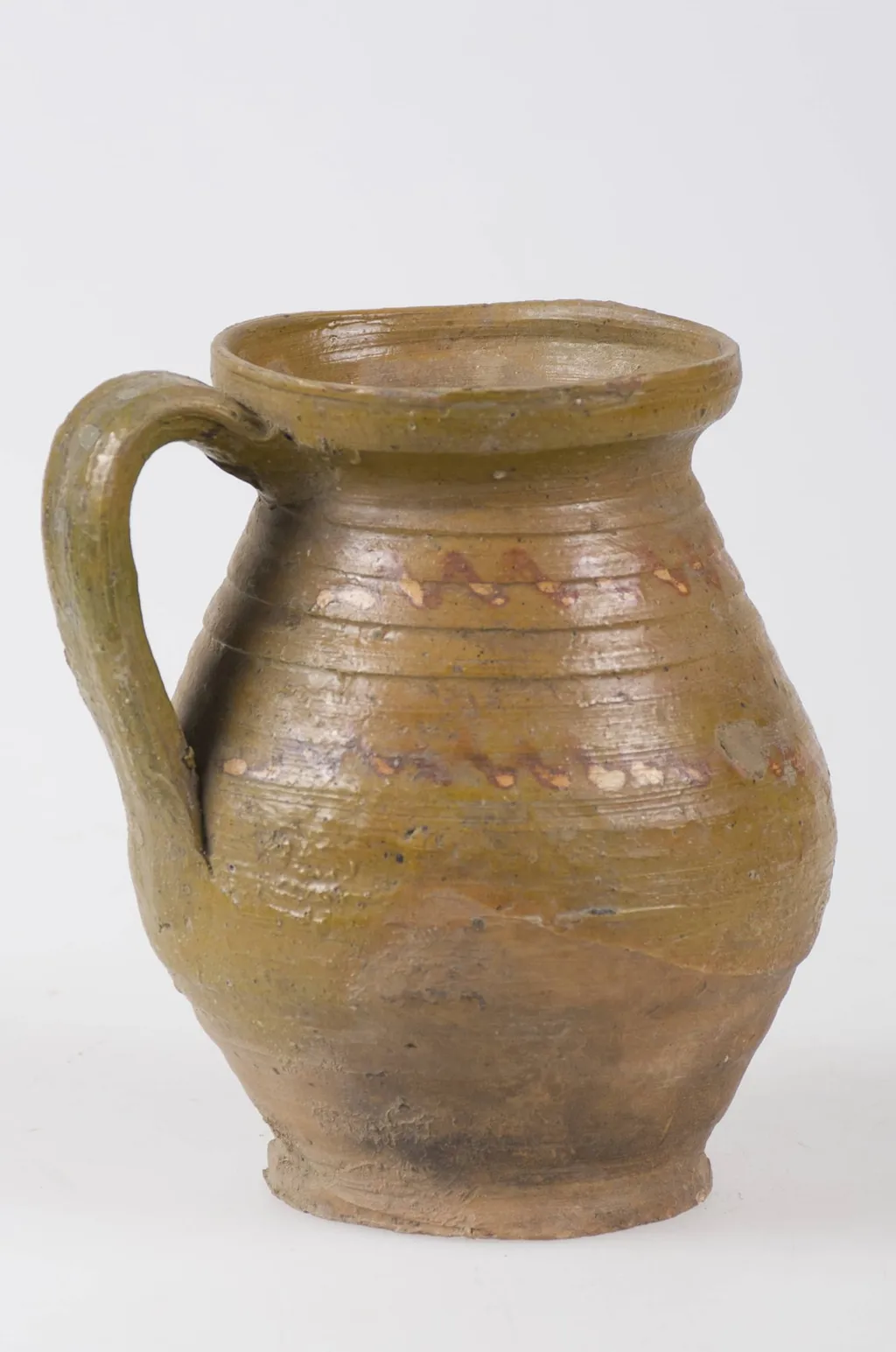
Vas bitronconic cu gât scurt și foarte profilat, cu gura înaltă și dreaptă. Prezintă o toartă care pleacă de sub buză și se unește cu corpul sub zona diametrului maxim. Este smălțuit în interior și la exterior (parțial nesmălțuit în partea de jos). În partea superioară prezintă un decor geometric realizat din cinci linii incizate și două linii în val pictate. Toarta este decorată cu puncte. Cromatică: fond: cărămiziu și pe alocuri verziu; motive: alb; maroniu. Prezintă uzură funcțională. is a photography by Unknown. It dates from 1850 and is held in the collection of the ASTRA National Museum Complex.
About this work
Overview
This ceramic vessel features a short neck, a tall straight mouth, and a handle extending from beneath the lip to the widest part of the body. Its surface is glazed both inside and out, though the lower portion remains unglazed. Visible wear indicates prolonged functional use. The form reflects a practical design common in early ceramic traditions, balancing utility with minimal ornamentation.
Subject & Meaning
The vessel’s decoration consists of incised and painted geometric patterns, including five incised lines and two wavy painted bands along the upper rim.
The vessel’s decoration consists of incised and painted geometric patterns, including five incised lines and two wavy painted bands along the upper rim. Dots adorn the handle, a subtle accent that may denote ownership, group identity, or ritual significance. The absence of figurative imagery suggests a focus on abstract symbolism, typical of utilitarian pottery in prehistoric or early historic contexts.
Technique & Style
The vessel was formed by hand, with a smooth, even wall thickness suggesting skilled craftsmanship. Glazing was applied selectively, covering most surfaces except the base. Decoration was executed using incision and pigment application—white and brown pigments on a reddish-brown to greenish ground. The restrained palette and linear motifs reflect a preference for clarity and repetition over complexity.
History & Provenance
Though exact origin is unspecified, the vessel’s form and decoration align with regional ceramic traditions from the late Neolithic or early Bronze Age in Southeastern Europe. Its wear patterns and material composition suggest local production and daily use, possibly in storage or serving. No documented excavation context is provided, limiting precise dating or cultural attribution.
Context
This vessel belongs to a broader category of early pottery characterized by functional forms and minimal decoration. Similar examples appear in archaeological assemblages from the Carpathian Basin and surrounding regions, where geometric motifs were standard. The use of glaze, even partial, indicates access to controlled firing techniques and an awareness of surface treatment for durability or aesthetics.
Legacy
As a representative of early ceramic technology, this vessel illustrates the transition from purely utilitarian objects to items bearing symbolic or aesthetic markings. Its preservation allows study of material choices, decorative conventions, and daily life in prehistoric communities. Though unremarkable in isolation, it contributes to understanding the evolution of pottery as both craft and cultural expression.
Artist & collection

 Domestic Scene
 Giacomo and Cardinal Marco, investing Andrea, Abbot of San Zeno, with his Benefice
 The Nymph of Fontainebleau
 Portrait of a Woman
 Madonna and Child with Saints in the Enclosed Garden
 Venus and Minerva
 Family Group of Four on Sofa
 Wall painting from Room H of the Villa of P. Fannius Synistor at Boscoreale
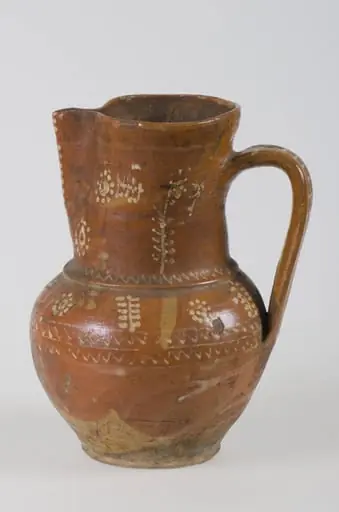 Cană înaltă cu o toartă și gura ovoidală terminată cu un cioc pe partea opusă torții. Toarta pornește de sub gură și se termină sub diametrul maxim al vasului. Smălțuită exterior. Decorată pe toată suprafața cu motive florale stilizate, motive fitomorfe (frunze stilizate) și motive geometrice: linie, linie ondulată, punct. Cromatică: fond: maroniu; motive: alb.
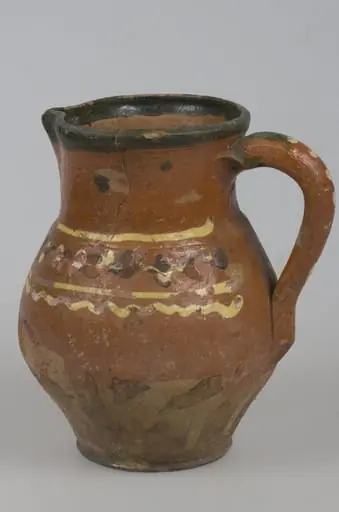 Vas de lut de mici dimensiuni, bombat, cu gât lung și puțin evazat, cu gură largă și cioc de scurgere. Toarta pornește de sub gură și coboară până în zona diametrului maxim al vasului. Este smălțuit în interior și exterior. Decorul dispus pe umărul vasului este format din: motive florale: o cunună din frunze încadrată de motive geometrice: o linie circulară în partea superioară și o linie circulară și una în val în partea inferioară. Buza vasului este vopsită în interior și exterior. Toarta este decorată cu puncte de culoare albă. Cromatică: fond: cărămiziu; motive: alb; verde; negru.
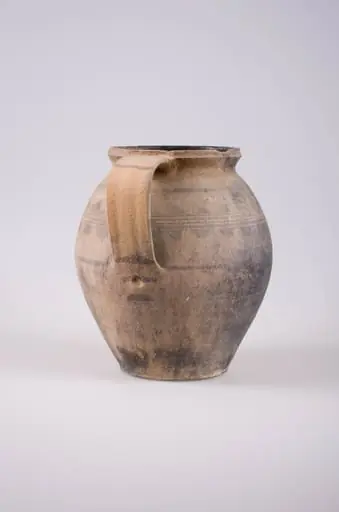 Oală borcan cu corp pântecos bombat cu gât profilat, cu buza evazată tăiată drept și toartă lată. Decorat în partea superioară cu cinci linii ușor adâncite realizate cu piaptănul care secționează un val pictat realizat cu degetul încadrate de două linii maro-roșcat. Toarta prezintă două caneluri este decorată cu o linie în partea superioară și trei linii în partea inferioară. Cromatică: fond: cărămiziu; motive: maro-roșcat. Prezintă urme de ardere secundară.
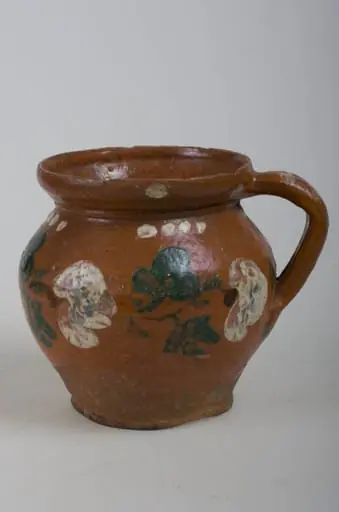 Ulcea de pus la grindă, cu corpul globular, gâtul scurt, buza evazată modelată la roată, arsă, smălțuită (interior și exterior până sub toartă), pictată cu pensula (motivele ornamentale). Motive florale și geometrice (puncte și linii). Vasul prezintă o impresiune sub toartă. Toarta are cinci linii albe transversale. Cromatică: fond: cărămiziu; decor: alb; verde; albastru.
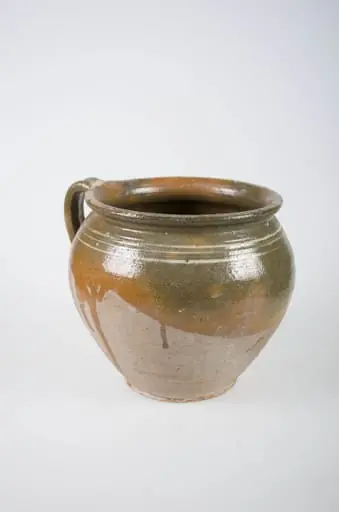 Vas cu corpul foarte bombat în partea superioară, cu un gât scurt și profilat, cu gura foarte lată, buza evazată și rotunjită. Din buză pornește o toartă care se unește cu corpul sub diametrul maxim. Vasul este smălțuit în interior și exterior (doar partea superioară). Este decorat cu motive geometrice: trei linii concentrice pe umăr și o linie scurtă orizontală pe toartă. Cromatica: fond: cărămiziu; motive: alb,.
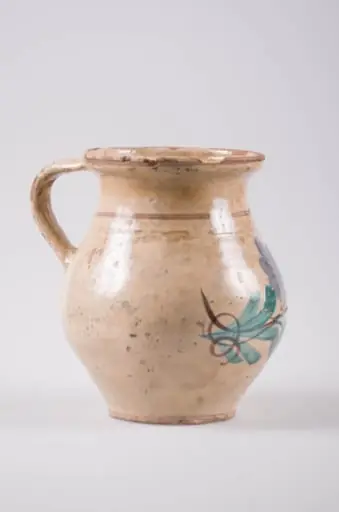 Oală de formă bitronconică de culoare bej. Decorul este reprezentat de motive florale: floarea este încadrată de linii albe realizate cu degetul; motive vegetale, motive geometrice: în partea superioară decorație circulară, linii. Prezintă toartă curbată. Smălțuită. Cromatică: fond: bej; motive: verde; albastru; maroniu.
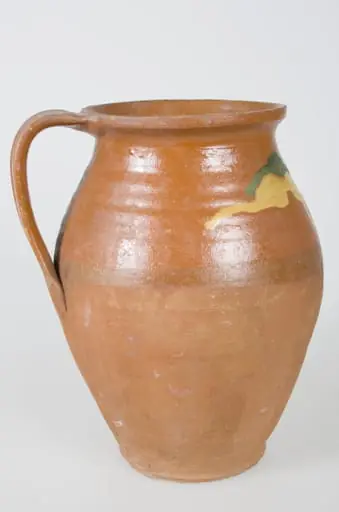 Vas bombat în partea mediană și cu buza evazată, smălțuit în jumătatea superioară. Prezintă o toartă ce leagă buza vasului de partea mediană. Decorații frontale realizate prin stropire, sub forma a două linii suprapuse și neregulate dispuse orizontal. Cromatică: fond cărămiziu; motive: verde; galben.
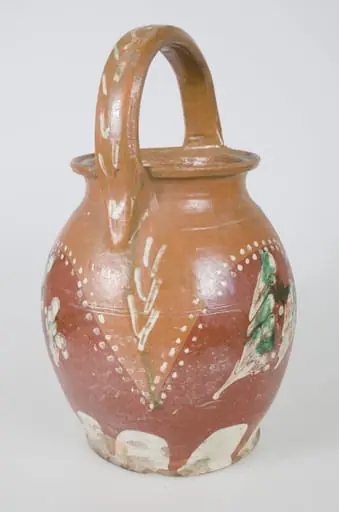 Vas smălțuit de formă ovoidală, bombat la mijloc, gât scurt cu buza dreaptă și evazată. Prevăzut cu o toartă semicirculară care pornește din buză, peste gură, și se prinde diametral opus (mănușar). Pe toartă este prezent motivul bradului realizat din linii albe unite în forma literei ”V”, înșiruite una după alta. Pe corpul vasului se găsesc trei registre circulare convexe, conturate cu câte două șiruri de puncte albe. În interiorul registrelor sunt decorații cu motive florale-vegetale stilizate. Între registre se găsesc câte trei decorații cu motivul bradului. La bază este conturat cu un șir de semicerucri pline. Cromatică: fond: cărămiziu; motive: brun; verde; alb.
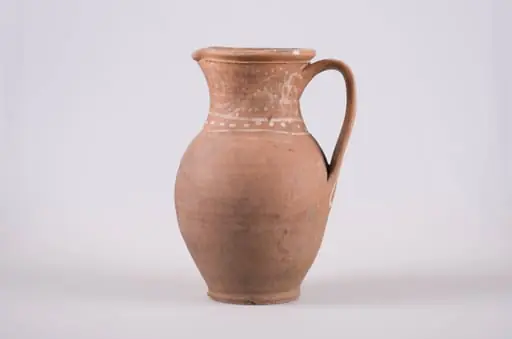 Recipient sferoidal cu gura largă și cioc. Prezintă toartă laterală. Decorul este floral și geometric pe toată suprafața gâtului format din linii, puncte, spirale. Decorat și pe toartă cu o linie de jur împrejur, iar pe buza vasului format din puncte. Cromatică: fond: cărămiziu; motive: alb.
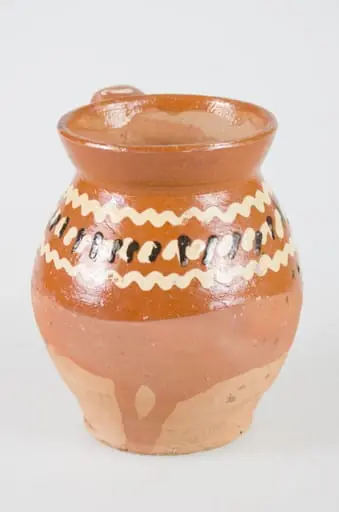 Recipientul este realizat din lut, are dimensiuni mici și formă bitronconică, cu gura mai largă decât baza și fundul plat. Obiectul este smălțuit la exterior, pe doar două treimi din suprafață. Acesta este prevăzut cu o toartă care pleacă din buză până aproape de partea inferioară a vasului. Cana este ornamenată în partea superioară cu pensula, cu motive geometrice: linii alternante albe și negre, dispuse oblic, încadrate de două rânduri de valuri pictate în alb. Din punct de vedere al cromaticii distingem fondul cărămiziu pe care sunt pictate motive cu alb și negru.
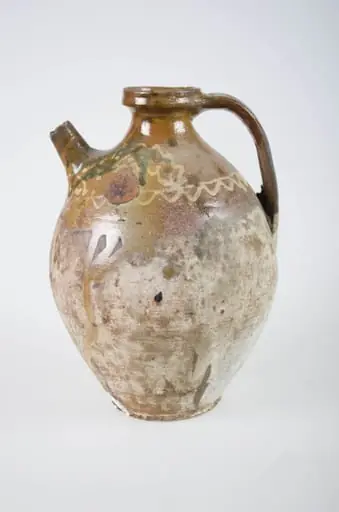 Vas de formă ovoidală cu gât lung, cu gura largă și buza înălțată. Prezintă o toartă care pleacă din gura vasului și se unește cu corpul în zona diametrului maxim. Din umăr, în partea opusă torții pleacă o țâță scurtă (burciuc). Vasul este smălțuit pe exterior în partea superioară unde prezintă și un decor format din motive geometrice: linie și linie în val deasupra cărora se regăsesc motive florale. Cromatica: fond: cărămiziu; motiver: alb-gălbui, verde. Prezintă uzură funcțională.