Artwork
Vas din lut cu corp foarte bombat, cu gât scurt, buză evazată și ridicată. O toartă pornește din buză și este fixată pe corp la nivelul diametrului maxim. Pe umăr este decorată cu motive geometrice: două linii incizate. Din buză pornesc vertical loburi de angobă. Partea de jos nesmălțuită. Partea de sus smălțuită galben și stropită cu verde. Interior neangobat dar smălțuit. Cromatică: fond: cărămiziu; motive: galben; verde.
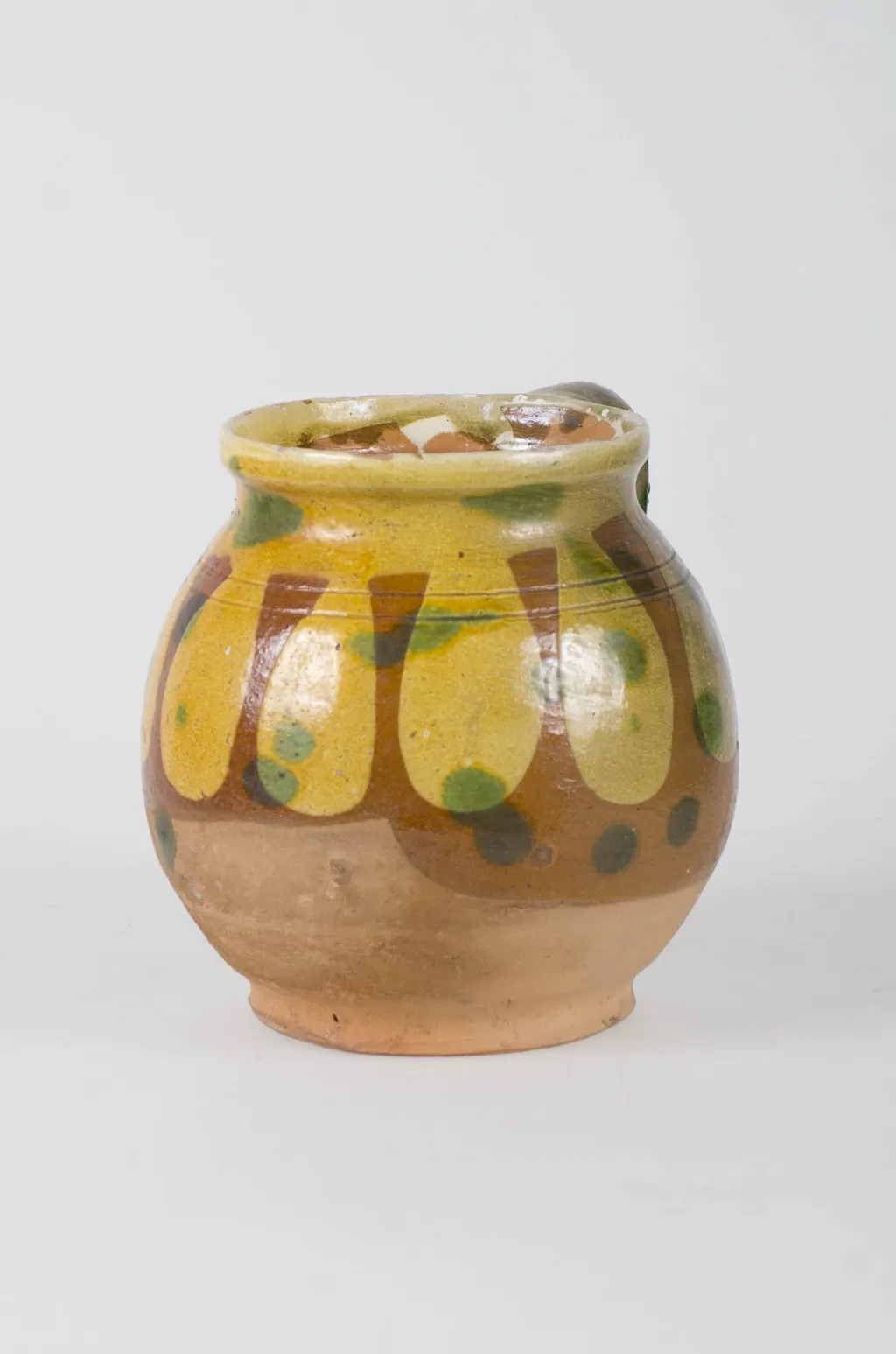
Vas din lut cu corp foarte bombat, cu gât scurt, buză evazată și ridicată. O toartă pornește din buză și este fixată pe corp la nivelul diametrului maxim. Pe umăr este decorată cu motive geometrice: două linii incizate. Din buză pornesc vertical loburi de angobă. Partea de jos nesmălțuită. Partea de sus smălțuită galben și stropită cu verde. Interior neangobat dar smălțuit. Cromatică: fond: cărămiziu; motive: galben; verde. is a photography by Unknown. It dates from 1850 and is held in the collection of the ASTRA National Museum Complex. This ceramic vessel features a broadly rounded body, a short neck, and a flaring, upturned rim.
About this work
Overview
This ceramic vessel features a broadly rounded body, a short neck, and a flaring, upturned rim. A single handle extends from the lip to the widest point of the vessel. The lower half remains unglazed, while the upper portion is coated in a yellow glaze accented with scattered green speckles. The surface contrasts matte and glossy textures, emphasizing its functional form and decorative intent.
Subject & Meaning
The vessel’s form suggests utilitarian use, possibly for storage or ritual. Its decoration, limited to incised lines and glaze accents, reflects a restrained aesthetic rather than narrative symbolism. The vertical lobes of yellow glaze may reference natural forms or serve as visual anchors, guiding the eye along the vessel’s profile without overt iconography.
Technique & Style
The piece was formed using wheel-thrown methods, with the body shaped to emphasize volume. Two fine incised lines encircle the shoulder, while the glaze was applied in two zones: yellow over the upper surface, with green droplets added by hand. The unglazed base and interior reveal the clay’s natural reddish tone, contrasting with the glazed upper section for visual balance.
History & Provenance
The vessel’s style aligns with regional ceramic traditions from the medieval Balkans, likely produced between the 12th and 14th centuries. Similar forms appear in archaeological contexts across present-day Romania and Bulgaria. Its glaze composition and decorative手法 suggest local workshops rather than imported models, pointing to a self-sustaining craft tradition.
Context
This vessel belongs to a broader category of utilitarian ceramics from the medieval period, where decoration was minimal yet deliberate. Glazed surfaces were reserved for upper sections to reduce cost and improve functionality. The use of incised lines and localized glaze reflects a practical approach to aesthetics, common in communities prioritizing utility without abandoning ornamentation.
Legacy
Though not widely documented in major collections, this vessel exemplifies a regional ceramic tradition that persisted for centuries. Its design principles—contrasting glaze zones, restrained incision, and functional form—influenced later folk pottery in the Carpathian region. Modern ceramicists studying historical techniques often reference such pieces for their economy of form and material.
Artist & collection

 Domestic Scene
 Giacomo and Cardinal Marco, investing Andrea, Abbot of San Zeno, with his Benefice
 The Nymph of Fontainebleau
 Portrait of a Woman
 Madonna and Child with Saints in the Enclosed Garden
 Venus and Minerva
 Family Group of Four on Sofa
 Wall painting from Room H of the Villa of P. Fannius Synistor at Boscoreale
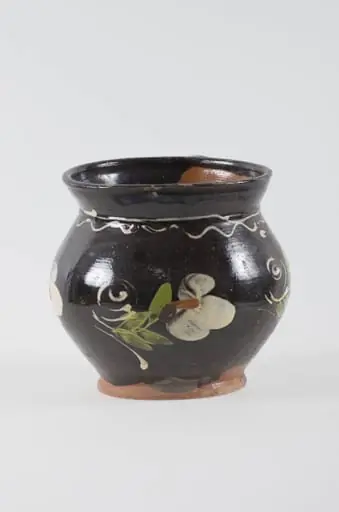 Vasul este de lut smălțuit și are formă bitronconică. Este prevăzut cu o toartă semicirculară și cu buza profilată înspre exterior. Decorat cu motive geometrice (linii drepte, curbe) și motive florale. Cromatică: fond: maro; motive: alb; verde; maro deschis.
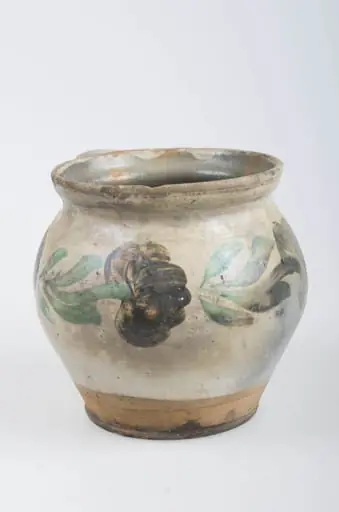 Vas bombat în partea mediană cu buza răsfrântă spre exterior. Toartă pe centrul vasului ce unește gura cu partea mediană. Pe toată suprafața vasului prezintă decorații realizate prin pictare, ilustrând flori albastre, în alternanță cu frunze verzi, împreună cu dungi dispuse orizontal. Cromatică: fond: alb; motive: verde, albastru, maro.
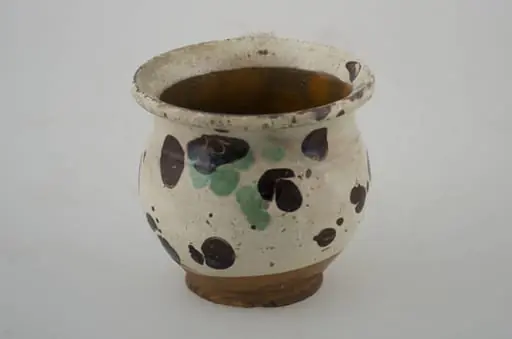 Vas de formă globulară, cu baza plată, cu gât foarte profilat și buza evazată. Prevăzut cu o toartă care pleacă de la gura vasului și se unește cu corpul sub diametrul maxim. Este smălțuit în interior și exterior mai puțin baza. Decorul este realizat prin pete aleatorii pe toată suprafața vasului. Cromatică: fond: alb; motive: maro; verde.
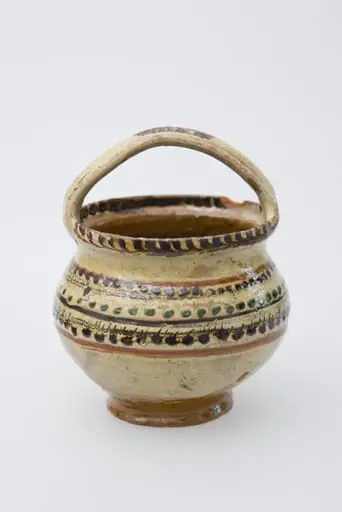 Vas ceramic de mici dimensiuni, pe bază inelară, pântecos, cu fundul și gura late. Deasupra gurii vasului a fost pusă o toartă de prindere. Buza vasului a fost pictată printr-un brâu de crenguțe. Pe pântecul vasului brâuri de puncte și două benzi subțiri jirăvite. Smălțuit în interior și exterior. Cromatică: fond: crem; motive: verde; maro; bej.
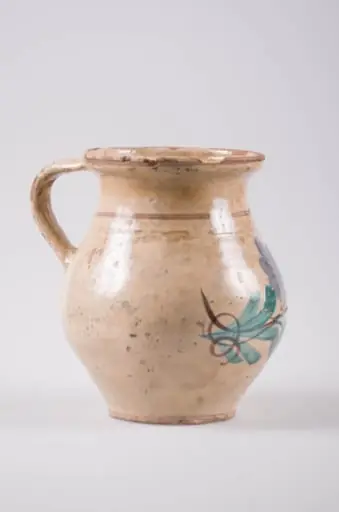 Oală de formă bitronconică de culoare bej. Decorul este reprezentat de motive florale: floarea este încadrată de linii albe realizate cu degetul; motive vegetale, motive geometrice: în partea superioară decorație circulară, linii. Prezintă toartă curbată. Smălțuită. Cromatică: fond: bej; motive: verde; albastru; maroniu.
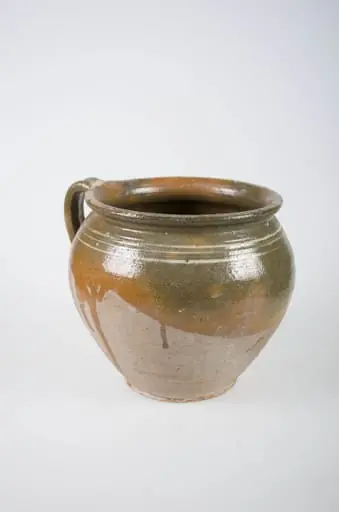 Vas cu corpul foarte bombat în partea superioară, cu un gât scurt și profilat, cu gura foarte lată, buza evazată și rotunjită. Din buză pornește o toartă care se unește cu corpul sub diametrul maxim. Vasul este smălțuit în interior și exterior (doar partea superioară). Este decorat cu motive geometrice: trei linii concentrice pe umăr și o linie scurtă orizontală pe toartă. Cromatica: fond: cărămiziu; motive: alb,.
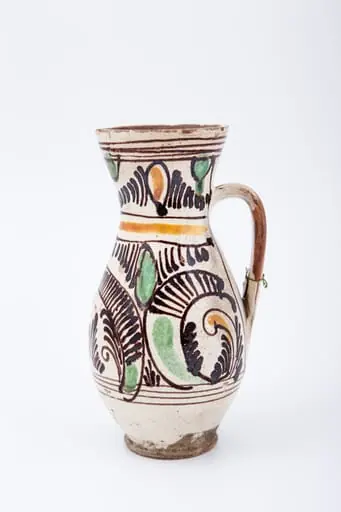 Cănceu piriform prevăzut cu o toartă, gât scurt și evazat, toarta dispusă de la gât la diametrul maxim al vasului. Suprafața decorativă a vasului este împărțită în două registre dispuse vertical, separate printr-o bandă lată verde așezată pe gâtul vasului. Primul registru prezintă motive geometrice stilizate: linii subțiri verticale și frunze stilizate, conturul fiind trasat cu cornul, pictate în interior cu galben și verde. Al doilea registru prezintă motive geometrice stilizate, linii, benzi interesectate decorate jumătate cu linii subțiri orizontale maro, jumătate pictate cu verde sau galben, cercuri hașurate care simbolizează motive florale și linii verticale subțiri maro. Decorul central este încadrat în partea inferioară și superioară de linii subțiri, paralele maro. Cromatică: alb; verde; maro; galben.
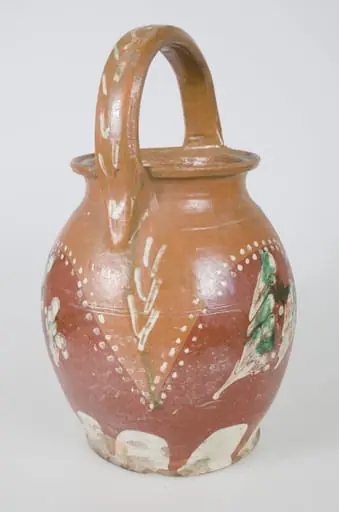 Vas smălțuit de formă ovoidală, bombat la mijloc, gât scurt cu buza dreaptă și evazată. Prevăzut cu o toartă semicirculară care pornește din buză, peste gură, și se prinde diametral opus (mănușar). Pe toartă este prezent motivul bradului realizat din linii albe unite în forma literei ”V”, înșiruite una după alta. Pe corpul vasului se găsesc trei registre circulare convexe, conturate cu câte două șiruri de puncte albe. În interiorul registrelor sunt decorații cu motive florale-vegetale stilizate. Între registre se găsesc câte trei decorații cu motivul bradului. La bază este conturat cu un șir de semicerucri pline. Cromatică: fond: cărămiziu; motive: brun; verde; alb.
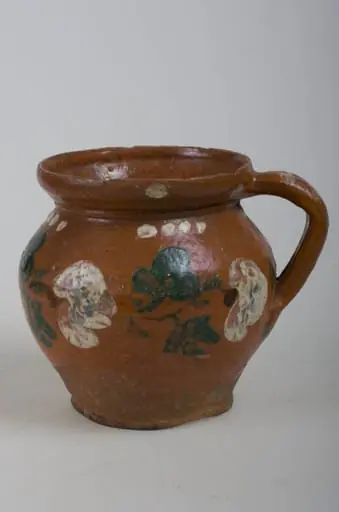 Ulcea de pus la grindă, cu corpul globular, gâtul scurt, buza evazată modelată la roată, arsă, smălțuită (interior și exterior până sub toartă), pictată cu pensula (motivele ornamentale). Motive florale și geometrice (puncte și linii). Vasul prezintă o impresiune sub toartă. Toarta are cinci linii albe transversale. Cromatică: fond: cărămiziu; decor: alb; verde; albastru.