Artwork
Portrait of Jan Jacob Rochussen, Governor-General of the Dutch East Indies
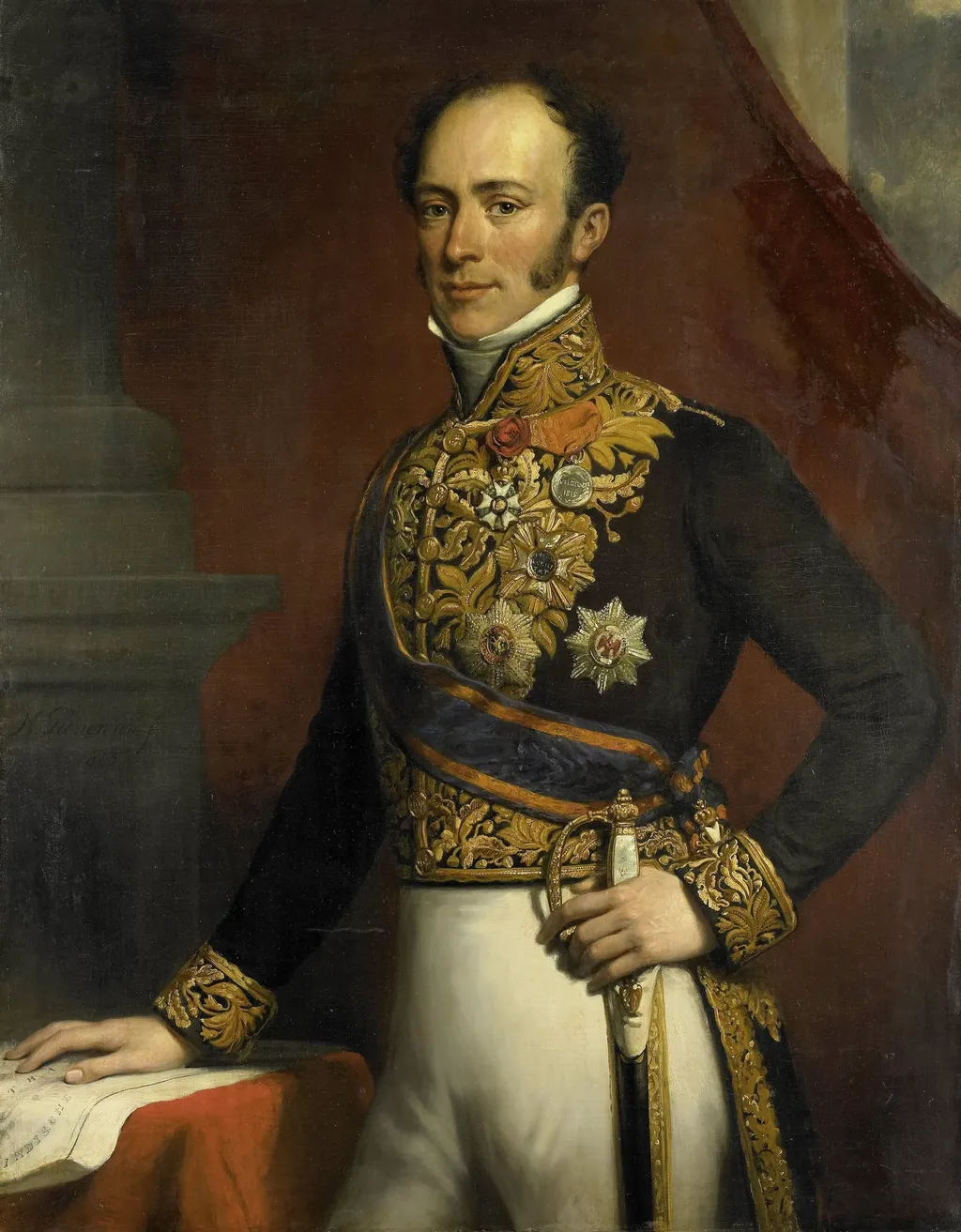
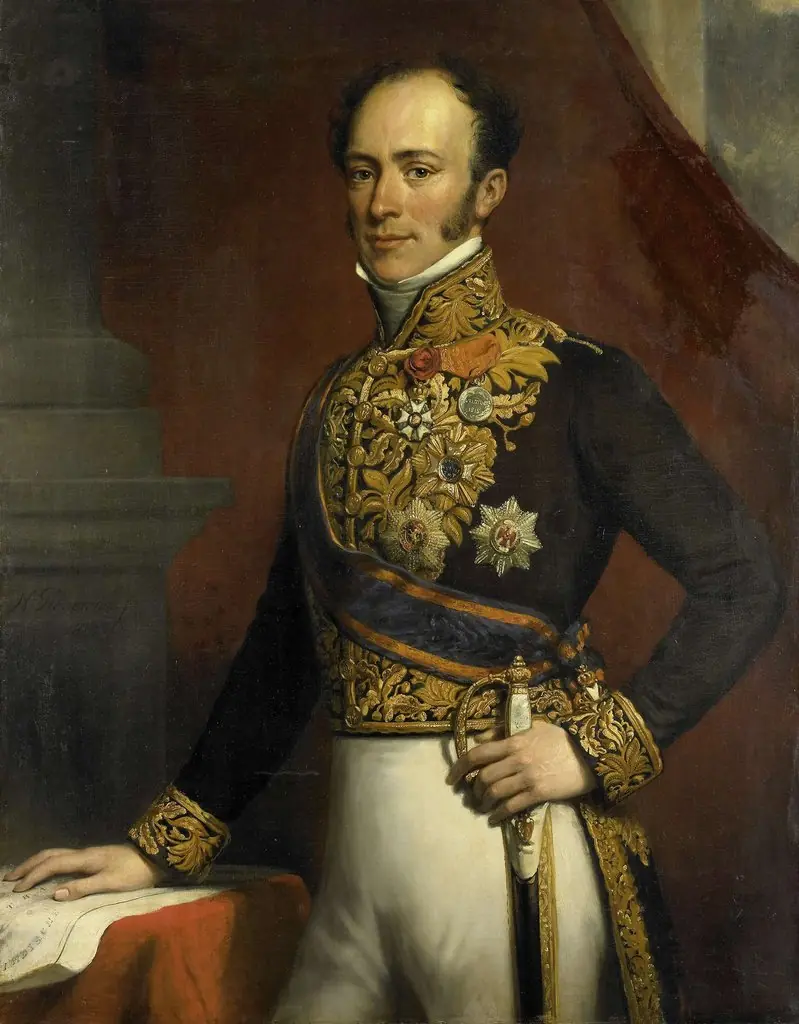
Portrait of Jan Jacob Rochussen, Governor-General of the Dutch East Indies is an unspecified painting by the Biedermeier artist Unknown. It dates from 1845 and is held in the collection of the Rijksmuseum. This oil painting depicts Jan Jacob Rochussen, who served as Governor-General of the Dutch East Indies from 1845 to 1851.
About this work
Overview
This oil painting depicts Jan Jacob Rochussen, who served as Governor-General of the Dutch East Indies from 1845 to 1851. Rendered in a formal, full-length pose, he stands beside a table, facing left. The composition follows the conventions of official portraiture used by colonial administrators, emphasizing authority and composure through rigid posture and restrained gestures.
Subject & Meaning
These attributes frame him not merely as an individual, but as an agent of imperial administration.
Rochussen is portrayed with symbolic elements that convey colonial control: his right hand rests on a map of the East Indies, asserting territorial dominion, while his left hand grips the hilt of a sword, suggesting military authority. The gold-trimmed sash signifies his rank within the Dutch state apparatus. These attributes frame him not merely as an individual, but as an agent of imperial administration.
Technique & Style
The painting employs a precise, restrained technique typical of mid-19th-century official portraiture. Details are rendered with clarity but without embellishment—fabric textures, facial features, and the map are rendered with clinical accuracy. The lighting is even, minimizing shadow to reinforce the image’s function as a formal record rather than a psychological study.
History & Provenance
The portrait was created during or shortly after Rochussen’s term as Governor-General, likely commissioned by the colonial government. It forms part of a series documenting successive administrators of the Dutch East Indies. The work entered the Rijksmuseum’s collection as part of a broader effort to preserve the visual history of Dutch colonial leadership.
Context
Such portraits were produced to legitimize and memorialize colonial governance. They circulated in administrative centers and public institutions, reinforcing the image of Dutch authority in Southeast Asia. The uniform, map, and sword were standardized symbols across these images, designed to project continuity and control regardless of the individual depicted.
Legacy
The portrait remains a document of colonial ideology, reflecting how power was visually codified in the 19th century. Today, it is studied not for artistic innovation but as evidence of institutional representation—how empire was sustained through imagery that equated leadership with control over land and force.
Artist & collection

 Domestic Scene
 Giacomo and Cardinal Marco, investing Andrea, Abbot of San Zeno, with his Benefice
 The Nymph of Fontainebleau
 Portrait of a Woman
 Madonna and Child with Saints in the Enclosed Garden
 Venus and Minerva
 Family Group of Four on Sofa
 Wall painting from Room H of the Villa of P. Fannius Synistor at Boscoreale