Artwork
Untitled
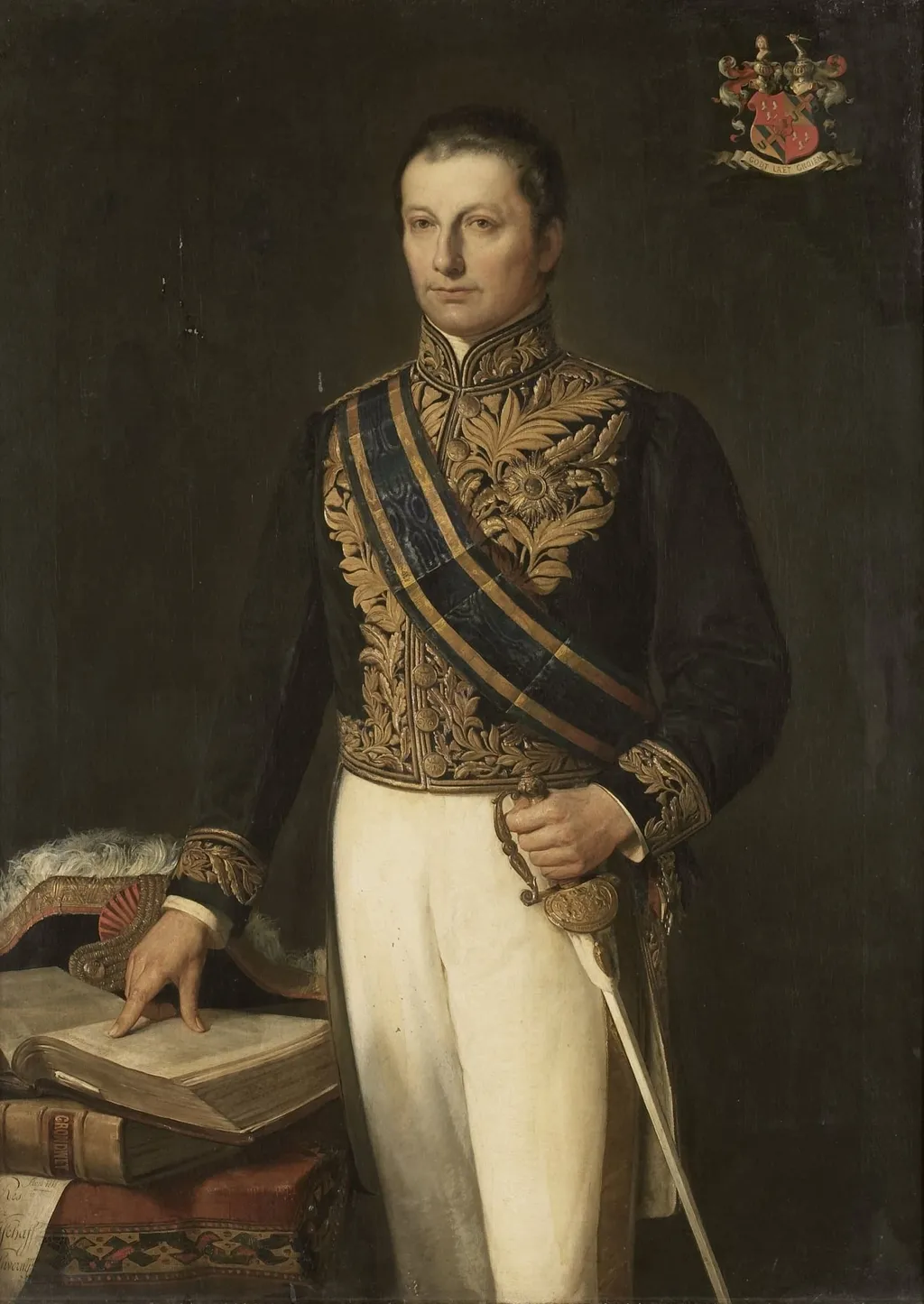
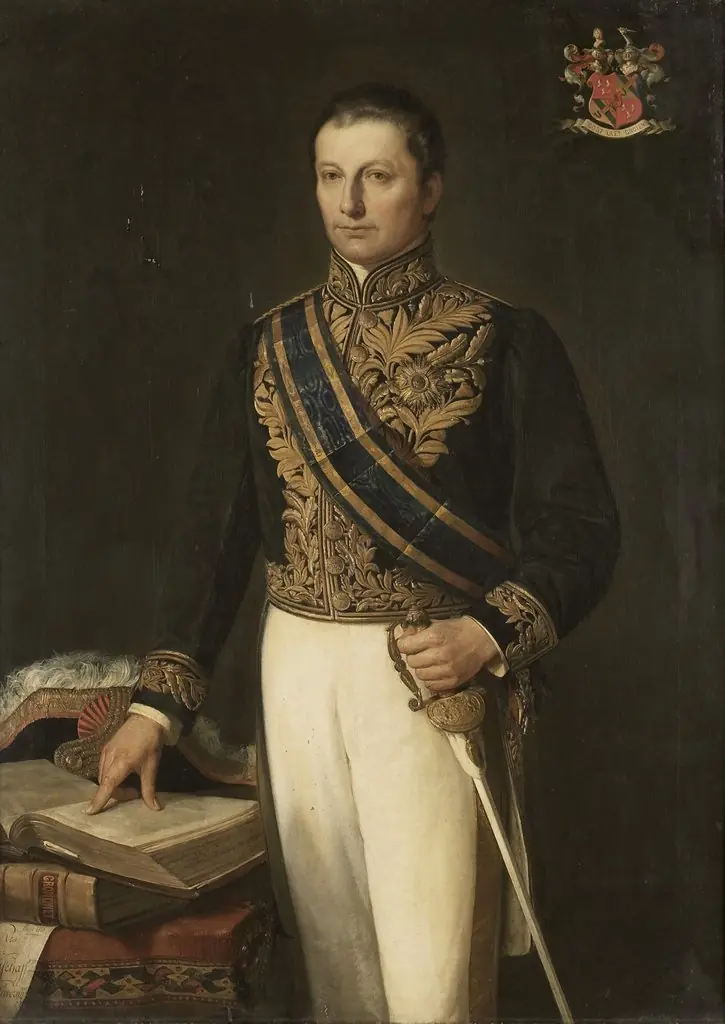
Untitled is an unspecified painting by the Dutch Golden Age artist Unknown. It dates from 1883 and is held in the collection of the Rijksmuseum. The canvas depicts Cornelis Theodorus Elout (1767–1841), who served as Commissaris‑generaal of the Dutch East Indies from 1816 to 1819.
About this work
Overview
The canvas depicts Cornelis Theodorus Elout (1767–1841), who served as Commissaris‑generaal of the Dutch East Indies from 1816 to 1819.
The canvas depicts Cornelis Theodorus Elout (1767–1841), who served as Commissaris‑generaal of the Dutch East Indies from 1816 to 1819. Rendered posthumously, the portrait shows him standing beside a table, his right hand indicating a passage in an open volume, while a second book titled *Grondwet* rests nearby. A sword hilt rests in his left hand and his family coat of arms appears in the upper right corner.
Subject & Meaning
Elout’s pose, with the pointing gesture toward the open book and the presence of a constitution‑named volume, underscores his administrative authority and involvement in legal matters of the colony. The sword hilt suggests a military dimension to his office, reinforcing the dual civil‑military nature of the commissarial role.
Technique & Style
The work is a posthumous composition assembled from earlier portraits by Charles Howard Hodges and L.A. Vincent. The artist reproduced their likenesses, integrating them into a unified scene with a dark coat, careful rendering of textiles, and a restrained palette typical of early‑19th‑century Dutch portraiture.
History & Provenance
Created after Elout’s death, the painting formed part of a series commissioned to commemorate the governors‑general of the former Dutch East Indies. It was likely assembled for an official collection, though the identity of the final painter remains unknown.
Context
The portrait belongs to a broader effort to document colonial leadership through visual means, aligning with contemporary practices of memorializing state officials. Its inclusion of legal and martial symbols reflects the administrative priorities of the Dutch colonial government during the early 1800s.
Artist & collection

 Domestic Scene
 Giacomo and Cardinal Marco, investing Andrea, Abbot of San Zeno, with his Benefice
 The Nymph of Fontainebleau
 Portrait of a Woman
 Madonna and Child with Saints in the Enclosed Garden
 Venus and Minerva
 Family Group of Four on Sofa
 Wall painting from Room H of the Villa of P. Fannius Synistor at Boscoreale