Artwork
Untitled
Untitled is an unspecified painting by the Dutch Golden Age artist Unknown. It dates from 1866 and is held in the collection of the Rijksmuseum.
About this work
Overview
The artist worked from existing records rather than direct observation, resulting in a stylized representation that prioritizes authority over individuality.
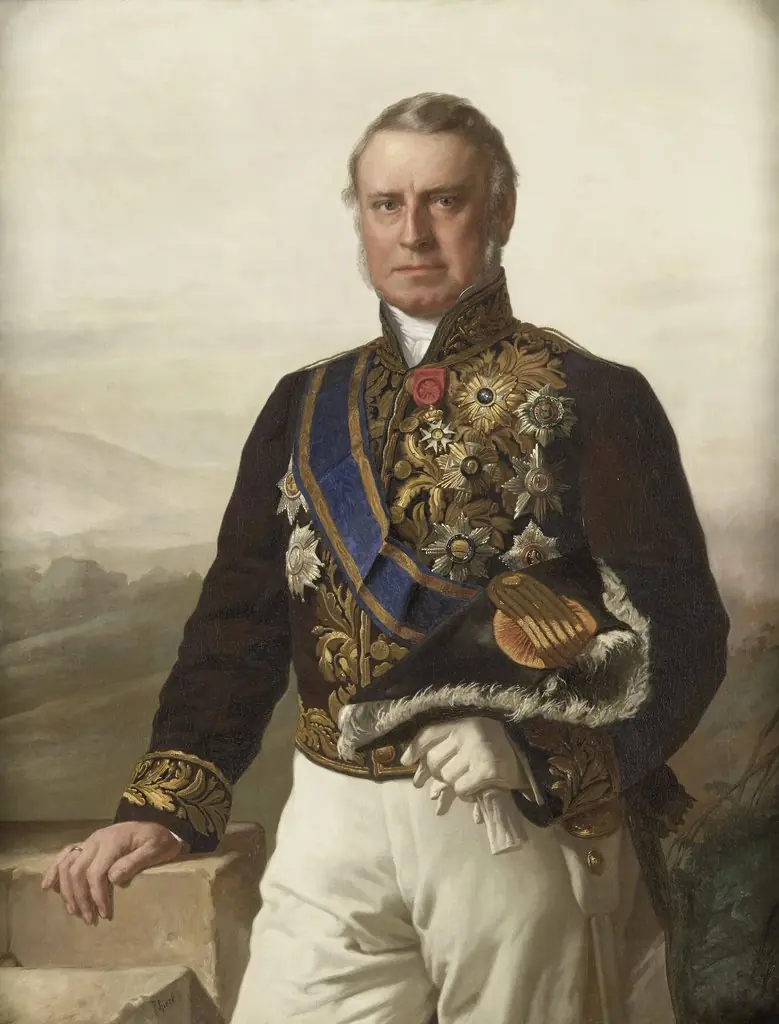
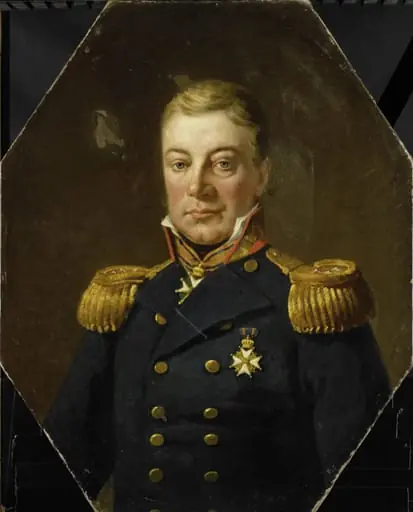
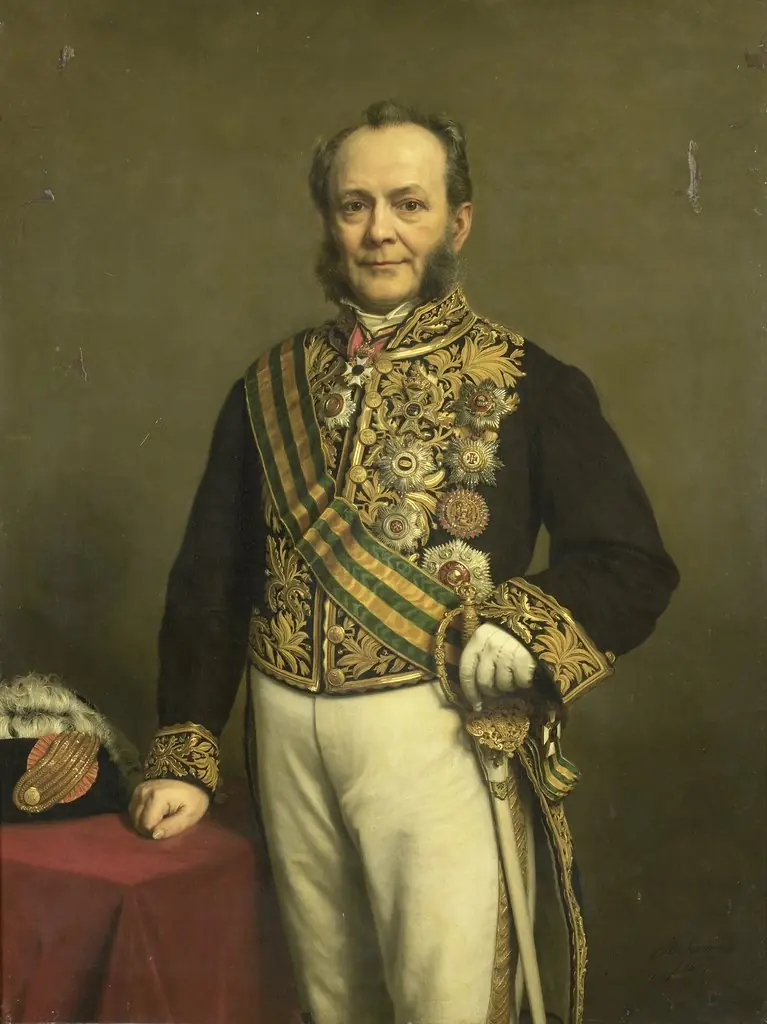
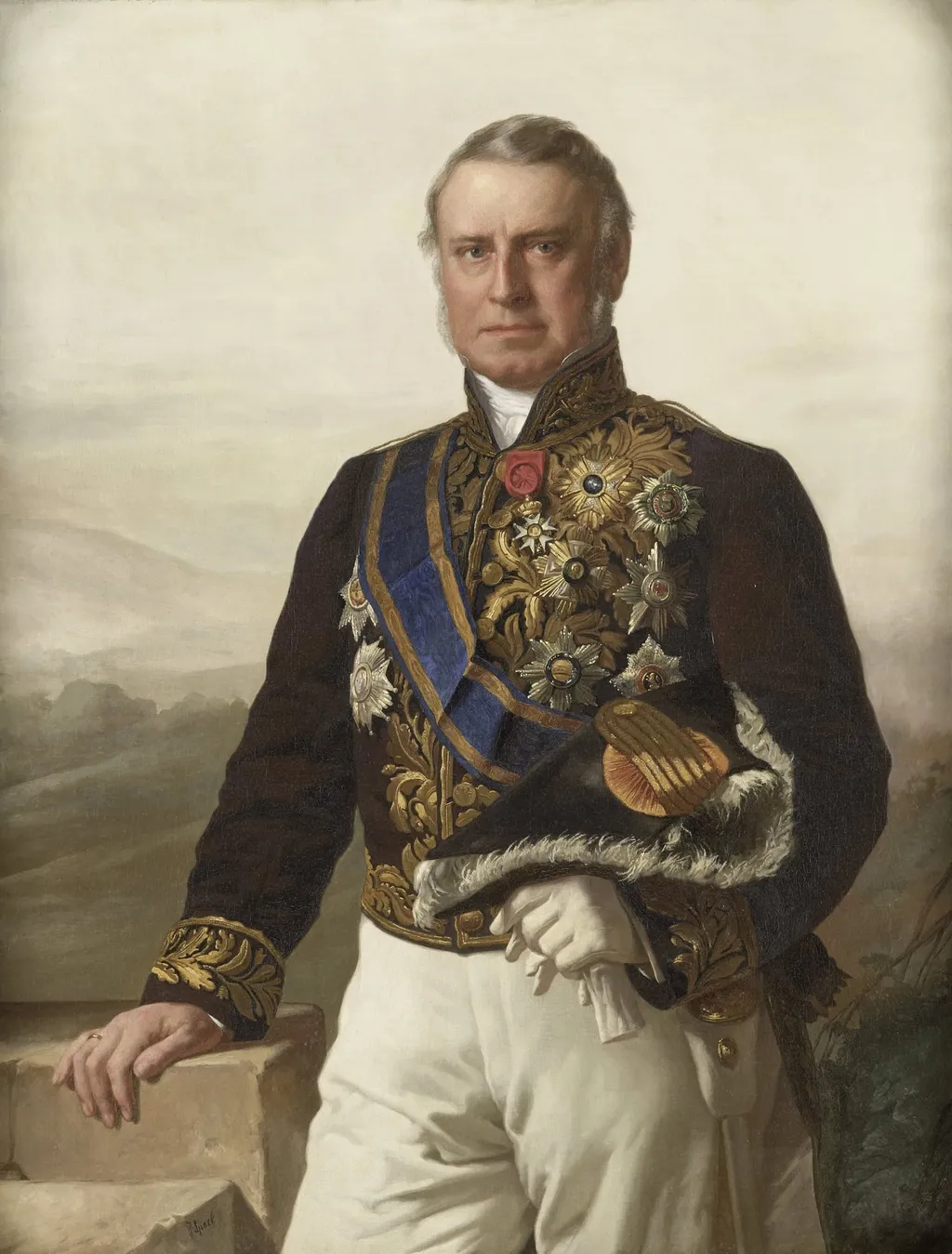
This oil painting depicts Charles Ferdinand Pahud de Mortanges, a former governor-general of the Dutch East Indies, portrayed in full-length standing pose. Created posthumously, the work belongs to a formal series commissioned to document colonial leadership. The artist worked from existing records rather than direct observation, resulting in a stylized representation that prioritizes authority over individuality.
Subject & Meaning
Pahud is shown in formal attire, leaning on a stone parapet with gloves and a sword held in his left hand. The posture and accoutrements convey administrative power and military bearing, typical of colonial governance iconography. His expression is composed, avoiding emotional inflection, reinforcing the role rather than the person. The image functions as a symbol of institutional continuity within the Dutch colonial administration.
Technique & Style
The painting employs a restrained palette dominated by dark tones, with the figure rendered in sharp detail against a softly blurred landscape. The background lacks spatial depth, suggesting minimal attention to environmental context. Brushwork is precise on the figure but looser in the distance, indicating a prioritization of the subject over setting. The composition follows traditional European portraiture conventions of the 19th century.
History & Provenance
Commissioned after Pahud’s death in 1873, the portrait was painted decades following his term as governor-general (1855–61). It was produced as part of a systematic effort to visually archive colonial leadership, likely for institutional display. The artist’s reliance on documentation rather than firsthand experience reflects the retrospective nature of the series, intended to legitimize colonial authority through visual history.
Context
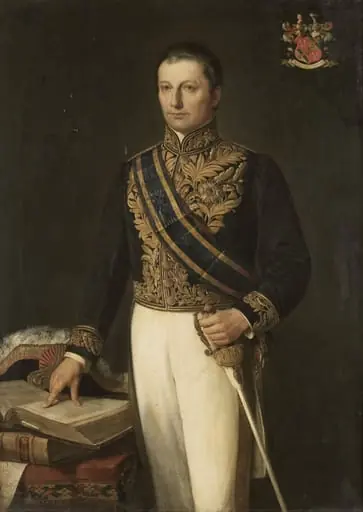
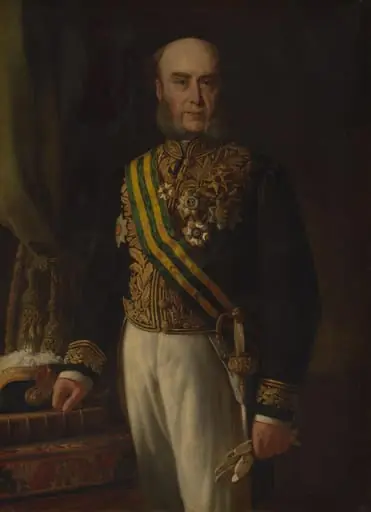
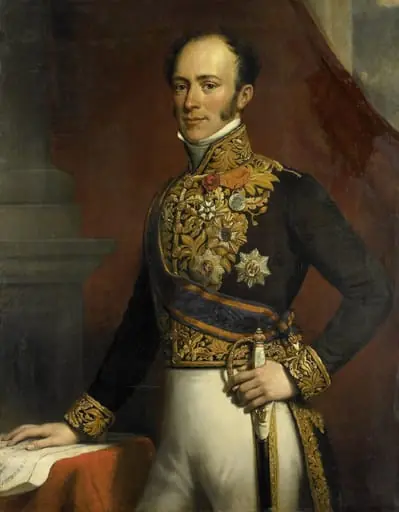
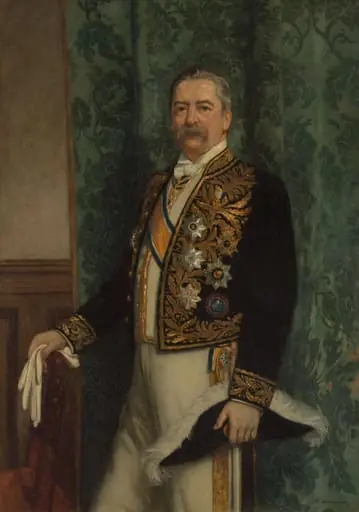
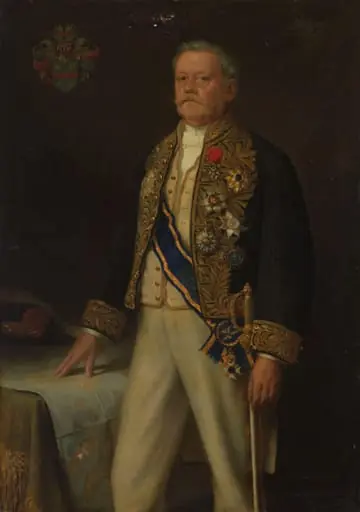
The portrait is one of many in a state-sponsored series documenting governors-general of the Dutch East Indies. Such collections were assembled to reinforce the legitimacy and permanence of colonial rule, often displayed in government buildings or public institutions. The uniformity in composition across the series underscores its function as bureaucratic record rather than personal tribute.
Legacy
The painting remains part of the Rijksmuseum’s colonial portraiture collection, where it contributes to ongoing scholarly examination of Dutch imperial imagery. Its formal rigidity and posthumous creation highlight the gap between lived experience and institutional representation. Today, it serves as a historical artifact reflecting how power was visually constructed and preserved in the colonial era.
Artist & collection

 Domestic Scene
 Giacomo and Cardinal Marco, investing Andrea, Abbot of San Zeno, with his Benefice
 The Nymph of Fontainebleau
 Portrait of a Woman
 Madonna and Child with Saints in the Enclosed Garden
 Venus and Minerva
 Family Group of Four on Sofa
 Wall painting from Room H of the Villa of P. Fannius Synistor at Boscoreale