Artwork
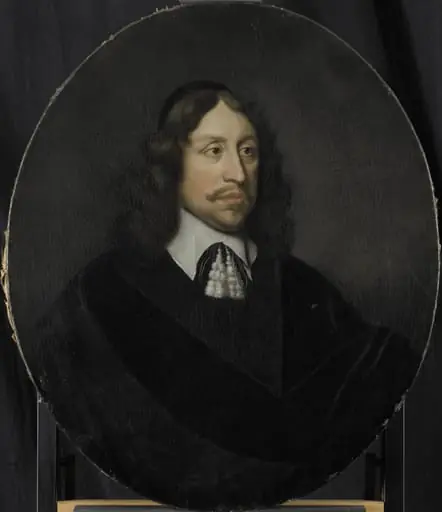
Portrait of Johan de Witt (1625-72), Grand pensionary of Holland
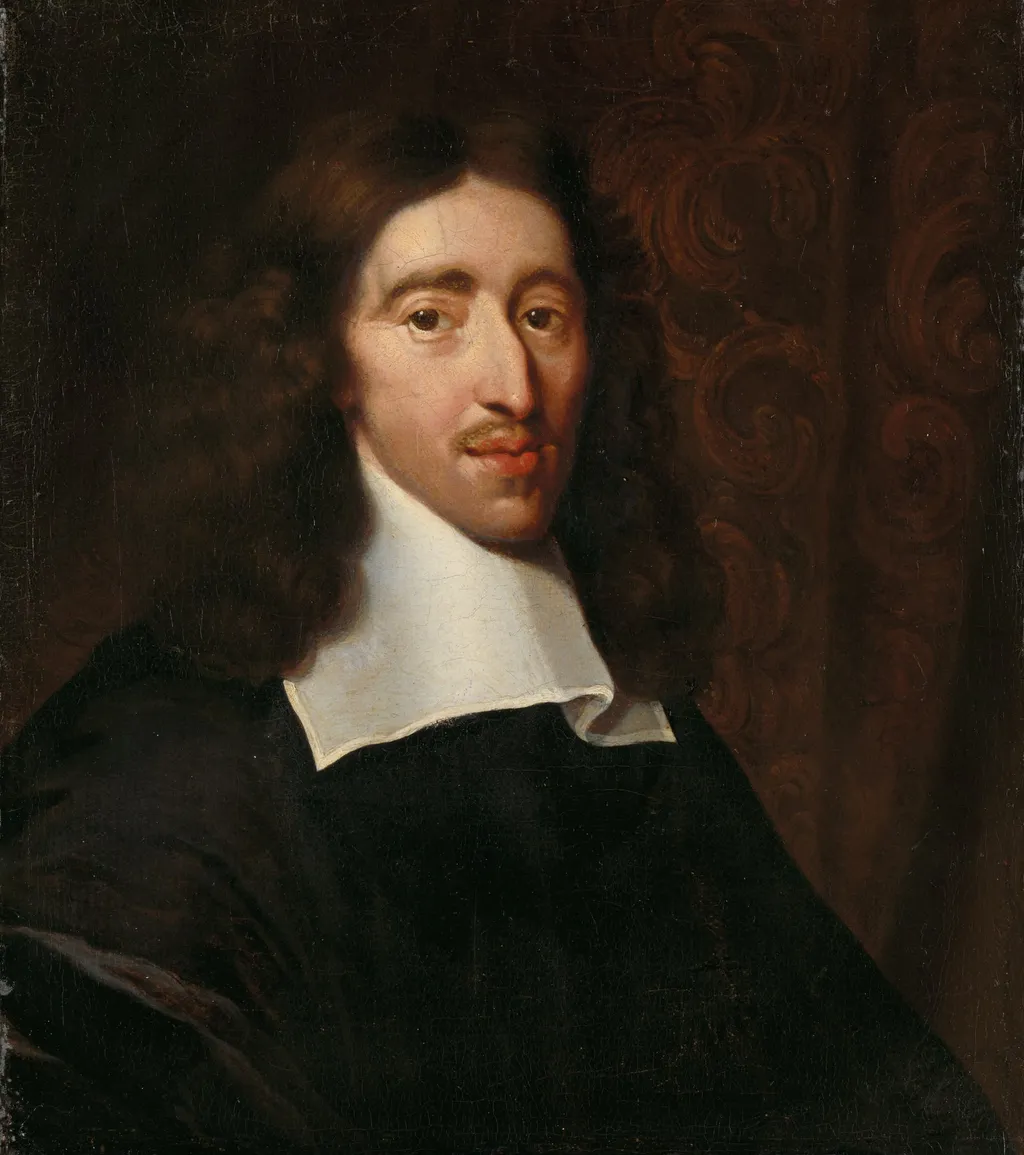
Portrait of Johan de Witt (1625-72), Grand pensionary of Holland is an unspecified painting by the Dutch Golden Age artist Unknown. It dates from 1680 and is held in the collection of the Rijksmuseum. The work is a portrait of Johan de Witt (1625–1672), who served as Grand Pensionary of Holland during the mid‑17th century.
About this work
He helped run the country but was killed by a mob in 1672—this painting might be a copy of an older one made after his death.
You see a man in a black coat with a white collar, turned slightly to the side. His face is serious, lips pressed tight. The background is dark, so his features stand out.
This is Johan de Witt, a powerful Dutch leader in the 1600s. He helped run the country but was killed by a mob in 1672—this painting might be a copy of an older one made after his death. The artist is unknown, but the style is careful, like a formal record.
To see more portraits like this, visit the Rijksmuseum.
Overview
The work is a portrait of Johan de Witt (1625–1672), who served as Grand Pensionary of Holland during the mid‑17th century. Rendered as a bust turned slightly to the right, the painting presents the statesman in a sober black coat with a white ruff, set against a dark, indistinct background that emphasizes his facial features.
Subject & Meaning
De Witt is depicted with a serious, unsmiling expression, his lips pressed together, conveying the gravitas associated with his political role. The restrained composition reflects the conventions of official portraiture, aiming to record the individual’s authority rather than to idealise his appearance.
Technique & Style
Executed with careful, precise brushwork, the portrait follows the formal conventions of Dutch civic portraiture of the period. The contrast between the dark backdrop and the illuminated white collar highlights the sitter’s face, while the limited palette underscores the work’s documentary intent.
History & Provenance
The painting is believed to be a post‑humous copy of an earlier portrait, likely produced after de Witt’s murder by an angry mob in 1672. The artist’s identity remains unknown, and the work has entered the collection of the Rijksmuseum, where it is displayed among other 17th‑century Dutch portraits.
Context
Johan de Witt’s tenure as Grand Pensionary coincided with the Dutch Republic’s Golden Age, a period of commercial expansion and political rivalry. His portrait aligns with the era’s practice of commemorating high officials through sober, lifelike representations that served both as personal records and as symbols of state stability.
Artist & collection

 Domestic Scene
 Giacomo and Cardinal Marco, investing Andrea, Abbot of San Zeno, with his Benefice
 The Nymph of Fontainebleau
 Portrait of a Woman
 Madonna and Child with Saints in the Enclosed Garden
 Venus and Minerva
 Family Group of Four on Sofa
 Wall painting from Room H of the Villa of P. Fannius Synistor at Boscoreale
 Portrait of a man
 Charles I
 Olivier Patru (1604-1681), avocat au Parlement de Paris, membre de l'Académie française
 Portrait of a Man
 Portrait of a Man
 Portrait of Johan de Vries, Director of the Rotterdam Chamber of the Dutch East India Company, elected 1667
 Portrait of Justus Criex
 Portrait of Johan de Vries, Director of the Rotterdam Chamber of the Dutch East India Company, elected 1667