Artwork
Portrait of the Courtier Mirza Muizz
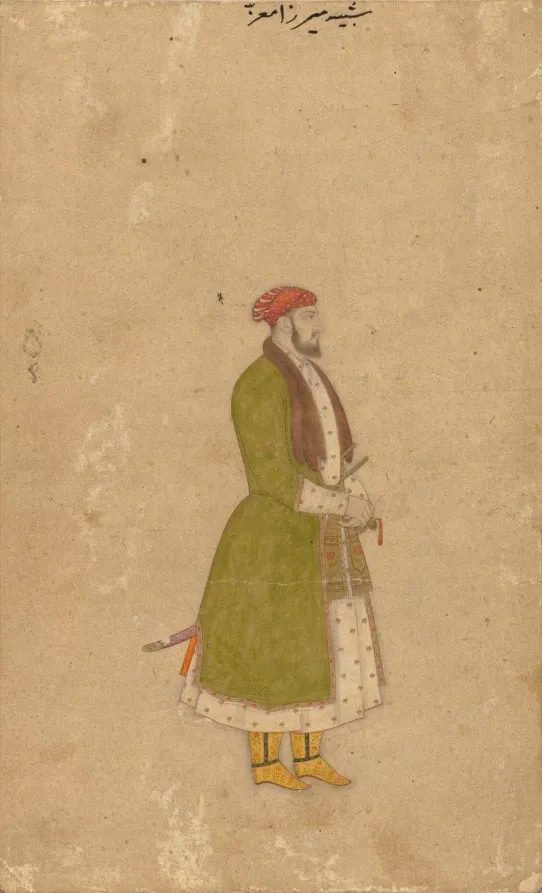
Portrait of the Courtier Mirza Muizz is an unspecified painting by the Baroque artist Unknown. It dates from 1690 and is held in the collection of the Cleveland Museum of Art. The work depicts a solitary figure dressed in a long green robe edged with gold, standing before an unadorned light backdrop.
About this work
Overview
The work depicts a solitary figure dressed in a long green robe edged with gold, standing before an unadorned light backdrop. He wears a red hat, a white shirt with sleeves rolled to the elbows, and yellow boots, his dark beard framing a composed expression. In his right hand he grips a curved sword, while his left rests on the weapon’s hilt, suggesting a poised, formal presentation.
Subject & Meaning
The sitter’s attire and armament indicate a person of status, likely a courtier or official serving a ruler. The combination of luxurious fabrics, vivid colors, and the sword as a symbol of authority points to an identity tied to military or administrative duties within a noble household.
Technique & Style
Rendered with clear, deliberate brushwork, the painting employs a restrained palette that lets the bright greens, reds, and yellows dominate the composition. The flat, neutral background isolates the figure, a hallmark of Baroque portraiture that emphasizes the subject’s presence and social rank through contrast and controlled lighting.
History & Provenance
The portrait is titled “Portrait of the Courtier Mirza Muizz,” suggesting the sitter’s name and role. While specific ownership records are limited, the work’s formal qualities and naming convention align with courtly commissions common in the early modern period, when patrons sought to document their officials in a dignified manner.
Context
Created during the Baroque era, the painting reflects the period’s interest in dramatic yet orderly representation of power. The emphasis on rich textiles, vivid coloration, and a single, commanding figure mirrors broader artistic trends that aimed to convey authority and prestige through visual splendor.
Legacy
As an example of court portraiture, the piece contributes to our understanding of how visual culture reinforced hierarchical structures. Its clear depiction of attire and weaponry offers scholars insight into the material culture and status symbols of the time, informing studies of both art history and social hierarchy.
Artist & collection

 Domestic Scene
 Giacomo and Cardinal Marco, investing Andrea, Abbot of San Zeno, with his Benefice
 The Nymph of Fontainebleau
 Portrait of a Woman
 Madonna and Child with Saints in the Enclosed Garden
 Venus and Minerva
 Family Group of Four on Sofa
 Wall painting from Room H of the Villa of P. Fannius Synistor at Boscoreale
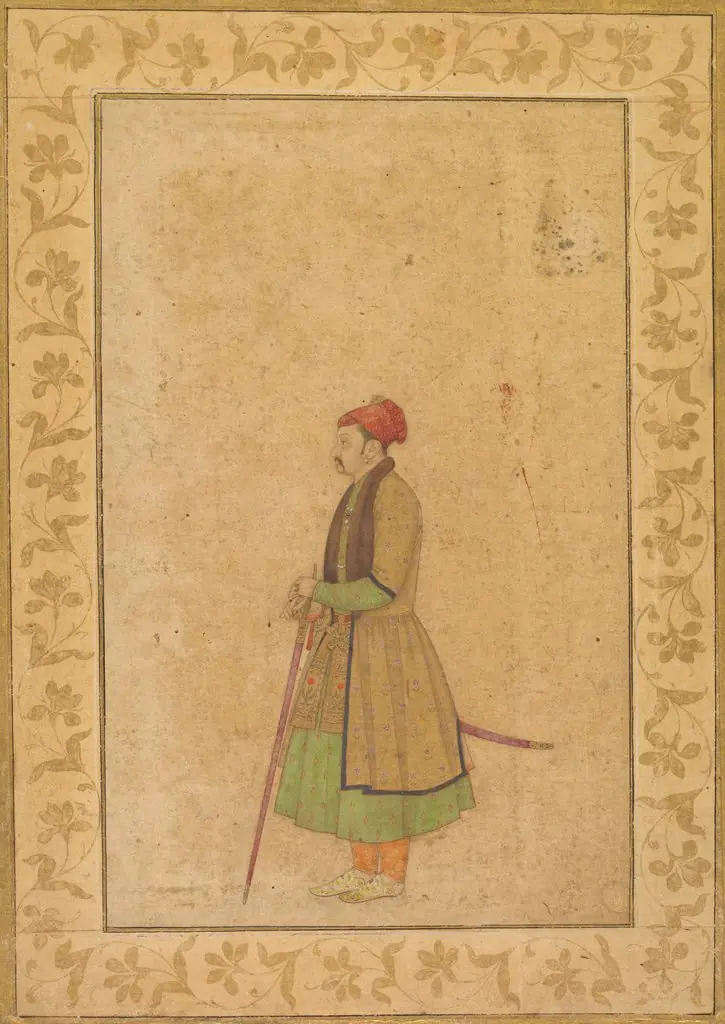 Portrait of Raja Ram Singh of Amber (r. 1667-1688) with a Deccan Sword (recto); Calligraphy (verso)
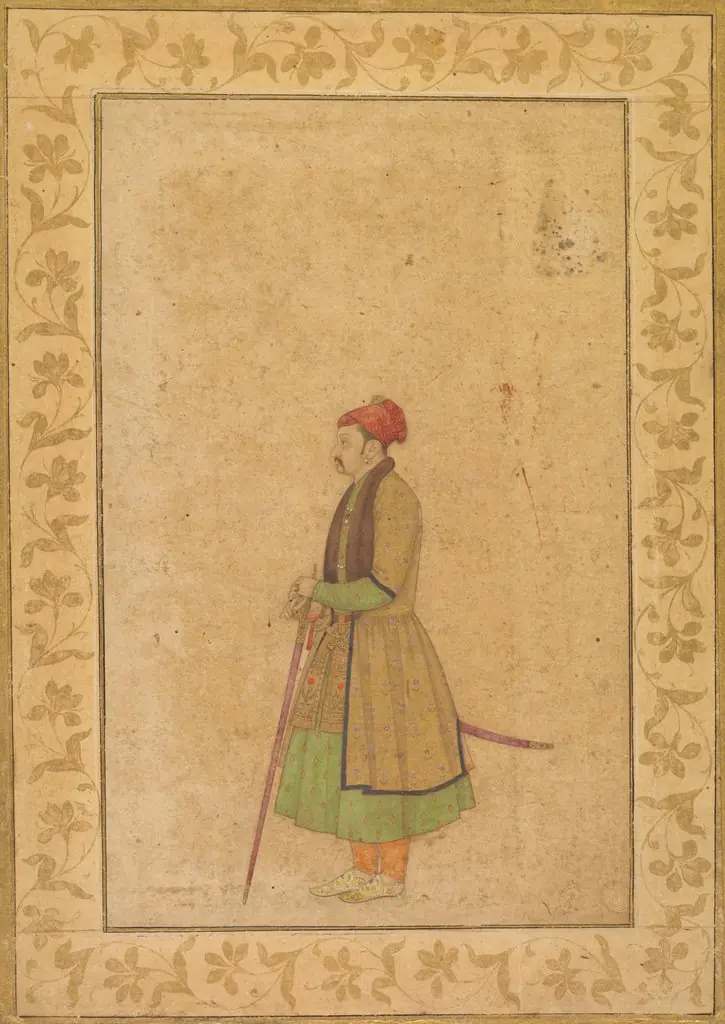 Portrait of Raja Ram Singh of Amber (r. 1667-1688) with a Deccan Sword (recto)
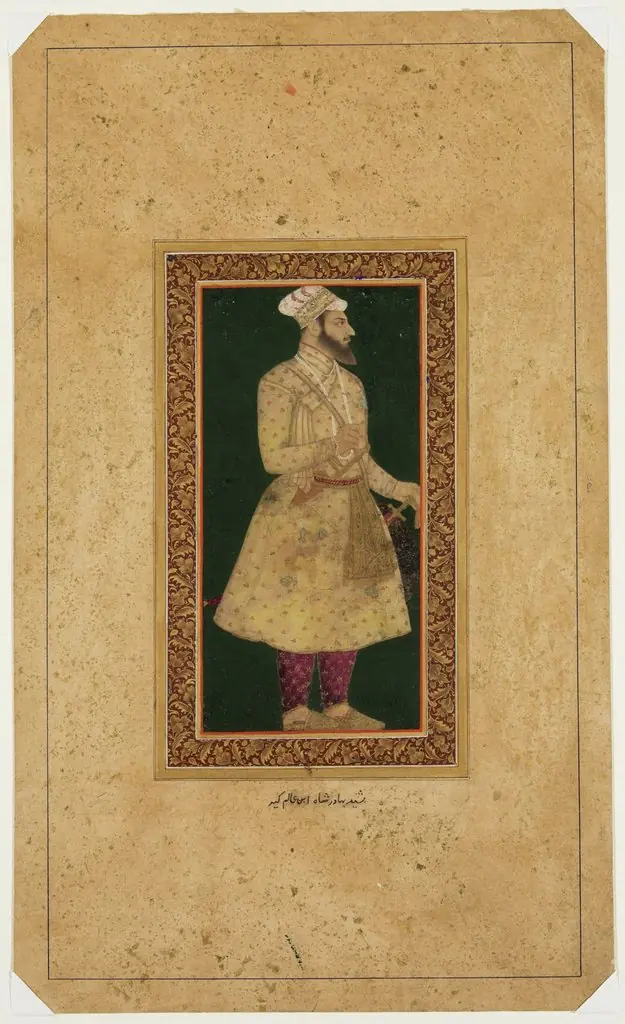 Portrait of a Prince
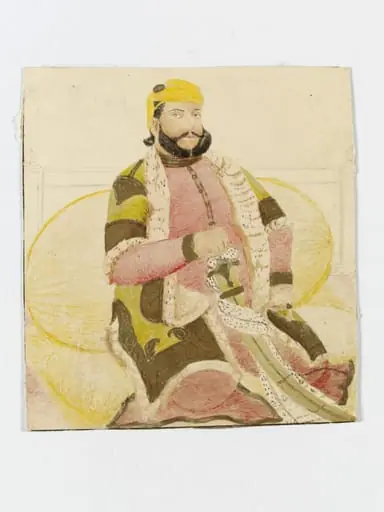 Raja Prithi Singh
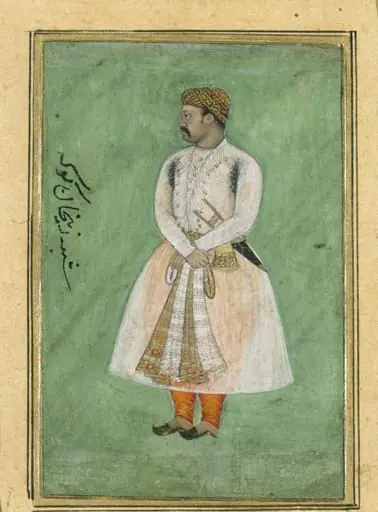 Zain Khan Koka
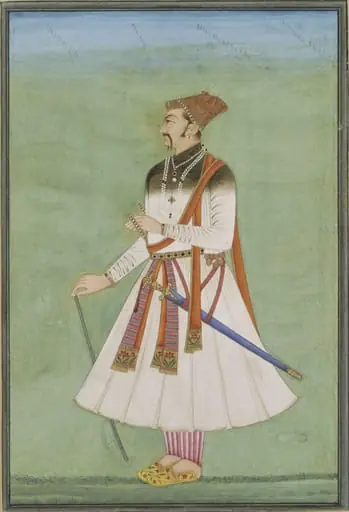 Raja Rawal Sabal Singh Bhatti
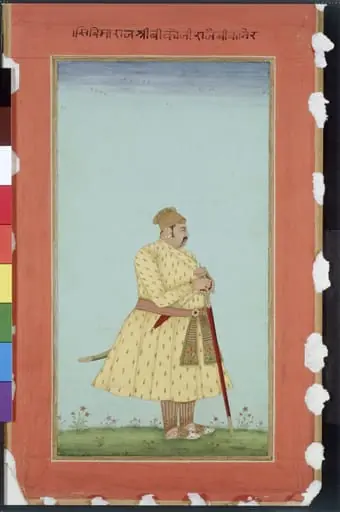 Rao Bikoji
 Aurangzeb
 Untitled
 Portrait of Raja Ram Singh of Amber (r. 1667-1688) with a Deccan Sword (recto)