Artwork
Portrait of Raja Ram Singh of Amber (r. 1667-1688) with a Deccan Sword (recto)
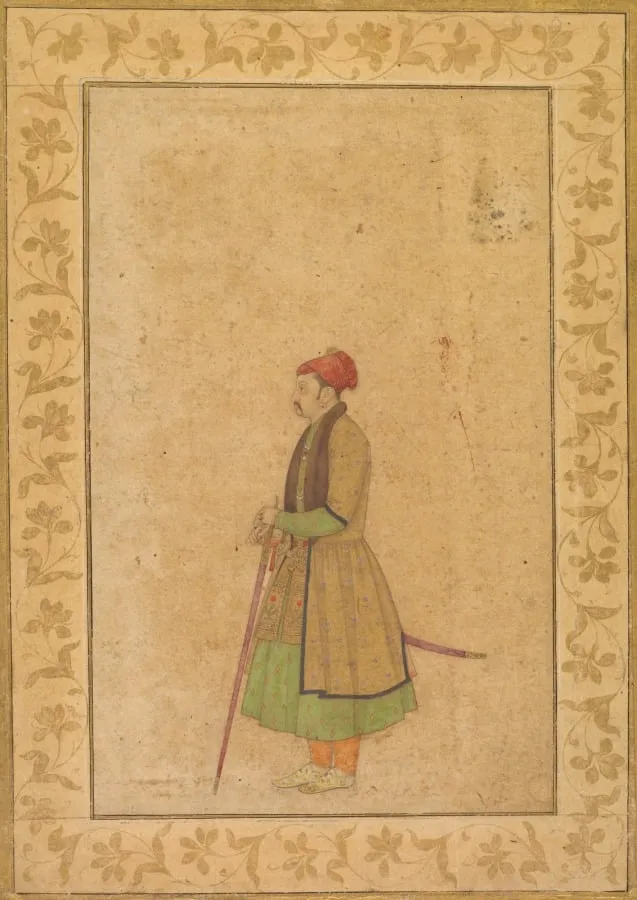
Portrait of Raja Ram Singh of Amber (r. 1667-1688) with a Deccan Sword (recto) is an unspecified painting by the Baroque artist Unknown. It dates from 1682 and is held in the collection of the Cleveland Museum of Art.
About this work
This is Raja Ram Singh, a Hindu ruler who spent his life serving Mughal emperors.
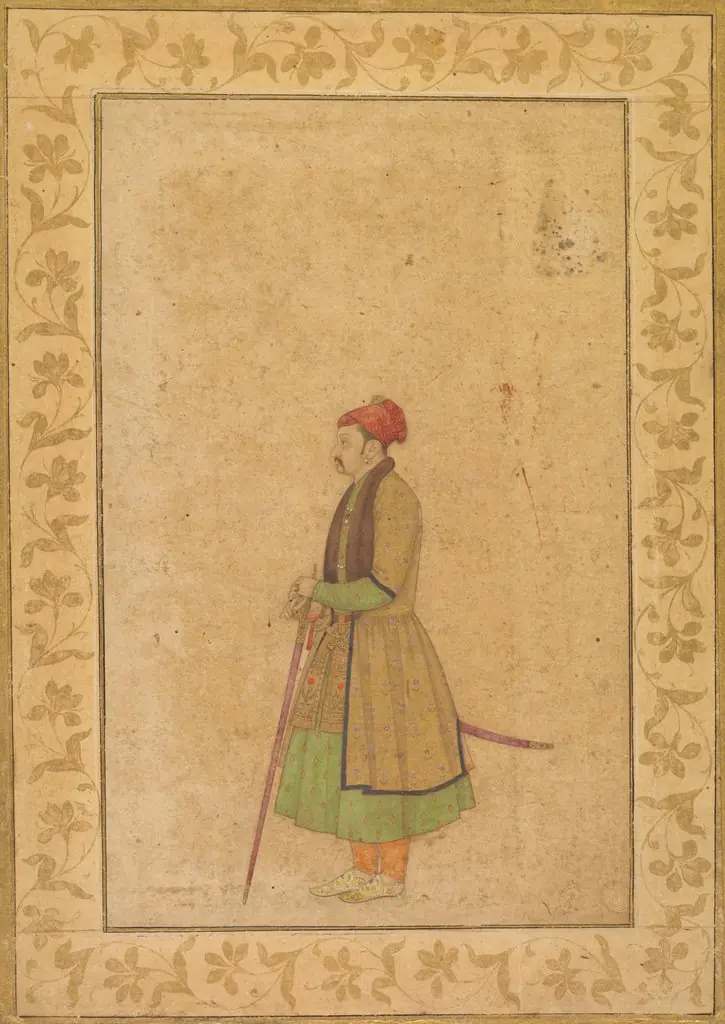
You see a man in a richly decorated robe, holding a curved sword. His face looks tired, with dark circles under his eyes.
This is Raja Ram Singh, a Hindu ruler who spent his life serving Mughal emperors. The artist shows his exhaustion, even though he’s dressed in fine clothes. The sword hints at his military role, but his expression tells a quieter story.
If you like this, look up more works under 17th century.
Overview
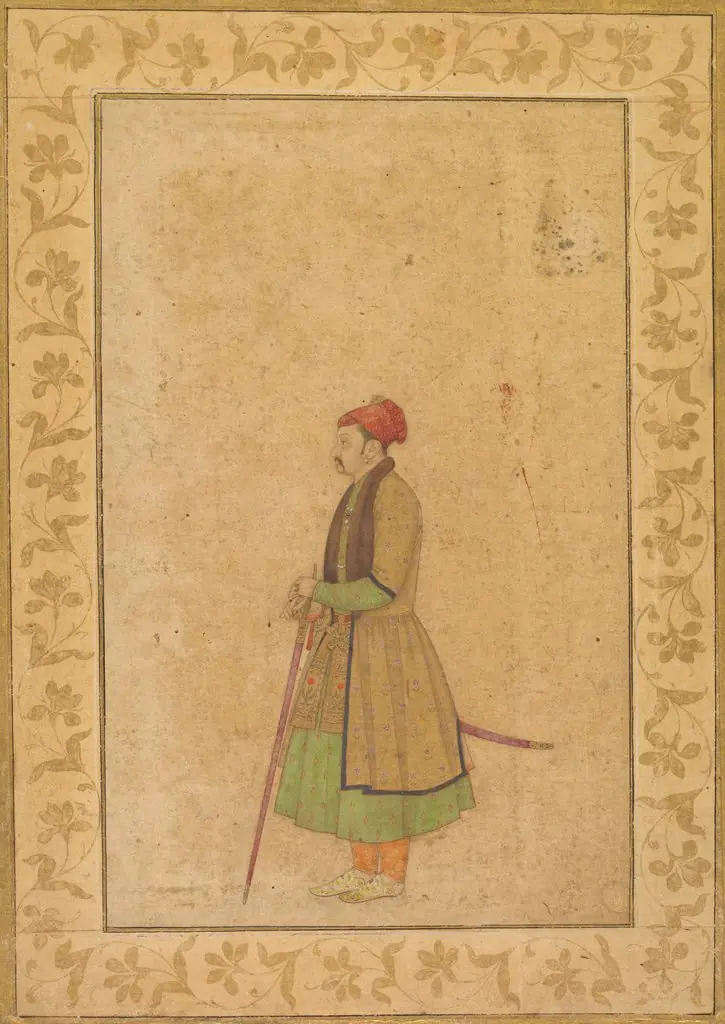
The painting depicts Raja Ram Singh of Amber, a Hindu prince who served as a courtier and military commander under the Mughal emperors Shah Jahan and Aurangzeb between 1643 and 1688. Dressed in an opulent coat of honor with a fur collar, gold thread embroidery, and jeweled ornaments, he holds a curved, enameled sword. His weary expression, marked by dark circles under the eyes, contrasts with the lavish attire, suggesting the personal toll of his long service.
Subject & Meaning
Ram Singh’s portrait emphasizes the tension between his official prestige and the fatigue of his duties. The inscription in Urdu, taken from a Mughal album, praises his battlefield success: "wherever he has led an expedition, victory is his." Yet the subdued facial features hint at the hardships of a career marked by shifting loyalties, failed successions, and the responsibility for the escape of the rebel Shivaji.
Technique & Style
The work employs a naturalistic approach to facial rendering, capturing subtle signs of exhaustion through delicate shading. The textile is rendered with intricate detail, showing gold‑threaded patterns, floral motifs, and the sparkle of rubies, emeralds, and pearls. The sword’s enamelled hilt is painted with precise brushwork, highlighting the Mughal court’s penchant for luxurious materiality combined with realistic portraiture.
History & Provenance
Created for inclusion in a Mughal album, the portrait likely dates to the period after Ram Singh’s accession to the throne of Amber in 1667, when he received the sword as a royal gift. The painting remained within Mughal collections before entering modern museum holdings, where it is now catalogued as a rare example of a Hindu ruler portrayed within the imperial artistic tradition.
Context
Raja Ram Singh’s career unfolded during the height of Mughal power, when regional princes were integrated into the imperial hierarchy. His service illustrates the complex alliances between the Mughal court and the Rajput kingdoms of Rajasthan, as well as the broader military campaigns that extended Mughal influence across the Deccan. The portrait thus reflects both personal status and the political dynamics of 17th‑century India.
Artist & collection

 Domestic Scene
 Giacomo and Cardinal Marco, investing Andrea, Abbot of San Zeno, with his Benefice
 The Nymph of Fontainebleau
 Portrait of a Woman
 Madonna and Child with Saints in the Enclosed Garden
 Venus and Minerva
 Family Group of Four on Sofa
 Wall painting from Room H of the Villa of P. Fannius Synistor at Boscoreale
 Portrait of Raja Ram Singh of Amber (r. 1667-1688) with a Deccan Sword (recto)
 Portrait of Raja Ram Singh of Amber (r. 1667-1688) with a Deccan Sword (recto); Calligraphy (verso)
 A Mughal courtier
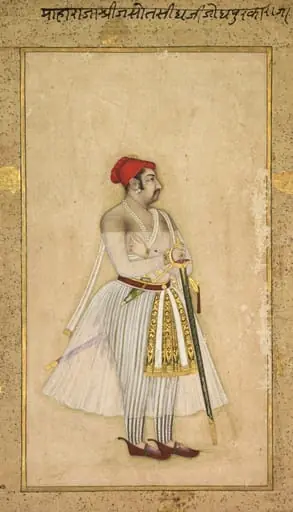 Jaswant Singh of Jodhpur (reigned 1635–1678)
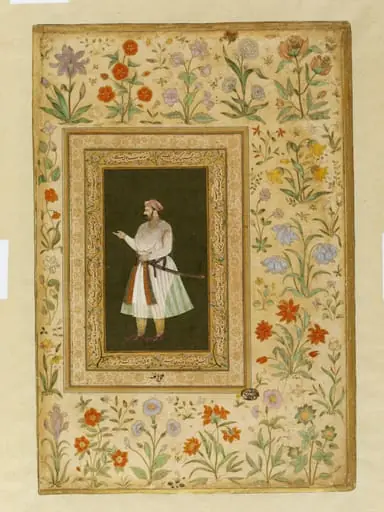 Untitled
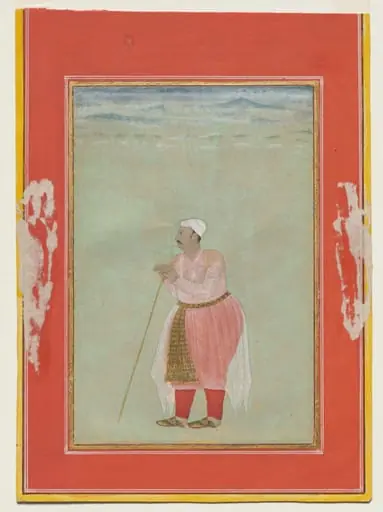 Portrait of Maharaja Rai Singh of Bikaner (reigned 1574–1612)
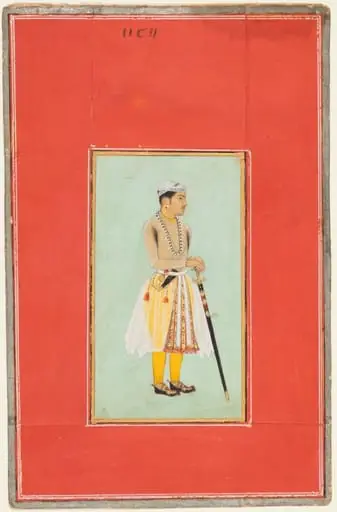 Portrait of Prince Sur Singh Rathor of Bikaner (1594–1631)
 Portrait of Asaf Khan (1569–1641), from the Late Shah Jahan Album
 The emperor 'Alamgir (Aurangzeb)
 Portrait of Murad Bakhsh (1624–61)