Artwork
Prăznicar – Scene din viața lui Iisus
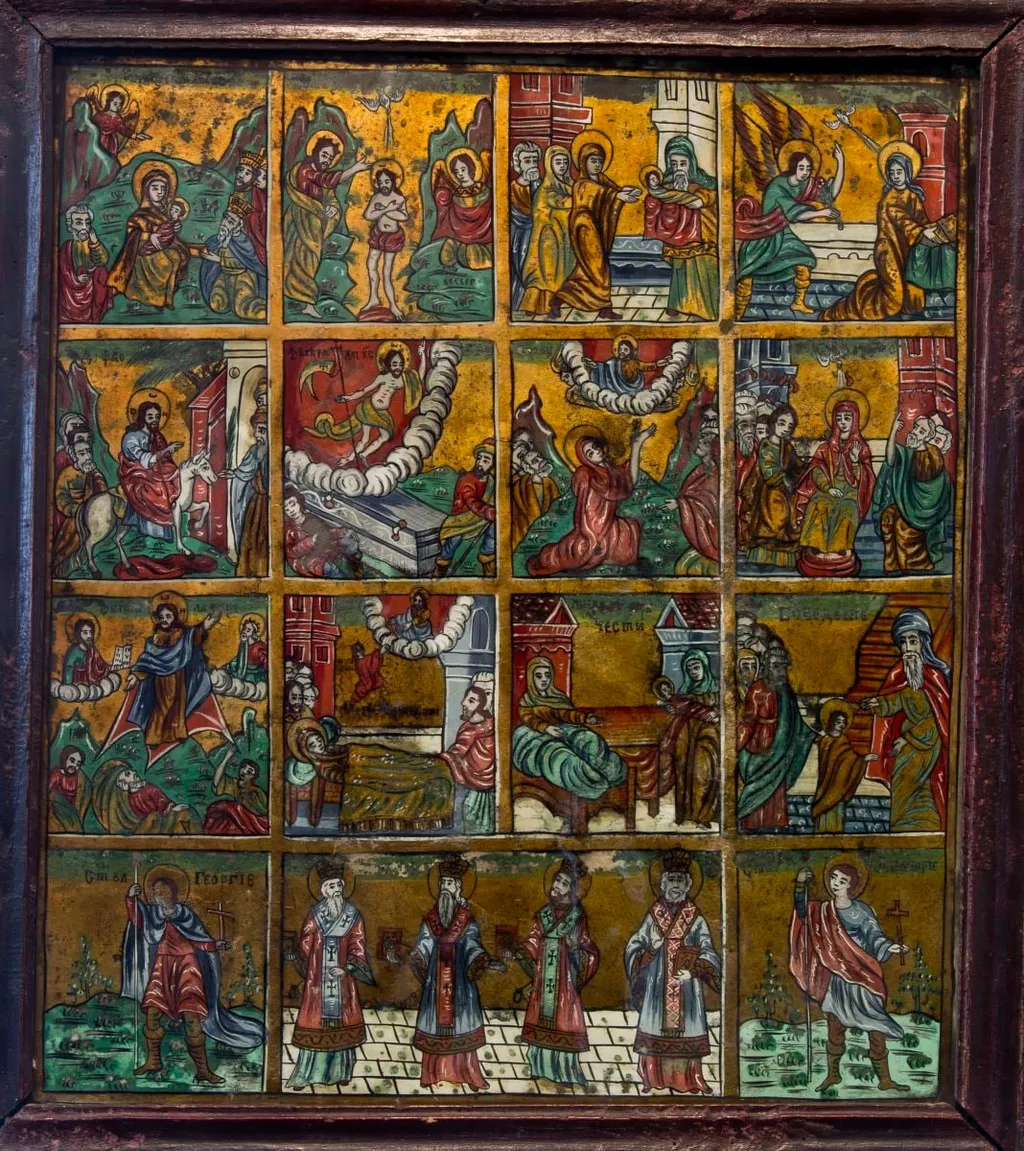
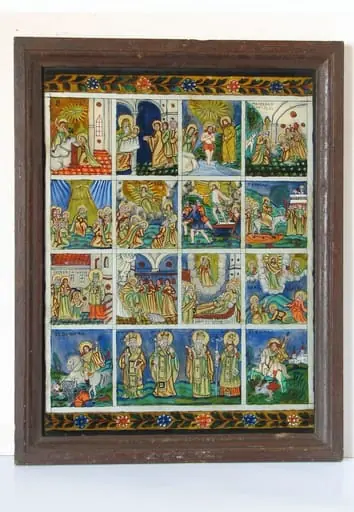
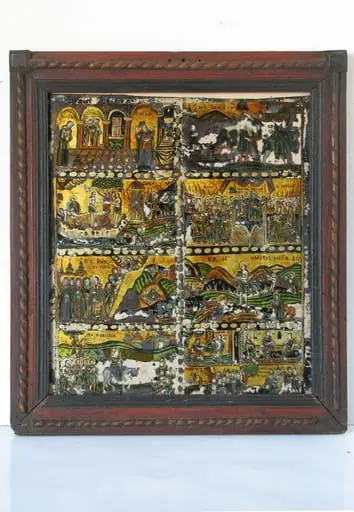
Prăznicar – Scene din viața lui Iisus is a drawing by Unknown. It dates from 1850 and is held in the collection of the National Museum of Art of Romania. This artwork comprises sixteen small, tightly composed scenes arranged in a grid of four rows and four columns.
About this work
Overview
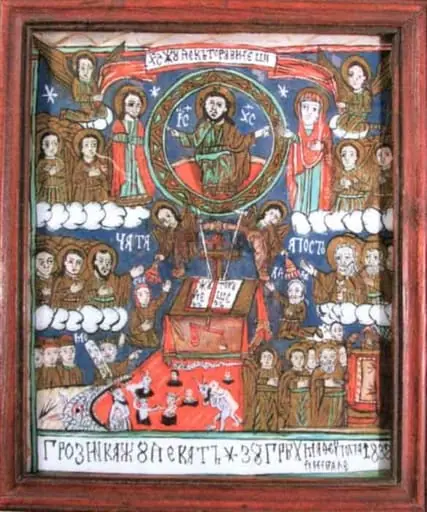
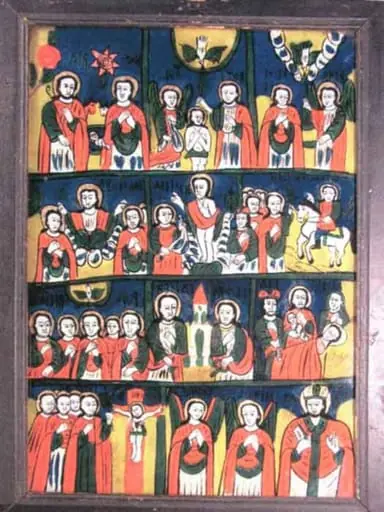
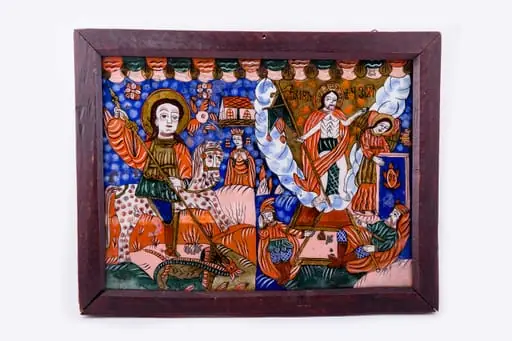
This artwork comprises sixteen small, tightly composed scenes arranged in a grid of four rows and four columns. Each panel illustrates a distinct episode from the life of Jesus, presented without narrative hierarchy. The composition invites sequential viewing, encouraging contemplation of Christ’s earthly journey through discrete, self-contained moments rendered in vivid color and fine detail.
Subject & Meaning
The scenes depict key events from Jesus’s life, including his birth, teachings, miracles, and Passion. The recurring presence of the Latin cross in multiple panels functions as a visual anchor, subtly reinforcing themes of sacrifice and divine purpose. Its consistent inclusion suggests a devotional intent, guiding the viewer toward reflection on faith and redemption across the narrative arc.
Technique & Style
The style prioritizes clarity and symbolic clarity over spatial realism, aligning with traditions of ecclesiastical storytelling in portable devotional formats.
Each scene is rendered with meticulous attention to facial expression and gesture, emphasizing emotional resonance over grandeur. Bright, flat pigments and clear outlines define figures and settings, creating a decorative yet legible visual language. The style prioritizes clarity and symbolic clarity over spatial realism, aligning with traditions of ecclesiastical storytelling in portable devotional formats.
History & Provenance
The work’s origins are tied to Eastern European religious art traditions, likely produced in the late 19th or early 20th century for private or parish use. Its compact, grid-based format suggests it may have served as a devotional aid or teaching tool in homes or small churches, where access to larger altarpieces was limited.
Context
This piece reflects a broader regional practice of condensing biblical narratives into accessible, multi-panel formats, common in Orthodox and Catholic communities seeking to make scripture tangible. The emphasis on emotional immediacy and symbolic motifs like the cross aligns with popular piety of the time, where visual cues reinforced doctrinal understanding among lay audiences.
Legacy
Though not widely documented in major art historical records, such works preserved local religious aesthetics and literacy. They represent a quiet but persistent tradition of vernacular sacred art, sustaining devotional practices through accessible imagery long after grand ecclesiastical commissions had faded from everyday life.
Artist & collection

 Domestic Scene
 Giacomo and Cardinal Marco, investing Andrea, Abbot of San Zeno, with his Benefice
 The Nymph of Fontainebleau
 Portrait of a Woman
 Madonna and Child with Saints in the Enclosed Garden
 Venus and Minerva
 Family Group of Four on Sofa
 Wall painting from Room H of the Villa of P. Fannius Synistor at Boscoreale