Artwork
Prahlada
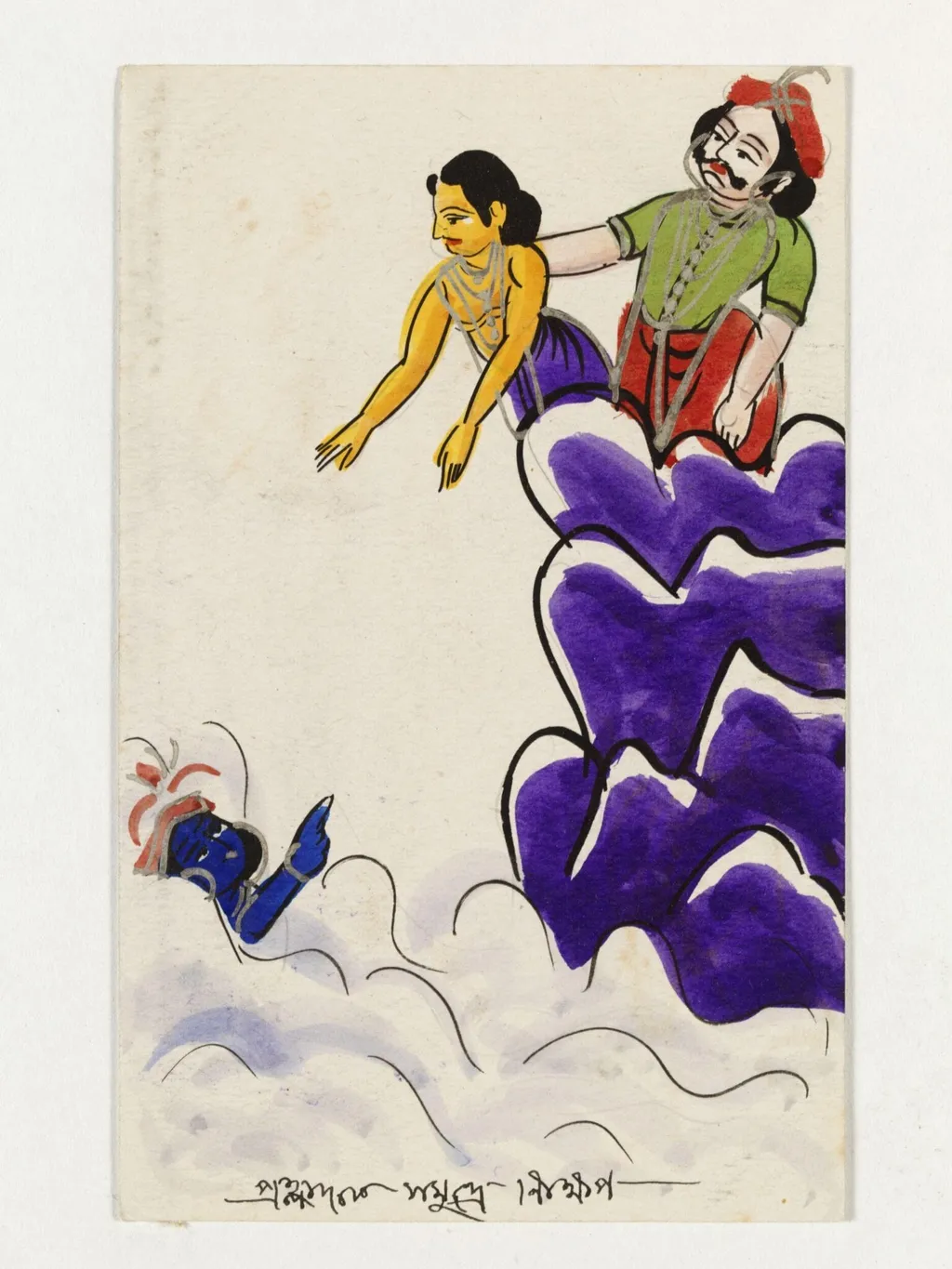
Prahlada is a paint painting by the Impressionist artist Unknown. It dates from 1890 and is held in the collection of the Victoria and Albert Museum.
About this work
Overview
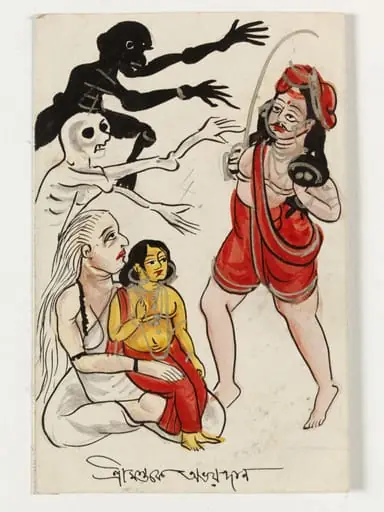
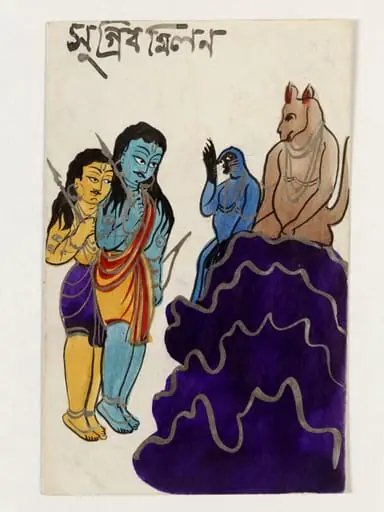
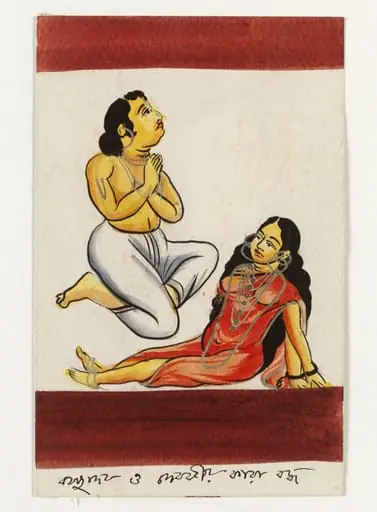
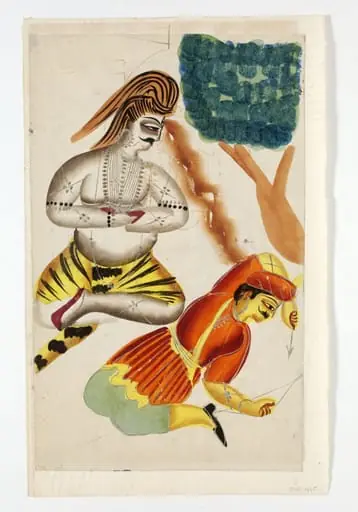
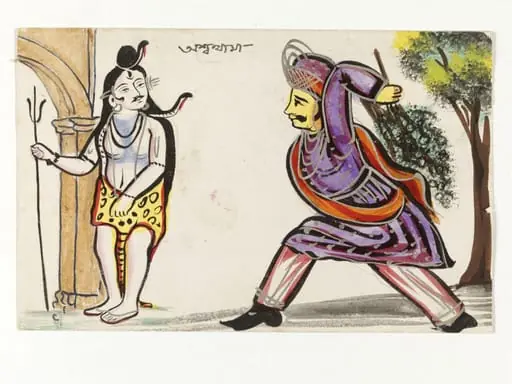
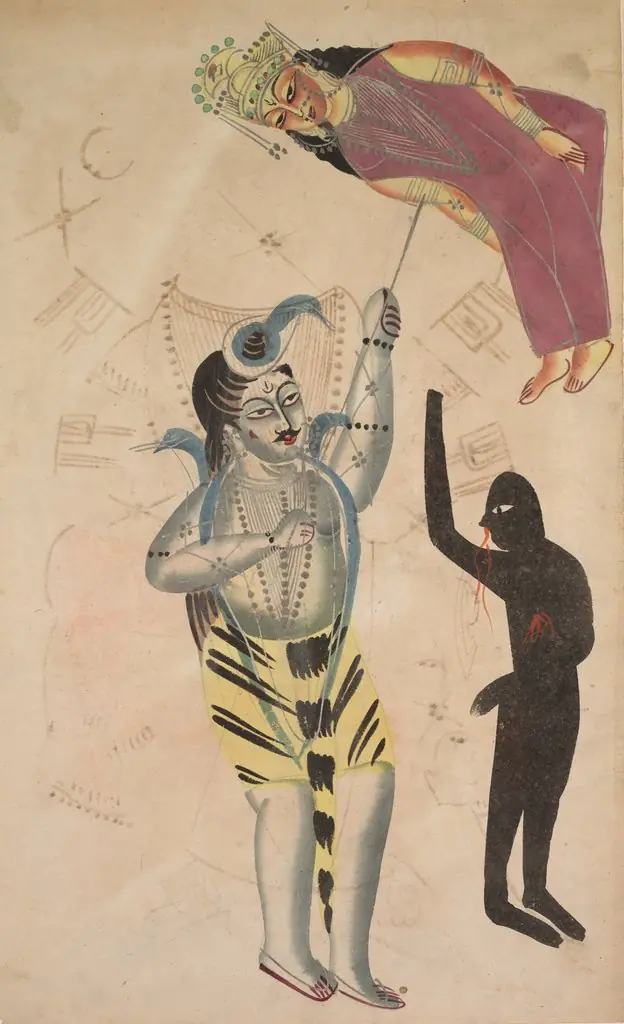
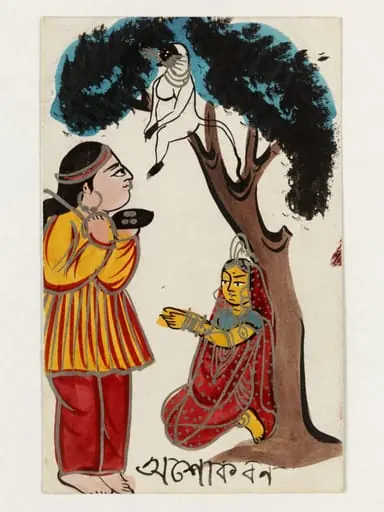
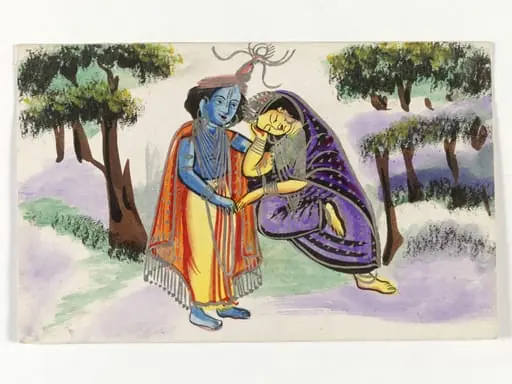
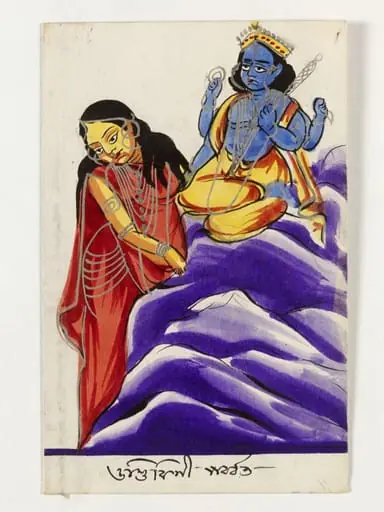
This 1890 watercolor and tin alloy painting on cardboard portrays a moment from Hindu mythology involving Prahlada, a devotee of Vishnu.
This 1890 watercolor and tin alloy painting on cardboard portrays a moment from Hindu mythology involving Prahlada, a devotee of Vishnu. The composition uses flat, unmodulated colors and bold outlines, characteristic of regional Indian painting traditions. The medium’s metallic elements add a subtle sheen, enhancing the visual impact against a pale ground. Its scale and material reflect its likely origin as a portable devotional or narrative image.
Subject & Meaning
The scene illustrates Prahlada’s rescue by Vishnu’s avatar, Narasimha, after being cast into the sea by his father, Hiranyakashipu. A woman in yellow, possibly his mother, reaches from the form of a colossal creature—perhaps the sea or a divine manifestation—while a male figure leans toward her. Below, the blue-skinned Narasimha hovers, arms extended, symbolizing divine intervention. The imagery conveys protection of the faithful against tyranny.
Technique & Style
The painting employs watercolor with tin alloy accents on cardboard, creating a luminous yet durable surface. Colors are applied in broad, unshaded planes with sharp, dark outlines, emphasizing form over depth. The lack of perspective and modeling aligns with folk and kalighat traditions, where symbolic clarity overrides naturalism. The flatness and intensity of hue contribute to a sense of immediacy and ritual presence.
History & Provenance
Created in 1890, the work likely originated in Bengal, where kalighat-style paintings flourished as affordable devotional art for pilgrims and urban patrons. Its use of cardboard and metallic pigments suggests production in a workshop setting, possibly for sale near temples or markets. No documented ownership prior to modern collections is recorded, but its style places it within a well-documented regional artistic practice of the late 19th century.
Context
This painting emerged during a period when traditional Indian art forms were responding to colonial influence and urbanization. Kalighat artists adapted mythological narratives for mass audiences, using simplified forms and vivid color to convey spiritual stories quickly and memorably. The work reflects a continuity of iconography from manuscript illustration to popular print culture, bridging religious devotion and commercial art.
Legacy
Though not widely exhibited in major institutions, the painting exemplifies a vibrant regional tradition that influenced later Indian modernists and folk art revivalists. Its stylistic economy and emotional directness remain relevant to studies of non-Western visual storytelling. It stands as a testament to the adaptability of Hindu iconography in everyday artistic practice during a time of cultural transition.
Artist & collection

 Domestic Scene
 Giacomo and Cardinal Marco, investing Andrea, Abbot of San Zeno, with his Benefice
 The Nymph of Fontainebleau
 Portrait of a Woman
 Madonna and Child with Saints in the Enclosed Garden
 Venus and Minerva
 Family Group of Four on Sofa
 Wall painting from Room H of the Villa of P. Fannius Synistor at Boscoreale